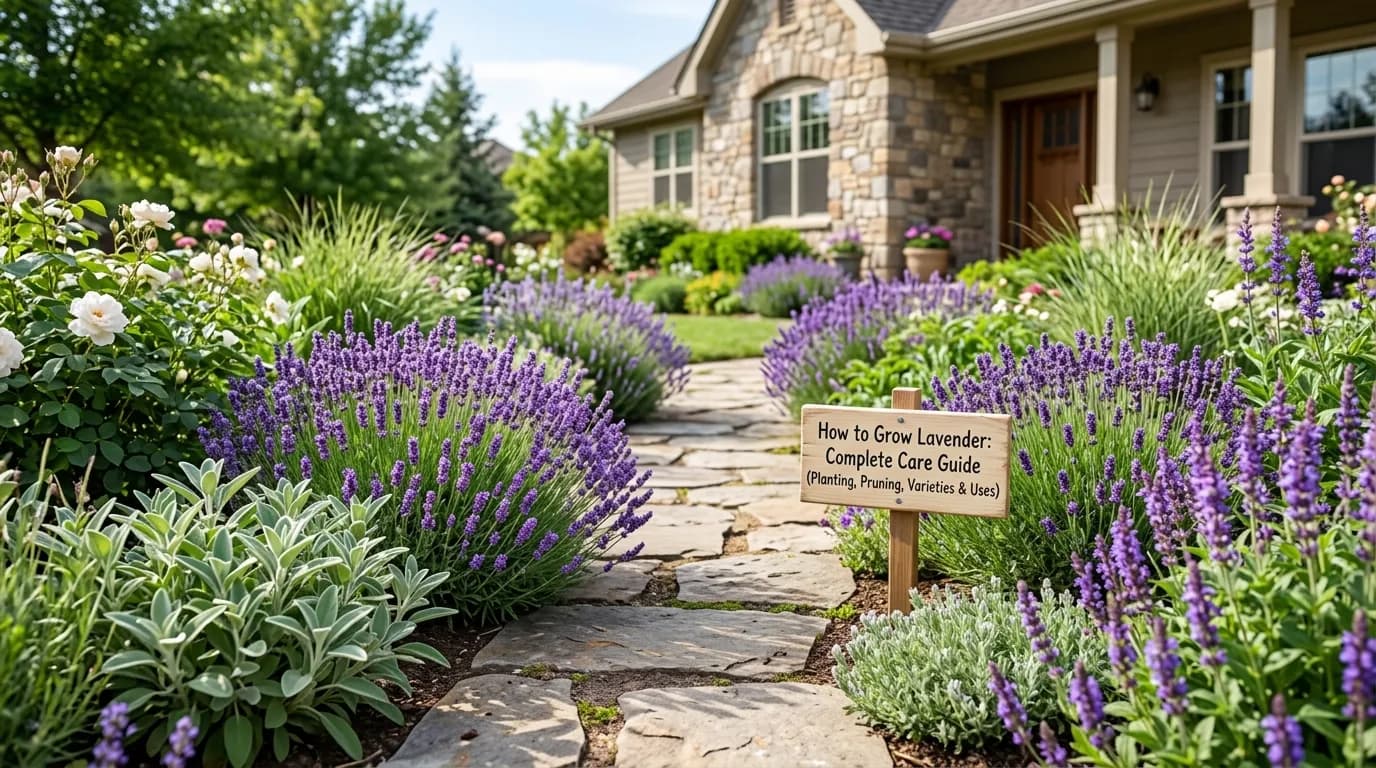
No plant says "Mediterranean garden" like lavender — those violet-blue flower spikes above silvery foliage, carrying fragrance on the breeze, buzzing with bees from June through September. And no plant is more brutally killed by well-meaning gardeners who water it too much, plant it in clay soil, or prune it at the wrong time.
Lavender wants exactly two things: excellent drainage and as much sun as it can get. Give it those, and it will grow for 10–15 years with almost no attention. Fail on either, and it dies — usually in its first or second winter, just when you thought it was established.
This guide covers how to actually grow lavender successfully in most US climate zones — including the common mistakes that kill it, the best varieties for different regions, how to prune correctly, and how to use it as a design anchor in low-maintenance landscapes.
Understanding Lavender's Native Conditions
All true lavenders (Lavandula species) originate from the Mediterranean basin — the rocky, sun-baked hillsides of Spain, France, Italy, and North Africa. Their native soil is typically:
- Thin and gravelly with excellent drainage — water moves through immediately after rain
- Alkaline to neutral pH (7.0–8.0)
- Low in nutrients — the Mediterranean maquis is not rich soil
- Exposed — no tree cover, full sun all day long
This tells you everything about how to grow lavender successfully:
- It needs perfect drainage above all else
- It prefers lean soil (compost-heavy beds make it floppy and short-lived)
- It wants full sun — at least 6 hours, ideally 8+
- It tolerates alkaline conditions better than most plants
The #1 cause of lavender death in the United States: wet soil in winter. Lavender can survive very cold temperatures (some varieties to zone 4) but cannot survive sitting in wet, cold soil. This is why clay soils and wet climates are particularly challenging.
Choosing the Right Lavender for Your Climate
English Lavender (Lavandula angustifolia) — Zones 5–8, most cold-hardy, finest fragrance
- Best varieties: 'Hidcote' (compact, deep purple), 'Munstead' (early bloomer, cold-hardy), 'Vera' (true lavender for oils), 'Phenomenal' (best heat AND cold tolerance — zones 5–8, excellent rebloomer)
- Use for: cold climates, cooking, drying, edging, knot gardens
Lavandin (Lavandula × intermedia) — Zones 5–8, larger and more vigorous hybrid
- Best varieties: 'Grosso' (commercial production lavender, massive spikes), 'Provence' (tall, graceful), 'Fred Boutin' (silver foliage), 'Edelweiss' (white flowers)
- Use for: hedges, cut flower production, large drifts, field effect
Spanish Lavender (Lavandula stoechas) — Zones 7–10, earliest bloomer, "rabbit ears" bracts
- Best varieties: 'Otto Quast', 'Anouk', 'Tickled Pink', 'Silver Anouk'
- Use for: mild winter climates, Southern US, Pacific Coast, Texas hill country
- Not hardy below zone 7 — treat as annual in colder zones or overwinter indoors
French Lavender (Lavandula dentata) — Zones 8–10, toothed leaves, nearly ever-blooming
- Best for: Southern California, Gulf Coast, Hawaii, frost-free areas
- Blooms almost year-round in warm climates
Portuguese Lavender (Lavandula latifolia) — Zones 6–8, strongly camphor-scented
- Used mostly in hybrid crosses; parent of Lavandula × intermedia
| Climate Zone | Best Choice |
|---|---|
| Zones 4–5 (cold winters) | 'Phenomenal', 'Munstead' (with excellent drainage) |
| Zones 5–7 (typical Northeast/Midwest) | 'Hidcote', 'Munstead', 'Phenomenal', 'Grosso' |
| Zones 7–8 (Mid-Atlantic, Upper South) | Any English lavender, Lavandins, Spanish lavender |
| Zones 8–10 (Deep South, Southwest, CA) | Spanish, French, Portuguese; avoid English lavender in heat |
| Pacific Coast (mild, dry summers) | Nearly all species; ideal conditions |
How to Plant Lavender Successfully
Site selection:
Choose the hottest, best-drained spot in your garden. South or west-facing slopes are ideal. Raised beds and slopes drain better than flat ground. Near pavement or walls (which reflect heat and dry quickly) works well.
Soil preparation:
- If you have clay soil: mix in 50% coarse grit or pea gravel to the planting hole and raised area; alternatively build a raised bed with a gritty mix
- If you have sandy or loamy soil: minimal amendment needed — don't add compost (it keeps soil too moist)
- Target pH: 6.5–8.0 — add lime if your soil is acidic (below 6.5)
- Do NOT add fertilizer to the planting hole
Planting:
- 1Dig a hole slightly larger than the root ball
- 2Set the plant so the crown is at or slightly above soil level — elevated crowns drain better
- 3Backfill with native soil (or gritty amended mix)
- 4Add a 1–2 inch layer of coarse gravel or pea gravel around the crown and extending 6 inches out — this keeps the crown dry and reflects heat upward (mimicking Mediterranean hillsides)
- 5Water in well — then let dry before watering again
Spacing: Most lavenders need 18–24 inches between plants. Lavandins need 24–36 inches. Don't crowd — good air circulation reduces fungal disease.
Watering Lavender: Less Is Almost Always More
The golden rule: lavender is drought-tolerant once established (12–18 months after planting). Before that, it needs regular water to establish roots — but never soggy soil.
Establishment period (first season):
- Water every 5–7 days if no rain
- Let soil dry 2–3 inches deep between waterings
- Never let water pool around the crown
Established lavender:
- In climates with regular summer rain: often no supplemental irrigation needed
- In dry summer climates (Southwest, Mediterranean California): water deeply every 2–3 weeks
- Signs of overwatering: yellowing foliage, mushy stems, sudden collapse — often fatal
Irrigation: If using drip irrigation, keep emitters at the drip line — not next to the crown. Avoid overhead irrigation, which wets foliage and increases fungal problems.
Want to incorporate lavender into a water-wise landscape design? Try Yardcast's AI landscape designer — it tailors plant recommendations to your climate zone and water availability, including drought-tolerant schemes with lavender as a design anchor.
Pruning Lavender: The Most Important Annual Task
This is where most gardeners go wrong. Lavender that isn't pruned regularly becomes woody, open-centered, and short-lived. Annual pruning keeps plants compact, productive, and vigorous for 10–15 years rather than 3–4.
When to prune:
- After the first bloom flush — typically late June to early July (English lavender)
- Again in late summer or early fall — a lighter shaping after the second flush
- Do not prune in fall (late October and beyond) — cutting stimulates growth that then gets winter-killed
How much to cut:
- English lavender and Lavandins: Cut back by one-third to one-half. Leave plenty of green wood — never cut into old, woody stems with no green growth. That wood will not regenerate.
- Spanish lavender: Trim back after each bloom flush, cutting spent flower stems back to foliage
- Young plants (first year): A light shaping only — let them establish
The hard rejuvenation prune: For older woody plants, some gardeners attempt a hard cut to 4–6 inches in early spring. Success rate is variable — English lavender handles it better than Lavandins. Some plants recover spectacularly; others die. Consider it a gamble on plants that are already failing.
Pro tip: Cut lavender flowers just before they fully open — they'll dry beautifully and hold fragrance for months. Timing your pruning to coincide with harvest lets you accomplish both at once.
Lavender in Landscape Design
Lavender is one of the most versatile design plants for sunny, well-drained spaces. It works in:
Mass plantings and hedges: A row of 'Hidcote' lavender along a driveway or path edge is stunning in bloom and attractive year-round with silver foliage. Space 18 inches apart for a solid hedge effect.
Mediterranean and cottage gardens: Pair with rosemary, sage, Russian sage (Perovskia), catmint (Nepeta), and ornamental grasses. All share the same cultural requirements and create a cohesive, low-water palette.
Front yard curb appeal: Lavender planted in drifts along a front walkway transforms the approach to your home. Drought-tolerant, pollinator-friendly, and fragrant every time you walk by.
Xeriscape and drought-tolerant landscapes: Lavender is one of the best anchor plants for water-wise gardens in the western US. See our drought-tolerant design guide for more combinations.
Pollinator gardens: Few plants attract more bees, butterflies, and beneficial insects than lavender in bloom. It's a keystone plant for any pollinator habitat.
Seasonal Care Calendar
Early Spring (March–April): Once you see new green growth emerging, do your light spring shaping — remove any winter-killed wood, cutting back to healthy green tissue. Apply a thin layer of gravel mulch if it's worked down into the soil. Do not fertilize heavily.
Late Spring (May): Peak growth. Enjoy the approach to bloom. Watch for aphids on tender new growth — usually just a strong spray of water is enough.
Early Summer (June–July): First bloom flush. Harvest flowers for drying just before full open. Prune back by one-third after bloom. This often triggers a second flush in 4–6 weeks.
Late Summer (August): Second bloom flush for rebloomers. Light shaping after this flush. Water deeply but infrequently in dry climates.
Fall (September–October): Stop pruning by mid-September. No heavy feeding. In zones 4–5, apply a light layer of coarse gravel mulch around the crown — do not use organic mulch which holds moisture.
Winter: Dormant. No care needed. In very cold zones, some winter dieback of top growth is normal — wait until spring to assess and prune.
Using Lavender: Culinary, Medicinal & Crafts
Culinary lavender: English lavender ('Vera', 'Hidcote', 'Munstead') has the best culinary flavor. Harvest just-opening buds in the morning. Use sparingly — lavender is potent. Classic uses: lavender shortbread, lavender lemonade, Herbes de Provence, honey infusions.
Dried lavender: Bundle 8–10 stems together, secure with a rubber band, and hang upside-down in a cool, dark, dry place for 3–4 weeks. Perfect for wreaths, sachets, linen bags, and potpourri.
Essential oil: Grosso and Vera are the varieties grown commercially for oil. Home steam distillation is possible with a simple still setup.
Medicinal/aromatherapy: Lavender is widely used for relaxation and sleep. Sachets placed in pillowcases, lavender spray on bedding, and diffused lavender oil are the most common uses.
Ready to Design Your Lavender Landscape?
If you want lavender as part of a broader low-maintenance, drought-tolerant design — whether as a front-yard hedge, cottage garden element, or Mediterranean-style foundation planting — Yardcast can build you a complete AI landscape design. Upload your yard photos, tell us your style and budget, and get three regionally-specific designs with plant lists that actually survive your climate. Free to preview.
FAQ: How to Grow Lavender
<script type="application/ld+json">
{
"@context": "https://schema.org",
"@type": "FAQPage",
"mainEntity": [
{
"@type": "Question",
"name": "How often should I water lavender?",
"acceptedAnswer": {
"@type": "Answer",
"text": "During the first season (establishment), water every 5–7 days when there's no rain, letting soil dry 2–3 inches deep between waterings. Once established (12–18 months), lavender is drought-tolerant — water deeply every 2–3 weeks in dry climates, or not at all if you get regular summer rainfall. Overwatering is the #1 cause of lavender death."
}
},
{
"@type": "Question",
"name": "Does lavender come back every year?",
"acceptedAnswer": {
"@type": "Answer",
"text": "Yes — English lavender (Lavandula angustifolia) and Lavandins are perennials in zones 5–8 and come back every year with proper care. Spanish lavender is perennial in zones 7–10 but dies in colder climates. With annual pruning, lavender plants can live 10–15 years."
}
},
{
"@type": "Question",
"name": "Why is my lavender dying?",
"acceptedAnswer": {
"@type": "Answer",
"text": "The most common causes of lavender death are: (1) Wet soil — especially in winter; lavender cannot survive in poorly drained clay soil. (2) Insufficient sun — lavender needs 6–8+ hours of direct sun daily. (3) Improper pruning — cutting into old woody stems with no green growth, or skipping annual pruning until the plant becomes woody and collapses. (4) Wrong variety for the climate zone."
}
},
{
"@type": "Question",
"name": "When and how do you prune lavender?",
"acceptedAnswer": {
"@type": "Answer",
"text": "Prune lavender after its first bloom flush in late June to early July, cutting back by one-third to one-half — never cutting into old woody stems with no green growth. A second lighter pruning after the second bloom flush in late summer is beneficial. Do not prune in late fall, as this stimulates tender growth that gets winter-killed."
}
},
{
"@type": "Question",
"name": "What's the best lavender to grow in cold climates?",
"acceptedAnswer": {
"@type": "Answer",
"text": "For cold climates (zones 4–6): 'Phenomenal' is the most cold and heat-tolerant English lavender variety, hardy to zone 5 with excellent drainage. 'Munstead' and 'Hidcote' are proven performers in zones 5–6. All require excellent drainage — wet winters kill lavender faster than cold temperatures."
}
},
{
"@type": "Question",
"name": "Can lavender grow in clay soil?",
"acceptedAnswer": {
"@type": "Answer",
"text": "Lavender struggles and usually dies in clay soil because clay stays wet — and lavender roots rot in consistently moist conditions. Solutions: build a raised bed with a gritty, well-draining mix (50% native soil, 50% coarse grit or perlite); plant on a slope; or amend heavily with gravel. Adding coarse grit mulch around the crown helps in borderline conditions."
}
},
{
"@type": "Question",
"name": "What grows well with lavender?",
"acceptedAnswer": {
"@type": "Answer",
"text": "Best lavender companions share the same sun and drainage needs: rosemary, sage, catmint (Nepeta), Russian sage (Perovskia), ornamental grasses (blue fescue, prairie dropseed), yarrow, salvia, echinacea, and thyme. All are drought-tolerant once established and thrive in the same lean, well-drained conditions."
}
},
{
"@type": "Question",
"name": "How do I harvest and dry lavender?",
"acceptedAnswer": {
"@type": "Answer",
"text": "Harvest lavender when about half the florets on the spike are open — morning is best, after dew dries but before heat builds. Cut stems as long as possible. Bundle 8–10 stems, secure with a rubber band (which tightens as stems dry and shrink), and hang upside down in a cool, dark, well-ventilated space for 3–4 weeks. The dried bundles hold fragrance for 1–2 years."
}
}
]
}
</script>