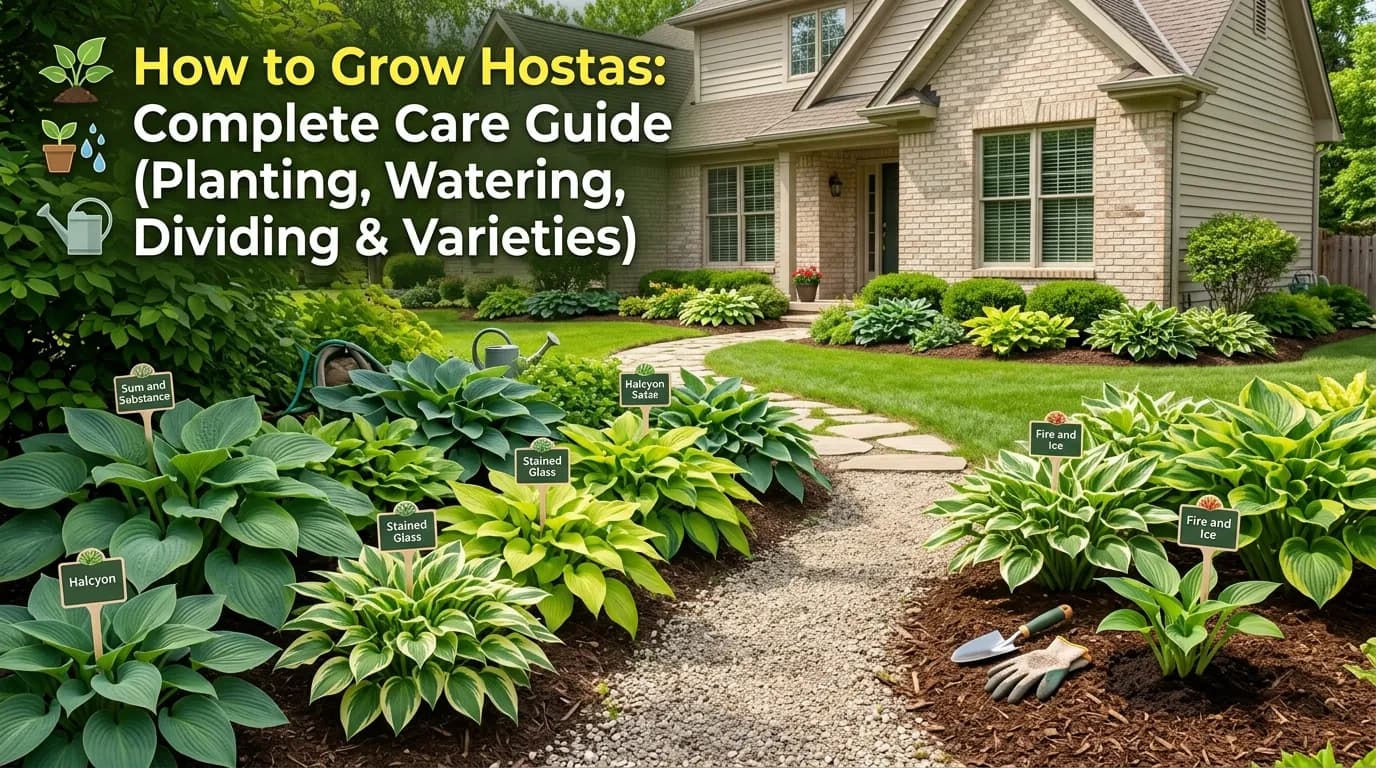
Hostas are the most popular shade perennial in North America — and for good reason. A single well-sited clump of 'Sum and Substance' can anchor an entire shade garden. A drift of blue-leaved 'Halcyon' hostas along a woodland path creates a cooling, elegant effect that almost nothing else can replicate in low light. And unlike most garden plants, hostas actually prefer the challenging conditions most gardeners deal with: deep shade, moist soil, and clay-heavy beds that defeat sun-lovers.
But "hostas are easy" doesn't mean "hostas need nothing." The difference between a struggling, slug-eaten, washed-out planting and a lush, vibrant hosta bed comes down to a handful of care decisions made at planting time — and a few simple seasonal routines. This guide covers everything.
Understanding What Hostas Actually Need
Hostas are woodland plants native to Japan, Korea, and China. In their natural habitat, they grow under the dappled canopy of deciduous forests — getting filtered light in summer, full light in spring before the trees leaf out, consistent soil moisture from forest duff, and cold winters that trigger dormancy.
This tells you exactly what to give them:
- Light: Dappled shade to full shade (most varieties). Morning sun with afternoon shade works beautifully for many. Avoid harsh afternoon sun, which bleaches gold varieties and burns thin-leafed types.
- Soil: Consistently moist but well-draining. They hate dry soil in summer and standing water in winter. Rich loam with plenty of organic matter is ideal.
- Climate: Cold-hardy in USDA zones 3–9. They need winter cold — hostas in frost-free climates (zone 10+) struggle. Full dormancy in winter actually improves next-season vigor.
- Spacing: Give them room. Most gardeners plant hostas too close together. A mature 'Empress Wu' can reach 6 feet wide. A 'Blue Angel' can be 4 feet. Check mature size on the tag — not just the current pot size.
The most common hosta mistake? Planting sun-tolerant varieties in deep shade and shade-only varieties in sun, then wondering why they look terrible. Always match variety to actual light conditions.
How to Plant Hostas Correctly
Timing: Spring or early fall. Spring planting lets roots establish before summer heat. Fall planting (4–6 weeks before hard frost) also works well — hostas are rugged and will settle in quickly.
Site prep:
- 1Loosen soil 12–15 inches deep — hostas form substantial root systems
- 2Work in 3–4 inches of compost to improve drainage and add organic matter
- 3Test soil pH — hostas prefer 6.0–7.5 (slightly acidic to neutral)
- 4Avoid planting directly under trees with aggressive surface roots (maples, Norway spruces) — they'll compete for water and win
Planting depth: This is critical. Set the crown (where roots meet leaves) at or just slightly below soil level — never more than 1 inch deep. Too deep, and the plant struggles to emerge; too shallow, and frost heave can dislodge it.
Spacing: Divide mature width by 2 and use that as your planting distance from neighbors. For a variety that matures to 36 inches wide, plant 18 inches from the next plant. They look sparse at first and fill in dramatically over 2–3 years.
After planting: Water thoroughly, apply 2–3 inches of bark mulch (keeping mulch away from the crown), and water weekly until established.
Watering & Moisture: The Single Biggest Care Factor
Hostas are not drought-tolerant. In summer heat, inadequate moisture shows up quickly as brown-tipped leaves, wilting by afternoon, and early yellowing. The best hostas grow in soil that stays consistently moist — not soggy, not dry.
Watering guidelines by season:
| Season | Frequency | Notes |
|---|---|---|
| Spring (establishing) | Every 2–3 days | Roots are growing fast |
| Summer | 1–2 times/week | More in heat waves |
| Fall | Every 7–10 days | Tapering as plant goes dormant |
| Winter | None | Plant is fully dormant underground |
Mulch is your best watering tool. A 3-inch layer of shredded bark mulch maintains soil moisture, moderates soil temperature, and suppresses weeds. Reapply each spring as it breaks down.
Drip irrigation works exceptionally well for hostas — it delivers moisture directly to the root zone without wetting foliage, which reduces slug and fungal disease pressure.
Signs of underwatering: Leaf margins turn brown and papery. Plants wilt by midday and don't fully recover overnight. New leaves emerge smaller than expected.
Signs of overwatering/poor drainage: Crown rot, mushy stems at the base, yellowing in early summer. If you see this, improve drainage before replanting.
Fertilizing Hostas for Maximum Foliage
Hostas are moderate feeders. They respond well to fertilizer but don't need heavy applications.
Best approach: Apply a balanced slow-release granular fertilizer (10-10-10 or 14-14-14) in early spring as shoots emerge. Work it lightly into the soil around the drip line — not touching the crown. One application is usually sufficient for the season.
Optional: A second application of water-soluble fertilizer (like Miracle-Gro All Purpose) in early June can boost size in poor soils. Stop fertilizing by July 4th — late feeding pushes soft new growth that's vulnerable to early frost.
Avoid: High-nitrogen fertilizers (like lawn fertilizers) applied near hostas. They boost leaf growth but can attract aphids and make foliage more succulent — which slugs love.
Compost top-dress: A 1-inch top-dress of finished compost each spring, worked into the mulch layer, is the single best long-term investment you can make. It improves soil structure, feeds beneficial microbes, and slowly releases nutrients all season.
Slug & Pest Control: The #1 Problem with Hostas
Slugs are the primary hosta pest — and in moist, shaded gardens they can completely devastate plantings. Young growth in spring is most vulnerable; mature, thick-leaved varieties are more resistant.
Slug control strategies (from most to least effective):
- 1Iron phosphate bait (Sluggo, Escar-Go) — safe around pets, children, and wildlife. Apply in early spring before slugs damage begins. Reapply after rain.
- 2Choose slug-resistant varieties — thick, heavily textured (corrugated or seersucker) leaves are harder to damage. 'Sum and Substance', 'Krossa Regal', 'Big Daddy', and most blue-leaved types are more resistant than thin-leaved green or gold varieties.
- 3Reduce hiding spots — slugs hide under boards, rocks, and thick mulch during the day. Keep mulch away from crowns and clear debris.
- 4Diatomaceous earth — sprinkle around plants in dry conditions; loses effectiveness when wet.
- 5Beer traps — effective but labor-intensive; require frequent emptying.
Other pests:
- Deer: Hostas are notorious deer candy. In deer country, use repellent sprays (Bobbex, Deer Out) or plant deer-resistant companions around them. Alternatively, accept losses or install fencing.
- Voles: May eat roots in winter. Hardware cloth cages around newly planted divisions help.
- Foliar nematodes: Cause brown streaking between veins; more common in humid climates. No chemical control — remove and destroy affected plants.
When and How to Divide Hostas
Hostas don't need dividing as often as most perennials — but dividing every 4–5 years keeps them vigorous and gives you free plants to expand the garden.
When to divide: Early spring, as "spikes" emerge from the ground. You can see exactly where to cut between the emerging crowns. Fall division (6+ weeks before frost) also works.
How to divide:
- 1Use a sharp spade to dig the entire clump, starting 6 inches out from the crown
- 2Lift the root ball and set it on a tarp
- 3Cut through the crown with a sharp knife or spade, ensuring each division has 2–3 eyes (growth points) and a substantial root section
- 4Replant divisions immediately at the correct depth, water thoroughly, and mulch
Divided hostas often look sparse for a season while they re-establish. Don't panic — they'll recover and often perform better than before.
Planning a Shade Garden Around Hostas
Hostas work best as part of a layered shade garden — not just planted alone. Consider pairing them with:
- Astilbe — feathery flower plumes in pink, red, and white; blooms when hostas are at peak foliage size
- Ferns (Japanese painted fern, ostrich fern, autumn fern) — texture contrast
- Heuchera/Coral Bells — colorful foliage in burgundy, caramel, lime; fills foreground gaps
- Bleeding heart (Dicentra) — spring blooms that fade as hostas expand to fill the space
- Hydrangeas — tall backdrop; pair beautifully with hostas in partial shade settings
- Hellebores — evergreen in mild climates, winter/spring bloom; fills the late-season gap
Want a cohesive design plan for your shade garden? Try Yardcast's AI design tool — upload photos of your shaded areas and get three designer-quality landscape concepts with plant lists tailored to your exact region and light conditions.
Best Hosta Varieties by Size & Use
Miniature Hostas (under 6" tall — for containers, edging, rock gardens)
| Variety | Color | Special Notes |
|---|---|---|
| 'Blue Mouse Ears' | Blue-green | Most popular mini; slug-resistant |
| 'Pandora's Box' | White-centered green | Striking contrast |
| 'Tiny Tears' | Dark green | Cascading habit; great for walls |
Small Hostas (6–12" — for borders, containers, front of bed)
| Variety | Color | Special Notes |
|---|---|---|
| 'Patriot' | White-margined green | Very vigorous; classic look |
| 'Golden Tiara' | Gold-margined green | Reliable bloomer; tolerates sun |
| 'Striptease' | Gold-centered green/white | Unusual tricolor effect |
Medium Hostas (12–24" — most versatile garden size)
| Variety | Color | Special Notes |
|---|---|---|
| 'Halcyon' | Blue-silver | Slug-resistant; gold in fall |
| 'Francee' | White-edged green | Classic, very reliable |
| 'Fire and Ice' | White-centered green | Reverse of Patriot; stunning |
Large Hostas (24–36" — focal points, mass planting)
| Variety | Color | Special Notes |
|---|---|---|
| 'Elegans' | Heavily corrugated blue | Slug-resistant; architectural |
| 'June' | Gold-centered blue | Most popular hosta of last decade |
| 'Sum and Substance' | Chartreuse-gold | Among the largest; slug-resistant |
Giant Hostas (36"+) — statement specimens
| Variety | Color | Special Notes |
|---|---|---|
| 'Empress Wu' | Dark green | Largest hosta; 6+ feet wide mature |
| 'Blue Angel' | Blue-green | 4–5 feet wide; slug-resistant |
| 'Sagae' | Blue-green gold edge | Award-winning; stunning structure |
Seasonal Care Calendar
Early Spring: Remove winter mulch as shoots emerge. Apply slow-release fertilizer. Apply iron phosphate slug bait. Divide if needed.
Late Spring–Early Summer: Water consistently. Top-dress with compost. Watch for slug damage; treat if needed.
Midsummer: Deadhead flower scapes after blooming (optional — scapes can be left for texture). Maintain even soil moisture. Apply summer mulch to reduce evaporation.
Fall: Enjoy fall color (many hostas turn gold or yellow). Allow foliage to die back naturally. After hard frost, cut dead foliage to ground. Apply fresh mulch over crowns for winter protection in zones 3–4.
Winter: Hostas are fully dormant. No care needed. Do not remove emerging spring "spikes" that appear in early warm spells — they're more frost-hardy than they look.
Mid-Season Check: Is Your Shade Garden Working?
If your hostas are looking sparse, washed-out, or smaller than expected, the fix is usually one of three things: inadequate moisture, too much sun, or slug damage. Before assuming a variety problem, rule out those three causes first.
And if you're ready to design a complete shade garden — with hostas as the anchor and layers of complementary plants — try Yardcast free. Upload your yard photos, describe your vision, and get three AI-generated landscape designs with regional plant lists, seasonal interest guides, and cost estimates. It's free to preview.
FAQ: How to Grow Hostas
<script type="application/ld+json">
{
"@context": "https://schema.org",
"@type": "FAQPage",
"mainEntity": [
{
"@type": "Question",
"name": "How much sun do hostas need?",
"acceptedAnswer": {
"@type": "Answer",
"text": "Most hostas prefer dappled shade to full shade (2–4 hours of indirect light). Many tolerate morning sun with afternoon shade, especially in cooler climates. Gold and chartreuse varieties can handle more sun; blue varieties need more shade. Avoid harsh afternoon sun in zones 6–9, which causes leaf scorch and bleaching."
}
},
{
"@type": "Question",
"name": "How often should you water hostas?",
"acceptedAnswer": {
"@type": "Answer",
"text": "Water hostas 1–2 times per week in summer, more during heat waves. They prefer consistently moist soil — not wet, not dry. Mulching with 3 inches of shredded bark greatly reduces watering frequency by maintaining soil moisture. Brown leaf tips are the first sign of underwatering."
}
},
{
"@type": "Question",
"name": "When do hostas come back in spring?",
"acceptedAnswer": {
"@type": "Answer",
"text": "Hostas emerge in spring when soil temperatures reach about 50°F. Timing varies by region: February–March in zones 7–8, April in zones 5–6, May in zones 3–4. They emerge as tightly furled 'spikes' that unfurl into leaves over 2–3 weeks. Don't worry if emergence is late — they're coming."
}
},
{
"@type": "Question",
"name": "How do you stop slugs from eating hostas?",
"acceptedAnswer": {
"@type": "Answer",
"text": "Iron phosphate bait (Sluggo, Escar-Go) is the most effective and safest treatment — apply in early spring before damage starts and reapply after rain. Also: choose slug-resistant varieties (thick, corrugated, or blue-leaved types), reduce hiding spots near plants, and use drip irrigation to keep foliage dry."
}
},
{
"@type": "Question",
"name": "How do you divide hostas?",
"acceptedAnswer": {
"@type": "Answer",
"text": "Divide hostas in early spring as growth spikes emerge, or in early fall. Dig the entire clump, set it on a tarp, and cut through the crown with a sharp knife or spade — each division needs 2–3 eyes and a good root section. Replant immediately at the same depth, water well, and mulch. Divided plants may look sparse for one season before rebounding."
}
},
{
"@type": "Question",
"name": "What is the best fertilizer for hostas?",
"acceptedAnswer": {
"@type": "Answer",
"text": "A balanced slow-release granular fertilizer (10-10-10 or 14-14-14) applied once in early spring is ideal. Work it lightly into the soil around the drip line, not touching the crown. An annual top-dress of 1 inch of finished compost improves long-term soil health. Stop fertilizing by mid-July to avoid pushing soft growth before frost."
}
},
{
"@type": "Question",
"name": "Do hostas grow in full shade?",
"acceptedAnswer": {
"@type": "Answer",
"text": "Many hosta varieties thrive in full shade (deep shade under a tree canopy, north-facing beds, etc.). Best full-shade performers include 'Halcyon', 'Blue Angel', 'Elegans', 'Krossa Regal', and 'Francee'. Avoid gold or chartreuse varieties in full shade — they need some light to develop their best color."
}
},
{
"@type": "Question",
"name": "When should you cut hostas back?",
"acceptedAnswer": {
"@type": "Answer",
"text": "Cut hostas to the ground in fall after the first hard frost kills the foliage — usually late October to November depending on your zone. Remove all dead foliage from the garden (do not compost — it can harbor slug eggs and disease). In zones 3–5, apply fresh mulch over crowns after cutting back for winter protection."
}
}
]
}
</script>