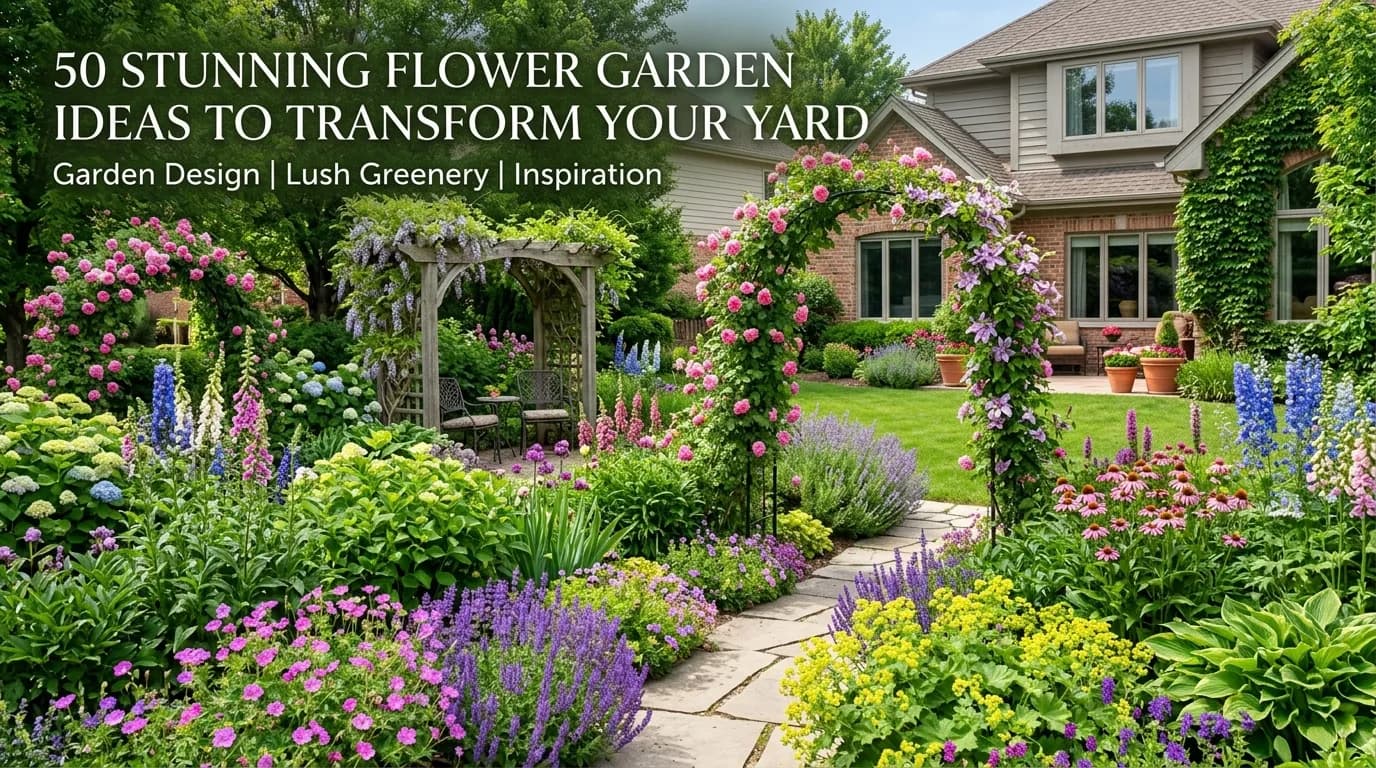
A beautiful flower garden is one of the fastest ways to bring life, color, and personality to your outdoor space. Whether you have a sprawling backyard, a narrow side strip, or just a few square feet by the front steps, flowers can transform it. Here are 50 inspiring flower garden ideas — organized by style, budget, and space — to help you design your dream garden.
Design by Style
1. Classic English Cottage Garden
Packed with roses, foxglove, hollyhock, delphiniums, and lavender, a cottage garden feels romantic and abundant. Don't overthink it — let plants spill over paths and tumble onto each other. The slightly "overgrown" look is the point. Use a mix of perennials and self-seeding annuals so the garden evolves year to year.
2. Modern Minimalist Flower Garden
Choose one or two bold species — ornamental alliums and black-eyed Susans, for example — and plant them in large drifts with clean gravel or decomposed granite between. The contrast between architectural plants and negative space creates striking visual impact without complexity.
3. Wildflower Meadow
Scatter a mix of native wildflower seeds across a prepared area. Cornflowers, poppies, cosmos, coneflowers, and native grasses create a pollinator paradise that looks effortless. Mow once in late fall and let it reseed. Cost: under $30 for seed, and it gets more beautiful every year.
4. Monochromatic Color Theme
Choose a single color family — all-white, all-yellow, or all-purple — and use different plants within that palette. An all-white garden with phlox, dahlias, shasta daisies, and white salvia reads as sophisticated and serene. All-yellow with rudbeckia, sunflowers, yarrow, and daylilies feels sunny and energetic.
5. Rainbow Gradient Garden
Arrange flowers by color in a spectrum — red through orange, yellow, green, blue, purple. Use zinnias, marigolds, coneflowers, and ageratum. This works best in a long, narrow border viewed from the front.
6. Four-Season Flower Garden
Plan for year-round color: Spring — tulips, daffodils, hellebores; Summer — coneflowers, dahlias, black-eyed Susans; Fall — asters, rudbeckia, sedums; Winter — ornamental kale, winter jasmine, witch hazel. Transition zones keep the garden interesting in every season.
Design by Space
7. Corner Flower Garden
Use your sunniest corner to create a layered triangle planting: tall flowers (Joe Pye weed, tall salvias) at the back, medium flowers (coneflowers, bee balm) in the middle, low edging plants (catmint, creeping phlox) up front. Corners feel neglected but they're perfect for anchoring the landscape.
8. Strip Garden Along a Fence
A 3–4 foot deep border along a fence is one of the most impactful flower garden improvements you can make. Plant tall flowers (hollyhocks, climbing roses) against the fence, medium flowers in the middle, and low annuals at the edge. This adds depth and privacy while softening hardscaping.
9. Raised Flower Bed
Build a 12–18 inch raised bed with cedar or stone. Fill with quality loamy soil. The elevated height improves drainage, warms soil faster in spring, and brings flowers closer to eye level on a porch or deck. Raised beds are ideal for bulbs — perfect drainage prevents rot.
10. Front Walkway Flower Border
Line both sides of your front walkway with a continuous flower border: lavender, salvia, and catmint on one side mirror the other. This creates a welcoming "gauntlet" of color and fragrance leading to your door. Even a 12-inch-deep border makes a huge difference.
11. Around-the-Mailbox Garden
Plant a small circle of flowers around your mailbox post: daylilies, salvia, and ornamental grasses with annual petunias for color. This surprisingly overlooked spot is one of the first things neighbors and passersby see. See our full mailbox landscaping guide →
12. Patio Container Flower Garden
No ground? No problem. Combine three plants per large container: a thriller (tall, dramatic center — canna, salvia), a filler (mid-height bushy plant — calibrachoa, impatiens), and a spiller (trailing edge plant — sweet potato vine, lobelia). Repeat the same combinations in multiple containers for cohesion.
Planting Strategies
13. The Thriller-Filler-Spiller Rule
This classic container design principle works equally well in ground beds. Thriller = one tall focal point per cluster. Filler = 3–5 medium-height plants around it. Spiller = low edge plants that soften the bed line. It creates instant depth and interest.
14. Plant in Odd Numbers
Groups of 3, 5, or 7 of the same plant look intentional and artistic. Even numbers feel formal and rigid. Odd numbers feel natural, like a plant has spread itself through the bed.
15. Layer by Height (Back to Front)
Always plant tallest in the back (or center of an island bed), descending to the shortest at the edges. This lets every plant be seen and prevents taller plants from shading shorter ones. Aim for at least three distinct height levels.
16. Repetition for Cohesion
Repeat the same plant or color at intervals through a long border. If you use purple salvia at the left end, use it again at the center and right. This "rhythm" gives the eye a path to follow and makes the garden feel designed rather than random.
17. Use Foliage as Filler
Between blooming periods, foliage carries the garden: hostas, ornamental grasses, lamb's ear, and coral bells provide color and texture all season even when not flowering. An all-bloom garden has gaps; a garden with strong foliage always looks full.
Low-Maintenance Flower Gardens
18. Native Perennial Garden
Native wildflowers like coneflowers (Echinacea), black-eyed Susans (Rudbeckia), butterfly weed (Asclepias), and blazing star (Liatris) are adapted to your region's rainfall and soil. Once established (year 2–3), they need almost no irrigation, fertilizer, or pest control.
19. Bulb-Based Spring Garden
Plant tulips, daffodils, alliums, and hyacinths in fall for an explosion of spring color that requires almost no effort. Bulbs essentially plant-and-forget: they come back for 3–7 years before needing division. Daffodils are deer-resistant. Alliums add architectural interest in early summer.
20. Self-Seeding Annual Garden
Some annuals drop seeds and return on their own: cosmos, larkspur, bachelor's buttons, California poppy, and borage. Plant once, let them go to seed, and they'll fill in year after year. The mix shifts slightly each year, which keeps it feeling fresh.
21. Perennial-Heavy Design (70/30 Rule)
Aim for 70% perennials (return every year) and 30% annuals (for season-long color). This gives you reliable structure and mass with spots to refresh color seasonally without replanting everything.
Flower Garden by Budget
22. Under $50: Seed-Started Flower Garden
Start from seed: zinnias, sunflowers, cosmos, marigolds, and nasturtiums germinate quickly and are nearly foolproof. A packet of each costs $2–$5. With a $50 budget you can plant a large, colorful garden entirely from seed.
23. Under $200: Perennial Foundation
Spend $150–$200 on a core of 15–20 perennials (coneflowers, black-eyed Susans, salvia, ornamental grasses, daylilies) that will anchor the garden for years. Fill in with $20–$30 of annual seed for the first season while perennials establish.
24. Under $500: Established Garden with Structure
Add hardscaping: a simple steel edging border, stepping stones, or a small raised bed frame. Invest in larger, faster-establishing perennials (1-gallon pots vs. 4-inch starts). Add mulch throughout to suppress weeds and retain moisture.
Pollinator Flower Gardens
25. Bee Garden
Bees prefer blue, purple, and yellow flowers with simple open shapes. Best plants: lavender, borage, phacelia, sunflowers, coneflowers, catmint, and anise hyssop. Group plants in clusters of at least 3 sq ft — bees need enough flowers to make foraging efficient.
26. Butterfly Garden
Butterflies need nectar plants AND host plants. Nectar favorites: milkweed, coneflowers, lantana, butterfly bush, verbena. Host plants (where they lay eggs): milkweed for monarchs, parsley/dill for swallowtails, fennel for black swallowtails. Include a shallow water dish with stones.
27. Hummingbird Garden
Hummingbirds are attracted to red and orange tubular flowers: salvia, trumpet vine, coral honeysuckle, bee balm, and cardinal flower. Plant in layers so blooms are at different heights. Include a feeder to supplement natural nectar.
Fragrant Flower Gardens
28. Evening Fragrance Garden
Night-blooming jasmine, moonflower, four-o'clocks, and petunias release strongest fragrance in the evening. Plant near a patio or bedroom window. Evening fragrance gardens reward you when you're actually outside — after work, not midday.
29. Cut Flower Garden
Design a dedicated cutting garden so you always have fresh flowers indoors. Best cut flowers: dahlias, zinnias, lisianthus, snaps, sunflowers, rudbeckia, and sweet peas. Plant in rows for easy harvesting. The more you cut, the more most produce.
Getting Started with AI Design
Planning a flower garden layout — figuring out which plants go where, how tall they'll be, and how colors will flow — is genuinely hard. That's where Yardcast's AI landscape design tool helps: you describe your space, style, and preferences, and get a custom visual concept showing exactly how your flower garden could look.
👉 [Generate your free flower garden preview →](/redesign)
It takes 60 seconds and gives you a starting point that would otherwise cost hundreds in consultation fees.
Flower Garden Maintenance Tips
31. Deadheading for Continuous Bloom
Removing spent flowers (deadheading) redirects the plant's energy from seed production to making more flowers. Most annuals and many perennials bloom for weeks longer when consistently deadheaded. Exceptions: plants you want to self-seed (let some go to seed) or those with ornamental seed heads (rudbeckia, echinacea).
32. Divide Perennials Every 3–5 Years
When perennials form large clumps, dig them up in fall or early spring, split the root ball, and replant. This keeps plants vigorous, increases your plant count for free, and prevents the center of clumps from dying out.
33. Mulch Everything
A 2–3 inch layer of shredded bark or leaf mulch suppresses weeds, retains moisture (reducing watering by 30–50%), and improves soil as it decomposes. Refresh annually.
34. Water at the Base, Not the Foliage
Wet foliage promotes fungal disease. Use drip irrigation or soaker hoses, or water with a wand at soil level. Water deeply 1–2 times per week rather than lightly every day to encourage deep root growth.
Regional Flower Garden Favorites
Cool Climates (Zones 3–5)
Best bets: coneflowers, black-eyed Susans, peonies, daylilies, hostas, astilbe, bee balm. These are all cold-hardy and bloom reliably despite short summers.
Mid-Atlantic & Southeast (Zones 6–8)
Extend your season with early spring bulbs, summer heat-lovers (zinnias, lantana, black-eyed Susans), and fall asters. This zone's long season is ideal for multi-season gardens.
Southwest & California (Zones 8–11)
Focus on drought-tolerant beauties: California poppy, penstemon, agastache, salvia, and native wildflowers. Once established, many need no supplemental water.
Pacific Northwest (Zones 7–9)
The cool, moist climate is ideal for dahlias, lupines, foxgloves, and rhododendrons. Summer dry spells require irrigation but the mild winters allow fall planting of spring bulbs for spectacular results.
Quick Reference: Beginner-Friendly Flowers
| Flower | Sun | Water | Bloom Time | Cost/6-pack |
|---|---|---|---|---|
| Zinnia | Full | Low | Summer–Fall | $4 |
| Marigold | Full | Low | Summer–Fall | $4 |
| Cosmos | Full | Low | Summer–Fall | $3 seed |
| Coneflower | Full | Low | Summer–Fall | $8 |
| Black-eyed Susan | Full | Low | Summer–Fall | $7 |
| Salvia | Full | Low | Summer–Fall | $6 |
| Catmint | Full | Low | Spring–Summer | $7 |
| Lavender | Full | Very Low | Summer | $8 |
| Impatiens | Shade | Med | Summer–Fall | $4 |
| Astilbe | Part Shade | Med | Summer | $9 |
A great flower garden starts with a plan. Yardcast's free AI design tool takes your space, style preferences, and regional conditions and generates a custom design concept in under 60 seconds — no landscaping experience required.
[→ Start your free flower garden design](/redesign)