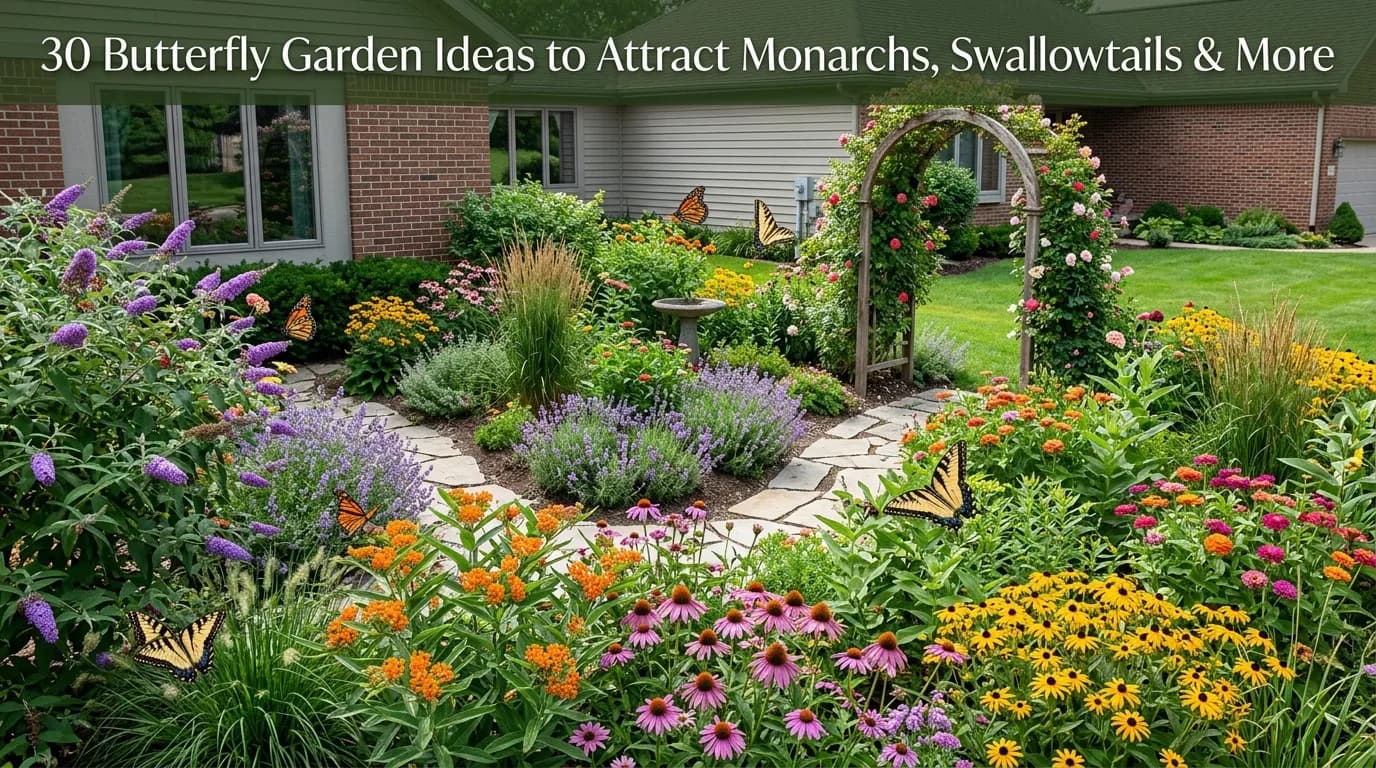
Butterfly gardens are having a moment — and for good reason. Between monarch populations declining 80% over the last two decades and the rise of pollinator-friendly landscaping, more homeowners are deliberately designing their yards to support butterfly life cycles.
The best part? You don't need an acre or a horticulture degree. A well-designed butterfly garden can fit in a 4×8 ft raised bed. You just need to know which plants do the work — and how to arrange them.
Here are 30 butterfly garden ideas, organized from easiest to most ambitious, with specific plant recommendations, layout tips, and regional adaptations.
Why Butterfly Gardens Work (and Why Lawns Don't)
Standard American lawns — monoculture turf grass — provide almost zero value to butterflies. No nectar, no host plants, no shelter. Butterflies pass over lawns looking for food.
The moment you add even a small patch of the right plants, you create a beacon. Butterflies have excellent vision for color (especially purple, yellow, orange, and red) and can detect flower scents from a quarter mile away.
You don't have to eliminate your lawn. Converting even 10–15% of lawn area to a butterfly-friendly planting bed makes a measurable difference to local populations. Think of it as creating a habitat island in a desert.
The 7 Foundation Plants Every Butterfly Garden Needs
Before the 30 ideas, here's the non-negotiable plant list. These are the species that do the heavy lifting regardless of your region:
| Plant | Type | Butterflies Attracted | Sun |
|---|---|---|---|
| Common Milkweed | Host + Nectar | Monarchs (required) | Full sun |
| Butterfly Weed (A. tuberosa) | Host + Nectar | Monarchs, Fritillaries | Full sun |
| Purple Coneflower (Echinacea) | Nectar | Swallowtails, Fritillaries, Skippers | Full sun |
| Black-eyed Susan | Nectar | Painted Ladies, Fritillaries, Sulphurs | Full sun |
| Lantana | Nectar | Nearly all species | Full sun |
| Zinnias | Nectar | Swallowtails, Monarchs, Painted Ladies | Full sun |
| Joe Pye Weed | Nectar | Swallowtails, Monarchs, Fritillaries | Full sun to part shade |
Plant at least 4 of these 7 and you'll see butterflies. Plant all 7 and you'll have a butterfly garden that attracts 20+ species.
30 Butterfly Garden Ideas
Beginner Ideas (Low Effort, High Impact)
1. The Milkweed Patch
Plant 6–12 milkweed plants in a 4×4 area. Monarchs will find it within days during migration. Include common milkweed (Asclepias syriaca), butterfly weed (A. tuberosa), and swamp milkweed (A. incarnata) for three-season interest. This single change does more for monarch conservation than anything else in this guide.
2. The Zinnia Border
Zinnias are the single best butterfly nectar plant per dollar spent. A $4 seed packet fills a 10-ft border. Sow directly in warm soil after last frost, in full sun. Deadhead weekly for nonstop bloom from June through frost. Swallowtails, monarchs, and painted ladies will never leave.
3. The Container Butterfly Garden
No yard? Use containers. Three 14-inch pots with dwarf milkweed, zinnias, and lantana on a sunny patio will attract butterflies reliably. Elevate the containers on a pot stand for better air circulation and visibility.
4. A Puddling Station
Male butterflies congregate at "puddling stations" — shallow wet soil where they extract minerals and salts. Fill a shallow tray or birdbath with coarse sand, add water, and press a few flat rocks into it for perches. Bury it slightly in the garden so it looks natural. Cost: under $15.
5. Flat Basking Stones
Butterflies are cold-blooded and need to warm up each morning before flying. Flat stones (flagstone, fieldstone, or dark pavers) absorb heat and give butterflies a place to sun themselves. Integrate them into your garden beds where they'll get morning sun.
6. Lantana in Containers
Lantana is one of the best tropical nectar plants for butterflies — it blooms nonstop in heat and is irresistible to swallowtails and monarchs. In zones 7 and below, treat as an annual or overwinter indoors. Grow in large containers for maximum bloom. Colors: orange, red, yellow, and bi-color varieties.
7. A Native Aster Drift
Native asters (Symphyotrichum spp.) bloom September through frost — exactly when migrating monarchs need nectar most. Plant a drift of 9–12 plants in full sun to part shade. Requires zero maintenance once established. Essential for fall butterfly gardens.
Intermediate Ideas (A Weekend of Work)
8. The Butterfly Border
A 3-ft deep border along a fence or wall, 12–20 ft long, planted with a wave of zinnias (front), coneflowers and black-eyed Susans (middle), and Joe Pye weed or ironweed (back). This provides layered nectar at multiple heights and bloom times from June through October.
9. The Swallowtail Herb Garden
Black swallowtails lay eggs on carrot-family plants (Apiaceae). Plant dill, fennel, parsley, and bronze fennel in a dedicated 4×4 bed and allow caterpillars to eat — that's the point. Add a few nearby nectar flowers and you have a self-contained swallowtail nursery. Bonus: harvest the herbs before the caterpillars do.
10. A Meadow Patch
Convert a 10×10 ft section of lawn to a wildflower meadow. Seed mix: coneflower, black-eyed Susan, native asters, oxeye daisy, and butterfly weed. Mow once in early spring. By year 2, it requires zero maintenance and hosts dozens of butterfly and moth species. Cost: $15–$30 in seed.
11. The Monarch Waystation
Register your garden as an official Monarch Waystation through Monarch Watch (monarchwatch.org). Requirements: milkweed + nectar plants. The certification is free and the habitat difference is real — registered waystations create a corridor of safe habitat along the migration route.
12. A Butterfly Shelter
Butterflies overwinter as adults (certain species like mourning cloaks and question marks), chrysalises, or eggs in leaf litter. Leave a pile of leaves in a corner of your yard untouched through winter. Add a small "butterfly house" (hollow box with narrow vertical slits) near the garden — evidence on effectiveness is mixed, but they look charming and don't hurt.
13. The Violet Carpet
Common blue violets (Viola sororia) are host plants for fritillary butterflies — great spangled, meadow, and variegated fritillaries all depend on violets exclusively. Let violets naturalize in a semi-shaded border under trees. They're free (spread themselves), require no maintenance, and turn a "weedy" corner into butterfly habitat.
Design Your Butterfly Garden with AI →
Not sure how to fit all this into your specific yard? Yardcast generates 3 landscape design options for your actual outdoor space in 60 seconds. Upload a photo, describe your goals (butterfly habitat, low maintenance, specific style), and get a complete plant plan with quantities, spacing, and costs. Perfect for planning a butterfly garden that works with your existing landscape.
14. Milkweed + Coneflower Island Bed
An oval island bed (8×12 ft) in the center of a lawn with milkweed at the center, coneflowers around it, and a ring of black-eyed Susans at the edges. Edge with steel landscape edging for a clean line. This creates a visible focal point and a butterfly landing pad visible from inside the house.
15. The Succession Planting Strategy
Plan your garden to bloom in three waves: early (May–June): phlox, catmint, baptisia; mid (July–August): coneflowers, zinnias, Joe Pye weed; late (September–October): native asters, goldenrod, sedum 'Autumn Joy'. This ensures nectar availability from spring through fall migration.
16. A Purple Pollinator Patch
Butterflies strongly prefer purple and violet flowers. Build a monochromatic purple border: lavender (front), salvia 'May Night' (middle), ironweed or native asters (back). Easy to maintain, stunning in flower, and highly attractive to swallowtails and skippers.
17. Native Grasses + Wildflowers
Combine little bluestem, switchgrass 'Shenandoah', or prairie dropseed with native wildflowers. The grasses provide structure, shelter, and overwintering habitat for caterpillars and pupae. This combination creates a 4-season garden with almost zero maintenance after year 1.
18. The Goldenrod Stand
Goldenrod (Solidago spp.) blooms in August–October and is a critical late-season nectar source. It's unfairly maligned — it does NOT cause hay fever (that's ragweed). Plant a mass of 9–15 plants in a sunny area. Fall butterflies, especially monarchs fueling up for migration, will cover it completely.
Advanced Ideas (Multi-Season Gardens)
19. A Four-Season Butterfly Garden
Requires planning across all four seasons: spring (violets, phlox, baptisia), summer (milkweed, coneflowers, zinnias, Joe Pye weed), fall (asters, goldenrod, sedum), winter (seed heads left standing provide food for birds and shelter for overwintering insects). A well-designed four-season butterfly garden looks intentional year-round, not just in July.
20. A Rain Garden for Butterflies
Low spots that collect water? Install a rain garden with swamp milkweed, ironweed, Joe Pye weed, and cardinal flower — all moisture-tolerant plants that butterfly love. Rain gardens handle drainage problems while creating habitat. Two problems solved simultaneously.
21. A Shaded Butterfly Corridor
Shade-tolerant butterfly plants are fewer but exist: spicebush (host for spicebush swallowtails), wild ginger, trillium, native columbine, and Virginia bluebells. Create a shaded woodland path edged with these plants. Spicebush swallowtails in particular need shade-loving host plants and are otherwise difficult to attract.
22. The Native Tree Layer
Host plant diversity increases with native trees and shrubs. White oak hosts over 500 moth and butterfly species. Tulip poplar hosts tiger swallowtails. Wild black cherry hosts 450+ species. Spicebush hosts spicebush swallowtails. Plant even one native tree and you multiply your garden's value 10x for butterfly populations.
23. A Butterfly Observation Garden
Design specifically for watching: install a curved stone path through the garden (butterflies are easy to photograph close-up if you move slowly), place a garden bench at the edge facing south (the warmest exposure), and site the bench 3 feet from your largest nectar plant groupings. Add a camera-friendly open background (solid fence or hedge) behind the main butterfly plants.
24. Plug in the Gaps
If you have existing garden beds, identify bloom gaps (weeks with no flowers) and fill them with one targeted plant per gap. Late May gap? Add catmint. August gap? Add tall garden phlox. Late September gap? Add native asters. Plugging bloom gaps costs $15–$30 in plants and makes your whole existing garden more butterfly-friendly instantly.
Regional Butterfly Garden Picks
Southeast (Zones 7–9): Firebush, native coral honeysuckle, passion vine (Gulf fritillary host), pipevine (pipevine swallowtail host), tropical milkweed (annual).
Pacific Coast (Zones 8–10): California poppy, sticky monkeyflower, toyon, native buckwheats (critical host for hairstreak butterflies in CA), blue wild rye.
Midwest/Great Plains (Zones 4–6): Common milkweed, prairie blazing star, wild bergamot, compass plant, prairie clovers (host for several sulphurs and blues).
Northeast (Zones 4–6): Native asters, goldenrod, spicebush, wild columbine, common milkweed, violet (fritillary host).
Southwest (Zones 7–10): Desert willow, senna (host for sulphur butterflies), desert marigold, blackfoot daisy, native salvias.
The #1 Mistake in Butterfly Gardens
Using pesticides — even "organic" or "natural" ones.
Neem oil, insecticidal soap, pyrethrin — all of these kill butterfly larvae. If you spray your garden, you will kill caterpillars before they pupate. Aphids on your milkweed? Ignore them (or spray them off with water only). Caterpillars eating your parsley? That's the garden working correctly.
Accept some leaf damage as success, not failure.
Ready to Design Your Butterfly Garden?
A butterfly garden that actually works needs to fit your specific yard — your sun exposure, space, hardiness zone, and existing plants. Yardcast generates 3 custom landscape designs based on photos of your actual yard. Tell it you want a butterfly or pollinator garden, and it builds a plant plan with specific species, quantities, spacing, and costs tailored to your space.
[Generate My Free Butterfly Garden Preview →](/redesign)
Upload your yard photos, answer 4 quick questions, and see your space transformed in 60 seconds. The design includes a full plant list, phased cost breakdown, and a printable PDF you can take to any nursery.
Your yard can be a monarch waystation, a swallowtail nursery, and a painted lady pit stop — all at once. You just need the right plan.