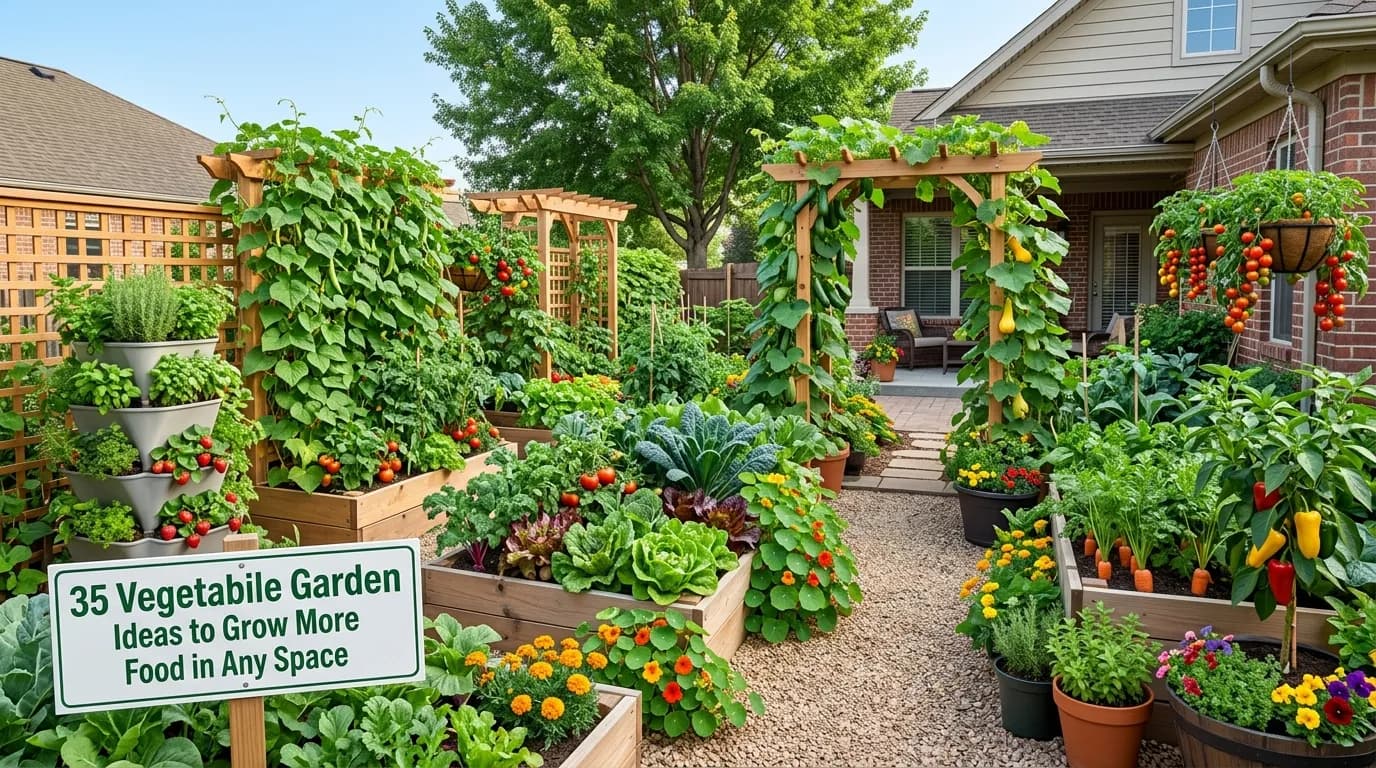
Growing your own vegetables is one of the most rewarding things you can do with outdoor space. Whether you have a quarter-acre backyard, a small urban patio, or just a sunny windowsill, there's a vegetable garden design that works for you. This guide covers 35 proven vegetable garden ideas — from beginner-friendly raised beds to intensive square-foot systems — along with plant choices, layout tips, and cost breakdowns to help you start growing food this season.
1. Classic Raised Bed Garden
The most popular vegetable garden setup for good reason: raised beds warm up faster in spring, drain better than in-ground beds, and keep weeds and pests at bay. Standard dimensions are 4 ft × 8 ft (reachable from both sides without stepping on soil) and 10–12 inches deep.
Materials cost: $80–$200 per 4×8 bed using cedar boards. Fill with a mix of 60% topsoil, 30% compost, 10% perlite.
2. Square Foot Gardening
Divide your raised bed into 1-foot squares and plant a specific number of crops in each based on size: 1 tomato per square, 4 lettuce plants per square, 16 carrots per square. Square foot gardening maximizes yield in small spaces and eliminates wasted rows.
Best for: Families wanting variety in a 4×4 or 4×8 bed.
3. Keyhole Garden Bed
A kidney-shaped or circular bed with a narrow path that lets you reach all parts from the center. Diameter of 6–8 ft gives you access to the whole growing area. Keyhole beds are especially efficient in small yards.
4. Vertical Vegetable Garden
Grow vining crops upward on trellises, cages, or cattle panels to multiply your growing space. Cucumbers, beans, peas, and indeterminate tomatoes all thrive on vertical supports.
Space-to-yield ratio: A 4 ft × 2 ft trellis panel can support the same production as a 4 ft × 6 ft flat bed.
5. Container Vegetable Garden
Container gardening works on patios, balconies, and driveways. Use large containers (5-gallon minimum for tomatoes, 3-gallon for peppers, 2-gallon for lettuce and herbs). Self-watering containers reduce watering frequency significantly.
Best container crops: Tomatoes, peppers, lettuce, herbs, kale, radishes, green onions.
6. Tiered Garden Bed System
Stack two or three tiers of raised beds to create visual interest and add growing depth for root vegetables. The top tier can house herbs or strawberries while lower tiers support heavier feeders like tomatoes and squash.
7. Hugelkultur Bed
A German technique: fill the bottom of a raised bed with logs and woody debris before adding soil. As the wood decomposes, it releases nutrients and retains moisture, reducing irrigation needs by 50–70% over time. Great for drought-prone areas.
8. Lasagna Garden (No-Dig Method)
Layer cardboard, compost, straw, and topsoil directly over grass or weeds to build a new growing area without digging. The layers suppress weeds and break down into rich planting medium. Ready to plant in 3–6 months, or immediately if layers are thick enough.
9. Back-to-Eden Garden
Cover the entire growing area with a deep (4–6 inch) layer of wood chips, plant directly into compost pockets within the chips. The wood chips retain moisture and suppress weeds while slowly enriching soil. Minimal ongoing maintenance once established.
10. Herb Spiral
A spiraling raised structure (3–4 ft wide, 3 ft tall at the peak) creates multiple microclimates: the sunny south-facing top is perfect for drought-tolerant herbs (rosemary, thyme), the shaded north-facing base suits moisture-loving herbs (mint, parsley). Grows 15–20 herbs in a 10 sq ft footprint.
Ready to see how a productive vegetable garden would look in your actual yard? [Generate a free AI design preview at Yardcast →](/redesign)
11. Three Sisters Garden
The traditional Native American companion planting trio: corn (tall vertical structure), beans (climb the corn, fix nitrogen), and squash (ground cover, shade roots, deter pests). Plant in a 6×6 ft mound and witness one of history's most productive polycultures.
12. Pizza Garden
Plant everything needed for homemade pizza in a circular bed divided like pizza slices: tomatoes, basil, oregano, peppers, garlic, and onions. A fun layout for families with kids.
13. Salad Bowl Garden
Dedicate a 4×4 bed (or large container) entirely to cut-and-come-again crops: leaf lettuce, arugula, spinach, mizuna, and Swiss chard. Harvest outer leaves every few days and plants regrow from the center, providing salad greens for 8–12 weeks.
14. Potager Garden (French Kitchen Garden)
The potager combines vegetables, herbs, and edible flowers in a decorative layout with geometric beds, defined paths, and focal points (an obelisk, topiary, or sundial). Productive and beautiful simultaneously.
Example layout: Four square beds arranged around a central focal point, each bed edged with herbs and filled with seasonal vegetables.
15. Succession Planting System
Rather than planting everything at once, stagger plantings every 2–3 weeks. Sow a new row of radishes, lettuce, or beans every 14–21 days from spring through early fall for a continuous harvest rather than a single glut.
16. Cold Frame Extension
Extend your season by 4–8 weeks in both spring and fall using simple cold frames: bottomless boxes topped with an old window or polycarbonate panel. Nighttime temperatures above 20°F are manageable inside a cold frame even when outdoor temps are near freezing.
17. Hoop House / Low Tunnel
PVC or galvanized hoops over a raised bed, covered with row cover fabric, create a mini-greenhouse effect. Cheaper than a cold frame and easier to ventilate. Extends season by 3–6 weeks on each end.
18. Perennial Vegetable Garden
Most vegetables are annuals, but a section of perennials provides harvests year after year with minimal replanting: asparagus (20-year lifespan), artichokes, horseradish, rhubarb, walking onions, and Jerusalem artichokes.
19. Companion Planting Bed
Strategic plant combinations that improve growth, repel pests, and attract beneficials:
- Tomatoes + basil + marigolds (basil repels aphids, marigolds deter nematodes)
- Carrots + onions (onion smell confuses carrot fly, carrot smell confuses onion fly)
- Brassicas + dill (dill attracts predatory wasps that control caterpillars)
- Cucumbers + nasturtiums (nasturtiums trap aphids away from cucumbers)
20. Four-Bed Crop Rotation System
Divide your vegetable garden into four sections and rotate plant families each year to prevent soil-borne disease and pest buildup:
- 1Nightshades (tomatoes, peppers, eggplant)
- 2Brassicas (cabbage, broccoli, kale)
- 3Root vegetables (carrots, beets, onions)
- 4Legumes + cover crop (beans, peas — fix nitrogen for next year)
21. Straw Bale Garden
Plant directly into decomposing straw bales. Condition bales with nitrogen fertilizer for 10–14 days before planting to kickstart decomposition. Straw bales elevate plants to waist height (great for bad backs), warm up early, and drain perfectly.
Cost: $8–$15 per bale. Each bale supports 1–2 tomato or squash plants, or 4–6 lettuce/herb plants.
22. Window Box Vegetable Garden
Attach 24–36 inch window boxes to a fence or railing for herbs, lettuce, radishes, and green onions. South-facing fences can support surprisingly productive growing in minimal footprint.
23. Grow Bags on a Patio
Felt grow bags (3–25 gallon) are portable, air-prune roots for healthier plants, and stack when empty. A 10×10 patio can accommodate 15–20 grow bags producing tomatoes, peppers, cucumbers, herbs, and greens all season.
24. Trellis Wall Garden
Install a wooden or metal grid trellis against a south or west-facing wall and train climbing crops (cucumbers, beans, small melons) up it. The wall radiates heat, creating a warm microclimate that extends the season and boosts production.
25. Low-Water Desert Vegetable Garden
In arid climates, concentrate plants in sunken beds (below grade level) to capture and retain water. Use ollas (buried clay pots that seep water slowly), heavy mulch, and drought-adapted varieties. Productive even with 50% less water than conventional gardens.
Vegetable Garden Planning: Yield by Bed Size
| Bed Size | Families Fed | Crops | Annual Value |
|---|---|---|---|
| 4×4 ft | 1–2 (salad/herbs) | 10–15 | $200–$400 |
| 4×8 ft | 2–3 | 20–30 | $400–$800 |
| 4×16 ft | 3–4 | 30–40 | $800–$1,500 |
| Three 4×8 beds | 4–5 | 40–60 | $1,500–$3,000 |
| Quarter acre | Full production | 100+ | $5,000–$10,000 |
Values based on retail organic produce prices.
Vegetable Garden Cost Breakdown
Starter 4×8 raised bed system:
- Cedar lumber (2×10×8 ft, 8 boards): $80–$120
- Hardware (corner brackets, screws): $15–$25
- Soil mix (1.5 cubic yards): $60–$120
- Transplants + seeds: $30–$60
- Trellis/cage supplies: $20–$40
- Total: $200–$365
Established 3-bed system (year 1):
- Materials and soil: $500–$800
- Seeds and transplants: $50–$100
- Irrigation (soaker hose or drip): $30–$60
- Total: $580–$960
- Return on investment: Typically achieved in first season if growing tomatoes, lettuce, herbs, and peppers.
Best Beginner Vegetable Garden Crops
If you're just starting out, these crops are nearly foolproof:
- 1Lettuce and salad greens — Fast (30–45 days), harvest continuously, tolerate partial shade
- 2Radishes — Ready in 25 days, great gap-fillers
- 3Bush beans — No staking, prolific, disease-resistant
- 4Zucchini — One plant produces abundantly all summer (too abundantly — one plant is usually enough)
- 5Cherry tomatoes — More forgiving than beefsteaks, produce heavily all season
- 6Cucumbers — Fast-growing, productive, great on trellises
- 7Basil and herbs — Use daily, easy to grow, expensive to buy
Vegetable Garden Layout Tips
Maximize sunlight: Most vegetables need 6–8 hours of direct sun. Place tall plants (tomatoes, corn, sunflowers) on the north end so they don't shade shorter crops.
Group by water needs: Thirsty plants like tomatoes and cucumbers together; drought-tolerant crops like herbs and root vegetables separate.
Leave working space: 18–24 inch paths between beds allow comfortable kneeling and harvesting.
Install irrigation before planting: Drip irrigation or soaker hoses save 50% water vs. overhead watering and dramatically reduce disease.
Frequently Asked Questions
Q: How big should my first vegetable garden be?
A: Start with one 4×8 ft raised bed. This is manageable for beginners, requires about 1 hour per week to maintain, and can produce $400–$800 worth of fresh produce annually. It's easy to add more beds as you gain experience.
Q: What's the best orientation for a vegetable garden?
A: Orient beds running north to south so all plants receive direct sun throughout the day. Place taller plants (tomatoes, trellised cucumbers) on the north end of each bed to avoid shading shorter crops.
Q: How deep should raised bed soil be?
A: 10–12 inches is sufficient for most vegetables. Root crops like carrots, parsnips, and beets need 12–18 inches. Deep-rooted plants like tomatoes benefit from 18–24 inches. Standard 2×10 lumber gives 9.25 inches — adequate for most crops.
Q: When should I start a vegetable garden?
A: You can start planning and building beds any time of year. For planting, start cool-season crops (lettuce, spinach, peas, carrots) 4–6 weeks before your last frost date. Start warm-season crops (tomatoes, peppers, cucumbers) after all frost danger passes, or start indoors 6–8 weeks before transplanting.
Q: Do I need to water a vegetable garden every day?
A: Most vegetable gardens need 1 inch of water per week, which in warm weather means watering every 2–3 days. Drip irrigation on a timer eliminates manual watering. Raised beds in hot climates may need more frequent irrigation — check soil moisture 2 inches deep; if dry, water.
Q: What's the cheapest way to start a vegetable garden?
A: The no-dig lasagna bed method requires no lumber or soil purchase — just cardboard (free from appliance stores), compost, and straw. Start with seeds rather than transplants (seeds cost $1–$3/packet vs. $3–$6 per transplant). Total startup cost: $20–$50 vs. $200–$400 for a traditional raised bed.
Q: How do I keep animals out of my vegetable garden?
A: Hardware cloth fencing (½-inch mesh) with posts sunk 12 inches underground stops rabbits, groundhogs, and rodents. For deer, a 7–8 ft fence or double fence (two 4-ft fences 3 ft apart — deer won't jump a wide gap). Motion-activated sprinklers deter deer without permanent fencing.
Q: Can I grow vegetables without a yard?
A: Yes. Container gardens on balconies, patios, and rooftops can be highly productive. Use 5-gallon containers minimum for tomatoes and peppers, 3-gallon for herbs and lettuce. Grow lights extend the season and make indoor growing viable year-round.
Start Growing Your Own Food This Season
A vegetable garden is one of the highest-return projects in any yard — food savings, fresh produce quality, stress relief, and the satisfaction of growing your own food make every minute invested worthwhile. Whether you start with a single 4×8 raised bed or plan a full kitchen garden, the steps are the same: pick your location, build your beds, improve your soil, and plant what you love to eat.
Want to see how a beautiful, productive vegetable garden would look in your actual outdoor space? Generate a free AI landscape design preview at Yardcast → — upload your yard photos, tell us your goals, and in 40 seconds you'll see 3 photorealistic designs with plant lists and cost estimates. No subscription required.