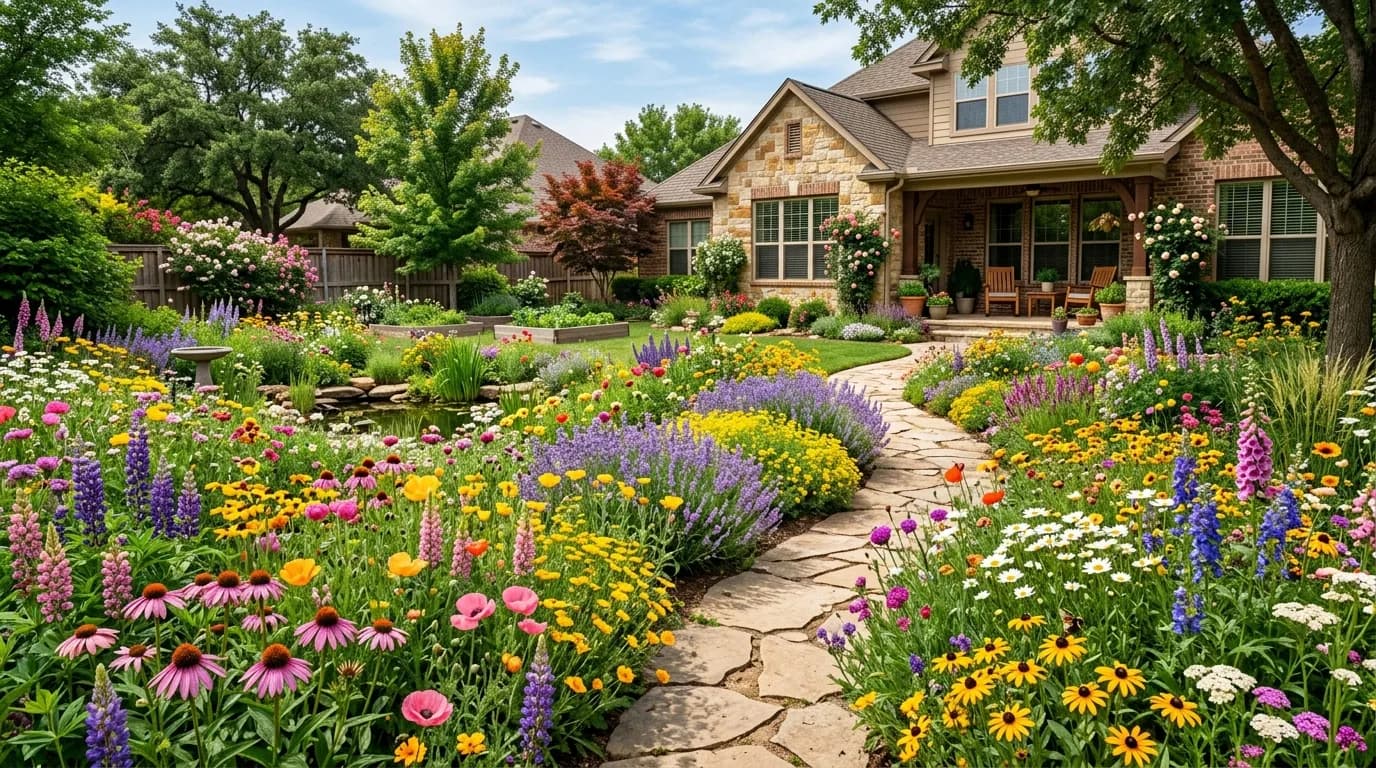
Wildflower gardens are having a moment — and for good reasons that go far beyond aesthetics. They require 80–90% less water than conventional lawns once established, attract 3× more pollinators than ornamental gardens, dramatically reduce fertilizer and pesticide use, and cost a fraction of traditional landscaping to maintain over time.
But here's what most people don't realize: a designed wildflower garden looks completely different from a neglected weedy patch. The difference is intentionality — choosing the right species mix for your region, establishing them correctly, and giving them a clear-edged framework that communicates "this is a garden, not neglect."
This guide covers 20 of the best wildflower garden ideas, how to establish them successfully, the best regional mixes, and how to design a wildflower landscape that's both ecologically powerful and genuinely beautiful.
What Makes a Wildflower Garden Work
The common failure mode: buy a can of "wildflower seeds," scatter them over grass, and wonder why nothing happens. Here's what actually works:
Site prep is everything. Wildflower seeds need bare soil to germinate — existing grass or weeds will outcompete them 100% of the time. You must kill or remove existing vegetation before sowing.
Choose regionally appropriate species. Native wildflowers are specific — a California poppy won't survive an Illinois winter, and a Prairie Smoke won't thrive in a Florida summer. Region-matched species are 3–5× more likely to establish and self-seed.
Plant in fall or very early spring. Fall planting allows seeds to stratify naturally over winter and germinate at exactly the right time in spring. Early spring (before soil temperature exceeds 55°F) also works well.
1. The Classic Meadow Aesthetic
A meadow-style wildflower garden replaces a traditional lawn or a large planting bed with a mix of native grasses and wildflowers. The combination of vertical grasses and scattered blooms at different heights creates the naturalistic beauty associated with prairie and meadow landscapes.
Key species mix: Purple Coneflower (Echinacea), Black-eyed Susan (Rudbeckia), Wild Bergamot (Monarda), Little Bluestem grass (Schizachyrium), Butterfly Weed (Asclepias), Blazing Star (Liatris), Rattlesnake Master.
Scale: Works on everything from 200 square feet to 2 acres.
2. Wildflower Border Along a Fence or Property Line
A 3–4-foot wide wildflower border along a fence creates a lush, colorful edge without formal garden maintenance. Use a steel edging strip at the front border to create a clear boundary between the wildflower planting and adjacent lawn — this visual definition is crucial for the planting to read as "designed."
Best for fences: Black-eyed Susan, Purple Coneflower, Wild Bergamot, Penstemon, native Salvia, Anise Hyssop — all 2–4 feet tall, full sun.
3. The Pollinator Paradise Garden
Design specifically around attracting pollinators: early bloomers for bumblebees emerging in March, mid-season bloomers for monarchs in July, and late-season species for migrating butterflies in September-October.
Early spring (for bees): Native violets, Wild Columbine, Virginia Bluebells, Phlox subulata
Midsummer (for monarchs): Butterfly Weed (Asclepias tuberosa), Purple Coneflower, Milkweed
Late season (for migration): Goldenrod, Asters (New England Aster, Sky Blue Aster), Ironweed
See how a wildflower garden would look in your specific yard. Get 3 free AI landscape design previews at Yardcast → Upload your photos, choose "natural" or "cottage" style, and add wildflower beds to your must-have list.
4. Wildflower Strips Between Lawn and Beds
Rather than replacing your entire lawn, add 3-foot wildflower strips as transition zones between lawn panels and existing planting beds or garden walls. This "meadow edge" aesthetic is increasingly popular in designed gardens — it softens hard transitions and dramatically increases pollinator activity.
5. Native Wildflower Front Yard
Converting a front yard lawn to wildflowers is increasingly common and dramatically reduces maintenance. Key considerations: check HOA rules (some prohibit it, some now require it), define the edge clearly with steel or stone edging, include a visible path to the door, and choose an appropriate height — in front yards, keep species below 3 feet for the first few years.
Best front-yard wildflowers: Wild Strawberry, Prairie Dropseed grass, Coreopsis (Tickseed), native Viola, Phlox subulata (creeping), Wild Bergamot, Butterfly Weed.
6. Wildflower Rain Garden
Combine a functional rain garden (a shallow depression that captures stormwater) with native wildflowers that tolerate both flooding and drought. This double-duty design solves drainage problems AND creates a beautiful habitat.
Wet zone plants: Blue Flag Iris, Cardinal Flower (Lobelia cardinalis), Joe Pye Weed, Swamp Milkweed
Moist-but-drained zone: Switchgrass, New England Aster, Wild Bergamot, Purple Coneflower
7. Wildflower Patch for Children
A designated wildflower "exploration patch" gives children a naturalistic play and discovery space. Taller native grasses (3–4 feet) create "rooms" and hiding spaces, while wildflowers at child eye-level (1–2 feet) encourage exploration. Bonus: Monarch caterpillars on milkweed, bees on clover, ladybugs on fennel — free nature education.
8. Cutting Garden with Native Wildflowers
Native wildflowers cut beautifully — and longer-lasting than most florist flowers. Design a dedicated cutting area with row-planted:
- Black-eyed Susan (6-week vase life)
- Purple Coneflower (outstanding cut flower)
- Blazing Star/Liatris (vertical accent)
- Yarrow (flat-top clusters, dries beautifully)
- Wild Bergamot (fragrant, interesting form)
Regional Wildflower Mix Guide
Matching plants to your region is the single biggest predictor of success:
| Region | Best Wildflowers | Best Native Grasses |
|---|---|---|
| Northeast | New England Aster, Wild Columbine, Joe Pye Weed, Bee Balm | Little Bluestem, Switchgrass |
| Southeast | Black-eyed Susan, Coreopsis, Blanket Flower, Wild Senna | Muhly Grass, Gulf Coast Muhly |
| Midwest | Purple Coneflower, Prairie Blazing Star, Wild Indigo, Compass Plant | Big Bluestem, Prairie Dropseed |
| Southwest | Desert Marigold, Penstemon, Desert Bluebells, Owl's Clover | Desert Muhly, Black Grama |
| Pacific Northwest | Camas, Clarkia, Western Columbine, Lupine | Tufted Hairgrass, Idaho Fescue |
| California | California Poppy, Globe Gilia, Clarkia, Phacelia | Purple Needle Grass, Blue Wild Rye |
9. Establishing a Wildflower Garden: Step-by-Step
Fall planting (best results):
- 1Kill existing vegetation (solarize with clear plastic for 6–8 weeks in summer, or use spot herbicide on small areas)
- 2Till or rake to 2–3 inches — create a rough, uneven surface (seeds need contact with soil)
- 3Mix seeds with sand (1:4 ratio) for even distribution
- 4Broadcast at recommended rate; rake in lightly
- 5Apply a thin layer (⅛ inch) of weed-free straw mulch
- 6Water once; let rain do the rest
- 7Do not mow until after first bloom — typically the following May–June
Spring planting:
Same process, but water more frequently until established (first 4–6 weeks).
10. Low-Mow Wildflower Lawn Alternative
Replace traditional turf with a low-growing wildflower lawn mix: creeping thyme, white Dutch clover, yarrow (low form), and native sedge grasses. This mix grows to only 4–6 inches tall, requires mowing just 1–2 times per year, tolerates light foot traffic, and creates a solid carpet of small blooms. Water requirement: 30–50% less than traditional grass.
11. Wildflower Berm or Raised Planting
Build a gently mounded wildflower berm (12–18 inches high, 6–8 feet wide) as a focal point in a larger yard. The elevated topography creates better drainage, more visual interest, and places the blooms at an angle that's easier to photograph and admire. Edge the base of the berm with large boulders or a steel edging strip.
12. Annual Wildflower Patch for Instant Color
For immediate (same-season) results, annual wildflowers are the solution. They germinate in 7–14 days, bloom within 60–90 days, and reseed for next year. Best annual wildflowers: Bachelor's Button (Centaurea), California Poppy, Cosmos, Annual Phlox, Larkspur, Annual Coreopsis, Sweet Alyssum.
Strategy: Plant annual mix for instant color while slower-establishing native perennials get roots. By year 3, perennials dominate and self-seed; annuals fade out naturally.
Wildflower Maintenance Calendar
One of the biggest wildflower garden advantages: minimal maintenance after establishment.
| Month | Task |
|---|---|
| March | Assess what's coming up; remove early weeds while small |
| April–May | Thin seedlings if overcrowded (6 inches apart minimum) |
| June–August | Water only during extended drought (>3 weeks dry) |
| September | Leave seed heads — critical food source for birds (especially goldfinches and chickadees) |
| October–November | Mow or cut to 4–6 inches after first hard frost — leave 6-inch stems as overwintering habitat |
| February | Final cleanup of previous year's stalks before new growth |
Cost Comparison: Wildflower Garden vs. Traditional Landscaping
| Item | Wildflower Garden | Traditional Landscaping |
|---|---|---|
| Initial installation | $0.10–$0.50/sq ft (seed) | $5–$15/sq ft (sod + plants) |
| Annual maintenance | $0.05–$0.20/sq ft | $1–$3/sq ft |
| Water use | 20–40% of lawn | 100% baseline |
| Fertilizer | None after year 1 | $50–$150/year |
| Pesticide | None needed | $30–$200/year |
| 5-year total cost (1,000 sq ft) | $600–$2,000 | $6,000–$18,000 |
The savings compound dramatically — wildflower gardens are the lowest-cost, lowest-maintenance residential landscaping option available.
13–20: More Wildflower Garden Ideas
13. Butterfly Waystation: Focus exclusively on native Milkweed species (Asclepias tuberosa, A. incarnata, A. syriaca) plus nectar plants (Lantana, Echinacea, Zinnia) — register officially with the Monarch Waystation Program for a free certificate.
14. Roadside/Hellstrip Wildflowers: Low-growing, highly drought-tolerant natives like Creeping Thyme, Coreopsis, Prairie Dropseed, and native Sedum in the hellstrip between sidewalk and curb. Zero irrigation required once established.
15. Shade Wildflower Garden: For sites with 2–4 hours of dappled sun — Wild Ginger, Trillium, Virginia Bluebells, Native Columbine, Solomon's Seal, and Wild Bleeding Heart create a stunning woodland wildflower tapestry.
16. Hot Dry Slope Wildflowers: Slopes with poor soil and little water are perfect for drought-adapted natives: Blanket Flower (Gaillardia), Penstemon, Prairie Blazing Star, Wild Bergamot, Buffalo Grass. They'll stabilize the slope AND bloom beautifully.
17. Formal Wildflower Garden: The apparent contradiction — wildflowers within a formal geometric framework. Plant different wildflower species within boxwood-edged parterres or within a symmetrical bed design. The structural geometry makes the naturalistic plantings feel intentional and sophisticated.
18. Wildflower Container Garden: For apartment balconies, patios, or yards with no planting space — a large (18-inch+) container filled with potting mix and annual wildflower seed mix. Cosmos, Zinnias, Nasturtiums, Marigolds, and annual Salvia perform beautifully in containers all summer.
19. Meadow Under Orchard Trees: The space between fruit trees is notoriously hard to plant — competition from tree roots, partial shade, variable moisture. Native wildflowers handle these conditions: Wild Ginger, Wild Strawberry, native Violets, Creeping Phlox. They suppress weeds AND attract the pollinators that boost fruit yields.
20. Winter Wildflower Skeleton Garden: Many wildflowers are as beautiful in their dormant winter state as in bloom. Leave seed heads of Echinacea (architectural dark cones), Prairie Blazing Star (dense purple-black spikes), Black-eyed Susan (russet seed buttons), and ornamental grasses standing all winter. They provide food for overwintering birds and create beautiful frost-covered silhouettes.
The Case for Wildflowers in 2026
With water costs rising, municipal water restrictions expanding, and growing awareness of pollinator decline (the US has lost 30% of honeybee colonies in the last decade), wildflower gardens are shifting from niche preference to mainstream practice.
The most beautiful yards of the next decade won't look like golf courses — they'll be layered, textured, alive with insects and birds, and designed with ecological intelligence. Wildflower gardens are the foundation of that vision.
Ready to see exactly what a wildflower garden would look like in your yard? Generate a free AI landscape design at Yardcast → — upload your photos, choose "Natural" style, and watch the AI place region-appropriate native wildflowers in the spots where they'll thrive for your specific site conditions.