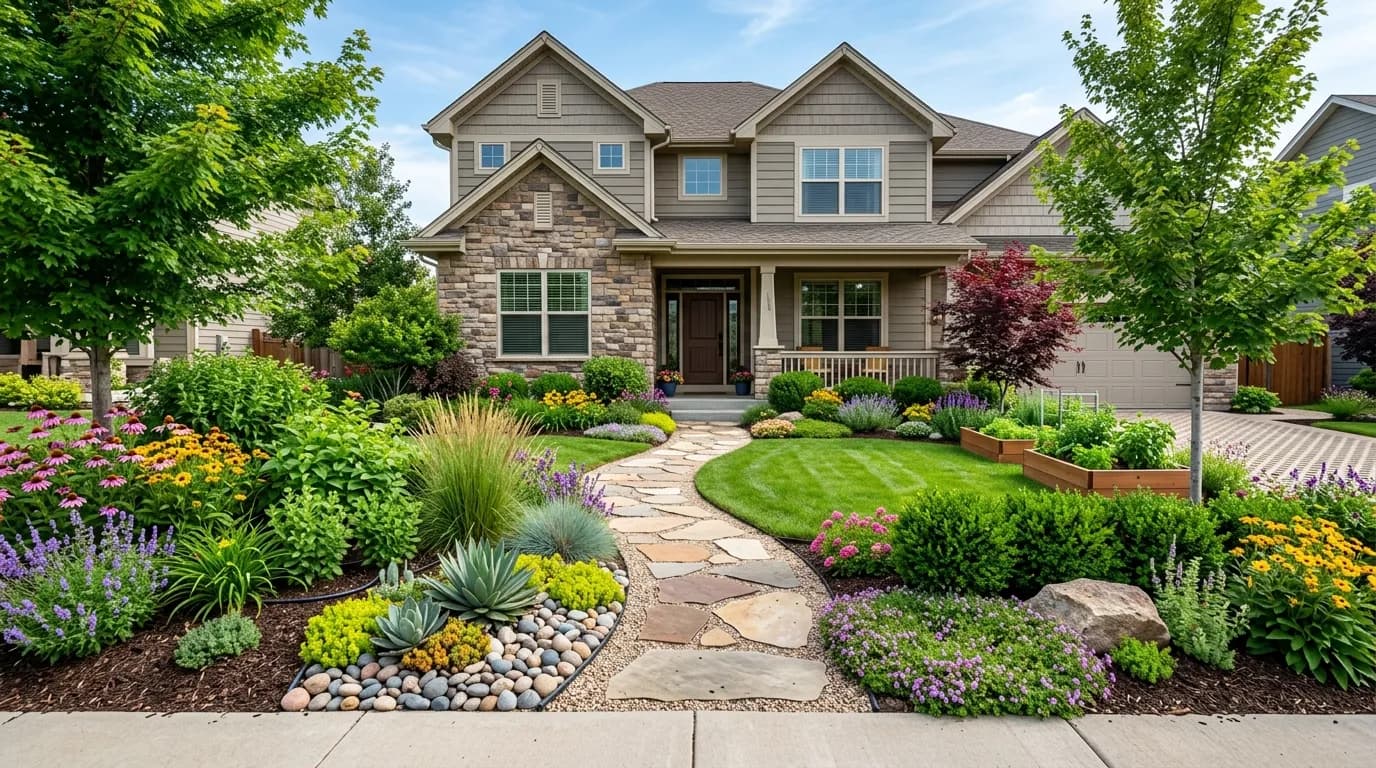
Creating a stunning outdoor space doesn't have to mean spending every weekend on yard work. With smart plant choices and design strategies, you can have a yard that looks professionally landscaped while requiring minimal maintenance. The secret is working with nature instead of against it.
Why Low-Maintenance Landscaping Makes Sense in 2026
The average American spends 4 hours per week on lawn and garden maintenance — that's over 200 hours per year. Low-maintenance landscaping doesn't mean no maintenance; it means smart maintenance. Homeowners who switch to well-designed, low-maintenance yards report saving 60-75% of the time they used to spend on upkeep, plus dramatically lower water bills and fewer trips to the garden center.
1. Choose Native Plants First
Native plants are the single biggest lever for reducing yard maintenance. They're adapted to your local climate and soil conditions over thousands of years, which means they require no supplemental watering once established, need no fertilizers or pesticides, attract beneficial pollinators and wildlife naturally, and resist local pests and diseases without intervention.
Start by identifying your USDA hardiness zone and looking up your region's native plant lists. The National Wildlife Federation's Native Plant Finder is an excellent free resource. Even replacing 30% of your yard's plants with natives can cut maintenance time in half.
Best native plants by region:
- Northeast: Purple coneflower, black-eyed Susan, little bluestem grass, inkberry holly
- Southeast: Beautyberry, coral honeysuckle, muhly grass, Southern magnolia
- Midwest: Prairie dropseed, wild bergamot, Joe Pye weed, buttonbush
- Southwest: Desert marigold, red yucca, Texas sage, penstemon
- West Coast: California poppy, manzanita, ceanothus, deer grass
2. Install Drip Irrigation
A drip irrigation system is arguably the best investment you can make in a low-maintenance yard. It delivers water directly to plant roots, eliminating surface evaporation. Set it on a timer and the system practically runs itself. Modern smart controllers (Rachio, RainBird) can even adjust automatically based on local weather data, skipping watering when rain is forecast.
Cost breakdown: Basic drip system for a 500 sq ft bed: $200-400 DIY, $600-1,200 professionally installed. Annual water savings often exceed the installation cost within 2 years.
3. Use Mulch Generously
A 3-4 inch layer of quality mulch is the closest thing to a maintenance miracle in landscaping. It suppresses 90% of weeds naturally (no herbicides needed), retains soil moisture so plants need watering 40-50% less often, regulates soil temperature keeping roots cooler in summer and warmer in winter, and breaks down over 1-2 years to improve soil structure.
Best mulch types for low maintenance: Shredded hardwood bark (lasts 2-3 years), cedar (natural pest deterrent), pine straw (great for acid-loving plants), cocoa hull mulch (attractive but expensive).
Pro tip: Apply mulch in spring before weeds germinate. In fall, just top off what decomposed over the summer. Annual mulching takes about 30 minutes per 100 sq ft of bed.
4. Create Defined Beds with Permanent Edging
Poorly defined beds are a maintenance nightmare — grass constantly creeps in and you're constantly trimming. Permanent metal, stone, or concrete edging creates a physical barrier that eliminates this problem entirely. Steel edging costs $1-3 per linear foot and lasts decades; it pays for itself in time saved within the first season.
5. Plant Ornamental Grasses
Ornamental grasses are the workhorse of low-maintenance landscaping. Species like fountain grass (Pennisetum alopecuroides), blue oat grass (Helictotrichon sempervirens), and switchgrass (Panicum virgatum) provide four seasons of interest without any deadheading, minimal watering, no fertilizer, and just one annual haircut in late winter.
A single clump of Karl Foerster feather reed grass or Blue Oat Grass can serve as a 3-year, zero-maintenance focal point that outperforms most flowering plants.
6. Replace High-Maintenance Lawn with Groundcovers
Traditional turfgrass is the most labor-intensive element of any yard — it needs mowing every 7-10 days, edging, fertilizing 2-4 times per year, pest management, and significant watering. Low-growing groundcovers eliminate all of this.
Best lawn alternatives:
| Plant | Zones | Water Needs | Walkable? | Bloom |
|---|---|---|---|---|
| Creeping thyme | 4-9 | Very low | Yes | Purple, summer |
| Sedum varieties | 3-9 | Very low | Light traffic | Yellow/pink |
| Clover (white/microclover) | 3-9 | Low | Yes | White |
| Ajuga (bugleweed) | 3-9 | Low | Light traffic | Blue, spring |
| Mondo grass | 5-10 | Medium | No | Small, white |
7. Add Strategic Hardscaping
Patios, paths, and gravel areas require zero watering, zero mowing, and minimal maintenance. A well-placed patio or gravel garden reduces the area of plants you need to maintain while creating more usable outdoor space. Use permeable pavers or gravel over landscape fabric for drainage.
Maintenance math: 200 sq ft of patio replaces 200 sq ft of lawn, saving approximately 10-15 minutes of mowing time per week, plus watering and fertilizing. Over a year, that's 10+ hours of lawn care eliminated.
8. Group Plants by Water Needs (Hydrozoning)
Hydrozoning is simply grouping plants with similar water needs in the same bed or area. Drought-tolerant plants together, moisture-lovers together. This makes irrigation far more efficient — you're not overwatering dry-lovers to keep moisture-lovers alive, or underwatering moisture-lovers to accommodate drought-tolerant ones.
9. Choose the Right Plants for Your Conditions
The single biggest driver of plant failure (and extra maintenance) is planting the wrong plant in the wrong place. A shade plant struggling in full sun will need constant attention. A sun plant in shade will be perpetually weak and disease-prone.
Before buying any plant, know: your soil type (clay, sand, loam), drainage (does water pool after rain?), sun exposure (full sun = 6+ hours, partial = 3-6 hours, full shade = under 3 hours), and your USDA zone.
Rule of thumb: A thriving plant in the right conditions needs almost no care. A plant fighting its environment needs constant intervention.
10. Install a Rock Garden
A well-designed rock garden with boulders, gravel, and drought-tolerant plants can be completely self-sustaining once established. It's one of the few landscape styles that actually improves with age and literally zero maintenance. Plants like sedum, sempervivum (hens and chicks), creeping phlox, and thyme thrive between rocks with only natural rainfall.
The Low-Maintenance Landscaping Blueprint
Here's a simple framework for transforming any yard into a low-maintenance space:
- 1Remove lawn from areas that don't get regular use
- 2Install permanent edging around all beds
- 3Mulch every bed to 3-4 inches depth
- 4Plant native and drought-tolerant species appropriate for your zone
- 5Install drip irrigation on a timer
- 6Add hardscaping in high-traffic areas
Most homeowners can implement this framework over 2-3 seasons, spreading the cost over time while seeing immediate benefits in each phase.
Design Your Low-Maintenance Yard with AI
Not sure where to start? Yardcast's AI landscape design tool analyzes your specific yard and generates a photorealistic design in both bed options tailored to your climate zone, soil type, and maintenance preferences. You'll get a plant list of regionally-appropriate, low-maintenance species and a phased cost estimate so you can tackle it season by season.
[See an AI landscape design in both bed options for your yard →](/redesign)