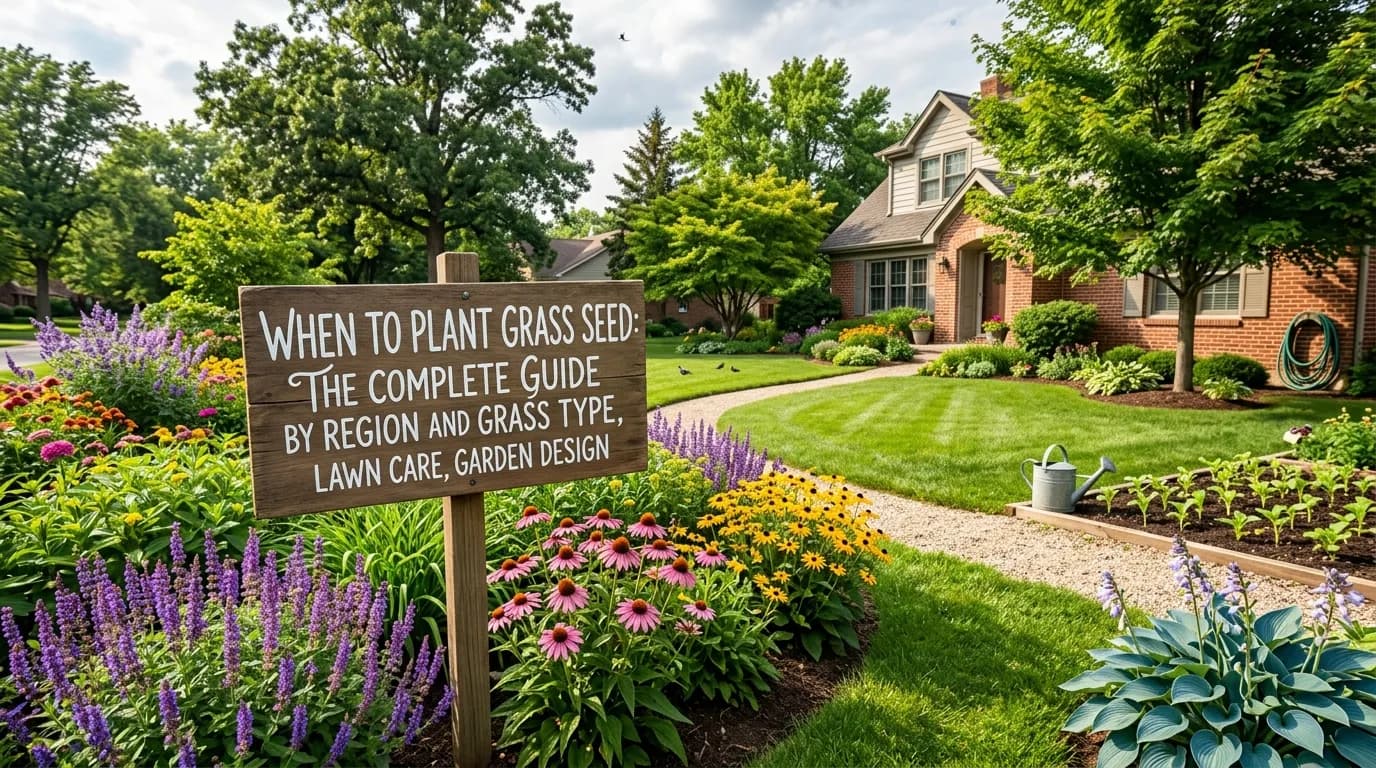
Timing is everything when it comes to seeding a lawn. Plant too early and cold soil stalls germination. Plant too late and new seedlings get scorched by summer heat — or killed by first frost. This guide covers exactly when to plant grass seed for every grass type and region in the US.
The Two Planting Windows: Cool-Season vs. Warm-Season Grass
All grass species fall into one of two categories, and this single distinction determines everything about when you should seed.
Cool-season grasses — Kentucky bluegrass, tall fescue, fine fescue, perennial ryegrass — thrive in temperatures between 60–75°F. They go semi-dormant in summer heat and peak growth in spring and fall.
Warm-season grasses — Bermuda, Zoysia, St. Augustine, Centipede, Bahia — need soil temperatures of 65–70°F or higher to germinate. They brown out in winter and green up in late spring.
When to Plant Cool-Season Grass Seed
Cool-season grasses have two viable planting windows: fall (best) and spring (acceptable).
Fall Planting — The Best Time (Late August to Mid-October)
Fall is the ideal time to seed cool-season grasses for four reasons:
- Soil is warm from summer (speeds germination)
- Air temperatures are cool (reduces heat stress on seedlings)
- Weed competition is low — annual weeds die in fall
- Seedlings have all winter to establish before summer heat arrives
Target window by region:
| Region | Best Seeding Dates |
|---|---|
| Northeast (NY, PA, NJ, CT, MA) | Sept 1 – Oct 1 |
| Mid-Atlantic (VA, MD, DE, DC) | Aug 25 – Sept 25 |
| Midwest (OH, IN, IL, MO, KS) | Aug 25 – Sept 20 |
| Pacific Northwest (OR, WA) | Sept 1 – Oct 15 |
| Mountain West (CO, UT) | Aug 15 – Sept 15 |
Rule of thumb: Seed at least 6 weeks before your first expected frost date. New seedlings need 2–3 mowings before going into winter.
Spring Planting — Second Best (Mid-March to Mid-May)
Spring seeding works, but competes against two enemies: weeds germinating at the same time, and summer heat arriving before the lawn fully establishes. If you must seed in spring:
- Wait until soil temperature reaches 50–55°F (use a soil thermometer — don't guess)
- Skip crabgrass preventer — it blocks grass seed germination too
- Water more frequently to compensate for warmer, drier conditions
- Expect 20–30% lower germination rates compared to fall seeding
When to Plant Warm-Season Grass Seed
Warm-season grasses should only be seeded in late spring or early summer, when soil temperatures are consistently 65–70°F and there's no risk of frost.
Target window by region:
| Region | Best Seeding Dates |
|---|---|
| Southeast (GA, SC, AL, MS) | Apr 15 – June 1 |
| Gulf Coast (TX, LA, FL panhandle) | Apr 1 – June 15 |
| Southwest (AZ, NM) | May 1 – July 1 |
| California (Central Valley, SoCal) | Apr 15 – June 30 |
| Mid-South (TN, AR, NC, OK) | May 1 – June 15 |
Bermuda grass is the fastest-germinating warm-season grass (7–14 days). Zoysia is the slowest (14–21 days or more) — budget extra time.
> Note: St. Augustine grass is nearly impossible to grow from seed. It's almost always installed as sod or plugs.
Soil Temperature: The Most Important Number
More important than the calendar date is soil temperature at 2–4 inches depth. Grass seeds cannot germinate without warm-enough soil, regardless of what the calendar says.
| Grass Type | Minimum Soil Temp | Ideal Soil Temp |
|---|---|---|
| Kentucky Bluegrass | 50°F | 60–65°F |
| Tall Fescue | 50°F | 60–65°F |
| Perennial Ryegrass | 50°F | 60–70°F |
| Bermuda | 65°F | 70–80°F |
| Zoysia | 65°F | 70–80°F |
| Centipede | 65°F | 70–80°F |
Check soil temperature with a cheap probe thermometer (under $15 at any hardware store). Take readings in the morning — soil is coldest then, and if it's warm enough at 7am, you're good.
How to Seed a Lawn: Step-by-Step
Getting the timing right is half the battle. Execution matters just as much.
1. Test and Amend Your Soil
Get a soil test ($15–$30 through your county extension office or a kit from the hardware store). Most lawns need lime to raise pH toward the 6.0–7.0 sweet spot. Apply amendments at least 2–4 weeks before seeding.
2. Prep the Seedbed
- Mow existing grass short (1.5–2 inches)
- Dethatch if thatch layer exceeds ½ inch
- Core aerate to break up compaction and improve seed-to-soil contact
- Rake smooth to remove debris and level high spots
3. Choose the Right Seed
Match grass species to your:
- Climate zone (cool-season vs. warm-season)
- Sun exposure (shade-tolerant vs. sun-loving varieties)
- Use level (high-traffic sports turf vs. ornamental lawn)
- Maintenance preference (fine fescues are lowest maintenance; Kentucky bluegrass is highest)
Pro tip: "Grass seed mix" bags blend multiple species for resilience. A mix of 3–4 varieties performs better than a single cultivar.
4. Seed at the Right Rate
Overseeding an existing lawn: use half the "new lawn" seeding rate.
| Grass Type | New Lawn Rate | Overseeding Rate |
|---|---|---|
| Kentucky Bluegrass | 2–3 lbs/1,000 sq ft | 1–1.5 lbs/1,000 sq ft |
| Tall Fescue | 6–8 lbs/1,000 sq ft | 3–4 lbs/1,000 sq ft |
| Perennial Ryegrass | 6–9 lbs/1,000 sq ft | 3–4 lbs/1,000 sq ft |
| Bermuda (hulled) | 1–2 lbs/1,000 sq ft | 0.5–1 lb/1,000 sq ft |
| Zoysia | 1–2 lbs/1,000 sq ft | 0.5–1 lb/1,000 sq ft |
5. Apply Starter Fertilizer
Starter fertilizer (high phosphorus, labeled 10-18-10 or similar) supports root development in new seedlings. Apply at seeding time — don't use regular lawn fertilizer, which promotes leaf growth at the expense of roots.
6. Water: The Critical Variable
Newly seeded lawns need to stay consistently moist until germination — but not waterlogged. Plan on:
- First 2 weeks: Light watering 2–3 times daily, keeping top ½ inch of soil moist
- Weeks 3–4: Taper to once daily watering
- After first mowing: Transition to deep, infrequent watering (1 inch twice weekly)
Setting up automatic irrigation dramatically improves seeding success rates.
What About Overseeding?
Overseeding — spreading seed over an existing lawn to thicken it — follows the same timing rules as new seeding. The difference: you don't need to prep the soil as aggressively. Core aeration before overseeding creates small holes that dramatically improve seed-to-soil contact and germination rates.
When NOT to Plant Grass Seed
Avoid seeding:
- During drought without irrigation infrastructure in place
- In frozen or waterlogged soil
- Right before extended rainfall (seeds wash away before they germinate)
- In summer heat for cool-season grasses (soil temps above 85°F + heat stress = failure)
- After applying broadleaf herbicide — wait 6–8 weeks minimum
Use AI to Design the Whole Yard
Once you know what you want for your lawn, the next challenge is the rest of your yard. Try Yardcast's free AI design tool to see what a professional landscape could look like for your specific property — including planting plans, patio layouts, and full plant lists.
Upload 2–4 photos of your yard and get 3 complete AI landscape designs in under 60 seconds. Preview free, no account required.