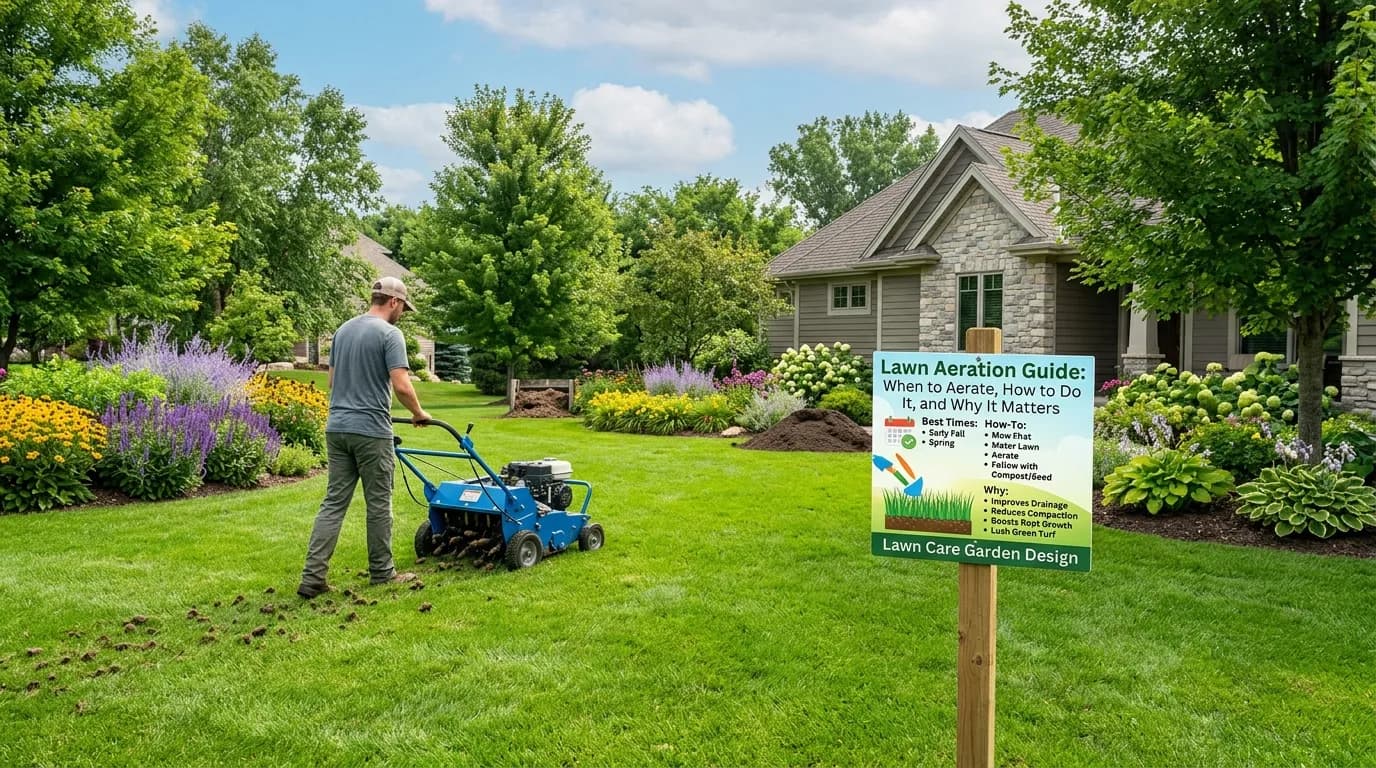
If your lawn looks tired, thin, or compacted despite regular watering and fertilizing, the problem is almost certainly underneath the surface — not above it. Soil compaction and thatch buildup prevent water, oxygen, and nutrients from reaching grass roots. Aeration fixes both problems in a single pass.
This guide covers everything you need to know about lawn aeration: what it is, when to do it, which method works for your situation, and exactly what to do in the weeks after aerating to get the most out of it.
What Is Lawn Aeration?
Aeration is the process of creating small holes or channels throughout your lawn to break up compacted soil and allow air, water, and nutrients to penetrate deeper into the root zone.
Why does this matter? Lawn soil compacts naturally over time from foot traffic, lawn equipment, freeze-thaw cycles, and rainfall. Compacted soil:
- Prevents water from reaching roots (it runs off instead of soaking in)
- Blocks oxygen exchange at the root level
- Creates ideal conditions for moss and weeds (which thrive in compacted, low-oxygen soil)
- Makes fertilizer applications significantly less effective
The result: a lawn that looks stressed regardless of how much you water and fertilize it.
Core Aeration vs. Spike Aeration: Which One to Use
There are two primary aeration methods — and they're not equally effective.
| Feature | Core Aeration | Spike Aeration |
|---|---|---|
| How it works | Removes plugs of soil 2–4 in deep | Pushes holes into soil with solid tines |
| Effectiveness | High — actually reduces compaction | Low — can increase compaction around holes |
| Best for | Compacted, clay, or heavy-traffic lawns | Sandy soil or light maintenance |
| Equipment | Aerator rental ($70–$120/day) | Aerator shoes ($20–$40) or lawn roller |
| Professional cost | $75–$200 per treatment | N/A |
| Recovery time | 2–4 weeks (plugs decompose) | Minimal |
The recommendation: Core aeration for almost every homeowner. Spike aeration is largely ineffective for the same reason that pushing a stick into compacted soil doesn't help — it displaces the soil laterally, increasing density around each hole rather than removing it.
The only exception: spike aeration can be useful for very sandy soils (which don't compact significantly) or as a very light annual maintenance pass.
When to Aerate Your Lawn
Timing is the single most important variable in lawn aeration success. Aerate at the wrong time and grass struggles to recover; aerate at the right time and the lawn fills in beautifully within 2–4 weeks.
Cool-Season Grasses (Kentucky Bluegrass, Tall Fescue, Perennial Ryegrass)
Best time: Late August through October
This is the most critical recommendation in this guide. Most homeowners aerate in spring — but for cool-season grasses, fall is dramatically better:
- Soil is warm from summer, which accelerates recovery
- Air temperatures are cooling, reducing stress on newly aerated turf
- Fall rain supports establishment without irrigation
- Weed competition is low (crabgrass and summer annuals are dying)
- Overseeding after fall aeration captures the prime germination window
Spring aeration (March–May) is acceptable if fall isn't possible, but you're competing with weed germination and the summer heat stress that follows.
Summer aeration: Never. Aerating cool-season grasses in summer creates thousands of open wounds in already-stressed grass during the worst possible recovery conditions.
Warm-Season Grasses (Bermuda, Zoysia, St. Augustine, Buffalo Grass)
Best time: Late May through July
Aerate when the lawn is in its active growing period — summer is peak season for warm-season grasses, and they can fill aeration holes quickly when temperatures are warm. Avoid aerating in spring before the grass has fully greened up (dormant grass can't recover well) or in fall as it's entering dormancy.
Signs Your Lawn Needs Aeration
- Water puddles or runs off after rain or irrigation rather than soaking in
- Thatch layer exceeds ½ inch (test by cutting a 3-inch cross-section of turf with a knife)
- Soil is hard — you can't push a screwdriver 2 inches into moist soil
- Lawn looks thin and tired despite adequate fertilization and watering
- Grass grows in patches with bare or struggling areas between healthy sections
- Moss invasion — moss prefers compacted, low-oxygen, low-pH soil
If your lawn checks 3+ of these boxes, aeration is likely to produce dramatic results.
How to Aerate a Lawn: Step-by-Step
What You'll Need
- Core aerator (rent from Home Depot, Lowe's, or a local equipment rental — typically $70–$120/day for a walk-behind)
- Garden hose or sprinkler
- Fertilizer, overseeding mix, and topdressing compost (for maximum results)
Step 1: Mow First
Mow the lawn 2–3 days before aerating at your normal mowing height. This gives the aerator better access to the soil and makes cleanup easier.
Step 2: Water 2 Days Before
Aerate when soil is moist but not saturated. Dry, hard soil makes aeration difficult and less effective; waterlogged soil can cause the aerator to create muddy trenches. Water deeply 2 days before to achieve the ideal moisture level.
Step 3: Flag Irrigation Heads and Shallow Utilities
Mark all sprinkler heads, invisible fence lines, and shallow cables before running the aerator. The tines go 2–4 inches deep and can damage irrigation heads if not marked.
Step 4: Aerate in Two Passes
For maximum effectiveness, make two passes at perpendicular angles (north-south, then east-west). This doubles the hole density and produces far better results than a single pass. Overlap each pass slightly.
Step 5: Leave the Plugs on the Lawn
This is the most-asked question: yes, leave the soil plugs on the lawn surface. They will break down within 2–4 weeks, returning the extracted organic matter and microorganisms to the lawn surface. You can speed up decomposition by dragging a piece of chain-link fencing behind a mower to break them up, but it's not necessary.
Step 6: Apply Topdressing (Optional but Highly Recommended)
Apply ¼–½ inch of fine compost across the entire lawn immediately after aerating. The aeration holes channel the compost directly into the root zone, dramatically improving soil biology and water retention. Use a push spreader or hand-broadcast.
Step 7: Overseed (For Cool-Season Grasses Only)
Immediately after aerating (and topdressing), overseed at 1.5–2× the normal seeding rate. The aeration holes provide perfect seed-to-soil contact for germination. Rake lightly to push seed into holes.
Overseeding rates after aeration:
- Tall fescue: 6–8 lbs per 1,000 sq ft
- Kentucky bluegrass: 2–3 lbs per 1,000 sq ft
- Perennial ryegrass: 4–6 lbs per 1,000 sq ft
Step 8: Fertilize Immediately After Aerating
Apply a starter fertilizer (high phosphorus) immediately after aerating and overseeding. The aeration holes allow the fertilizer to penetrate directly into the root zone rather than sitting on the surface.
Step 9: Water Daily for 3–4 Weeks
If overseeding, water lightly (10–15 minutes) once or twice daily to keep the seed moist until germination (7–14 days for most grasses). After germination, transition to deeper, less frequent watering.
If not overseeding, water deeply once immediately after aerating, then resume your normal schedule.
> Thinking about a full lawn and landscape renovation? Design your yard with Yardcast's free AI tool — upload photos of your space, answer a few questions about your goals and climate, and get 3 photorealistic landscape designs showing how your lawn, garden beds, paths, and plantings could work together. Free preview in 60 seconds.
How Often Should You Aerate?
| Lawn Type | Recommended Frequency | Reasoning |
|---|---|---|
| High-traffic (kids, dogs, frequent use) | Annually | Compaction occurs faster with heavy use |
| Average home lawn | Every 2 years | Standard maintenance interval |
| Sandy soil (low compaction) | Every 3 years | Sand doesn't compact significantly |
| Clay soil | Annually | Clay compacts fastest and benefits most from regular aeration |
| Newly established lawn (under 3 years) | Annually | New lawns benefit from early aeration to encourage deep root development |
What to Expect After Aeration
Week 1: Soil plugs on the surface; lawn may look rougher than normal.
Week 2: Plugs begin breaking down; overseeded areas show germination if conditions are right (consistent soil moisture, soil temps above 55°F for cool-season grasses).
Week 3–4: Plugs mostly decomposed; overseeded areas filling in; lawn should look noticeably greener due to improved water and nutrient uptake.
6–8 weeks: Full recovery. Lawns treated with aeration + overseeding + topdressing typically show dramatic density and color improvement by this point.
Aeration + Overseeding + Topdressing: The Full Package
If you're going to aerate, do the full treatment for maximum results. The three practices are synergistic:
- Aeration opens the soil profile
- Overseeding introduces new grass into the open holes with excellent seed-to-soil contact
- Topdressing feeds the microbiome and improves drainage simultaneously
Done together in late August–early October for cool-season lawns, this combination produces better results than any individual treatment alone. Homeowners who do this annually for 3 consecutive years typically report 90%+ improvement in lawn density and far fewer weed problems.
Wondering what your yard could look like with a great lawn and professional landscaping? [Use Yardcast's free AI design tool](/redesign) — upload your yard photos and get 3 photorealistic landscape designs built specifically for your space, style, and climate. Takes 60 seconds. Free to preview.