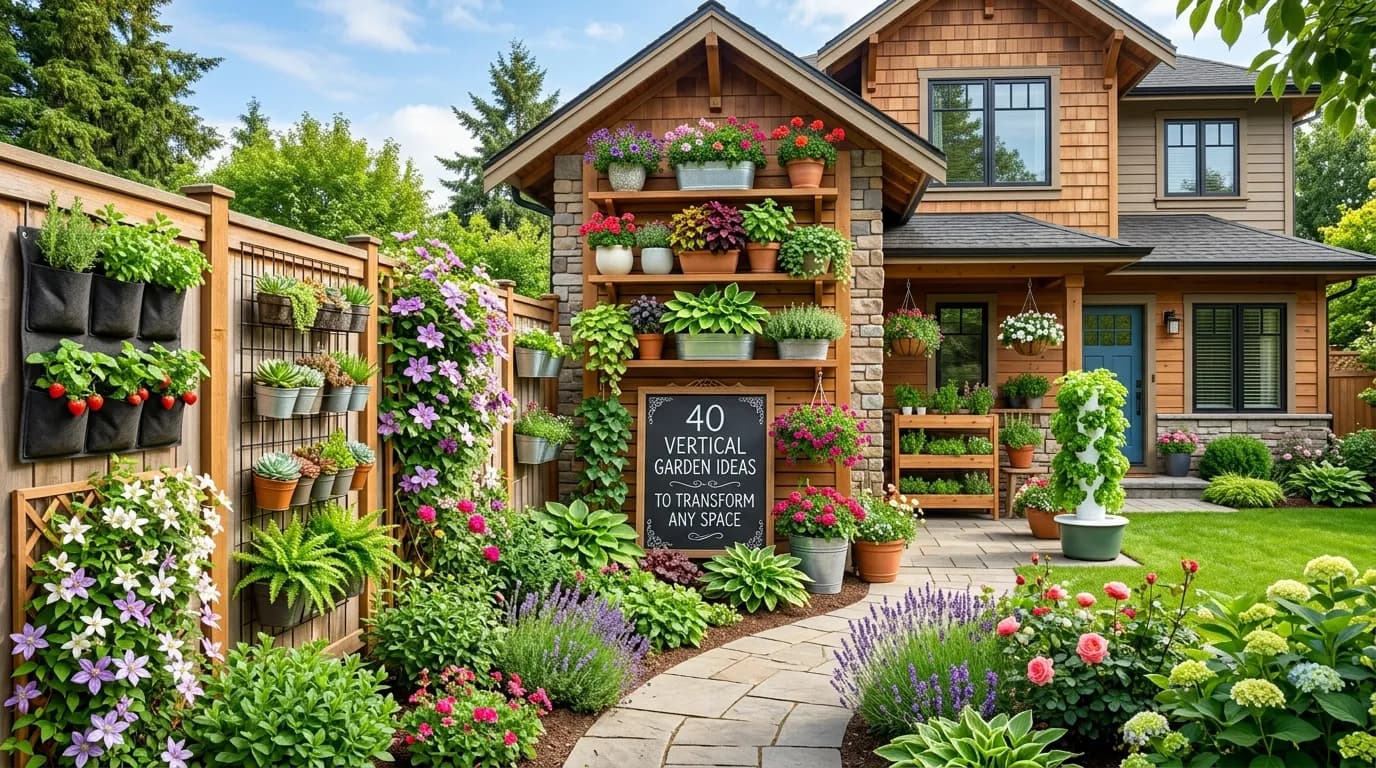
When your yard is small — or nonexistent — going vertical is one of the smartest design moves you can make. Vertical gardens turn blank walls, ugly fences, and bare pergola posts into lush, living tapestries. They add privacy without permits, grow food in spaces too small for raised beds, and create focal points that make any outdoor space feel designed rather than accidental.
Here are 40 vertical garden ideas for every style, budget, and skill level.
Why Vertical Gardens Work
Vertical gardens exploit the one dimension most gardeners never use: height. A 6-foot fence that's 20 feet long has 120 square feet of growing surface — the equivalent of a generous raised bed — without taking up a single square foot of ground space.
Beyond the practical benefits, vertical greenery fundamentally changes how a space feels. It creates enclosure, softens hard surfaces, filters sound and wind, and — in cities — creates privacy and a visual connection to nature that flat ground-level planting can never fully achieve.
40 Vertical Garden Ideas
1. Pallet herb garden. Lean a wooden pallet against a wall, fill the gaps with landscape fabric and potting soil, and plant herbs in each pocket. Parsley, basil, oregano, thyme, and mint thrive in a vertical pallet. Cost: near zero if you find a free pallet.
2. Mounted felt pocket planters. Commercial vertical planter panels (felt or fabric) mount directly to a fence or wall and hold dozens of small plants. Annuals, succulents, and herbs all work. Easy to swap out plants seasonally.
3. Living wall with modular frames. Professional living wall systems (Woolly Pocket, Florafelt, Tournesol Siteworks) mount to any wall and include built-in irrigation. They can accommodate 50+ plants on a single 4×8 foot panel. Expensive ($300–$1,500 installed) but dramatic.
4. Trellis with climbing roses. A classic for a reason. Climbing roses (Climbing Iceberg, Blaze, New Dawn, Zephirine Drouhin) on a wooden or iron trellis create romantic, fragrant vertical interest. Requires annual pruning but rewards with extraordinary seasonal displays.
5. Espalier fruit trees. Train apple, pear, fig, or citrus trees flat against a south-facing wall in a formal pattern. Espalier maximizes fruit production in minimal space, extends the growing season (wall warmth), and creates extraordinary architectural interest. Takes 3–5 years to develop.
6. Cucumber and squash on a cattle panel arch. Bend a 16-foot cattle panel into an arch between two raised beds and grow cucumbers, squash, and beans up and over it. Creates a beautiful tunnel of foliage and makes harvesting easy. Cost: $30–$50 per arch.
7. Clematis cascade on a pergola post. A single large-flowered clematis (Jackmanii, The President, or Niobe) planted at a pergola post will cover the entire post and cascade across the top beams within 2–3 seasons. Spectacular in bloom.
8. Hydrangea petiolaris on a shaded wall. Climbing hydrangea self-clings to brick, stone, or wood walls (no trellis needed) and produces enormous lacecap flower clusters in early summer. Extremely shade-tolerant and hardy to Zone 4.
9. Bamboo pole trellis for beans and peas. Build a simple teepee or row trellis with bamboo canes tied at the top. Pole beans, climbing peas, and nasturtiums cover it within weeks, producing both food and beauty.
10. Window box tower. Stack 3–4 window boxes vertically on a wall bracket or freestanding frame. Plant the top boxes with trailing plants (bacopa, lobelia, sweet potato vine) that cascade down and frame the boxes below. Eye-catching and compact.
11. Hanging gutter planters. Mount metal or PVC gutters horizontally on a fence in staggered rows and fill with strawberries, herbs, or lettuce. Each 6-foot gutter holds 12–15 plants. Cost: $50–$100 for materials.
12. Wisteria arbor. Plant wisteria (Chinese or American; American is less aggressive) at an arbor over a gate or walkway. In bloom — typically late April to May — the hanging flower racemes are breathtaking. Requires patience (3–7 years to bloom) but becomes a permanent garden landmark.
13. Vertical succulent frame. A shadow box frame filled with chicken wire and moss holds dozens of succulent cuttings. Mounted flat, it's living wall art. Works best in mild climates (or as an indoor feature).
14. Kiwi vine on a cable trellis. Hardy kiwi (Actinidia arguta, hardy to Zone 4) is an aggressive but extraordinarily ornamental vine with heart-shaped leaves, fragrant late-spring flowers, and dozens of small sweet fruits. Needs a sturdy cable trellis or pergola.
15. Bean teepee children's garden. Grow pole beans, scarlet runner beans, or morning glories up a teepee of bamboo or wood poles. Leave an opening at the base and children can sit inside the leafy, flowering structure. Magical and fast-growing.
16. Galvanized trough tower. Stack small galvanized troughs at different heights on a shelf unit and plant with a mix of cascading and upright plants. Industrial-chic aesthetic, easy to reconfigure.
17. Espaliered fig on a fence. A fig tree (Brown Turkey, Chicago Hardy) trained in a horizontal or fan espalier against a south or west-facing wooden fence maximizes fruit production while creating a beautiful structural feature year-round — the leaves are large and tropical-looking even before fruiting.
18. Passion flower fence cover. Passiflora incarnata (native passionflower, hardy to Zone 6) covers a chain-link or wood fence entirely within one season. The flowers are extraordinary — alien-looking, purple and white, intensely fragrant — and attract gulf fritillary butterflies.
19. Jasmine-covered pergola. Confederate jasmine (Trachelospermum jasminoides, Zone 7+) covering a pergola creates a white flower canopy with intoxicating fragrance in spring. In mild climates it's semi-evergreen, providing structure year-round.
20. Pyramid strawberry planter. A wooden pyramid planter — stacked tiers narrowing toward the top — plants 20–30 strawberry plants in a 4×4 foot footprint. Highly productive, easy to harvest, and surprisingly decorative.
21. Metal grid wall planter. A powder-coated metal grid panel (1×2 inch grid, 4×6 feet) mounted on a fence, with S-hooks holding a collection of small planters in different finishes and sizes. Easy to reconfigure. Very effective in modern outdoor spaces.
22. Hops vine on a trellis. Humulus lupulus (hops) grows 20+ feet in a single season, covering any support structure in large, textured, deeply lobed leaves. Cut back hard to the ground each winter, it returns reliably every spring.
23. Climbing hydrangea on a shaded fence. In deep shade where almost nothing else grows lushly, climbing hydrangea (Hydrangea petiolaris) thrives. It attaches to wood fence with aerial rootlets, needs no tying, and produces showy white flowers each June.
24. Herb spiral. Build a freestanding circular stone or brick spiral planter — tallest in the center, tapering to ground level at the outside edge — and plant herbs on the different levels. Each level has slightly different drainage and microclimate. Traditional permaculture design that's both practical and beautiful.
25. Tepee of morning glories. Morning glories (Ipomoea purpurea) on a wire or bamboo teepee cover the entire structure in large heart-shaped leaves and hundreds of flowers per day from summer to frost. Start from seed directly in the ground; they don't like transplanting.
26. Tomato cage tower. Tall wire tomato cages (4–5 feet) planted with cherry tomatoes, climbing nasturtiums, and basil create an edible vertical garden that's ornamental from a distance.
27. Bamboo screening wall. Clumping bamboo (non-invasive) in large, deep planters creates an instant living privacy screen. Fargesia (clumping, hardy to Zone 5) and Phyllostachys aureosulcata (golden groove, clumping, Zone 5) are reliable choices. Screen reaches 8–12 feet.
28. Vertical pea gravel with peg board. A large pegboard panel mounted outdoors (sealed and weatherproofed) with a grid of hanging pots at adjustable heights creates a reconfigurable vertical planting display. Annuals, herbs, and succulents rotate seasonally.
29. Living moss wall art. Preserved (glycerin-treated) or live moss panels mounted in a wooden frame create indoor-meets-outdoor living art. Preserved moss requires no water. Live moss needs high humidity and low light — perfect for a shaded patio or covered outdoor room.
30. Climbing roses through ornamental trees. Allow a vigorous climbing rose (Wedding Day, Kiftsgate) to scramble through a large ornamental tree (crabapple, ornamental cherry). When in bloom simultaneously, the effect is like a flower explosion.
31. Fence-mounted vertical planter box wall. Mount a series of 12×24 inch cedar planter boxes directly to a fence in a 3×3 grid pattern. Plant each with trailing plants, herbs, or annuals. The wood planters soften a plain fence and create an intentional gallery wall effect.
32. Bitter melon or loofah gourd on a fence. Unusual edibles that cover a fence quickly. Loofah (Luffa aegyptiaca) produces the loofah sponges you use in the shower — worth growing purely for the novelty.
33. Copper pipe trellis. Fashion a trellis from 1/2-inch copper pipe fittings and couplings. Simple to solder or connect with compression fittings. The copper develops a patina over time that looks extraordinary with green foliage. Elegant and highly custom.
34. Pumpkin arch. Two sturdy posts with a wire run between them, 6–7 feet high — grow large pumpkins over and through it. Hanging pumpkins on a vine arch is an incredible autumn visual statement.
35. Columnar trees as living walls. Plant columnar or fastigiate trees (Sky Pencil Holly, Swedish columnar aspen, Skyrocket juniper, columnar apple) in a row 3–4 feet apart to create a living wall that provides privacy, screens unsightly views, and requires no horizontal ground space.
36. Stair railing planters. Mount narrow planters on deck or stair railings and plant with cascading succulents, herbs, or annuals. Every time someone uses the stairs, they brush past fragrant herbs or trailing color.
37. Fence-top container row. Set a row of matching planters along the top of a cinder block or low masonry wall. Plant with trailing rosemary, trailing lantana, or wave petunias that drape down both sides of the wall. Softens hard masonry dramatically.
38. Vertical vegetable tower. Stack three 5-gallon buckets with drainage holes, offset on a central rebar stake, planted with lettuce, Swiss chard, and herbs. The staggered arrangement creates a self-contained edible tower in a 2-foot footprint.
39. Grape vine arbor dining room. A sturdy wooden or metal arbor over an outdoor dining table, covered by a fruiting grape vine (Concord, Mars, Niagara), creates a dappled green ceiling by midsummer. In 2–3 years the arbor is completely covered. Grapes provide edible bonus.
40. Wall-mounted succulent wheel. Mount an old wagon wheel (or a wooden frame with spokes) horizontally or vertically on a wall, fill the sections with soil, and plant with an arrangement of Sempervivum, Echeveria, and low sedums. A living artwork that requires almost no care.
Getting the Most From Vertical Gardens
Match the plant to the support. Self-clinging vines (climbing hydrangea, Virginia creeper) need no tying but can damage wood and mortar. Twining vines (wisteria, morning glory, hops) need wires or lattice to wind around. Tendril climbers (sweet peas, cucumbers, clematis) need thin supports they can grab.
Think about weight. Living walls get heavy when wet. Ensure wall mounting is into studs or masonry anchors. Free-standing structures need ballast or ground anchors in exposed locations.
Plan for irrigation. Vertical planters dry out faster than ground-level plantings — especially in sunny or windy locations. Drip irrigation (a simple timer and emitter system, $30–$80) on vertical planters transforms maintenance from daily to monthly.
Layer heights. The most beautiful vertical gardens combine structures at different heights: tall climbing vines at the back, medium trellised plants in the middle, cascading containers at eye level, and low ground covers at the base.
Ready to design your vertical garden layout? Use Yardcast's free AI landscape designer → to visualize how climbing plants, living walls, and vertical features will transform your space — with a personalized plant list for your climate.
Vertical Garden Cost Guide
| Type | DIY Cost | Professional Install |
|---|---|---|
| Pallet herb garden | Free – $30 | N/A |
| Trellis + climbing rose | $50–$200 | $300–$800 |
| Modular pocket planter | $60–$200 | $200–$600 |
| Professional living wall | $300–$800 | $800–$3,000 |
| Espalier fruit tree | $100–$300 | $500–$1,500 |
| Pergola + vine cover | $500–$2,000 | $2,000–$8,000 |
Best Climbing Plants by Condition
| Condition | Best Climbers |
|---|---|
| Full sun, hot | Clematis, bougainvillea, climbing roses, wisteria |
| Partial shade | Climbing hydrangea, Schizophragma, ivy, Akebia |
| Fast coverage | Hops, morning glory, silver lace vine, Virginia creeper |
| Fragrance | Wisteria, jasmine, climbing roses, honeysuckle |
| Edible | Grapes, kiwi, climbing beans, cucumbers, passion fruit |
| Year-round interest | Ivy, climbing euonymus, climbing hydrangea (exfoliating bark) |