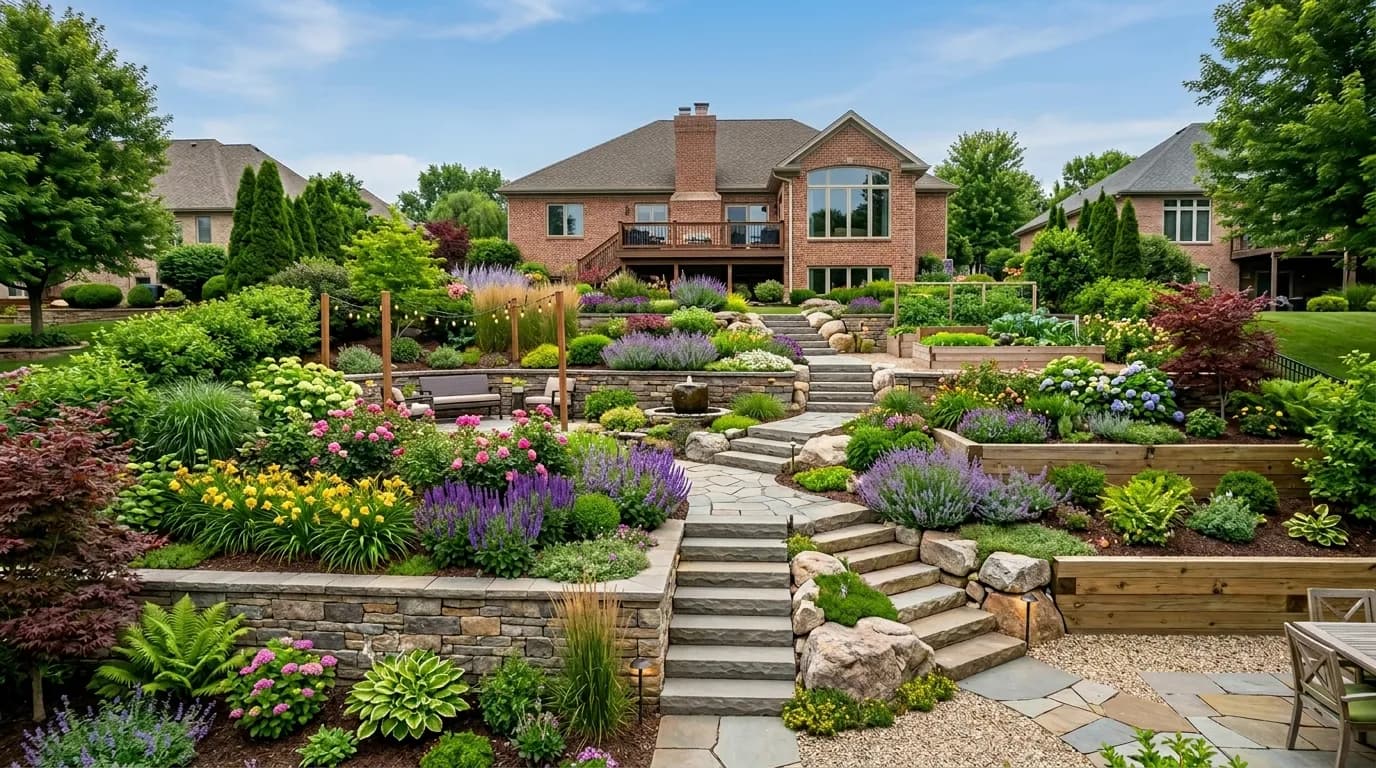
Sloped yards frustrate homeowners for years — they're hard to mow, prone to erosion, and almost impossible to use for anything practical. But the most stunning landscapes are often built on challenging terrain. A well-designed terraced garden transforms a problematic hillside into a dramatic series of outdoor rooms, each at a different elevation, each with its own character and purpose.
This comprehensive guide covers 20 terraced garden ideas for slopes of every size and gradient, with material costs, planting ideas, and construction tips to help you unlock the hidden potential of your sloped yard.
Understanding Terraced Garden Design
Before exploring specific ideas, it helps to understand the fundamentals of terrace design:
The basic principle: Terracing converts a continuous slope into a series of level or near-level steps. Each terrace — called a "plinth" in professional landscape design — creates a usable flat area bounded by a retaining wall, bank, or stepped edge.
Critical measurement: A slope's percentage determines which terrace approach works best. A 10–15% grade (gentle slope) might need only low retaining walls. A 30%+ grade requires substantial retaining structures.
Drainage is everything: Every terrace must have a drainage plan. Water that collects behind retaining walls causes freeze-thaw damage, wall failure, and landslide risk. Proper French drains, gravel backfill, and weep holes behind walls are non-negotiable.
Retaining Wall Terraced Garden Ideas
1. Natural Stone Terrace
Dry-stacked natural stone retaining walls are the most beautiful and enduring terracing option. Using locally-sourced fieldstone, limestone, or granite — materials that look like they belong in your region — walls 18–36 inches high can be stacked without mortar on well-prepared crushed stone bases.
Best for: Any style of landscape, particularly cottage, naturalistic, and traditional designs
Cost: $25–$75/linear foot for dry-stacked stone (varies widely by stone type and labor)
Bonus: Plant creeping thyme, alyssum, sedum, and phlox in wall crevices for a planted stone wall that softens the terrace edges beautifully
2. Timber Retaining Wall Terrace
Pressure-treated 6×6 or 8×8 landscape timbers create affordable, practical retaining walls for garden terracing. Install with deadmen (horizontal anchors extending into the hillside) every 6 feet for walls over 2 feet tall, and ensure 4–6 inches of gravel backfill for drainage.
Best for: Vegetable gardens, utilitarian terracing, budget-conscious projects
Cost: $10–$20/linear foot installed
Lifespan: 15–20 years for pressure-treated; 25–30 years for recycled plastic "timbers"
3. Concrete Block Retaining Terrace
Segmental concrete retaining blocks (Versa-Lok, Allen Block, and similar brands) interlock for simple, reliable terrace construction. These engineered systems have built-in battering (slight lean back into the slope) and drainage engineering, making them more stable than DIY timber walls for taller applications.
Best for: Walls 3–6 feet tall, permanent installations
Cost: $15–$35/linear foot installed for standard concrete block
Tip: Gray or tan concrete block can look institutional alone; invest in good planting in front to soften the appearance
4. Gabion Terrace Wall
Gabion baskets filled with decorative stone create distinctive industrial-meets-natural retaining walls. The open wire construction provides excellent drainage naturally — no separate drain system needed — and the visual texture of rock-filled cages is dramatic and contemporary.
Best for: Modern, industrial, and xeriscape landscapes; rocky or challenging terrain
Cost: $30–$60/linear foot for gabion walls
DIY potential: Gabion basket filling is labor-intensive but straightforward — suitable for confident DIY homeowners
5. Mortared Brick Terrace Wall
Mortared brick retaining walls add a formal, classic quality to terraced gardens that no other material matches. Single or double-wythe brick walls up to 3–4 feet tall work well for terracing. Above that height, engineered design is typically required.
Best for: Traditional, formal, and colonial-style homes with brick architecture
Cost: $40–$80/linear foot for mortared brick
Plant pairing: English box (Buxus) hedges planted at terrace level with roses on upper terrace create a classic formal garden effect
> See how terracing could transform your sloped yard. Generate a free AI landscape design at Yardcast → Upload photos of your sloped yard and receive 3 photorealistic designs showing different terracing approaches, planting schemes, and hardscaping options — all tailored to your specific grade and style preferences.
Planted Terrace Ideas
6. Food Garden Terraces
Level terraces are perfect for vegetable and herb gardens — raised beds on terraces create exactly the deep, well-draining soil conditions that vegetables need. Each terrace can feature a different theme: one tier for perennial herbs, another for annual vegetables, another for cut flowers or fruit bushes.
Design approach: Build terraces 4–6 feet deep (enough for raised beds with a work path behind them) with timber or stone retaining walls. Install drip irrigation on a timer. The result is a highly productive, incredibly organized kitchen garden on previously unusable hillside.
Cost: $3,000–$12,000 for a 3-terrace food garden on a moderate slope
ROI: Not just monetary — a terraced food garden is one of the most-used and most-loved outdoor spaces possible
7. Wildflower Meadow Terraces
On gentle slopes, simple mown-edge terraces create level areas for planted wildflower meadow panels interspersed with grass paths. The meadow panels — planted with native wildflowers and grasses — are visually spectacular from late spring through fall and require almost no maintenance after establishment.
Design approach: Create shallow terraces with sod removed and prepared with compost. Seed with regional native wildflower mixes. Mow paths and terrace edges twice yearly. Cost is minimal; impact is maximum.
8. Ornamental Grass Terrace Garden
Ornamental grasses thrive on slopes — their deep root systems stabilize soil while their graceful foliage moves beautifully in the breeze. A terraced slope planted with sweeps of different grass varieties (Blue Oat Grass, Karl Foerster, Pennisetum, Maiden Grass) creates a contemporary, low-maintenance landscape with extraordinary seasonal interest.
Best grasses for terraced slopes: Karl Foerster (upright, 4–5 ft), Muhlenbergia capillaris (pink cloud of fall bloom), Blue Oat Grass (blue-silver, 2 ft), Miscanthus sinensis (6–8 ft, dramatic), and Little Bluestem (fall color, native)
9. Rose Terrace Garden
A classic formal rose garden terraced into a slope is one of the most romantic landscapes imaginable. Plant climbing roses trained to vertical pillars, shrub roses filling the terrace beds, and miniature roses along the terrace wall edges. Add a stone path connecting the tiers.
Suggested layout: Top terrace: pergola with climbing roses. Middle terrace: hybrid tea and floribunda roses in formal beds. Lower terrace: groundcover roses (Knockout series) cascading over wall edge.
10. Native Plant Slope Restoration
For steep or erosive slopes, a well-planned native plant terrace garden does double duty — stabilizing the soil while creating wildlife habitat. Use natives with deep fibrous root systems: wild columbine, native sedges, purple coneflower, prairie dropseed grass, and creeping juniper.
Design approach: Small step-cut terraces (12–18 inches high) planted densely with natives. No lawn in this zone. After 2–3 years of establishment, this landscape is completely self-sustaining.
Terrace Garden with Outdoor Living Spaces
11. Dining Terrace at the Top
Reserve the highest terrace level for an outdoor dining area. A flat terrace with a patio surface, outdoor dining table, and views down over lower garden levels creates a naturally dramatic outdoor dining experience. Retaining walls below become planters visible from the dining level.
Cost: $8,000–$25,000 for a top-level dining terrace with patio, retaining walls, and landscaping
Impact: One of the highest-value landscape investments — outdoor dining spaces are used constantly and add significant home value
12. Fire Pit Terrace
Create a dedicated fire pit terrace on a mid-slope level. A level, circular terrace with seating arranged around a central fire pit bowl creates an intimate gathering space with elevated views. Stone or brick paving, low stone walls that double as seating, and perennial plantings around the perimeter complete the picture.
Cost: $5,000–$15,000 for a mid-slope fire pit terrace
13. Hot Tub or Spa Terrace
A level terrace is ideal for a hot tub installation — the terrace creates the structural support and privacy screening that elevated hot tub locations need. Surround with privacy shrubs, install landscape lighting for evening use, and add a small storage cabinet for towels.
Planning note: Hot tubs weigh 3,000–5,000 lbs when full. Terrace must be engineered to support this load — consult a structural engineer before installation.
14. Lawn Level Terrace
On a multi-level slope, create one generous terrace — 20×30 feet minimum — as a lawn terrace. A flat, level lawn panel on an otherwise sloped property is extremely usable for games, relaxation, and children's play. Frame with planting beds on three sides.
Design tip: Position this lawn terrace to receive afternoon sun (typically facing south or west) and to be visible from the main entertaining area or primary interior rooms.
15. Children's Play Terrace
A dedicated terrace for children's play equipment — playset, sandbox, trampoline — creates a safe, level play zone. Surround with impact-absorbing bark mulch or rubber tile. Low retaining walls around the perimeter prevent children from accidentally stepping off the edge.
Water Features on Terraced Gardens
16. Terraced Water Cascade
The most dramatic water feature a sloped yard can offer: a series of cascading water steps, with water flowing from one terrace level to the next. Formal versions use clean-edged stone channels; naturalistic versions use boulder-lined streams.
Cost: $5,000–$25,000 for a multi-level cascade depending on scope
Maintenance: Pump requires winterization in cold climates; algae management needed in summer
17. Terraced Pond at Base
Collect the slope's natural water flow into a naturalistic pond at the lowest terrace level. The pond becomes the visual anchor of the entire terraced garden — a reflective surface that mirrors the upper levels. Stock with native aquatic plants (pickerelweed, blue flag iris, cattail) for wildlife value.
18. Rill Water Feature
A formal rill — a narrow, shallow channel of flowing water — can run along the retaining wall face or through a stone pathway connecting terrace levels. Rills are associated with Persian and Moorish garden design. Even 12 inches wide, a rill with trickling water creates extraordinary sound and movement through a terraced garden.
Steps and Path Ideas for Terraced Gardens
19. Natural Stone Stepping Path
Meandering stone steps connecting terrace levels — using the same stone as the retaining walls — create a unified, organic appearance. Wide steps (at least 4 feet) are comfortable and safe. Plant step risers with creeping thyme or Irish moss for softness. Install low-voltage step lighting for evening safety.
Step proportions: The classic garden step formula: Riser (vertical) + 2 × Tread (horizontal) = 26 inches. For a comfortable outdoor stair, use 6-inch risers with 14-inch treads.
20. Terraced Zigzag Path
For steep slopes, a zigzag or switchback path with level rest landings at each direction change is more comfortable and elegant than a straight steep staircase. Each landing can feature a garden ornament, specimen plant, or small seating area — making the act of walking through the garden a journey in itself.
Planning Your Terraced Garden
Successful terraced garden projects require:
- 1Grade assessment — Measure your slope's percentage (rise ÷ run × 100) to determine how many terraces you need and how tall retaining walls must be
- 2Drainage plan — Before any terrace construction, understand where water flows and ensure your terrace design channels it safely away from walls and your home's foundation
- 3Structural engineering — Retaining walls over 4 feet tall typically require engineered designs and permits in most jurisdictions
- 4Phasing — Large terraced gardens are built in phases. Start with the lower terrace (closest to the house, most-used), stabilize it fully, then work up the slope
- 5Plant selection — Choose plants appropriate to each microclimate — upper terraces tend to be hotter and drier; lower terraces moister and shadier
A professionally designed terraced garden is one of the highest-return landscaping investments you can make. The transformation from an unusable, eroding slope to a dramatic, multi-level outdoor space typically adds more value than it costs — and you get a spectacular garden to enjoy while living there.
[Visualize your terraced garden before breaking ground — get 3 free AI designs at Yardcast →](/redesign)