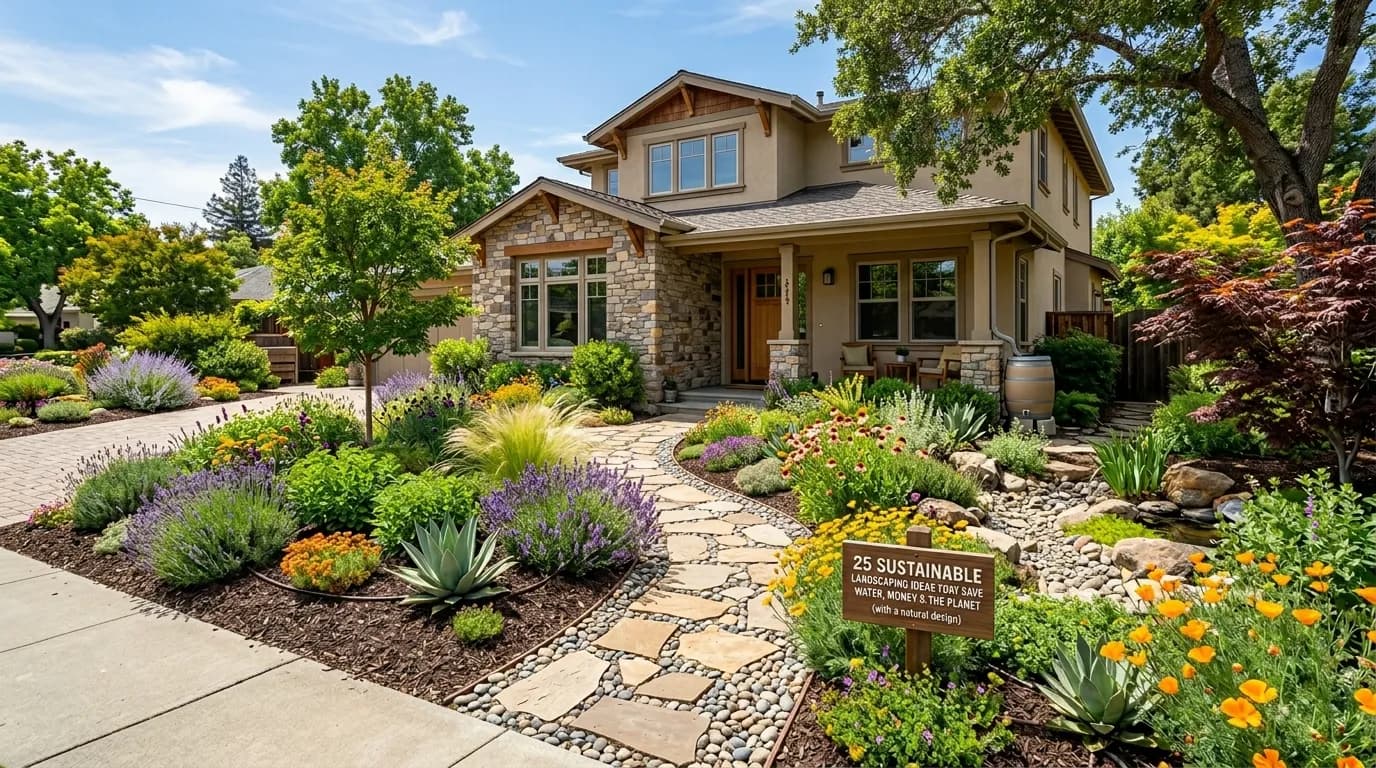
Sustainable landscaping is one of the fastest-growing trends in home improvement — and for good reason. Traditional lawns consume 30–60% of household water use in summer, require constant chemical inputs, and provide virtually no ecological value. A thoughtfully designed sustainable yard can cut your water bill by $300–$800 per year, slash yard work by half, and actually improve in beauty over time as plants mature.
Whether you're starting from scratch or retrofitting an existing yard, these 25 ideas cover every budget, climate, and yard size.
1. Replace Thirsty Turf with Native Groundcovers
Traditional Kentucky bluegrass needs 1–1.5 inches of water per week to stay green. Swap even half your lawn for native groundcovers like creeping thyme, buffalo grass, or blue grama grass and you'll cut outdoor water use by 40–60%. Native groundcovers also rarely need mowing and need zero fertilizer after establishment.
Cost: $2–$5/sq ft installed vs. $1–$3/sq ft for sod
Payback period: 1–2 years via water savings
2. Install a Rain Garden
A rain garden is a shallow depression planted with deep-rooted natives that captures runoff from your roof, driveway, or lawn. Instead of sending stormwater into the sewer system, it soaks into the ground and filters out pollutants. A typical 100 sq ft rain garden handles runoff from 1,000 sq ft of impervious surface.
Best plants for rain gardens: swamp milkweed, blue flag iris, switchgrass, buttonbush, and native sedges.
Cost: $300–$1,200 DIY, $1,500–$4,000 installed
3. Mulch Everything — Deeply
A 3–4 inch layer of organic mulch (wood chips, shredded leaves, or straw) reduces soil moisture loss by 50–70%, suppresses weeds, moderates soil temperature, and feeds soil organisms as it decomposes. In dry climates, mulching alone can eliminate supplemental watering for established native plants.
Free source: Many cities offer free wood chip mulch from tree trimmings. Check chipdrop.com for free arborist chips delivered directly to your home.
4. Harvest Rainwater with a Barrel or Cistern
Rain barrels collect water from your downspouts for later use in the garden. A standard 55-gallon barrel fills completely from 1 inch of rain falling on a 500 sq ft roof. For larger storage, underground cisterns hold 500–5,000 gallons.
In the US, the average household uses 9 gallons/day outdoors during summer. A 200-gallon cistern can provide 20+ days of irrigation for a small garden bed.
Cost: $50–$200 for rain barrel; $500–$5,000 for underground cistern
Annual savings: $50–$300 depending on local water rates and garden size
5. Plant a Tree in the Right Spot
A single mature shade tree on the west side of your house can reduce summer cooling costs by 15–35%. It takes 5–10 years to reach meaningful size, but the shade-plus-carbon-sequestration value makes trees one of the highest-ROI sustainable landscaping investments.
Best shade trees by region: Live oak (South), Red maple (Northeast/Midwest), Western redcedar (Pacific Northwest), Mesquite (Southwest).
🌿 Want to see exactly where trees and sustainable features would look best in YOUR yard? [Generate a free AI landscape design at Yardcast →](/redesign)
6. Create a Pollinator Corridor
Pollinators — bees, butterflies, hoverflies — are essential for food production and ecological health. A pollinator garden requires zero maintenance beyond occasional deadheading, attracts beneficial insects that control pest populations, and qualifies for USDA and state-level wildlife habitat certifications.
Key plants by region:
- Northeast: Purple coneflower, black-eyed Susan, wild bergamot, goldenrod
- Southeast: Coral honeysuckle, salvia, passionflower, ironweed
- Midwest: Switchgrass, milkweed, prairie blazing star, wild columbine
- West: California poppy, penstemon, blue wild rye, buckwheat
A 200 sq ft pollinator garden costs $200–$600 to install and typically $0/year to maintain after year one.
7. Build a Compost System
Composting yard waste and kitchen scraps creates free, rich soil amendment that replaces bagged fertilizers and soil conditioners. A backyard compost pile reduces household organic waste by 30%, produces 200–400 lbs of finished compost per year, and saves $100–$300 annually on fertilizer and soil.
Setup cost: $0 (pile) to $150 (enclosed tumbler bin)
8. Use Permeable Paving
Traditional concrete driveways and patios shed 100% of rain into storm drains. Permeable pavers, gravel, decomposed granite, or reinforced grass grids allow water to infiltrate the soil, reducing runoff, preventing erosion, and recharging groundwater.
Permeable paving options by cost:
| Material | Cost/sq ft | Permeability |
|---|---|---|
| Decomposed granite | $1–$3 | High |
| Gravel | $1–$4 | High |
| Permeable concrete | $8–$16 | Medium |
| Permeable pavers | $15–$30 | Medium-High |
9. Install Drip Irrigation
Overhead sprinklers lose 30–50% of water to evaporation and wind drift before it reaches plant roots. Drip irrigation delivers water directly to the root zone with 90–95% efficiency. Combined with a smart timer, drip systems can reduce landscape water use by 40–60%.
Cost: $0.50–$2/linear foot for DIY drip systems; $1,500–$4,500 for professional installation with smart controller
10. Add a Green Roof or Living Wall
Flat roofs and blank walls are wasted ecological space. A sedum green roof (the easiest type) costs $10–$30/sq ft to install, reduces building cooling costs by 10–20%, absorbs stormwater, and lasts 40+ years with minimal maintenance. Living walls (vertical gardens) on exterior walls provide insulation value and eliminate blank wall waste.
11. Choose Drought-Tolerant Perennials
Once established, drought-tolerant perennials require little to no supplemental watering — even in hot, dry summers. They return year after year, spreading slowly to fill space and crowd out weeds.
Top performers:
- Lavender (zones 5–9): Full sun, excellent drainage, virtually indestructible
- Agastache (zones 5–10): Hummingbird magnet, heat-tolerant
- Yarrow (zones 3–9): Spreads quickly, tolerates poor soil, full sun
- Sedum/Stonecrop (zones 3–9): Thrives in neglect, excellent fall color
- Penstemon (zones 3–9): Native to North America, wildlife value
12. Eliminate Chemical Fertilizers
Synthetic nitrogen fertilizers run off into waterways, contributing to algal blooms and aquatic dead zones. Switch to slow-release organic fertilizers (feather meal, bone meal, kelp) or top-dress beds with compost. Over time, a healthy soil ecosystem eliminates the need for any fertilizer input.
13. Create Habitat Brush Piles and Log Stacks
A simple pile of logs and branches in a corner of your yard creates habitat for salamanders, toads, ground beetles, and nesting birds — all of which help control garden pests. Cost: zero. Benefit: free pest control and ecological value.
14. Plant Edible Landscaping
Replacing ornamental-only plants with edibles that also look attractive — blueberry bushes, fig trees, espalier apple, raspberry canes, herbs as groundcover — creates a yard that produces food AND looks beautiful. A well-planted 400 sq ft edible landscape can produce $500–$1,500 worth of produce per year.
🌿 Ready to see what a sustainable, food-producing landscape would look like at your home? [Get 3 AI-generated designs in 60 seconds →](/redesign)
15. Install Solar-Powered Landscape Lighting
Solar lights eliminate electrical costs entirely and work best in sustainable landscapes because they don't require trenching (which disturbs soil and plant roots). Modern solar path lights and spotlights provide 6–10 hours of illumination and cost nothing to operate after installation.
Savings vs. low-voltage electric: $50–$200/year in electricity
16. Use Sheet Mulching to Kill Lawn Without Chemicals
Sheet mulching (cardboard + wood chips) kills existing grass and weeds without herbicides. Lay cardboard directly over lawn (overlap edges 6 inches), cover with 4–6 inches of wood chips, and plant through it. The cardboard decomposes in 6–12 months, feeding the soil ecosystem.
17. Plant for Year-Round Interest
A sustainable landscape planted for four-season interest uses fewer annual plants (which require replanting and intensive soil disturbance), relies on perennials and woody plants that need minimal inputs, and provides food and habitat year-round. Key strategy: combine early spring bulbs, summer perennials, fall asters and grasses, and winterberry or dried seedheads for winter structure.
18. Reduce Impervious Surface
Every square foot of concrete or asphalt sends stormwater directly to drains. Removing even a strip of driveway and replacing with permeable groundcover or gravel not only reduces runoff but can reduce annual stormwater fees in cities that charge them.
19. Build a Worm Bin for Vermicomposting
Worm bins convert kitchen scraps into concentrated castings (worm compost) that are 5x richer in nitrogen, phosphorus, and potassium than traditional compost. A 2 sq ft bin under your kitchen sink can process 5 lbs of food scraps per week. Worm castings brew into "worm tea" — a liquid fertilizer that replaces synthetic options completely.
20. Install a Bioswale
A bioswale is a vegetated channel that slows and filters stormwater runoff from driveways or downspouts before it reaches storm drains or waterways. They're particularly effective in neighborhoods with clay soil or frequent heavy rain. Like rain gardens, they're planted with deep-rooted natives and require minimal maintenance.
21. Create a Meadow Instead of a Lawn
A native meadow (mixed grasses + wildflowers) requires mowing only once per year, needs zero irrigation after establishment, eliminates fertilizer entirely, and provides superior wildlife habitat compared to turf. A 1,000 sq ft meadow costs $500–$2,000 to establish and saves $200–$500/year in lawn care costs going forward.
22. Choose Locally Sourced Hardscape Materials
The most sustainable hardscaping uses locally quarried stone, reclaimed materials, or FSC-certified wood. Shipping stone from China or Brazil generates significant carbon emissions. Local stone also weathers more naturally to match your region's aesthetic.
23. Plant a Hedgerow Instead of a Fence
A mixed native hedgerow — combining shrubs, small trees, and perennial herbs — creates a living fence that provides privacy, wildlife habitat, wind protection, and potential edible yields. Hawthorn, elderberry, serviceberry, rugosa rose, and native viburnums make excellent hedgerow plants that require zero maintenance after establishment.
24. Reduce Mowing Frequency
Every mowing pass burns fuel (or electricity), disturbs soil organisms, removes pollinator-friendly flowers, and stresses grass. Raising your mower deck to 3.5–4 inches and mowing every 10–14 days instead of weekly reduces fuel use by 50%, allows clover and dandelions to flower (pollinator value), and produces deeper grass roots that need less water.
25. Design for Water Flow First
The most impactful sustainable landscaping decision happens before you plant a single thing: observe where water flows in your yard after rain. Designing your landscape to work with that flow — capturing runoff in rain gardens, directing water to trees and shrubs, creating berms and swales — means plants get free irrigation and your yard becomes more resilient to both drought and heavy rain.
How Much Can You Save with Sustainable Landscaping?
| Improvement | Annual Savings |
|---|---|
| Native groundcover (replace 50% of lawn) | $200–$500 water |
| Drip irrigation | $150–$400 water |
| Rain barrel (200 gal capacity) | $50–$200 water |
| Eliminate synthetic fertilizer | $100–$300 |
| Reduce mowing frequency | $100–$300 (fuel/service) |
| Total potential annual savings | $600–$1,700 |
The Sustainable Landscaping Payback Timeline
Most sustainable landscaping changes pay for themselves within 1–3 years through reduced water bills, eliminated fertilizer costs, and reduced maintenance. Native plant gardens actually appreciate in value over time as plants mature — unlike annual plantings that need replacement every year.
A full yard renovation to sustainable landscaping (1/4 acre) typically costs $8,000–$25,000 professionally installed, or $2,000–$8,000 DIY. It adds 5–15% to home resale value according to the National Association of Realtors.
Start with an AI-Generated Sustainable Landscape Plan
Not sure which sustainable strategies make sense for your specific yard, climate, and budget? Yardcast's AI landscape designer creates customized sustainable landscape concepts in 60 seconds — free. Describe your goals (water savings, pollinator garden, edible landscape, reduced maintenance), upload a photo, and get 3 distinct design directions to compare.