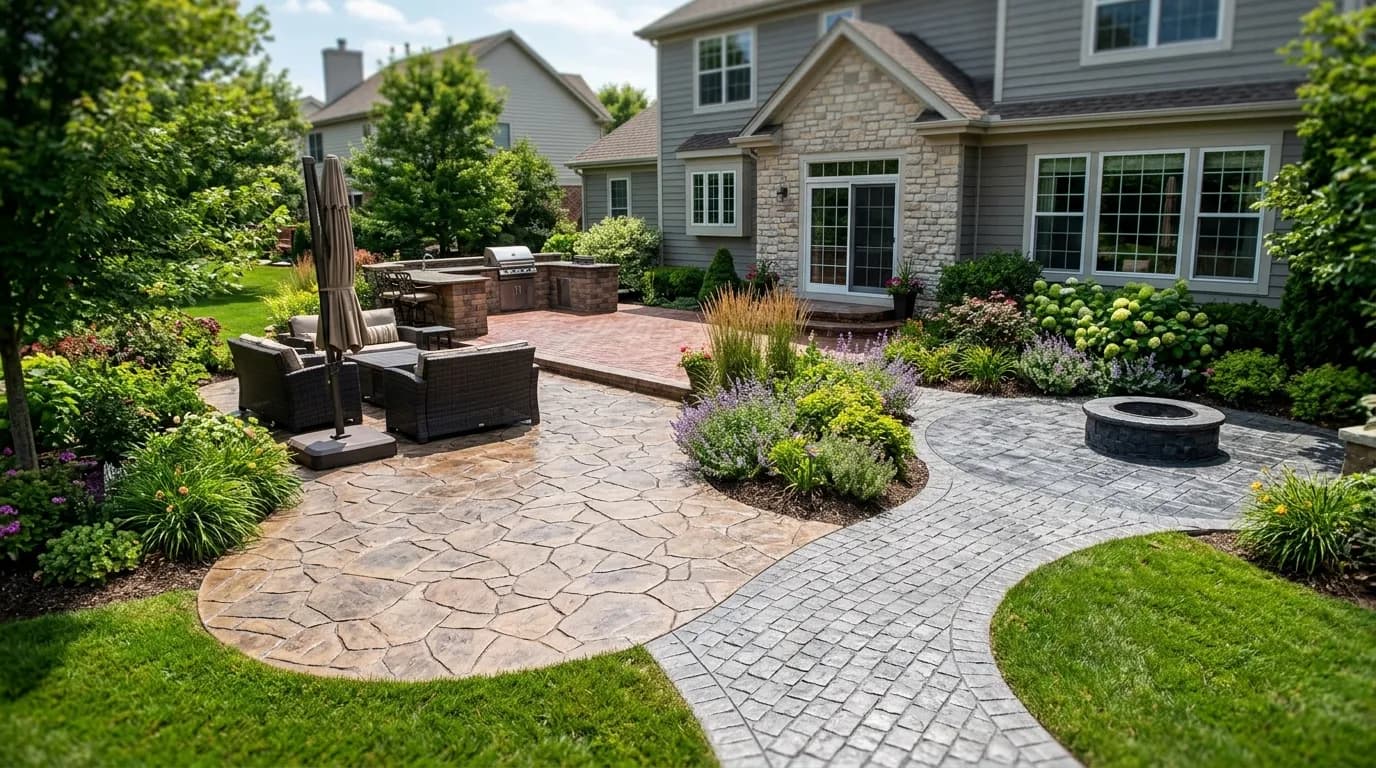
Stamped concrete is one of the best values in outdoor flooring. It looks like natural stone, brick, slate, or even wood — but installs in a single pour and costs significantly less than the materials it imitates. A well-designed stamped concrete patio can anchor an outdoor living space, boost curb appeal, and last 25–30 years with minimal maintenance.
This guide covers 30 stamped concrete patio ideas organized by pattern, color, and style, plus a full cost breakdown, pros and cons, and design tips you won't find in the contractor's sales brochure.
What Is Stamped Concrete?
Stamped concrete is poured concrete that's pressed with rubber stamps while still wet to imprint texture and pattern. Integral color (mixed into the wet concrete), surface color hardener (broadcast on top), or acid stain (applied after curing) adds color. A release agent applied before stamping prevents the stamp from sticking and adds a secondary color tone in the low points — this is what gives stamped concrete its realistic depth.
The result: a continuous concrete slab that looks like individual stone pavers, brick, or wood planks — without mortar joints that collect weeds or individual pieces that can shift, settle, or require replacement.
Stamped Concrete Patterns: 15 Popular Options
1. Ashlar Slate
The most popular stamped concrete pattern in the US. Ashlar slate mimics cut stone in a consistent rectangular grid with varied sizes — resembling high-end flagstone or travertine tile. Works with virtually every architectural style from traditional to contemporary.
Best colors: charcoal gray, buff tan, sandstone beige, or medium brown with darker antiquing release.
Ideal for: formal patios, pool surrounds, driveways, walkways.
2. Random Slate / Irregular Flagstone
Random slate stamping produces an organic, irregular pattern that mimics natural broken flagstone. Unlike the consistent grid of Ashlar, random slate has variation in stone size, shape, and joint width — giving a more naturalistic, rustic feel.
Best colors: earth tones — warm tan, russet brown, natural gray, or olive green with dark antiquing release.
Ideal for: cottage gardens, naturalistic landscapes, informal entertaining spaces.
3. Running Bond Brick
Running bond stamping replicates the classic brick pattern — rectangular units staggered by half a unit per row. From a distance, it's essentially indistinguishable from real clay brick, at a fraction of the cost.
Best colors: terra cotta red, weathered brick red, russet brown. Add a gray or charcoal release agent for a realistic aged-brick effect.
Ideal for: colonial, Georgian, craftsman, and traditional homes. Perfect for front walks, driveways, and formal patios.
4. Cobblestone
Cobblestone stamps produce small, rounded stones in a fan or random arrangement that evokes European village streets. The texture is dramatic and highly tactile.
Best colors: charcoal gray, blue-gray, warm brown. A dark release agent in the joints is essential to make individual "stones" read distinctly.
Ideal for: driveways, side yards, formal garden paths. Creates a striking transition between building and landscape.
5. Herringbone Brick
Like running bond, but the bricks are laid at 45-degree angles in a V-pattern. More visually dynamic than running bond — the angled lines create movement and direct the eye.
Best colors: classic brick reds and browns; also looks striking in gray or charcoal for a contemporary interpretation.
Ideal for: entryways, small accent patios, sections of a larger patio where you want visual interest.
6. Wood Plank / Timber
Wood plank stamping creates parallel boards with realistic wood grain texture — it genuinely looks like pressure-treated decking or reclaimed timber from a normal viewing distance.
Best colors: cedar brown, gray driftwood, weathered teak, redwood. A lighter base color with darker grain texturing reads most realistically.
Ideal for: contemporary and modern farmhouse homes. Creates warmth without the maintenance issues of real wood decking (no splinters, rot, or staining).
7. Travertine
Travertine stamping mimics the distinctive pitted, porous texture of natural travertine stone. Popular for Mediterranean and Spanish-style homes and pools.
Best colors: ivory, cream, light beige, champagne gold. Near-neutral, light colors evoke the real stone most convincingly.
Ideal for: pool surrounds, Mediterranean and Spanish-style outdoor spaces. Light colors also stay cooler underfoot than darker concrete.
8. Slate Texture (Random Rough)
This pattern mimics rough, natural slate tiles with irregular surface texture and varied joint widths — less formal than Ashlar slate, more earthy and organic.
Best colors: blue-gray, charcoal, forest green, russet red. Slate patterns can handle more dramatic color than other styles.
Ideal for: contemporary, craftsman, and naturalistic landscapes.
9. River Rock / Exposed Aggregate Look
River rock stamping creates a surface that looks like smoothed river stones set in mortar — the pattern of round, varied-size stones with mortar between them. Very distinctive and tactile.
Best colors: warm tans and browns to mimic real river stone. Use a natural tan base with a medium brown release.
Ideal for: water features, naturalistic gardens, informal paths.
10. Fan / Basket Weave
Fan stamping creates a sweeping, curved pattern that radiates from corners or circular focal points. Basket weave alternates rectangular units in perpendicular arrangements.
Best colors: buff, warm tan, light gray. Complex patterns read best in lighter, more neutral tones.
Ideal for: large patios where the pattern becomes the design feature; formal gardens.
Color Combinations That Work
Color is where most stamped concrete projects succeed or fail. Here are proven combinations:
11. Gray Base + Charcoal Release
Contemporary, versatile. Works with modern, craftsman, and traditional homes. The gray base stays neutral while the charcoal release adds depth to the joints and texture.
12. Buff Tan Base + Dark Brown Release
The most popular combination overall. Warm, earthy, and universally flattering. Works with brick homes, cream/white homes, and natural wood siding.
13. Terra Cotta Base + Black Release
Bold, Southwestern and Mediterranean in character. The contrast between warm orange-red and black joints is dramatic and eye-catching.
14. Sandstone Base + Burnt Sienna Release
Warm, organic, and beautiful with natural stone or stucco homes. Looks like travertine or natural limestone.
15. Charcoal Base + Black Release
Dramatic, contemporary, and sophisticated. Requires architectural confidence — best for modern homes with strong lines and minimal ornamentation.
16. Light Beige Base + Medium Gray Release
Soft, elegant, and timeless. Works with almost any home color. The gentlest option if you want texture without strong color contrast.
Design Concepts for Full Patios
17. The Multi-Pattern Patio
Use two complementary patterns: a primary pattern for the main patio area and a contrasting border pattern framing the edges. Example: Ashlar slate field with a running bond brick border. The visual separation makes the patio feel purposefully designed rather than poured in one shot.
18. The Color-Band Patio
Same pattern throughout, but use two different color applications: a lighter center field and a darker border band (6–18 inches wide) around the perimeter. Creates strong visual structure without pattern complexity.
19. The Circular Feature Patio
A circular or oval area at the center of the patio in a different pattern or color — often used around a fire pit or table. The circle draws the eye to the gathering space and gives the patio a strong compositional center.
20. The Seamless Pool Surround
Stamped concrete (travertine or Ashlar slate pattern) transitioning seamlessly from patio to pool deck to steps. Unified material makes the entire outdoor space feel intentional and connected.
21. Indoor-Outdoor Continuity
Use the same stamped concrete pattern from an interior concrete floor to the outdoor patio — possible when there's a direct glass door connection. Creates a visual flow that makes the home feel larger.
22. The Stamped-and-Exposed Combination
Combine stamped concrete sections with exposed aggregate sections. Stamped for the formal patio area; exposed aggregate for the path or steps. The textural contrast adds interest while maintaining material continuity.
Stamped Concrete vs. Pavers: Honest Comparison
| Feature | Stamped Concrete | Pavers |
|---|---|---|
| Cost | $8–$18/sq ft | $12–$25/sq ft |
| Appearance | Mimics stone/brick | Actual individual units |
| Repairability | Difficult — full slab | Easy — replace individual units |
| Freeze-thaw | Can crack | Expands/contracts individually |
| Maintenance | Seal every 2–3 years | Occasional joint sand refill |
| Lifespan | 25–30 years properly sealed | 30–50 years |
| Weed risk | Minimal | Joint growth possible |
| Color fade | Yes, over 10–15 years | Minimal |
Bottom line: Stamped concrete costs less and is seamless (no joints). Pavers cost more but can be repaired piece by piece and handle freeze-thaw better in harsh climates (Zone 5 and colder).
Stamped Concrete Cost Breakdown
23. Small Patio (200 sq ft)
- Basic single-pattern stamping: $1,600–$2,400
- Mid-grade with integral color + release: $2,400–$3,200
- Premium multi-pattern with borders + acid stain: $3,200–$4,000+
24. Medium Patio (400 sq ft)
- Basic: $3,200–$4,800
- Mid-grade: $4,800–$6,400
- Premium: $6,400–$8,000+
25. Large Patio + Pool Surround (800 sq ft)
- Basic: $6,400–$9,600
- Mid-grade: $9,600–$12,800
- Premium: $12,800–$18,000+
Per-Square-Foot Cost Guide
| Project Type | Cost Range / Sq Ft |
|---|---|
| Basic stamp, 1 color | $8–$10 |
| Single stamp + release agent | $10–$14 |
| Multi-pattern + integral color | $14–$18 |
| Complex custom design + acid stain | $18–$25+ |
What's included: Concrete pour, stamps, color hardener or integral color, release agent, finishing, sealing. NOT included: demolition of existing surface ($2–$4/sq ft), grading, drainage work, rebar or fiber reinforcement (recommended: add $0.50–$1.50/sq ft).
Common Stamped Concrete Mistakes
26. Skipping the Sealer
Concrete without sealant stains, fades, and deteriorates. A quality acrylic or polyurethane sealant (applied by the contractor, then reapplied every 2–3 years by the homeowner) is essential. Cost: $0.75–$2/sq ft. Never skip it.
27. Wrong Pattern Scale for the Space
Large patterns on small patios make the space feel busy and crowded. Small patterns on large patios look fine but miss an opportunity to make a statement. Match pattern scale to space: large Ashlar patterns for large patios; smaller brick or cobblestone for tight spaces.
28. Too Much Color Contrast
High-contrast color combinations (very light base + very dark release) photograph beautifully but can feel overwhelming in person. In shaded patios especially, high contrast reads as busy. Medium contrast is more livable.
29. No Control Joints
Without properly placed control joints (saw cuts made 24–48 hours after pour), concrete will crack on its own — and not where you want it to. A good contractor places control joints at regular intervals to control where cracking occurs if it does happen. Verify this is part of the spec.
30. Choosing Solely by Price
Stamped concrete is a skilled craft. The pattern alignment, stamp timing (get it wrong by 20 minutes and the surface is too firm or too soft), color consistency, and sealer application all require experience. The difference between a $9/sq ft job and a $14/sq ft job is often the difference between "good enough" and "genuinely beautiful."
Maintenance Guide
Annual: Rinse with garden hose, remove leaves and debris. Inspect for chips, cracks, or delamination.
Every 2–3 years: Reapply concrete sealant. This is the single most important maintenance task — it protects color, prevents staining, and extends life dramatically. Cost DIY: $0.20–$0.60/sq ft in materials. Cost professional: $1–$2/sq ft.
As needed: Spot-treat stains (oil, rust, organic) with appropriate concrete cleaner before they set permanently. Do not use wire brushes, high-pressure power washers (>1500 PSI), or deicers containing ammonium nitrate or ammonium sulfate — all damage the surface.
Plan Your Stamped Concrete Patio
Not sure which pattern or color is right for your home? Yardcast's AI design tool can show you exactly how a new stamped concrete patio will look with your home's existing style, color, and landscaping. Start your free yard design at /redesign — upload photos of your space, choose your style, and get 3 photorealistic designs in under 60 seconds.
Each design comes with a detailed cost estimate, plant list, and implementation plan — everything you need to go from idea to accurate contractor quote.