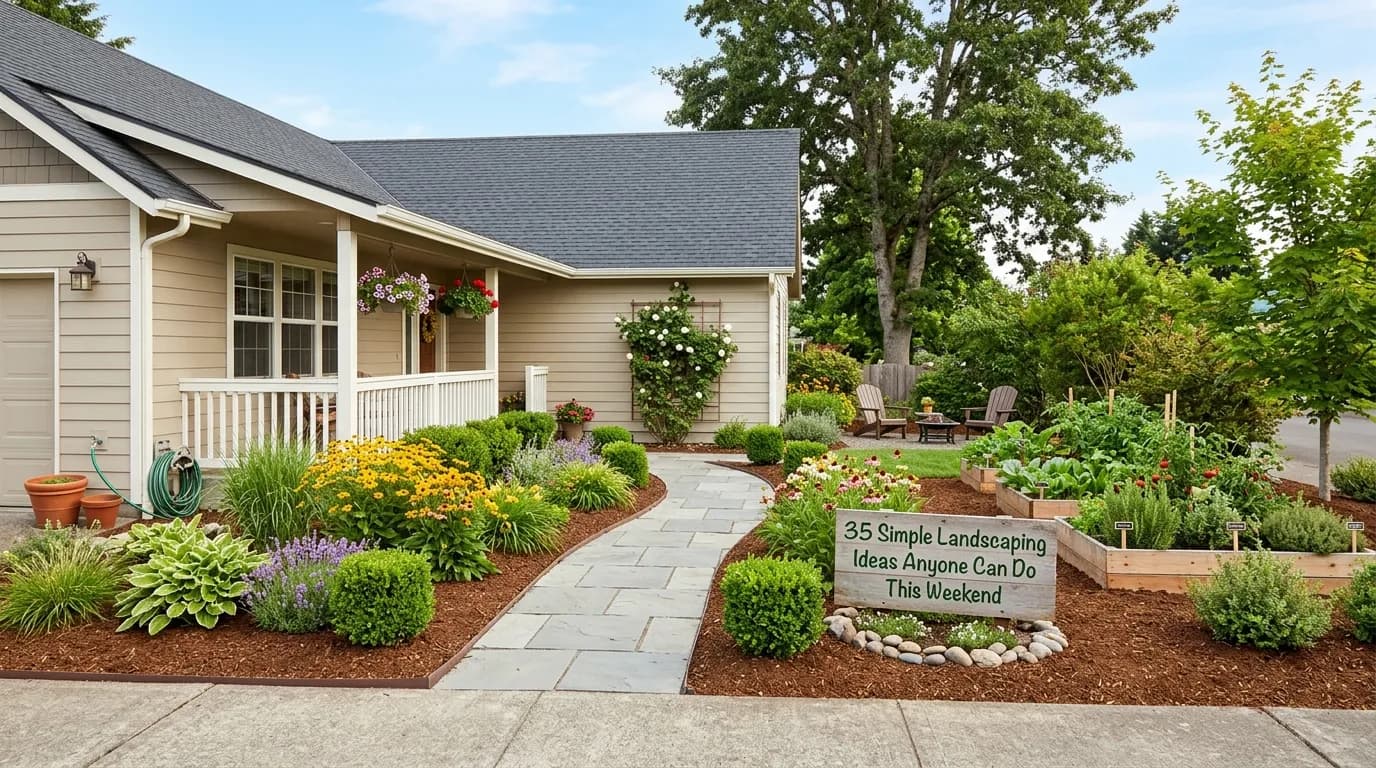
Landscaping doesn't have to be complicated, expensive, or require weeks of planning. Some of the most dramatic yard transformations happen in a single weekend — with simple, focused changes that make an outsized visual impact. Here are 35 simple landscaping ideas ranked from easiest to most involved.
Before You Start: Design First, Dig Later
The single mistake that turns "simple" projects into costly mistakes is buying plants without a plan. Before lifting a shovel, use Yardcast's free AI design tool to preview what your finished yard could look like — based on photos of your actual property. It's free to preview, takes 60 seconds, and prevents expensive do-overs.
Level 1: One-Hour Wins
These can be done today, right now, with minimal cost.
1. Edge All Lawn Borders
A half-moon edger ($15) creates a crisp 2-inch deep cut between lawn and beds. Run it along every bed edge, walkway, and driveway border. This single task makes a yard look professionally maintained instantly. Repeat every 3–4 weeks.
2. Pull Weeds from the Top 3 Visible Areas
Focus only on what's visible from the street. Front bed, entry walkway, and mailbox area. Clean these three spots and the entire property looks better — even if the backyard is a disaster.
3. Add Fresh Mulch
A 2-inch refresh of mulch over existing beds makes tired plantings look newly installed. The contrast of dark, fresh mulch against plant stems and soil creates a clean, finished look. One cubic yard covers approximately 160 square feet at 2 inches deep.
4. Trim Foundation Shrubs to Windows
Shrubs that have grown past the window sills block light, look overgrown, and crowd the house. Trim them to sit below the sill with clean, rounded or squared shapes. This immediately makes the house look larger and the landscape more intentional.
5. Stake Leaning Plants
Floppy perennials, leaning roses, and windblown young trees look messy. A bamboo stake ($1) and soft tie ($3) straightens them instantly. Tall grasses can be given a quick "haircut" with pruning shears if they're sprawling.
6. Deadhead Spent Blooms
Removing dead flower heads from roses, coneflowers, petunias, and most perennials triggers new bud production. It also makes the plant look intentionally maintained rather than neglected.
Level 2: Half-Day Projects
7. Install a Defined Walkway
Line an existing worn path with two rows of stepping stones from a hardware store ($1–$3 each). This takes 2–3 hours and defines entry movement through the yard. Stagger stone sizes for a natural look; keep them level with the lawn for easy mowing.
8. Create a Single Focal Point
Every yard needs one thing the eye goes to first. A large urn planted boldly, a weeping Japanese maple, a bird bath, or a single distinctive boulder. Pick one, place it strategically (centered on the front door axis or at a path corner), and plant around it simply.
9. Plant a Window Box
A window box filled with simple annuals — petunias, geraniums, sweet potato vine — transforms a flat facade into a charming cottage. Basic window boxes run $20–$40; plants cost $15–$25. Total: under $65, installed in an afternoon.
10. Add a Simple Trellis and Climbing Vine
A $15–$20 wooden trellis mounted to a fence or wall, with a climbing plant (clematis, climbing rose, morning glory), adds vertical dimension to a flat fence. Morning glory grows 10 feet in a season from a $3 seed packet.
11. Group Three Containers at the Entry
Odd numbers always look more designed. Three large pots (one tall, one medium, one low) grouped beside the front door with matching plants creates an entry statement. Use the "thriller, filler, spiller" formula: one dramatic tall plant, one bushy filler, one trailing plant.
12. Replace Dying Lawn Patches with Groundcover
Instead of reseeding dead spots in deep shade under trees — where grass will keep failing — replace them with hostas, pachysandra, or creeping phlox. These thrive where grass struggles and never need mowing.
Level 3: Weekend Projects
13. Build a Simple Raised Bed
Four 2×6 cedar boards form an 8×4-foot raised bed: no screws required if you use corner brackets ($8 for a set of 4). Fill with a 50/50 mix of topsoil and compost. Takes 3–4 hours, costs $50–$80. Perfect for vegetables, herbs, or cut flowers.
14. Install Landscape Edging Around All Beds
Steel or aluminum edging ($0.60–$1 per linear foot) installed along bed edges is a one-time project that eliminates weekly re-edging and keeps mulch and grass permanently separated. Measure all bed perimeter, add 10%, and order accordingly.
15. Lay a Gravel Side Yard Path
Side yards are typically muddy, shaded, and impossible to maintain. Lay landscape fabric, then 3 inches of pea gravel between the houses for a clean, functional surface that requires zero maintenance. One ton of gravel ($30–$50) covers approximately 60 square feet at 3 inches.
16. Create a Simple Rock Garden
Choose a sunny, well-drained spot — often a slope or a dry bed where grass won't grow. Place 3–5 large rocks in a natural grouping (odd numbers, different sizes). Fill between them with drought-tolerant plants: sedum, creeping thyme, iceplant, or cacti. Top-dress with gravel. Water once to establish, then almost never.
17. Plant a Low-Maintenance Foundation Bed
The narrow strip along the house foundation is prime landscaping real estate. Simple approach: plant two rows — small boxwood or dwarf spirea along the front edge, slightly taller evergreen shrubs behind, and one or two accent plants flanking the door. Mulch thickly. Done.
18. Add a Fire Pit Circle
Dig a 12-inch deep, 4-foot wide circle. Fill with gravel. Surround with a ring of landscape bricks or larger pavers ($2–$5 each). Center with a steel fire pit bowl ($30–$80). Surround the whole setup with 6–8 Adirondack chairs. This is a complete backyard destination, installed in a weekend.
19. Simplify an Overgrown Mixed Border
If your existing bed has 15 different species crammed together, it looks chaotic. Remove everything but the 3–4 best plants, give them space, mulch heavily, and the same bed suddenly looks designed. Less is dramatically more with borders.
20. Plant a Native Wildflower Meadow Strip
Instead of trying to grow grass in a difficult area (slope, dry soil, deep shade), broadcast a native wildflower seed mix ($15–$25 per pound, covers 500–2,000 sq ft depending on density). Rake lightly, water weekly for 4 weeks, then let nature take over. Second-year blooms are stunning.
Level 4: More Involved But Still DIY
21. Install Pathway Lighting
Low-voltage landscape lighting kits (12 lights + transformer, $50–$100) transform a yard at night. Line a walkway, highlight a focal plant, or accent the house foundation. Plug into a GFCI outlet, set the timer, and done.
22. Build a Simple Garden Arch
A metal garden arch ($30–$60) over a garden gate or path entry point adds vertical structure and a sense of arrival. Plant climbing roses or clematis at the base. After two seasons it's fully covered and looks permanent and established.
23. Install a Rain Garden
A rain garden — a shallow, planted depression that collects runoff from a downspout — handles drainage problems and creates a beautiful native plant feature. Dig a 6-inch deep basin 10 feet from the house, direct a downspout to it, and plant with native moisture-tolerant plants: Joe Pye weed, blue flag iris, swamp milkweed. Water once, then it manages itself.
24. Create a Dry Creek Bed
A dry creek bed along a drainage swale or low area adds visual interest while handling water runoff. Dig a slight channel, line with landscape fabric, and fill with river rocks of varying sizes. Edge the sides with boulders and plant ornamental grasses to frame it. Takes a day, requires no ongoing maintenance.
25. Plant a Privacy Screen with Arborvitae
Green Giant Arborvitae grows 3–5 feet per year and requires zero pruning. Plant 6 feet apart along a property line and in 5 years you have a 15-foot-tall living wall. Bare root seedlings are $3–$5 each online.
Simple Landscaping by Zone and Style
26. Simple Desert Landscaping (Southwest)
Decomposed granite ($35–$60/ton) as a ground cover, bordered by boulders. Plant three to five desert-adapted specimens: agave, palo verde tree, desert willow, globe mallow. No irrigation needed after year one.
27. Simple Cottage Landscaping (Midwest/East)
A classic cottage border needs only three reliable layers: tall ornamental grasses or hollyhocks at the back, mid-height coneflowers and peonies in the middle, catmint or creeping phlox at the front. Dense planting suppresses weeds and looks full from year one.
28. Simple Tropical Landscaping (Florida/Southeast)
Three plants create the tropical look with almost no effort: canna lilies (dramatic, easy, divide every few years), bird of paradise (architectural, low maintenance), and ornamental banana. All grow fast, require minimal care, and create an instantly lush effect.
29. Simple Shaded Backyard
For deep shade under large trees: create a hosta collection. Select 8–10 hosta varieties in varying sizes and leaf colors (gold, blue-green, variegated). Mass them in groups of three. Add a few ferns for texture. Add decomposed stone paths between groupings. Requires no sun.
Simple Landscaping Mistakes to Avoid
30. Planting Too Small
The most common beginner mistake: buying small plants because they're cheaper, then spacing them for their mature size (which looks sparse for years). Better approach: buy medium-sized plants, space them slightly closer than recommended, and thin as needed later. Immediate fullness beats waiting 5 years.
31. Using Too Many Colors
A bed with 8 different flower colors looks busy and amateur. Choose 2–3 colors and repeat them throughout. Classic combinations: white + blue + purple; yellow + orange + red; pink + white + green (foliage).
32. Ignoring Scale
A 6-inch shrub planted against a 25-foot-wide house looks lost. Match plant size to structure size. Foundation shrubs for a large house should reach 4–5 feet at maturity. Scale up bolder than you think.
33. Straight Lines in Natural Areas
Straight rows of shrubs or plants in naturalistic settings look institutional. Use curved, sweeping groupings for gardens. Reserve straight lines for hedges, formal gardens, and hardscape edging.
Get a Design Before You Dig
Even for simple landscaping, having a visual plan prevents the most common and costly mistakes. Use Yardcast's free AI tool to upload photos of your yard and see three different design options — each with a complete plant list and cost estimate — in under 60 seconds.
See your yard transformed before you buy a single plant. Preview is completely free. →
Simple Landscaping Cost Guide
| Project | Time Required | Cost Range |
|---|---|---|
| Edge and mulch beds | 2–4 hours | $50–$150 |
| Stepping stone path | 3–4 hours | $30–$80 |
| Container entry grouping | 1–2 hours | $60–$120 |
| Raised garden bed | 3–5 hours | $50–$100 |
| Gravel side yard | 4–6 hours | $80–$150 |
| Foundation planting | 4–8 hours | $150–$400 |
| Privacy arborvitae screen | 4–6 hours | $50–$200 |
| Fire pit circle | 6–8 hours | $100–$250 |
| Pathway lighting | 2–3 hours | $60–$150 |
| Wildflower meadow | 2–3 hours | $20–$50 |