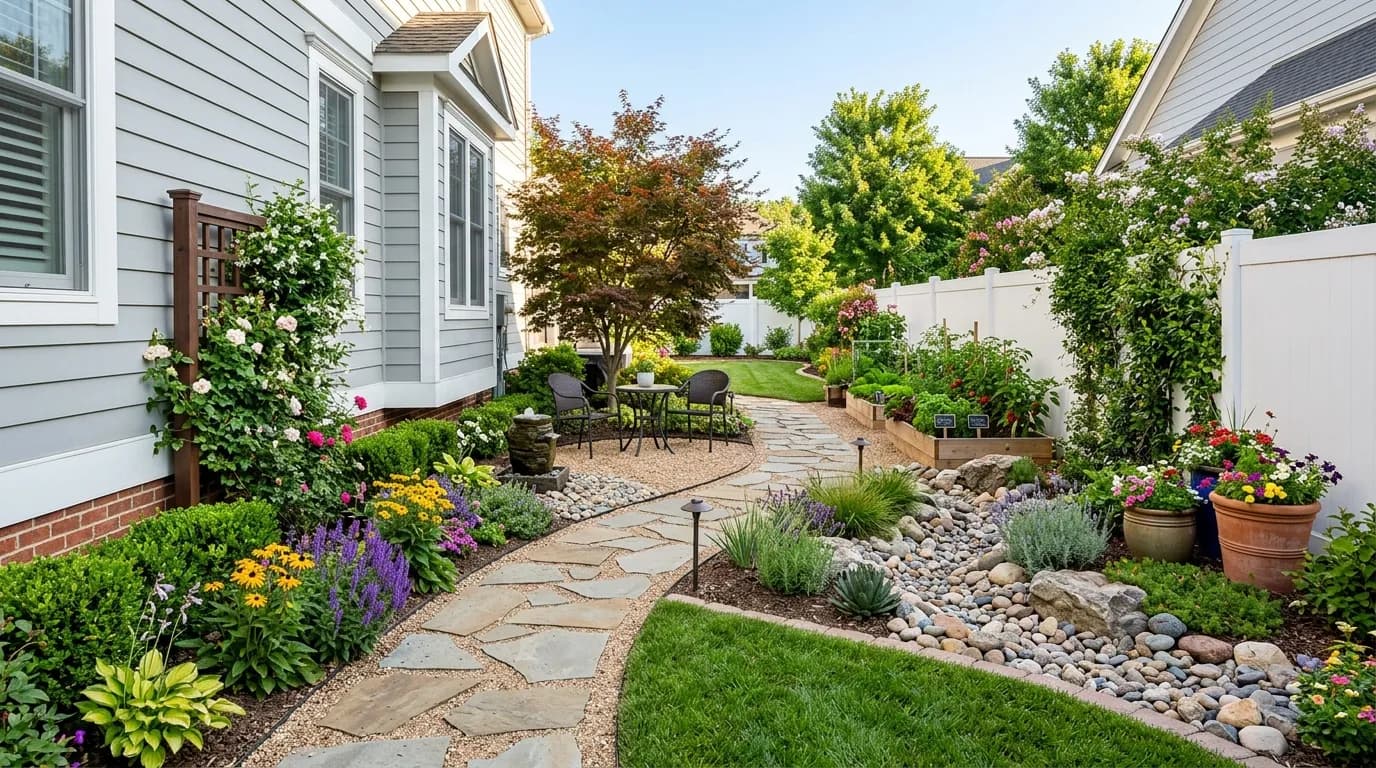
The side yard is the most neglected space in the typical residential landscape. It's usually an afterthought: a narrow strip between house and fence used for nothing but trudging to the back gate, storing a hose, or letting weeds grow uninhibited. But that strip of land — typically 3 to 12 feet wide — is prime real estate with real potential.
Done right, a side yard becomes a secret garden path, a productive growing space, a screened utility corridor, or an elegant architectural feature that makes your entire property feel intentional. Here are 25 side yard landscaping ideas for every width, budget, and design style.
Understanding Your Side Yard
Before choosing a design, assess your specific conditions:
Width categories:
- Narrow side yard (3–5 feet): Focus on vertical interest, path function, and low-maintenance plants
- Medium side yard (5–8 feet): Can accommodate a true garden bed, small seating nook, or utility zone
- Wide side yard (8+ feet): Full design opportunity — outdoor kitchen, garden rooms, greenhouse, play area
Light conditions: South-facing side yards can be sunny and hot. North-facing strips are often shaded and cool. East and west exposures vary by season. Measure your actual sun exposure before choosing plants.
Drainage: Side yards often collect roof runoff and have poor drainage. This affects plant selection and may require grading or a dry creek bed solution.
25 Side Yard Landscaping Ideas
1. Gravel + Stepping Stone Path
The most practical solution for any narrow side yard: decomposed granite or pea gravel with stepping stones. Set 18–24 inch diameter concrete, flagstone, or natural stone steppers in the gravel. Edge with steel landscape edging for a clean line. This solves drainage, eliminates mowing, and creates a clear path in one move. Cost: $400–$1,200.
2. Secret Garden Path
Line a wider side yard path with lush plantings on both sides — ornamental grasses, ferns, hydrangea, astilbe — to create a "secret garden" feel. Add a small gate at the street end for a magical arrival experience. This design makes the side yard a destination, not just a throughway.
3. Shade Garden Under Eaves
The narrow strip under deep eaves often gets almost no rain and little sun. Plant shade-tolerant, drought-adapted plants: hostas, liriope, heuchera, and Japanese forest grass thrive here. Add a layer of pine bark mulch and this maintenance-free garden basically takes care of itself.
4. Dry Creek Bed Drainage Solution
If your side yard has drainage issues (standing water after rain), a dry creek bed solves the problem beautifully. Excavate a shallow channel, line it with landscape fabric, then fill with river rock of varying sizes. Plant ornamental grasses and water-tolerant plants along the banks. Functional and genuinely beautiful.
5. Vertical Garden on the Fence
Install a modular wall planter system on your fence or house wall. These vertical garden systems hold 20–40 plants in a 4x8 foot space. Use a mix of ferns, succulents, herbs, or annuals depending on sun exposure. Transforms a blank fence into a living wall. Cost: $200–$800.
6. Narrow Raised Bed Vegetable Garden
A 24–30 inch wide raised bed running the length of your south-facing side yard is one of the most productive growing spaces per square foot in any residential property. Grow tomatoes, cucumbers, beans, and greens with a vertical trellis against the fence. A 3x20 foot raised bed can produce more food than a 200 sq ft in-ground garden.
7. Espalier Trees on the Wall or Fence
Espalier is the art of training fruit or ornamental trees flat against a wall in a formal pattern. Apple, pear, citrus (in warm climates), camellia, and pyracantha all work beautifully. Espalier trees take up almost no ground footprint while creating dramatic vertical structure. Perfect for 2–3 foot wide strips.
8. Bamboo Privacy Screen
Plant a clump-forming (non-invasive) bamboo variety along the side yard fence: Fargesia robusta or Fargesia murielae are beautiful, non-spreading, and reach 10–15 feet tall. They create a natural privacy screen and soft rustling sound. Always avoid running bamboo — it will spread into your neighbor's yard. Zones 5–9.
9. Climbing Rose on Fence
A climbing rose trained along a side yard fence transforms an ugly fence into an annual showstopper. 'New Dawn' (light pink, extremely vigorous), 'Don Juan' (red, fragrant), and 'Blaze' (red, cold-hardy) are top picks for fence coverage. Install horizontal wire supports spaced 18 inches apart for the canes to tie into.
10. Outdoor Art Corridor
In a wider side yard, create a "gallery corridor" — a path lined with outdoor sculpture, large planters, or vertical art panels. Use uplights at each piece for dramatic evening ambiance. This transforms an awkward pass-through into an intentional art experience. Particularly effective in modern and contemporary home styles.
Planning a complete side yard overhaul? [Try Yardcast's free AI landscape designer](/redesign) — upload your yard photos (including the side yard) and get 3 photorealistic design options with plant lists and cost estimates in under 60 seconds.
11. Pollinator Corridor
Native plants in a side yard become a pollinator corridor connecting front and back gardens. Plant a mix of coneflower, black-eyed Susan, native asters, salvia, and ornamental grasses. A pollinator corridor increases biodiversity, requires minimal maintenance after establishment, and looks beautiful in a naturalistic, informal way.
12. Japanese Moss Garden
In a shaded north-facing side yard, embrace the conditions: grow Japanese moss (Sagina subulata or collected native moss) as a ground cover between stepping stones. Add Japanese maples, bamboo, or ferns for vertical interest. This zen garden approach turns a challenging space into a refined feature.
13. Outdoor Shower
A wide side yard adjacent to a pool or beach-access home is a natural location for an outdoor shower. Install a simple deck platform, privacy screen, and plumbing. Tropical plants — elephant ear, bird of paradise — surround it for a resort feel. Very practical, adds real value in the right market.
14. Side Yard Dog Run
For dog owners, a side yard dog run with a gravel or artificial turf surface, side gate access, and sturdy fencing is a practical and humane solution. Keep it clean with a drain, provide shade with a shade sail, and add a water station. This gives dogs a dedicated space outside the main garden area.
15. Herb Garden Lane
Line both sides of a path with culinary and medicinal herbs: rosemary, lavender, thyme, sage, mint (contained in pots), lemon balm, chives, and parsley. Brush against them as you walk through to release fragrance. Practical, productive, beautiful — and the most affordable side yard idea on this list.
16. Stacked Stone Retaining Wall + Planting Beds
If your side yard has a grade change, use it as a design opportunity. Build a stacked stone or concrete block retaining wall, creating a raised planting bed above. Fill it with colorful plantings visible from the street. This elegant solution handles drainage, prevents erosion, and creates one of the most architecturally interesting side yard features possible.
17. Woodland Garden Path
Use native woodland plants to create a naturalistic path: Virginia bluebells, mayapple, trillium, wild ginger, and native ferns create a ground cover tapestry under a small dogwood or serviceberry tree. This low-maintenance approach works beautifully in part to full shade and supports native bird and insect populations.
18. Trellis + Vines Privacy Screen
Build a simple wood or metal trellis frame (6–8 feet tall) and train fast-growing climbing plants over it to create a privacy screen from neighbors. Clematis, climbing roses, or star jasmine provide seasonal screening with flowers. Evergreen options include climbing euonymus or English ivy (in mild climates).
19. Utility Zone (Done Well)
Every side yard needs somewhere to put the hose, trash bins, AC unit, and garden tools. Instead of ignoring this, design it: a simple cedar screen with a gate hides bins from view. Add a wall-mounted hose reel, built-in tool storage, and a composter. A designed utility zone makes the whole yard function better.
20. Bioswale / Rain Garden
Convert a perpetually wet side yard into a bioswale — a shallow planted channel designed to accept and filter stormwater runoff. Plant with water-tolerant natives: cardinal flower, blue flag iris, Joe Pye weed, sedges, and swamp rose mallow. These rain gardens handle 3–5 inches of runoff and are stunning in summer bloom.
21. Tropical Paradise Strip
In USDA zones 9–11 (Southern California, South Florida, Gulf Coast), a south-facing side yard can support tropical plantings year-round: bird of paradise, plumeria, ginger, heliconia, and bromeliads. These bold, architectural plants turn a narrow strip into a lush tropical alley. Elsewhere, large-leafed tropicals work as summer annuals.
22. Gravel Meditation Garden
For a side yard adjacent to a home office or master bedroom, create a simple meditation garden: a band of fine raked gravel or decomposed granite, a few carefully placed stones, clipped boxwood balls or ornamental grasses as punctuation marks, and a simple bench. Minimal, calming, and maintenance-free once established.
23. Fence-Mounted Planters with Seasonal Color
Install fence-mounted planter brackets at varying heights along your side yard fence. Fill with seasonal color: tulips and daffodils in spring, geraniums and petunias in summer, kale and ornamental cabbage in fall. This simple approach costs under $300 for a complete side yard and makes a huge visual impact.
24. Narrow Lawn Replacement
If you have a strip of struggling lawn in the side yard — and most side yard lawns struggle — replace it entirely. Options: ground cover (liriope, pachysandra, ajuga), ornamental gravel, decomposed granite with stepping stones, or a mulched bed with shrubs and perennials. All options look better and require dramatically less maintenance than a struggling lawn strip.
25. Outdoor Storage + Garden Shed Integration
A wide side yard (8+ feet) can accommodate a small garden shed or storage unit, integrated into the landscape with plantings. Screen the shed with tall ornamental grasses, climbing vines on a trellis, or a hedge. Add a path leading to it. A well-integrated shed in the side yard frees up the main backyard for living, entertaining, and garden beauty.
Side Yard Plant Guide by Condition
Full sun, dry (south-facing under eaves):
Lavender, rosemary, creeping thyme, sedum, agave (Zone 8+), yarrow, Russian sage
Part shade, average moisture:
Hostas, heuchera, astilbe, Japanese forest grass, ferns, bleeding heart, lungwort
Deep shade, dry:
Liriope, pachysandra, sweet woodruff, epimedium, English ivy (where not invasive), vinca minor
Wet / drainage problems:
Swamp rose mallow, Joe Pye weed, cardinal flower, blue flag iris, sedges, buttonbush, river birch
Narrow (3–5 ft), any light:
Ornamental grasses, columnar plants (sky pencil holly, emerald green arborvitae), climbing plants on fence, ground covers
Side Yard Budget Guide
| Project Type | DIY Cost | Installed Cost |
|---|---|---|
| Gravel path + steppers | $200–$600 | $800–$2,000 |
| Raised vegetable bed | $300–$800 | $1,000–$3,000 |
| Dry creek bed | $400–$1,200 | $1,500–$4,000 |
| Privacy fence + plantings | $500–$2,000 | $2,000–$7,000 |
| Full garden design + install | $1,000–$5,000 | $3,000–$15,000 |
Before you start digging, see your side yard transformed. [Try Yardcast's free AI design tool](/redesign) — upload a photo of your side yard, tell the AI your goals, and see 3 professionally designed options with zone-matched plant lists and cost breakdowns. Free to preview, takes 60 seconds.