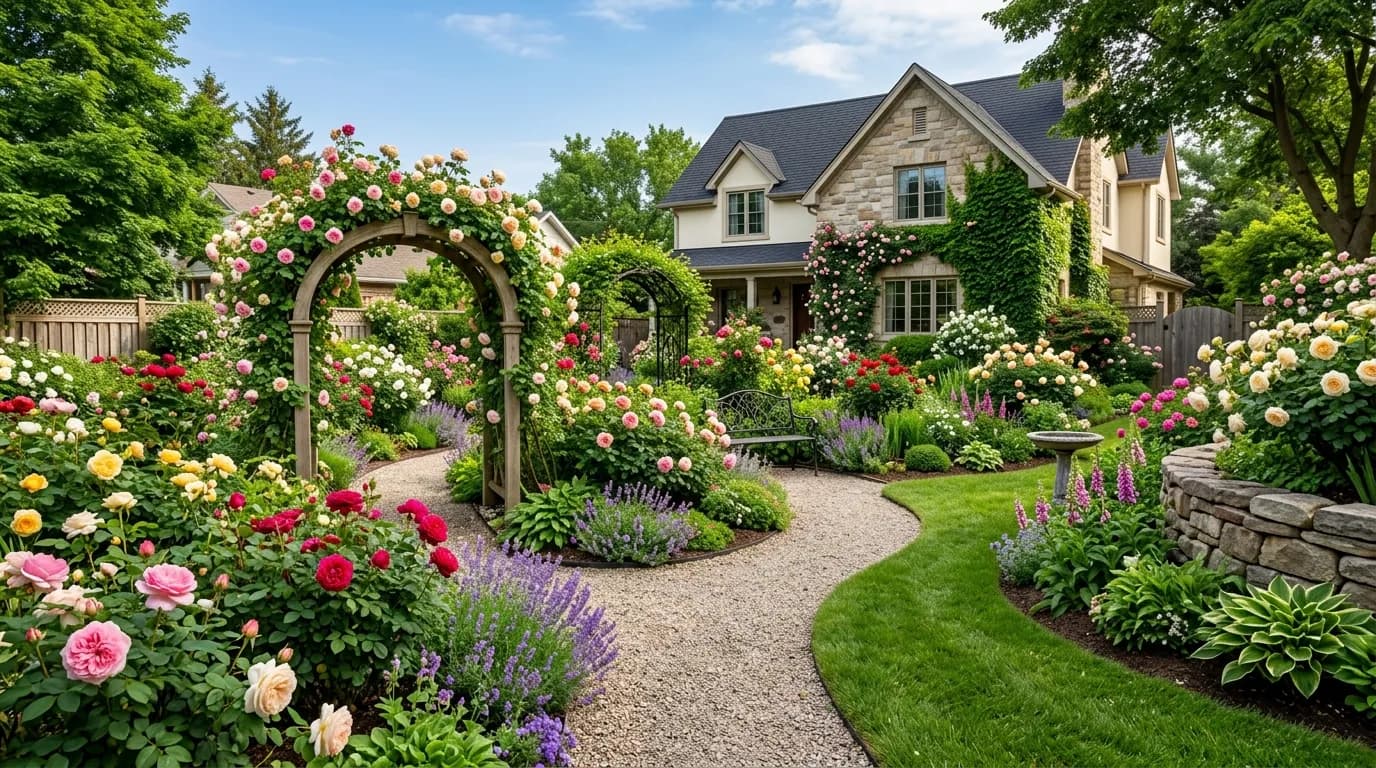
Roses are the most searched landscaping plant in the world — and for good reason. No other plant delivers the same combination of fragrance, color, historical romance, and design flexibility. Whether you want a romantic cottage garden overflowing with Old Garden roses, a modern formal parterre with hybrid teas, or a low-maintenance modern landscape with disease-resistant shrub roses, there's a rose garden idea here for you.
This guide covers 30 rose garden ideas organized by style, size, and skill level — with specific variety recommendations, companion plant suggestions, cost breakdowns, and expert design tips for every climate zone.
Why Roses Are the Ultimate Landscape Investment
Before diving into ideas, let's address the misconception that roses are "too difficult." That reputation belongs to a previous generation of hybrid teas that demanded constant spraying, precise deadheading, and winter protection. Modern shrub roses — especially the Knockout, Drift, and Earth-Kind series — are genuinely low-maintenance while delivering spectacular color from May through November.
What roses offer that few other plants can match:
- Repeat bloom from late spring through hard frost
- Fragrance that transforms your entire yard experience
- Exceptional cut flower production
- Enormous range: ground-hugging Drift roses (18 inches tall) to climbing New Dawn covering a two-story fence
- Property value impact — a well-designed rose garden consistently adds perceived value
The one non-negotiable: roses need at least 6 hours of direct sun. The rest — soil, watering, fertilizing — is flexible and manageable.
Rose Garden Ideas by Style
1. The Classic Cottage Rose Garden
The archetypal English cottage garden layers Old Garden roses with perennials in a seemingly effortless tangle of bloom and fragrance. Choose roses with historic charm: 'Madame Alfred Carrière' (white, climbing, shade-tolerant), 'Gertrude Jekyll' (rich pink, intense fragrance), 'Graham Thomas' (golden yellow, David Austin rose), and 'Constance Spry' (soft pink, large cupped blooms).
Key elements: Winding stone or brick paths, wooden picket or wire fencing for climbers, foxglove, delphinium, lavender, catmint, and lady's mantle as companions. Let plants slightly overspill paths for that intentional-informal look.
Best for: Front yards, side yards with a fence, south-facing beds with strong sun.
2. Modern Minimalist Rose Garden
Pair disease-resistant shrub roses with clean lines and limited color palette. Three rows of 'Knockout Red' roses (all the same variety, all the same height) backed by a smooth stucco wall, edged with steel landscape edging, mulched with decomposed granite. The repetition IS the design.
Key elements: Single rose variety in mass planting, contemporary hardscape (steel edging, poured concrete paths, gravel mulch), tight spacing for a hedge effect, zero other flowering plants to dilute the visual impact.
Best for: Modern homes, urban gardens, anyone who wants simplicity over romance.
3. Formal Parterre Rose Garden
Geometric beds divided by formal paths, with rose standards (tree-form roses on long stems) as vertical anchors and low boxwood hedging as the frame. This is the Versailles look — structured, symmetrical, intentional.
Best roses for parterres: Hybrid teas for their high-centered blooms and strong stems ('Mr. Lincoln' red, 'Peace' yellow-pink, 'Double Delight' red-and-white bicolor). Underplant with standard annuals (white alyssum, blue lobelia) for clean contrast.
Cost note: Formal parterres require significant hardscape investment ($3,000–$15,000+) but last for generations. If you're considering this style, generate a free AI landscape design at Yardcast to visualize it on your actual property before budgeting.
4. The Climbing Rose Pergola
A rose-draped pergola is arguably the single most dramatic thing you can do with a $200 plant and a $800 structure. Climbing roses like 'New Dawn' (soft pink, vigorous, cold-hardy to Zone 5), 'Don Juan' (deep red, richly fragrant), and 'Fourth of July' (red-and-white striped) can cover a 10-foot pergola in 3–4 years and bloom reliably for 20+.
Design tip: Train canes horizontally along the pergola beams rather than letting them grow straight up — horizontal canes produce far more blooms (a rose's natural tendency is to bloom at the arc of a bend).
Best for: Defining an outdoor room, creating a garden entrance, framing a pathway.
5. Foundation Rose Planting
Low-growing shrub roses like the Drift series (Pink Drift, Coral Drift, Red Drift — all 18–24 inches tall) make exceptional foundation plants that replace temperamental junipers and burning bush. They bloom spring through frost, require no special care, and never outgrow their space.
Spacing: 3–4 feet apart. Plant 18–24 inches from the foundation for airflow. Mix with ornamental grasses (blue fescue, Karl Foerster) and dwarf conifers for year-round structure.
Rose Garden Ideas by Yard Size
6. Small-Space Rose Garden: The Container Collection
Don't have ground space? A collection of 3–5 large containers (15–20 gallons each) planted with miniature roses, patio roses, and cascading Drift roses creates a showstopper entry or patio focal point.
Container-perfect varieties: 'The Fairy' (soft pink clusters, exceptional disease resistance), 'Cupcake' (miniature pink hybrid tea form), 'Baby Love' (single yellow flowers, extremely compact), 'Sweet Chariot' (miniature lavender, highly fragrant).
7. Narrow Side Yard Rose Tunnel
A narrow side yard (4–8 feet wide) with arched metal hoops every 4 feet, planted with climbing roses on each side, creates an enclosed floral tunnel that's genuinely magical when blooming. Use the same climbing variety on both sides for symmetry.
Best climbing roses for this: 'Blaze' (red, vigorous, disease-resistant), 'America' (coral-salmon, ARS winner), 'Cecile Brunner' (pink clusters, antique charm).
8. Large Property Rose Border
A 50–100 foot mixed rose border backing a lawn area mixes shrub roses of varying heights: tall grandifloras (4–6 feet) at the back, hybrid teas in the middle, low Drift roses at the front edge. Weave in ornamental grasses and Russian sage for textural contrast and to extend the season.
Plant count for a 50-foot border: 8–10 tall roses (back), 10–12 mid-height (middle), 12–15 Drift roses (front edge) = 30–37 total plants, approximately $600–$1,100 in plant material.
Rose Garden Ideas by Color Theme
9. All-White Rose Garden
A monochromatic white rose garden is elegant, bright in the evening, and pairs beautifully with silver-leaved companions (artemisia, lamb's ears, white-variegated hostas).
White rose varieties: 'Iceberg' (floribunda, extremely disease-resistant, prolific bloomer), 'White Knock Out' (shrub rose, bulletproof), 'Madame Plantier' (old garden rose, one-time intense bloom), 'Prosperity' (climber, clusters of small white blooms).
10. Hot Color Sunrise Garden
Opposite of subtle: plant 'Mardi Gras' (orange-yellow blend), 'Julia Child' (buttery gold), 'Hot Cocoa' (russet-orange), and 'Easy Spirit' (coral) together for an energetic, tropical-feeling bed that reads as a single sunrise-colored mass from a distance.
11. Romantic Pink and Purple Cottage
Layer soft pink roses ('Bonica', 'The Fairy', 'Cecile Brunner') with purple alliums, blue salvia, and lavender for a color combination that photographs beautifully and smells extraordinary.
Mid-Article Check: Ready to Design Your Rose Garden?
You don't have to figure this out on graph paper. [Upload a photo of your yard at Yardcast.ai](/redesign) and get 3 AI-generated landscape designs in under 60 seconds — including a rose garden layout tailored to your exact space, sun exposure, and climate zone. Free preview. $29 to download.
Rose Garden Ideas by Climate
12. Zone 9–11 (California, Florida, Gulf Coast): Heat-Tolerant Roses
Traditional hybrid teas can stress in extreme heat. Choose heat-adapted varieties: 'Belinda's Dream' (Texas Superstar, disease-resistant in humidity), 'Cecile Brunner' (thrives in heat), 'Caldwell Pink' (virtually indestructible in the South), and any "Earth-Kind" rose designated by Texas A&M.
Florida tip: Avoid black spot-susceptible varieties. Knockouts, Drifts, and Earth-Kind roses are your best bets. Plant October–March to avoid summer transplant stress.
13. Zone 3–5 (Minnesota, Upper Midwest, Canada Border): Cold-Hardy Roses
Many rose varieties die back to the snow line in Zone 4–5 winters. Choose own-root roses (not grafted) that regenerate from the roots: Explorer series ('William Baffin', 'John Cabot', 'Frontenac'), Parkland series ('Morden Sunrise', 'Winnipeg Parks'), and Rugosa roses (wrinkled foliage, extremely cold-hardy to Zone 2).
Rugosa highlight: Rosa rugosa hybrids offer exceptional cold hardiness, salt tolerance, large fragrant blooms, and ornamental fall rose hips. 'Hansa' (purple-red), 'Blanc Double de Coubert' (white), and 'Therese Bugnet' (pink, extremely fragrant) are top performers.
14. Zone 6–7 (Mid-Atlantic, Midwest): The "Goldilocks" Rose Zone
Most roses perform beautifully in Zones 6–7. This is where you have the widest variety selection. Hybrid teas, David Austin English roses, modern shrub roses — all are viable. Focus on disease resistance to avoid the humidity-driven black spot issues of late summer.
Design Techniques for a Professional-Looking Rose Garden
15. Odd Numbers Rule
Plant roses in groups of 3, 5, or 7 of the same variety rather than one-of-each mixing. Mass planting creates bold color impact; individual specimen roses get lost. Three 'Knockout Red' roses together read as a design statement; one 'Knockout Red', one 'Bonica', and one 'Julia Child' reads as a collection.
16. Layer Heights for Depth
Front-to-back height layering: ground cover roses or low perennials (12–24 inches) → mid-height shrub roses (3–4 feet) → tall hybrid teas or grandifloras (4–6 feet) → climbing roses on fence or trellis (8–15 feet). This staircase silhouette gives the garden depth and allows every plant to be seen.
17. Use Hardscape to Define the Space
A rose garden without structure looks like an accident. Even a simple low fence, curved stone edge, or wooden arbor gives the planting context and intentionality. A 3-foot picket fence enclosing a 12x12 rose garden costs $150–$400 in materials and transforms the perception of the planting entirely.
18. Underplant for Season Extension
Rose canes are bare and unattractive in early spring. Interplant with spring bulbs — alliums especially (they also deter aphids), plus tulips and narcissus — that bloom before roses leaf out. Fill the base with low mounding perennials (hardy geraniums, catmint, ajuga) that hide bare rose ankles through the season.
19. Fragrance by Zone: Plant for Evening Scent
Some roses have intense fragrance; many modern disease-resistant varieties sacrifice fragrance for other traits. If fragrance matters, plant the most fragrant varieties near your outdoor living areas, especially where you sit in the evening. Top fragrant varieties: 'Mr. Lincoln' (intense classic rose), 'Gertrude Jekyll' (myrrh and rose), 'Mister Lincoln', 'Fragrant Cloud', 'Double Delight', and most Old Garden roses (Gallicas, Damasks, Bourbons).
Rose Garden Cost Guide
| Garden Type | DIY Cost | Professional Install |
|---|---|---|
| 3-rose container collection | $75–$200 | $400–$800 |
| 5-rose foundation border | $150–$400 | $800–$2,000 |
| 15-rose cottage garden | $500–$1,200 | $2,500–$6,000 |
| Climbing rose pergola | $200 plant + $800 structure | $2,500–$5,000 |
| Full formal parterre | $2,000–$5,000 | $8,000–$25,000+ |
Plant costs vary by variety and source: bare-root roses (order winter/early spring) cost $15–$40; container roses from nurseries run $25–$60. David Austin English roses run $40–$80 each.
The 10 Best Rose Varieties for Beginners
- 1Knock Out Red — bulletproof, no spray, no deadhead, Zone 4–11
- 2Pink Drift — 18-inch groundcover, exceptional disease resistance
- 3Iceberg (floribunda) — white, nearly disease-free, prolific
- 4The Fairy — small pink clusters, shade-tolerant (needs only 4 hours sun)
- 5Julia Child — buttery gold, strong fragrance, disease-resistant
- 6Bonica — soft pink, arching habit, excellent disease resistance
- 7William Baffin — climbing, Zone 3, virtually indestructible
- 8Belinda's Dream — heat/humidity tolerant, Texas Superstar
- 9Carefree Wonder — pink/white bicolor, low maintenance
- 10Coral Drift — 18–24 inches, perfect edging or container
Frequently Asked Questions About Rose Gardens
See FAQ schema below for search-optimized answers.
What is the easiest rose to grow for beginners?
Knockout roses are by far the easiest. They're disease-resistant, repeat-bloom from spring through frost, require no deadheading, and tolerate drought, heat, and humidity.
How far apart should I plant roses?
Shrub roses need 4–6 feet between plants. Hybrid teas need 3–4 feet. Miniature roses can be 18–24 inches apart. Proper spacing allows airflow, which prevents disease.
What companion plants go well with roses?
Classic companions: lavender (repels aphids), catmint, salvia, alliums, hardy geraniums, lady's mantle, ornamental grasses. For cottage style, add foxglove, delphinium, and peonies.
Start Your Rose Garden With an AI Design
The hardest part of planting roses isn't growing them — it's figuring out where they go. How many? What varieties? How do you arrange them with everything else in the yard?
[Get 3 AI landscape designs for your yard at Yardcast.ai →](/redesign)
Upload a photo of your yard, answer 4 quick questions about your style and budget, and in 60 seconds you'll see three professional landscape designs — including how roses could work in your specific space. Plant lists, cost estimates, and contractor-ready PDFs included. Free preview, $29 to download.
Your rose garden starts with a plan. Let the AI build it for you.