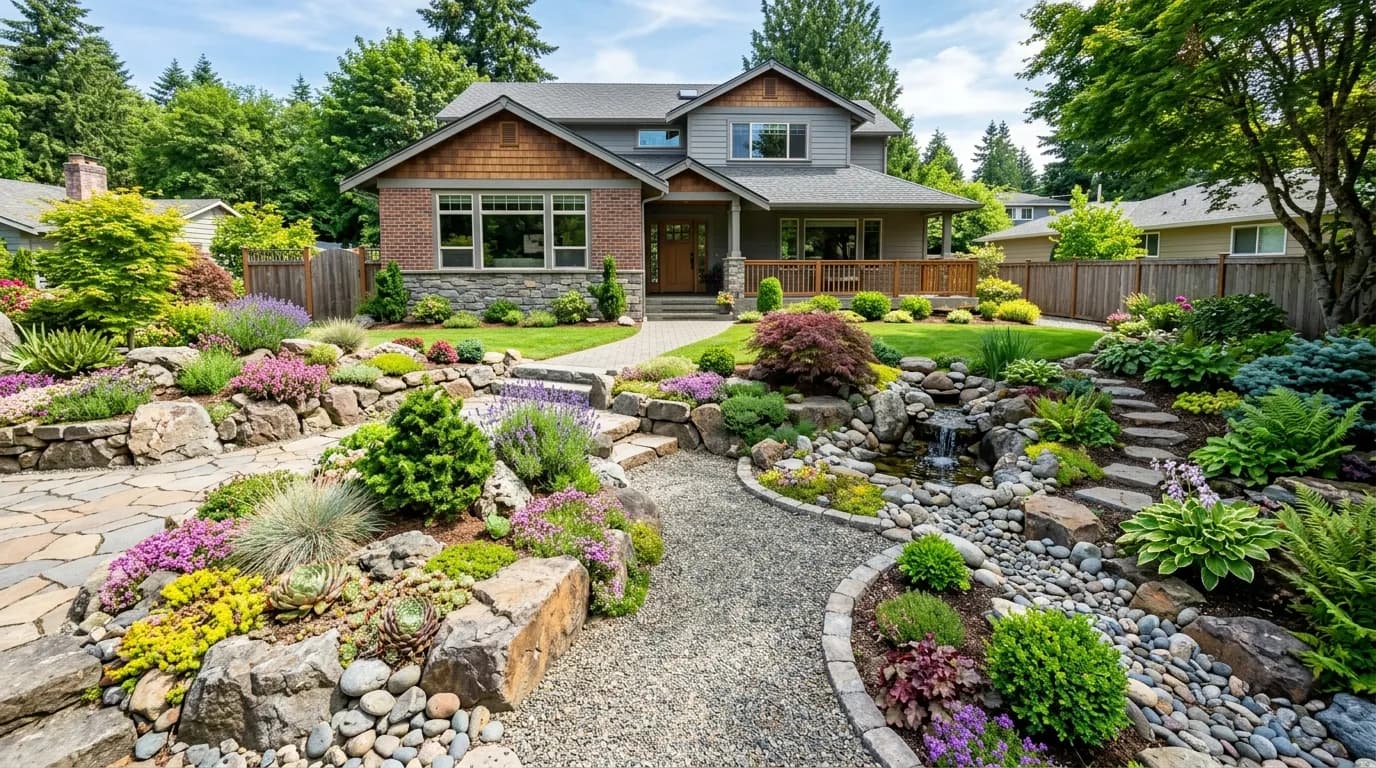
Rock gardens are one of the most versatile and enduring landscape styles. They work on flat ground, slopes, tiny urban yards, and sprawling rural properties. Done right, a rock garden requires almost no irrigation, no mowing, and minimal upkeep — while delivering striking texture, structure, and year-round visual interest.
Whether you're working with an awkward slope, dry climate, or just want something beautiful that doesn't demand your weekends, here are 35 rock garden ideas to inspire your next project.
Why Rock Gardens Work So Well
Rocks create permanent structure that looks great even in winter when plants are dormant. They suppress weeds, retain soil moisture, moderate soil temperature, and provide drainage for plants that hate wet feet. From a design perspective, rocks add weight, texture, and naturalistic beauty that's hard to achieve with plants alone.
Rock gardens are also inherently low-maintenance. Once established — usually by the second season — most rock garden plants are drought-tolerant and self-sustaining. You're not fighting the environment; you're working with it.
35 Rock Garden Ideas
1. Alpine trough garden. Fill an old stone trough or hypertufa container with gritty soil and plant with miniature alpine plants: dwarf sedums, saxifrages, encrusted rock cress, and Sempervivum (hen and chicks). Perfect for a patio or doorstep.
2. Slope erosion control with boulders and ornamental grasses. Terraced boulders hold soil on steep slopes while native ornamental grasses (little bluestem, prairie dropseed) fill in between. Functional, beautiful, and zero irrigation once established.
3. Japanese-inspired karesansui. Rake fine white or grey gravel into wave patterns around two or three large statement stones. Add a single Japanese black pine or a clump of bamboo at the edge. The minimalism is meditative and stunning.
4. Naturalistic boulder planting. Half-bury several large rounded boulders at naturalistic angles (as if they've always been there) and plant soft ornamental grasses, creeping phlox, and native wildflowers between them. The result looks like an untouched hillside.
5. Stacked stone retaining walls as garden beds. Build dry-stacked stone walls 18–24 inches tall to create terraced planting pockets on a slope. Fill pockets with alpines, creeping thyme, and sedums. The walls become features, not just structures.
6. Gravel mulch with specimen succulents. Replace lawn in a sunny area with decomposed granite or pea gravel, then plant large Agave, Euphorbia, or ornamental grasses as specimens. Clean, modern, and almost zero maintenance.
7. Rock and sedum tapestry. Plant 6–8 varieties of sedum across a rocky slope — different heights, leaf colors, and bloom times create a changing tapestry from spring through fall. Stonecrop sedums are particularly hardy and spread naturally between rocks.
8. Dry creek bed with stone. Create a curved dry creek bed using river rock (fist-sized to grapefruit-sized stone) lined with larger boulders. Plant ornamental grasses and native perennials at the edges. Functional drainage + beautiful landscape feature in one.
9. Mediterranean hillside garden. Arrange limestone or sandstone rocks on a south-facing slope and plant with lavender, rosemary, thyme, and rockrose (Cistus). The scent alone makes this worth building.
10. Crevice garden. Stack flat stones vertically (like books) with 1–2 inch crevices between them, then plant alpines directly in the crevices with gritty soil. Dianthus, saxifraga, and Lewisia bloom prolifically from crevices and look impossibly charming.
11. Naturalistic fern and boulder woodland. In shade, arrange moss-covered boulders and plant native ferns (ostrich fern, lady fern, Japanese painted fern), trillium, and Solomon's seal between them. Requires no irrigation once established in moist shade.
12. Modern geometric rock grid. Place large basalt or granite slabs in a precise grid pattern on compacted gravel, with a 4-inch gravel joint between each slab and a single ornamental grass planted at each intersection. Clean, architectural, statement-making.
13. River rock border edging. Line garden beds with a single row of smooth river rocks, 3–4 inches in diameter. It's the simplest rock garden application and one of the most effective at creating clean definition.
14. Rugged desert rock garden. Large sandstone boulders + decomposed granite + desert-adapted plants: Agave, Penstemon, native cacti, and desert marigold. Authentically Southwestern and maintenance-free after establishment.
15. Rock and creeping thyme patio. Set flagstone pavers with 2-inch gaps between them and plant creeping thyme (Thymus serpyllum) in the joints. The thyme smells incredible when walked on, fills in beautifully, and tolerates heavy foot traffic. Cost: $200–$600 depending on size.
16. Boulder focal point. One large, dramatic stone — 200–500 lbs — positioned as a focal point in a garden bed, surrounded by low ornamental grasses and trailing plants. Powerful visual anchor for any garden.
17. Rock garden with bulbs. Plant spring bulbs (tulips, alliums, scilla, ornamental onions) between rocks. The rocks provide the drainage bulbs need to avoid rot, and they look beautiful emerging from between stones in spring.
18. Slate and fern shade corner. Stack large slate pieces loosely in a shaded corner and tuck ferns, hostas, and native ginger into the crevices. Simple, wild-looking, and maintenance-free.
19. Prairie rock garden. Large chunks of limestone or fieldstone arranged on native prairie plantings: coneflowers, black-eyed Susans, rattlesnake master, and little bluestem. The combination of prairie grasses and stone is quintessentially American Midwest.
20. Moss rock garden. In damp, shaded climates, encourage moss to grow on and between stones by inoculating with a blended moss slurry (moss + buttermilk + water). Within a season you'll have a lush, otherworldly green carpet.
21. Hypertufa planter cluster. Group 3–5 hypertufa containers of different sizes and plant each with alpines or succulents. Hypertufa ages beautifully, developing weathered texture that looks decades old within 2–3 years.
22. Gabion wall planters. Wire gabion cages filled with decorative stone (granite, basalt, quartzite) create bold, modern retaining walls. Top the wall with a soil ledge and plant it with ornamental grasses or trailing rosemary.
23. Cobblestone path through a planted rock garden. A winding cobblestone path through drifts of ornamental grasses, lavender, and ground-hugging alpines creates a cottage-meets-naturalistic look that's stunning in early summer.
24. Xeriscaped front yard rock garden. Replace water-hungry lawn with a xeriscape design: decomposed granite ground plane, large boulders, drought-tolerant shrubs (Apache plume, rabbitbrush, native salvias), and ornamental grasses. Water use drops 50–70%.
25. Pea gravel and stone zen corner. Carve out a 6×8 foot square in a quiet corner of the yard. Rake pea gravel smooth, add 3 carefully chosen stones, and a single small Japanese maple or heavenly bamboo. Instant tranquility.
26. Rock creek with crossing stones. Naturalistic dry creek bed with large flat stepping stones set at intervals — big enough to step on — creating a playful, interactive landscape feature that doubles as a drainage solution.
27. Slope rock garden with spring bulbs and sedums. Combine early spring interest (muscari, species tulips) with summer sedums on a rocky slope. The bulbs bloom first, then the sedums fill in as the bulbs go dormant.
28. Granite chip garden with agapanthus. Fine granite chips (light grey or golden) as a mulch substitute, with agapanthus, lavender, and ornamental grasses planted in bold clumps. The low-profile mulch shows off the plants dramatically.
29. Black lava rock garden. Black lava rock paired with silver-leaved plants (Artemisia, Lamb's ear, blue fescue) creates a stunning high-contrast planting that looks sophisticated in both modern and naturalistic settings.
30. Stacked fieldstone raised bed. A dry-stacked fieldstone raised bed, 18 inches tall, creates growing space for alpines, herbs, or vegetables while serving as a beautiful permanent garden feature. Cost: $400–$1,200 depending on stone type and size.
31. Rock and ornamental grass mixed border. Large boulders interspersed throughout a mixed grass border of Karl Foerster, Shenandoah switchgrass, and blue oat grass. The rocks anchor the grasses and prevent the border from looking too soft or insubstantial.
32. Colorado-style rock garden. Red sandstone slabs + blue grama grass + native penstemons + Apache plume recreate the rugged beauty of the Front Range landscape in any high-altitude or low-humidity garden.
33. Rock mulch kitchen garden. Use smooth river rock as a mulch in raised vegetable beds instead of organic mulch. It retains heat (excellent for tomatoes and peppers), suppresses weeds, and never breaks down or harbors fungal pathogens.
34. Stepping stone rock path through ornamentals. Large irregular flagstone stepping stones set at natural walking stride intervals, surrounded by low-growing sedum, creeping thyme, and ornamental grasses. Eliminates the need for lawn maintenance in the spaces between beds.
35. Night-lit rock garden. Warm uplighting placed behind or beneath key boulders creates dramatic shadows and silhouettes at night. Combined with the naturalistic planting of a rock garden, the effect is theatrical and completely transforms an outdoor space after dark.
Rock Selection Guide
The type of rock you choose shapes everything about your garden's feel:
| Rock Type | Look | Best For | Cost (per ton) |
|---|---|---|---|
| Fieldstone/Limestone | Rustic, natural | Prairie, cottage, naturalistic | $80–$200 |
| Basalt | Modern, dark, angular | Contemporary, Japanese-inspired | $150–$350 |
| Sandstone | Warm, layered | Mediterranean, Southwest, cottage | $100–$250 |
| River Rock | Smooth, rounded | Dry creeks, edging, paths | $60–$150 |
| Quartzite | Glittery, dramatic | Accent stones, crevice gardens | $200–$500 |
| Slate | Flat, stacking | Crevice gardens, walls | $150–$300 |
| Lava Rock | Lightweight, porous | Mulch, tropical, modern | $80–$180 |
Best Plants for Rock Gardens
Alpines and Crevice Plants: Saxifraga, Dianthus (pinks), Lewisia, Armeria (sea thrift), Aubrieta, rock cress (Arabis/Aubrieta), Draba
Ground Covers: Creeping thyme, sedum (dozens of species), creeping phlox, veronica prostrata, Ajuga
Ornamental Grasses: Blue fescue, blue oat grass, prairie dropseed, little bluestem, black mondo grass
Shrubs: Lavender, rosemary, dwarf Mugo pine, rockrose (Cistus), Apache plume, dwarf blue spruce
Succulents (mild climates): Sempervivum (hardy to Zone 3), Sedum, Agave, Echeveria
Native Perennials: Penstemon, coneflower, black-eyed Susan, prairie smoke, catmint
Want a professional rock garden design for your specific yard? Generate your free AI landscape design at Yardcast → — upload a photo, describe your style, and get 3 photorealistic designs with a plant list tailored to your climate.
How to Build a Rock Garden Step by Step
1. Choose your location. Most rock garden plants prefer full sun and good drainage. Slopes work naturally; flat areas may need drainage improvement (mix in grit or gravel before planting).
2. Select your rocks. Use one or two rock types for a cohesive look. Source locally to save money — regional stone looks more natural anyway. Aim for a mix of sizes with a few large statement boulders.
3. Place rocks first, plants second. Arrange boulders and stones before planting. Bury rocks 1/3 to 1/2 of their height for a natural look — they should appear to emerge from the ground, not sit on top of it. Tilt flat rocks slightly backward to direct water toward plants.
4. Prepare the soil. Rock garden plants need excellent drainage. Amend with 30–50% grit or coarse sand if your soil is clay-heavy. For alpines, a mix of 50% grit, 25% topsoil, and 25% compost works well.
5. Plant in the crevices and pockets. Tuck plants into natural-looking arrangements — not rows. Plant in odd numbers. Use trailing plants at the edges of rocks, upright forms behind, and ground covers in the open areas.
6. Mulch with fine gravel or grit. A 1–2 inch layer of fine gravel around plant bases prevents crown rot (the #1 killer of alpine plants), suppresses weeds, and looks beautiful.
7. Water to establish, then mostly stop. Water new plantings regularly for the first season. After that, most rock garden plants need very little irrigation — that's the whole point.
Rock Garden Cost Guide
| Project Size | DIY Cost | Professional Install |
|---|---|---|
| Small (50–100 sq ft) | $200–$600 | $800–$2,500 |
| Medium (100–300 sq ft) | $600–$2,000 | $2,500–$8,000 |
| Large (300–1,000 sq ft) | $2,000–$6,000 | $8,000–$25,000 |
| Slope/erosion control | $1,000–$5,000 | $3,000–$15,000 |
The biggest variable is rock cost. Locally sourced fieldstone is cheapest; imported specialty stone can double or triple costs.