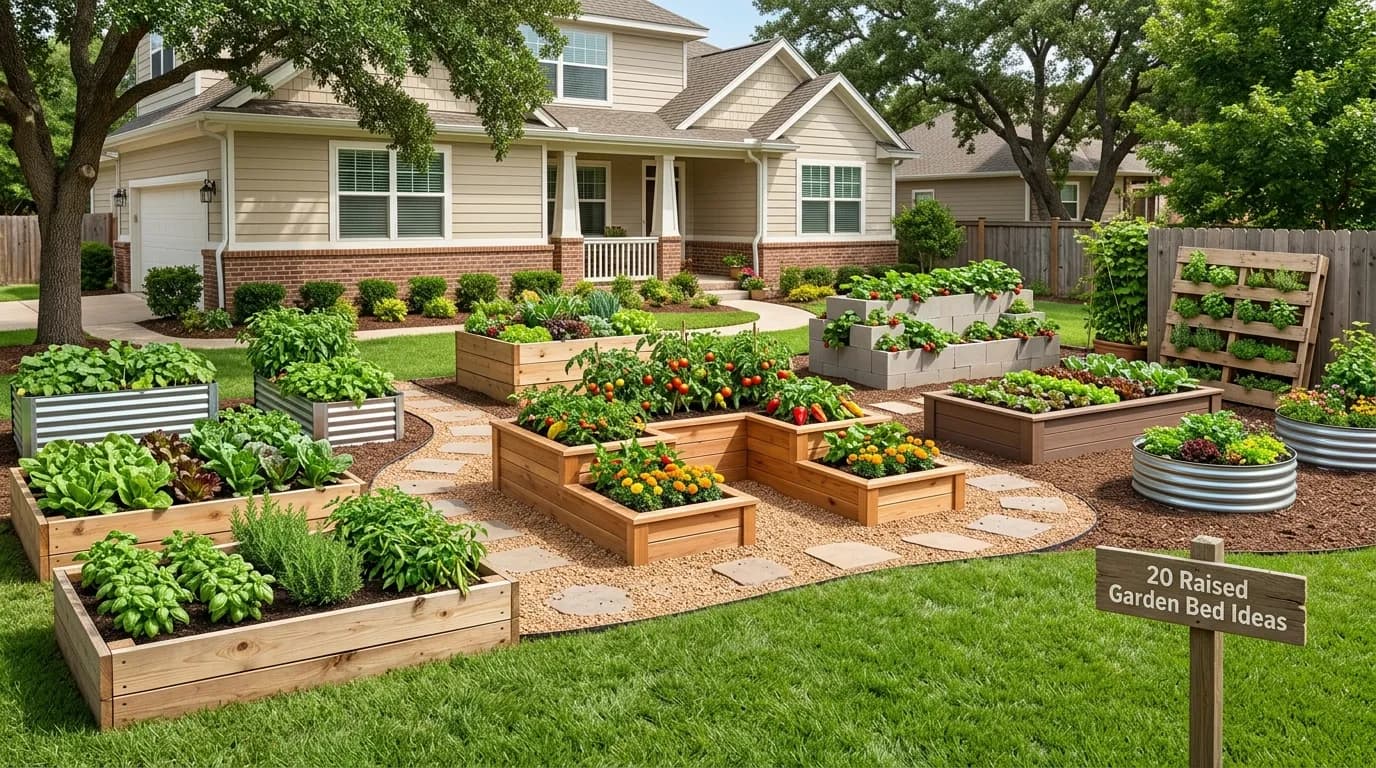
Raised garden beds are the easiest way to grow food and flowers at home. Better drainage, fewer weeds, no bending over, and you control the soil. Here are 20 ideas from budget to premium.
Budget-Friendly ($50–$200)
1. Cedar 4×8 Classic
The workhorse of raised beds. Use 2×8 or 2×10 untreated cedar. Lasts 10–15 years. No staining needed — cedar is naturally rot-resistant.
Materials: 4 cedar boards (2×10×8), screws, landscape fabric
Cost: $80–$120 | Time: 2 hours
2. Concrete Block Bed
Stack cinder blocks without mortar. The holes become planters for herbs. Incredibly durable and costs $1–$2 per block.
3. Straw Bale Garden
Stack straw bales in a rectangle. Condition for 2 weeks, then plant directly into the top. Free bed at end of season (compost the straw).
Cost: $5–$8 per bale × 8 bales = $40–$64
4. Pallet Wood Bed
Disassemble heat-treated pallets (stamp "HT" not "MB"). Free wood, 1 hour to build. Line with landscape fabric.
5. Galvanized Stock Tank
30-gallon or 50-gallon galvanized steel tanks from farm supply stores. Drill drainage holes in the bottom. Industrial-chic look.
Cost: $50–$150 per tank
Mid-Range ($200–$500)
6. Tiered Cedar Corner Bed
Three tiers in an L-shape for corners. Tallest tier at the back (24"), shortest at front (8"). Perfect for cascading herbs and flowers.
7. U-Shaped Raised Bed
Walk into the center for easy access to all sides. 8×10 exterior, 4×6 interior cutout. Best for intensive vegetable gardens.
8. Composite Lumber Bed
Trex or similar composite boards. Lifetime durability, no rot, no splinters. More expensive than wood but never needs replacing.
9. Gabion Wall Bed
Wire cages filled with decorative rock create stunning walls. Fill the interior with soil. Modern industrial aesthetic.
10. Metal Raised Bed (Corten Steel)
Pre-fabricated corten steel beds develop a beautiful rust patina. Lasts 50+ years. Sharp modern look.
Cost: $200–$400 for 4×8
Premium ($500+)
11. Built-In Stone Bed
Natural stone or manufactured stone veneer walls. Permanent, adds property value. Can incorporate seating on top edge.
12. Raised Bed with Cold Frame
Cedar bed with a hinged glass or polycarbonate top. Extends growing season by 4–6 weeks on each end. Essentially a mini greenhouse.
13. Waist-Height Accessible Bed
30–36" tall for wheelchair access or no-bend gardening. Must be narrower (3–4 feet max) for reach. ADA considerations add value.
14. Self-Watering Raised Bed
Built-in water reservoir at the bottom with wicking fabric. Fill the reservoir weekly and plants water themselves. Perfect for vacations.
15. Living Wall Vertical Bed
Stackable planter system mounted on a wall or fence. Grows herbs and strawberries vertically. Great for tiny yards and balconies.
Creative Ideas
16. Keyhole Garden
Circular bed with a compost basket in the center and a keyhole-shaped walkway. African garden design — self-composting and water-efficient.
17. Hugelkultur Mound
Layered logs, branches, leaves, and soil in a mound. As the wood decomposes, it releases nutrients and retains moisture for years. Zero irrigation after establishment.
18. Raised Bed with Integrated Trellis
Add a 6–8 foot trellis to the back of any raised bed. Grow tomatoes, cucumbers, beans, and peas vertically. Doubles your growing space.
19. Spiral Herb Garden
A rock spiral that rises from ground level to 3 feet high. Plant Mediterranean herbs at the top (dry, hot) and moisture-loving herbs at the base.
20. Terraced Hillside Beds
Build stepped beds into a slope. Each terrace gets a different crop or flower type. Eliminates erosion and creates flat growing space.
Soil Mix for Raised Beds
The best raised bed soil is a mix of:
- 40% topsoil — structure and weight
- 40% compost — nutrients and biology
- 20% perlite or vermiculite — drainage and aeration
Cost: ~$30–$50 per cubic yard (you need ~1 cubic yard per 4×8×1 bed).
What to Grow
Beginner vegetables: Tomatoes, peppers, lettuce, herbs, radishes, green beans
Cut flowers: Zinnias, cosmos, dahlias, sunflowers, snapdragons
Herbs: Basil, cilantro, rosemary, thyme, parsley, mint (in its own container — it spreads)
Design your garden beds into a complete landscape plan with Yardcast. Our AI places beds, pathways, and plantings optimized for your space.