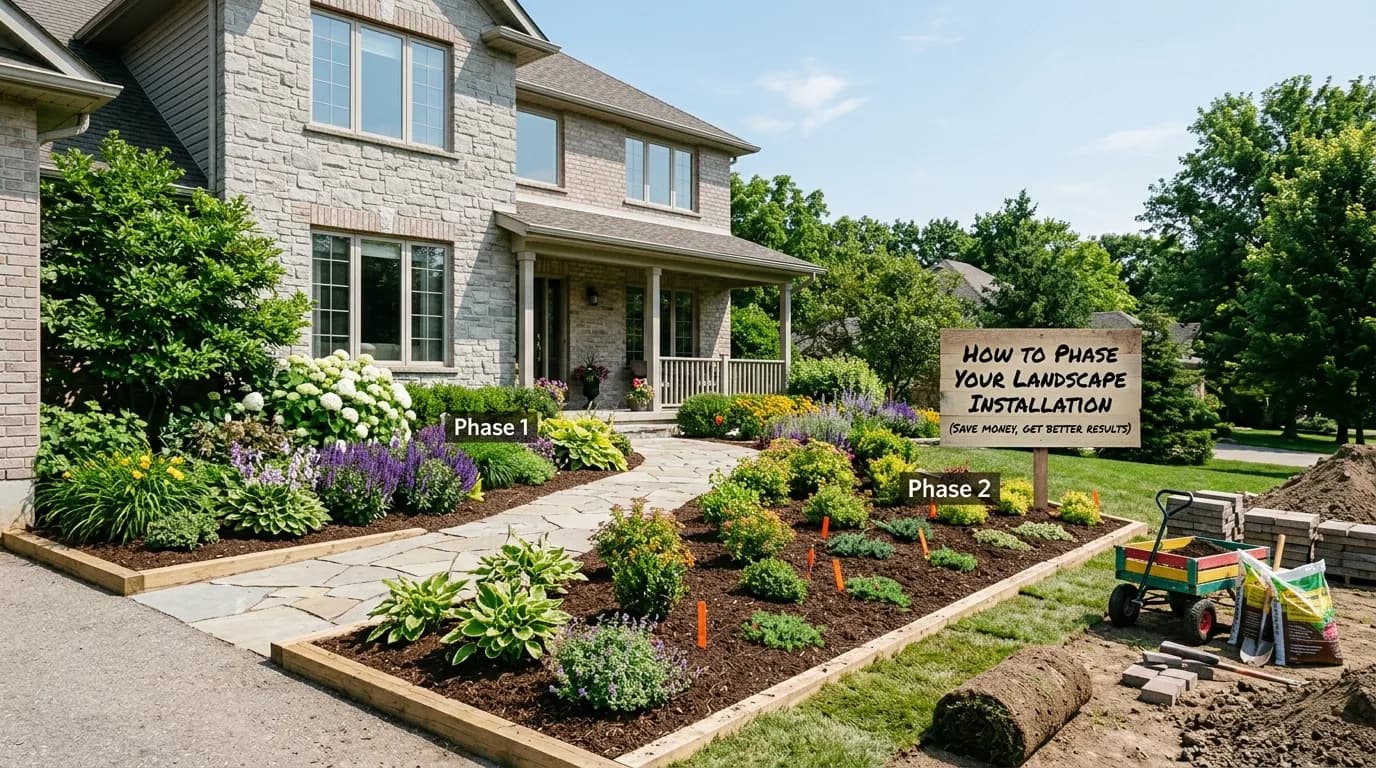
The biggest mistake homeowners make is trying to install an entire landscape design in one weekend. Professional landscape architects always phase installations over months or years — and there are very good reasons why.
Why Phasing Works Better
1. Cash Flow
A $15,000 design is overwhelming. Three $5,000 phases spread over 18 months is manageable. And the first phase alone transforms the property.
2. Plant Survival
Plants installed in the right season survive better. Trees planted in fall establish roots over winter and hit the ground running in spring. Perennials planted in spring bloom that same summer. Forcing everything into one season means some plants go in at the wrong time.
3. Learning
After Phase 1, you'll understand your yard's microclimates, drainage patterns, and maintenance reality. Phase 2 decisions are better informed.
4. Course Correction
Maybe that sunny corner turned out to be shadier than you thought. Maybe the drainage solution wasn't enough. Phasing lets you adjust before investing more.
The Professional 3-Phase Approach
Phase 1: Foundation (Do First — Highest ROI)
Timeline: Fall or early spring
Budget allocation: 40-50% of total
Phase 1 establishes the "bones" of the landscape:
- Trees — Plant canopy and understory trees first. They take the longest to mature, so every month of head start matters. A $150 tree planted now is worth $1,500 in 10 years.
- Primary hardscape — Patio, main pathway, any retaining walls. These define the structure of the space.
- Irrigation mainline — Even if you're not installing all zones yet, trench and lay the main line now. It's much harder to add later.
- Grading/drainage — Fix drainage problems before planting anything. You don't want to tear up beds later.
- Edging — Define all bed edges now. This creates the framework even before planting fills it in.
Why first: Trees and hardscape are the most expensive to change later and provide the most impact. A yard with 2-3 well-placed trees and a clean patio already looks intentional.
Phase 2: Structure (Months 3-6)
Timeline: Following fall (for shrubs) or spring (for perennials)
Budget allocation: 30-35% of total
Phase 2 adds the "walls" and "furniture" of the landscape:
- Shrubs — The backbone of the design. Screening hedges, foundation plantings, mass groupings. Fall planting is ideal for root establishment.
- Secondary hardscape — Fire pit, pergola, water feature, raised beds.
- Irrigation zones 2-3 — Connect lateral lines to the mainline installed in Phase 1.
- Mulch — Full 3-inch mulch application to all beds.
Why second: Shrubs establish quickly (1-2 seasons to fill in) and define garden rooms and sight lines. By the time Phase 3 plants go in, the shrubs provide context and scale.
Phase 3: Finishing (Year 1-2)
Timeline: Spring of the following year
Budget allocation: 15-25% of total
Phase 3 adds color, texture, and the finishing touches:
- Perennials and grasses — Fill beds with flowering plants and ornamental grasses. These establish quickly and bloom the first season.
- Groundcovers — Fill all remaining bare soil. Suppresses weeds and completes the design.
- Landscape lighting — Now that you know where the focal points are, light them.
- Lawn — Seed or sod any remaining turf areas.
- Seasonal annuals — Add temporary color while perennials establish.
Why last: Perennials and groundcovers are the cheapest and fastest to establish. Planting them last means they go into prepared, mulched beds with irrigation already running.
What to Expect at Each Stage
After Phase 1 (Month 0-2)
The yard looks sparse. Trees are small. Hardscape is clean but beds are mostly mulch. This is normal. Trust the process.
After Phase 2 (Month 6-12)
Shrubs are filling in. The structure of the design is visible. Garden rooms are taking shape. Screening is starting to work. The yard feels intentional but young.
After Phase 3 (Year 1-2)
Perennials are blooming. Groundcovers are spreading. Grasses provide movement. Lighting makes the yard spectacular at night. This is when people start asking who designed your yard.
Year 3-5 (Full Maturity)
Trees provide real shade. Shrubs are at mature size. Groundcovers have formed solid mats. The yard looks like the AI render — lush, layered, and professional. This is when the property value increase becomes real.
Budget Example
For a medium-sized yard with a $12,000 total design budget:
| Phase | Timing | Budget | What |
|---|---|---|---|
| Phase 1 | Year 0, Fall | $5,000 | 2 trees ($400), patio ($2,500), drainage ($600), irrigation mainline ($500), edging ($300), grading ($700) |
| Phase 2 | Year 1, Spring/Fall | $4,000 | 10 shrubs ($750), pergola ($1,500), fire pit ($800), irrigation zones ($400), mulch ($300), 1 tree ($250) |
| Phase 3 | Year 1-2, Spring | $3,000 | 20 perennials ($400), 15 grasses ($300), groundcovers ($300), lighting ($800), lawn seed ($200), annuals ($150), remaining irrigation ($350), mulch refresh ($200), misc ($300) |
Your Yardcast design pack includes a phased implementation plan tailored to your specific design — telling you exactly what to install first and why.
Get your phased design → — includes 3-phase implementation timeline.