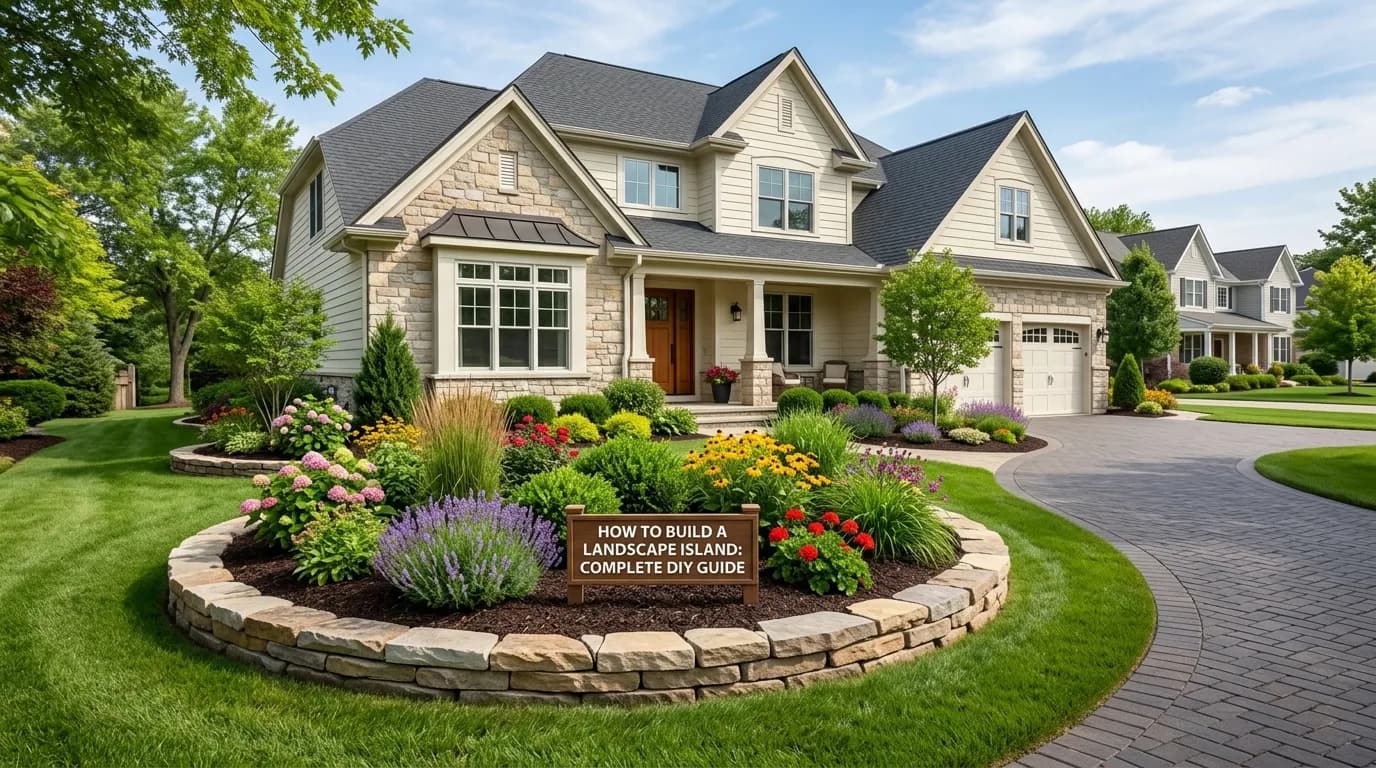
Building a landscape island is one of the most impactful DIY projects you can tackle in a single weekend. Unlike full-yard makeovers, an island is a contained project with a clear start and finish — and the results are immediate.
This guide walks through every step, from choosing the location to selecting plants that thrive in your climate.
Step 1: Choose the Location
The best spot for a landscape island depends on your goals:
Curb appeal: Front yard, visible from the street. Between sidewalk and house, or as a driveway roundabout centerpiece.
Backyard focal point: Center of an open lawn area, visible from a patio or deck.
Functional divider: Between different yard zones (play area and garden, patio and lawn, etc.).
Location Tips
- Avoid placing directly over underground utilities. Call 811 before you dig.
- Consider sun exposure — 6+ hours is "full sun," under 3 is "shade." This determines your plant options.
- Stay at least 3 feet from property lines and 5 feet from building foundations.
- Ensure your garden hose can reach the island for the first season of watering.
Step 2: Design the Shape
Lay a garden hose on the ground in your desired shape. Live with it for a day — look at it from inside the house, from the street, from the patio.
Design rules:
- Curves look more natural than straight lines or perfect circles
- Minimum width: 4 feet (anything smaller looks like an afterthought)
- Ideal proportion: island width = 1/3 of the surrounding open space
- Length-to-width ratio of 2:1 to 3:1 creates pleasing proportions
Step 3: Prepare the Bed
Remove the Sod
- 1Spray-paint the outline from your hose shape
- 2Use a flat-edge spade or sod cutter to cut 2 inches deep along the outline
- 3Roll or shovel out the sod (compost it or fill bare spots elsewhere)
- 4Rake the exposed soil smooth
Build Up the Soil
Islands look best when they're mounded — higher in the center, tapering to the edges. This adds dimension and improves drainage.
- 1Spread 4–6 inches of topsoil/compost mix over the entire bed
- 2Mound the center 8–12 inches above the surrounding grade
- 3Taper gradually to 2–3 inches at the edges
- 4Water lightly to settle, then add more soil where needed
Install Edging
Edging keeps grass from invading and gives a clean professional look.
Options by budget:
- Budget: Plastic landscape edging ($0.50–$1/ft)
- Mid-range: Aluminum or steel edging ($2–$4/ft) — our top recommendation
- Premium: Natural stone or brick ($5–$15/ft)
Dig a 4-inch trench along the edge, set the edging material, and backfill.
Step 4: Plan the Planting Layout
The classic formula works every time:
Thriller, Filler, Spiller
- Thriller (center): One specimen plant that draws the eye. Ornamental tree, tall grass, or large shrub. Height = 1/2 to 2/3 of the island width.
- Filler (mid-ring): 3–5 medium plants around the thriller. Mix textures and seasonal interest.
- Spiller (edge): Low groundcovers or cascading plants that soften the border.
Plant Spacing
- Trees: center, minimum 5 feet from edge
- Shrubs: 3–4 feet apart (they'll fill in within 2 years)
- Perennials: 12–18 inches apart
- Groundcovers: 6–12 inches apart
Pro tip: Set all plants on top of the soil (still in pots) before digging any holes. Step back and evaluate from 20 feet away. Adjust until it looks balanced.
Step 5: Plant
- 1Water all plants in their pots 1 hour before planting
- 2Dig each hole 2x wider and same depth as the root ball
- 3Gently loosen root-bound roots
- 4Set the plant so the soil line matches the surrounding bed level
- 5Backfill with native soil mixed with compost
- 6Water deeply and immediately
Plant the center first, then work outward. This prevents stepping on already-planted areas.
Step 6: Mulch
Apply 2–3 inches of hardwood mulch or pine bark over the entire bed. Keep mulch 2 inches away from plant stems to prevent rot.
Material choices:
- Hardwood mulch: Classic look, breaks down slowly, good for most climates
- Pine bark: Acidic — great for azaleas, blueberries, hydrangeas
- River rock: Permanent, best for modern or desert styles
- Rubber mulch: Long-lasting but doesn't improve soil
Step 7: Water & Maintain
First 2 weeks: Water daily if no rain.
Weeks 3–8: Water every 2–3 days.
After establishment: Most native and adapted plants need only 1 inch of rain or irrigation per week.
Annual maintenance:
- Spring: Refresh mulch to 2–3 inches, divide overgrown perennials
- Summer: Deadhead spent flowers, spot-treat weeds
- Fall: Cut back perennials after frost, plant spring bulbs
- Winter: Leave ornamental grass standing for winter interest
Cost Breakdown (Medium Island, ~80 sq ft)
| Item | DIY Cost | Pro Cost |
|---|---|---|
| Topsoil/Compost (4 cu yd) | $120–$180 | $180–$280 |
| Plants (12–15 plants) | $200–$500 | $300–$700 |
| Mulch (2 cu yd) | $50–$80 | $80–$120 |
| Edging (50 ft steel) | $100–$200 | $150–$300 |
| Landscape fabric | $20–$40 | $30–$60 |
| Labor | $0 | $400–$800 |
| Total | $490–$1,000 | $1,140–$2,260 |
Visualize Before You Build
Not sure what style to go with? Try our AI Island Designer — upload a photo of your yard, paint the area where you want the island, and see a professional design in both bed options generated in seconds. It's the fastest way to know what looks right before you buy a single plant.