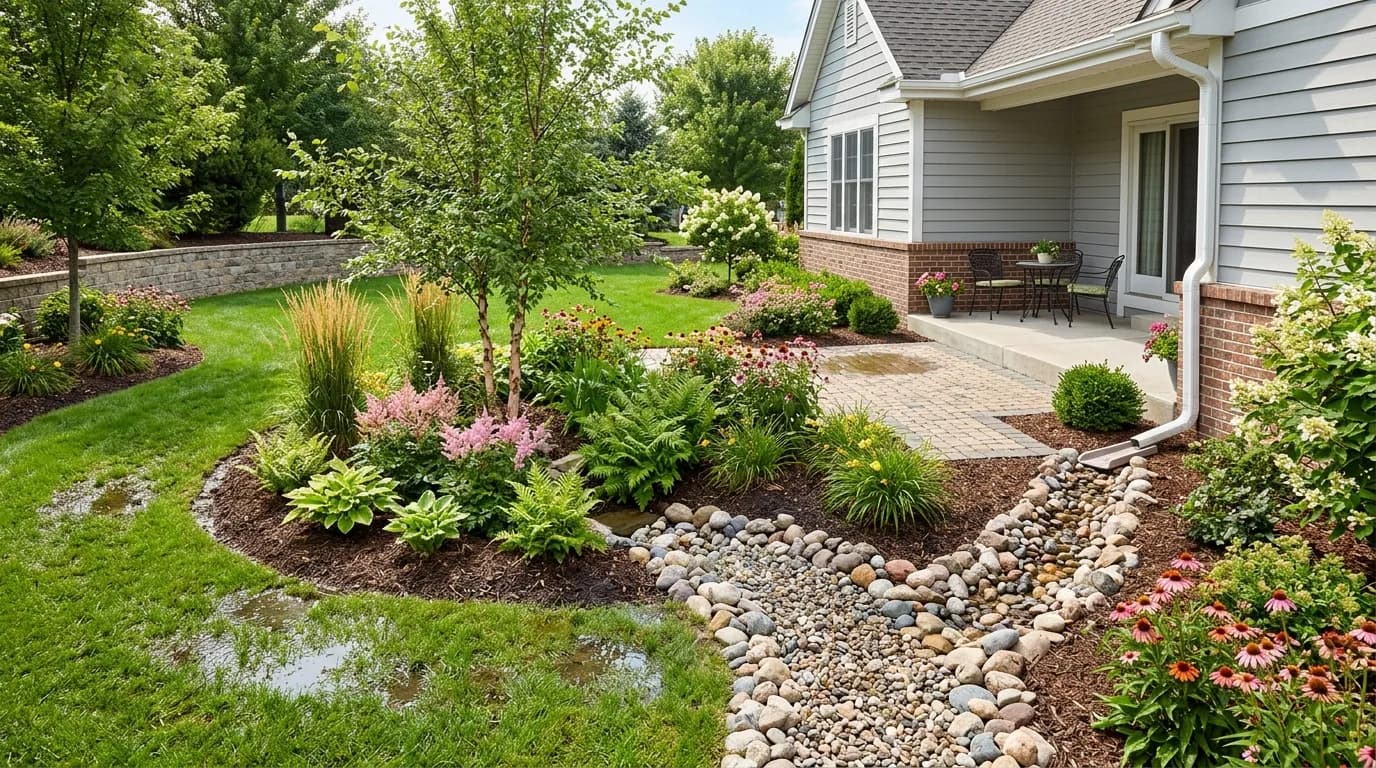
Standing water in your yard isn't just annoying — it kills plants, breeds mosquitoes, damages foundations, and destroys the value of your outdoor space. If water pools within 24 hours of rain and doesn't drain within 48, you have a drainage problem.
Here are 8 solutions, ranked from simplest to most involved.
1. Regrading (Simplest)
Cost: $500-2,000 (professional) or DIY with a shovel
Effectiveness: High for simple pooling issues
The ground around your home should slope away from the foundation at a minimum of 2% grade (1/4 inch per foot). If it's flat or slopes toward the house, regrading solves the problem.
DIY: Add topsoil to the low side and rake it smooth. Create a gentle slope away from the house for the first 6-10 feet. Compact lightly and seed or sod.
2. French Drain
Cost: $1,000-5,000
Effectiveness: Very high for subsurface water
A French drain is a perforated pipe buried in a gravel-filled trench. Water seeps into the gravel, enters the pipe, and is carried to a discharge point (storm drain, dry well, or low area of the yard).
Key specs:
- Trench: 12-18 inches wide, 18-24 inches deep
- Pipe: 4" perforated PVC or corrugated drain tile, holes facing DOWN
- Gravel: Washed 3/4" stone (not pea gravel — too fine)
- Grade: Minimum 1% slope (1 inch drop per 8 feet of run)
- Filter fabric: Wrap gravel in landscape fabric to prevent clogging
Common mistake: Holes facing up. The pipe collects water from the gravel bed, not from the surface — holes go down.
3. Rain Garden
Cost: $500-3,000
Effectiveness: High, plus it's beautiful
A rain garden is a shallow basin planted with deep-rooted native plants that absorb and filter stormwater. It fills during rain and drains within 24-48 hours.
Design specs:
- Size: 100-300 sq ft (about 20-30% of the area draining to it)
- Depth: 6-8 inches deep
- Location: At least 10 feet from foundation, at the natural low point
- Plants: Native species with deep roots — switchgrass, Joe Pye weed, cardinal flower, blue flag iris
- Soil: 60% sand, 20% compost, 20% topsoil (for rapid infiltration)
Bonus: Rain gardens filter 30-40% more pollutants than conventional landscapes and can reduce your stormwater utility fee by 25-100% in many municipalities.
4. Dry Creek Bed
Cost: $1,000-5,000
Effectiveness: High for directing surface flow
A dry creek bed is a decorative channel lined with river stone that directs water flow during rain. It's both functional and beautiful — the most aesthetically pleasing drainage solution.
Design tips:
- Width: 2-4 feet
- Depth: 6-12 inches
- Line with landscape fabric under the stone
- Use a mix of stone sizes (3" to 8") for natural look
- Add boulders at curves where water changes direction
- Plant the banks with moisture-tolerant plants (ferns, sedges, iris)
5. Swale
Cost: $200-1,000 (DIY possible)
Effectiveness: High for intercepting sheet flow on slopes
A swale is a shallow, wide channel that runs perpendicular to the slope. It intercepts water flowing downhill and redirects it to a safe discharge point.
Design:
- Width: 3-6 feet wide, 6-12 inches deep
- Shape: Broad and gentle (not a ditch — a shallow depression)
- Plant it: A grass-lined or native-planted swale absorbs water as it flows
- Grade: 1-2% slope along the length toward discharge
6. Dry Well
Cost: $500-2,000
Effectiveness: Good for collecting concentrated runoff
A dry well is a buried pit filled with gravel or a purpose-built plastic chamber that collects runoff and lets it percolate slowly into the soil.
Best for: Downspout discharge, sump pump output, or the end of a French drain in areas where you can't discharge to a storm drain.
7. Channel Drain
Cost: $500-2,000 per drain
Effectiveness: High for hardscape areas
A channel drain (trench drain) is a linear drain set into concrete, pavers, or asphalt. Water flows into a narrow slot, through a covered channel, and to a discharge point.
Best for: Patio edges, driveway bases, garage entrances, any place where water flows across hardscape toward the house.
8. Retaining Wall with Drainage
Cost: $3,000-15,000+
Effectiveness: Highest for slope issues
For steep slopes, a retaining wall holds back earth while an integrated drainage system handles the water.
Critical specs:
- Walls over 4 feet require engineering review and permit
- Every retaining wall needs a perforated drain pipe behind it (at the base)
- Backfill with 12 inches of gravel behind the wall
- Weep holes every 6-8 feet allow water to escape
- Cap with a waterproof membrane to prevent soil saturation
When to Call a Professional
DIY the simple stuff (regrading, rain gardens, dry creek beds). Call a professional for:
- French drains deeper than 24 inches
- Any work near the foundation
- Retaining walls over 4 feet
- Connection to municipal storm systems
- Persistent water in crawl space or basement
Get a Drainage Plan
Your Yardcast design pack includes a terrain-specific drainage solution based on your yard conditions — flat, sloped, steep, or multi-level — with recommended implementation steps.
Get your design → — includes drainage analysis.