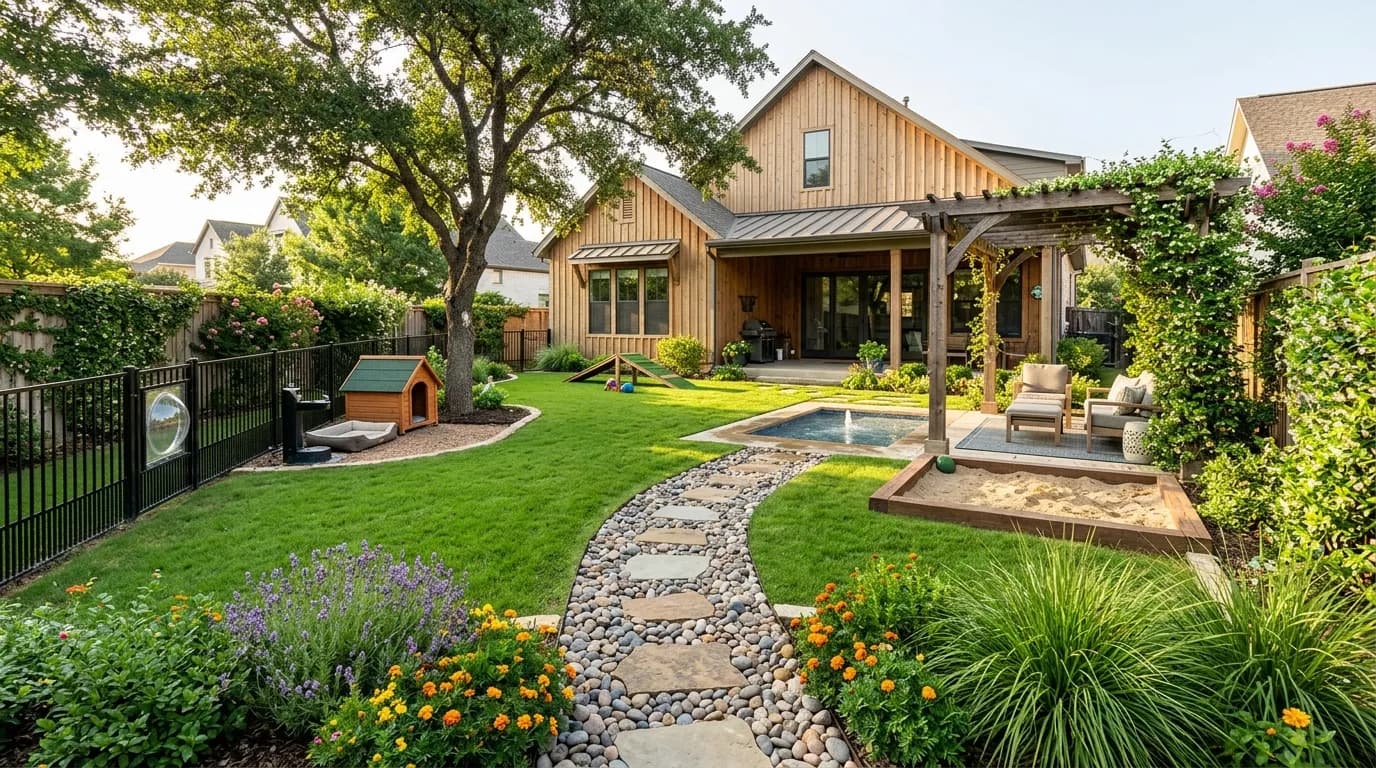
Sixty-five percent of American households own a dog. And in most of those homes, the backyard is the dog's domain — whether the owners planned it that way or not. Muddy paw prints on the patio. Worn dirt paths along the fence line. Holes in the lawn. Destroyed plants.
The good news: a dog-friendly backyard doesn't have to look like a dog's backyard. With thoughtful design, you can create an outdoor space that genuinely works for your dog — safe, stimulating, clean — while still looking beautiful enough to enjoy yourself. Here are 30 dog-friendly backyard ideas that prove you don't have to choose between a yard you love and a yard your dog loves.
What Makes a Backyard Dog-Friendly?
Before getting into specific ideas, it helps to understand what dogs actually need from an outdoor space:
Safety: A securely fenced perimeter, no toxic plants, no sharp edges, no gaps they can squeeze through, and no standing water where mosquitoes breed.
Stimulation: Scent trails, digging zones, running space, and visual access to the street or neighboring yards — dogs are curious animals and need environmental enrichment.
Comfort: Shade during hot weather, shelter from rain, a fresh water source, and soft surfaces for lounging.
Boundaries: Defined zones that tell your dog where they can dig, run, and relax — this dramatically reduces destructive behavior in other parts of the yard.
Once you understand these needs, designing a beautiful dog-friendly backyard becomes straightforward.
Dog-Safe Fencing Ideas
1. Privacy Fence (The Gold Standard)
A 6-foot wooden privacy fence is the most secure option for most dogs. It eliminates visual triggers (dogs are less likely to fence-run if they can't see passersby), prevents escapes, and creates a clean backdrop for landscaping. Cedar, pressure-treated pine, and composite options are all durable. Cost: $15–$45 per linear foot installed.
2. Horizontal Fence Boards
Horizontal cedar board fencing is a modern, architectural look that also works well for dogs. The key: make sure the gaps between boards are under 4 inches (to prevent small dogs from squeezing through). Bottom boards should sit close to the ground — most dogs dig under fences where there's a gap. Budget: $20–$50/linear foot.
3. Coyote Roller System
If you have a dog that climbs or jumps, install coyote rollers on the top of your existing fence — rotating aluminum cylinders that prevent the dog from getting a grip to pull themselves over. They also work to keep wildlife out. These attach to any fence style and are far cheaper than rebuilding.
4. Buried Fence Skirt
Most dog escapes happen by digging under the fence, not jumping over it. Bury a 12–18 inch L-shaped wire mesh "skirt" along the base of your fence — it extends horizontally underground so when the dog digs, they hit the wire and give up. This is the most effective escape-prevention solution for determined diggers.
5. Designated Dog Run
A dedicated side-yard dog run keeps your dog contained in one zone while giving the rest of the yard back to you. Build it 4–6 feet wide and as long as space allows. Surface options: decomposed granite (most popular — drains well, cool on paws), artificial turf (cleanest option), or concrete with a floor drain. Add shade, a water station, and a toy box.
Ground Cover & Lawn Ideas
6. Artificial Turf
Modern artificial turf looks and feels remarkably like real grass — and it's arguably the best surface for dog owners. It doesn't stain (wash down with a hose), eliminates muddy paw prints, holds up to running and rough play, and requires zero mowing. Look for turf with an antimicrobial infill and adequate drainage backing. Cost: $8–$20 per sq ft installed.
7. Buffalo Grass or Tall Fescue Lawn
If you want natural grass, choose the right variety. Buffalo grass (warm climates) and tall fescue (cool climates) are the most wear-tolerant grass types for active dogs. Avoid Kentucky bluegrass — it recovers slowly from dog damage. Overseed damaged areas in fall. Keep the lawn healthy with less frequent, deeper watering to build strong root systems that recover faster.
8. Clover Lawn
White clover is an underrated lawn alternative for dog owners: it stays green with almost no watering, doesn't show wear as obviously as grass, resists dog urine better than traditional turf, and is soft enough for dog lounging. A clover-grass mix (30% clover, 70% grass) is the most practical approach. Dogs and clover are a surprisingly good match.
9. Decomposed Granite Paths + Planted Borders
Replace struggling lawn with a clean layout of decomposed granite paths and raised planted borders. Dogs can run on the DG paths; you protect the plantings with low edging or a garden border. This dramatically reduces mud and makes the whole yard look intentional and designed.
10. River Rock in High-Traffic Zones
The dog's path to the back gate, around the fence perimeter, and to the "bathroom corner" of the yard are typically worn bare. Instead of fighting it, surface these paths with river rock or pea gravel. It's comfortable on paws, drains perfectly, and frames the wear pattern as a design element.
Plants That Are Safe (and Tough) for Dogs
The single most important safety step in a dog-friendly garden: eliminate toxic plants. Many common landscaping plants are dangerous to dogs. Then choose plants that are both safe and tough enough to withstand dog activity.
11. Dog-Safe Plant List
These plants are non-toxic to dogs (according to ASPCA) and generally tough in landscapes:
- Rosemary — fragrant, deer-resistant, drought-tolerant, Zone 7–10
- Camellia — beautiful flowering shrub, Zone 7–9
- Snapdragons — annual color, fully safe
- Sunflowers — cheerful, very tough, reseeds easily
- Zinnias — heat-tolerant annual, bright colors
- Marigolds — deer and insect repellent, completely safe
- African violet — safe for indoor/covered patio containers
- Celosia — unique texture, safe
- Boston fern — excellent for shaded areas, pet-safe
- Spider plant — container and hanging basket use
12. Plants to Remove Immediately
These common landscaping plants are toxic to dogs — remove them from any dog-accessible yard:
- Sago palm — extremely toxic, can be fatal (all parts)
- Azalea/rhododendron — toxic, causes vomiting and heart issues
- Oleander — highly toxic, can be lethal
- Foxglove — causes heart arrhythmia
- Lily of the valley — highly toxic
- Yew — all parts toxic, especially berries
- Lantana — toxic berries
- Autumn crocus — highly toxic
- Daffodil bulbs — toxic if chewed
- Castor bean plant — extremely toxic
When in doubt, cross-check any plant against the ASPCA Toxic Plant database (aspca.org/pet-care/animal-poison-control/toxic-and-non-toxic-plants).
Designing a dog-friendly backyard from scratch? [Try Yardcast's free AI landscape designer](/redesign) — upload your yard photos and describe your dog's needs. The AI generates 3 custom design options with plant lists (all dog-safe options can be requested), layout suggestions, and cost estimates in under 60 seconds.
Dedicated Dog Zones
13. Dig Box (The Dig Pit)
Most dogs dig. Fighting it is exhausting. Instead, give your dog a dedicated dig pit: a 4x6 foot raised area filled with loose sand or sandy soil, located in a corner or along the fence. Bury toys and treats in it to encourage use. Once dogs understand this is their digging spot, they largely leave the rest of the yard alone. Frame it with landscape timbers to define the zone.
14. Dog-Proof Raised Garden Beds
If you love gardening, raised beds protect your plants from dog access. A 24–30 inch tall raised bed is too high for most dogs to reach into comfortably. Use rot-resistant cedar or composite lumber. Surround the base with low fencing if your dog is persistent. This allows you to grow vegetables, herbs, and flowers without constant replanting.
15. Shade Sail or Dog House in the "Dog Zone"
Dogs overheat quickly and will seek shade on hot days. Install a shade sail over the dog's favorite lounging area, or position a well-ventilated dog house in the corner. A well-designed dog house can be an attractive landscape element — cedar or redwood with a metal roof, elevated off the ground on a platform. Dogs use them for sun protection, not just rain.
16. Splash Pool / Dog Pool
A kiddie pool or purpose-built dog splash pool set into a gravel or composite deck area is one of the best investments for dogs in warm climates. Dogs cool their core temperature by wading, not panting. Position it in semi-shade, change the water regularly, and drain/clean weekly. A simple concrete pad or gravel base under it prevents mud.
17. Dog Water Station
Install a stainless steel water bowl set into a low garden wall, post-mounted dog drinking fountain, or automatic pet water dispenser connected to your irrigation system. Dogs need constant access to fresh water outdoors, especially in warm weather. A proper outdoor water station beats the "fill a bowl" routine and stays cleaner longer.
18. Scent Trail or Sniff Garden
Dogs experience the world primarily through scent. Create a "sniff garden" — a raised bed or meandering path planted with fragrant plants, wood chip mulch (full of interesting scents), and occasionally "loaded" with new scent objects (sticks from different trees, worn gloves, new toys). This provides powerful mental enrichment and tires dogs out faster than physical exercise alone.
Hardscape & Structure Ideas
19. Dog-Safe Patio Surfaces
Choose patio materials that are comfortable on paws and don't absorb too much heat. Best options: Composite decking (stays cooler than concrete), tumbled concrete pavers (rounded edges, less heat absorption), and natural flagstone in shaded areas. Avoid: Exposed aggregate concrete (rough on paws) and dark-colored materials in full sun (get dangerously hot in summer).
20. Low Retaining Wall as Dog Boundary
A 12–18 inch low retaining wall creates a natural boundary between garden beds and dog zone without the aggressive look of a fence within the yard. Dogs respect the visual boundary of a wall — they'll usually avoid walking through planted areas when a low wall signals "this is different territory." Use stacked stone, concrete block, or gabion baskets.
21. Dog Agility Elements
Build simple agility elements into the landscape: a small tunnel (concrete culvert pipe, painted and set into a slope), a weave pole course (PVC poles set in the lawn), a small A-frame ramp, or a balance platform (a large tree stump or raised platform). These elements double as landscape features and give active dogs a structured activity outlet.
22. Outdoor Shower or Dog Wash Station
A low outdoor shower station with a handheld nozzle, non-slip mat, and a hook for the leash makes dog washing dramatically easier. Built into a pea gravel area with good drainage, a dog wash station keeps mud out of your indoor bathroom. Add hooks for towels and a small storage box for dog shampoo. Simple, practical, enormously useful.
Maintenance & Problem-Solving
23. Dog Urine Damage Solutions
Dog urine burns lawn grass due to nitrogen concentration. Solutions: (1) Train your dog to use a specific spot (gravel, mulch, or a dedicated "bathroom corner") away from the main lawn; (2) Dilute immediately after urination with water — this neutralizes burn before it sets; (3) Choose urine-resistant clover or tall fescue over bluegrass; (4) Consider artificial turf in high-traffic urine zones. No lawn treatment product is truly effective — redirection is the best solution.
24. Fence Line Maintenance Strip
Dogs run the perimeter fence constantly, wearing a path along the fence line. Instead of fighting the wear, design for it: a 12–18 inch gravel or mulch maintenance strip along the entire fence perimeter. This eliminates the worn-grass look, makes it easy to redirect dogs to this path, and creates a clean design element. Edge with metal landscape edging.
25. Motion-Sensor Lighting
Install motion-sensor lighting in the backyard for late-night bathroom trips. This is a safety feature (you can see what your dog is investigating) and a practical one (you don't have to manually turn lights on and off). Solar-powered path lights or low-voltage LED landscape lights both work well. Position lights near the back door and along the main dog paths.
26. Easy-Clean Patio Areas
Select patio materials and layouts that hose down easily. Avoid porous pavers without sealer — they absorb stains from dog waste. Use sealed concrete pavers, composite decking, or pressure-washed concrete. Keep a hose with a spray nozzle near the patio. A simple outdoor broom and hose-down routine keeps dog patios clean without chemical cleaners.
Style Inspiration
27. Modern Dog-Friendly Backyard
Clean lines, neutral palette. Artificial turf inset into large concrete pavers. A simple planting border with ornamental grasses and rosemary — all dog-safe. A low concrete wall separating the dog run from the seating area. Minimal, architectural, easy to maintain.
28. Cottage Garden Dog Yard
A more relaxed, English cottage style: gravel paths with stepping stones, planted borders of zinnias, marigolds, snapdragons, and salvias (all dog-safe). A weathered wood fence, a simple shade sail, and a dip pool for summer. Feels lush and informal while remaining functional.
29. Tropical Dog Oasis (Zone 9–11)
Large-format pavers, tropical plants selected for safety (bird of paradise, plumeria, tropical ferns, bromeliads — check each species), a shade sail, a splash pool. For hot climates, shade and water access are the design priorities. Keep the plant palette simple and bold.
30. Small Backyard for Small Dogs
Small backyards for small dogs can be designed as complete entertainment spaces: a 10x15 foot composite deck with a built-in planter border, a small patch of artificial turf (their bathroom zone), a water feature that doubles as a drinking station, and a low privacy fence with climbing plants for screening. Small dogs need surprisingly little space — design it well and both you and your dog will love it.
Budget Guide: Dog-Friendly Backyard
| Project | DIY Cost | Installed Cost |
|---|---|---|
| Artificial turf (500 sq ft) | $2,000–$4,000 | $4,000–$10,000 |
| Dog run with DG surface | $500–$1,500 | $2,000–$5,000 |
| Privacy fence (100 linear ft) | $1,500–$4,000 | $3,500–$8,000 |
| Dig pit + gravel paths | $300–$800 | $800–$2,500 |
| Dog wash station | $400–$1,200 | $1,500–$3,500 |
| Complete dog-friendly redesign | $3,000–$8,000 | $8,000–$25,000 |
The best dog-friendly backyards don't look like kennels — they look like beautifully designed outdoor spaces that happen to work brilliantly for a dog. The design principles (defined zones, durable surfaces, clear paths, safe plants) also make for better landscape design in general.
Ready to see your dog-friendly backyard come to life? [Use Yardcast's free AI design tool](/redesign) — upload your yard photos, describe your dog (size, breed, energy level), and get 3 professional design concepts with plant lists, layout options, and cost estimates. No designer fees, no waiting. Just your new backyard, rendered in 60 seconds.