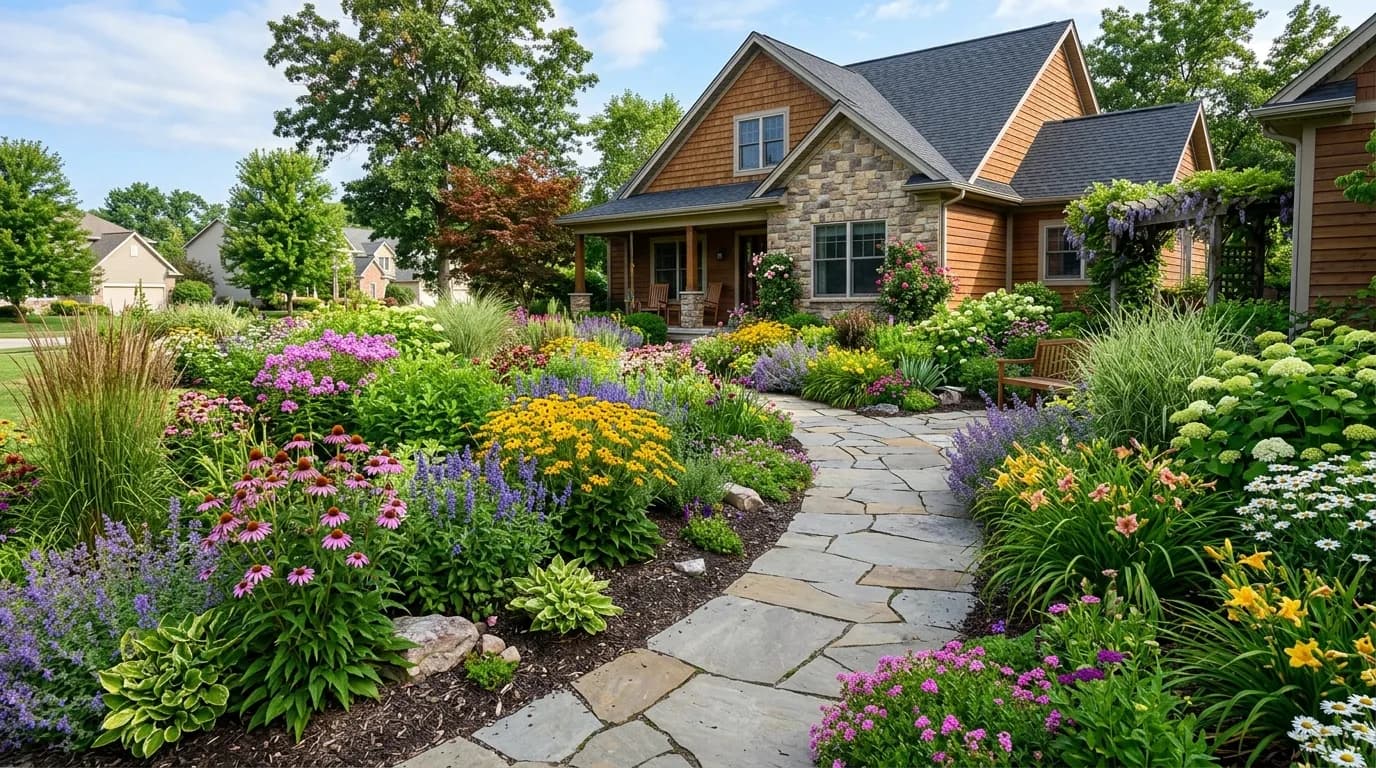
The smartest thing you can plant in a garden is a perennial. Unlike annuals that die each year and require replanting, perennials come back every spring — and most get bigger, better, and more floriferous with every season. A perennial garden is an investment that compounds.
Why Perennials Beat Annuals for Most Homeowners
Cost: You plant once, spend nothing again. Annuals need $100–$500 in replanting costs every single year.
Effort: After the first year of establishment, most perennial gardens need only spring cutback, occasional division, and mulching. No replanting, no starting from seed every spring.
Beauty: Year 3 perennial gardens look dramatically better than Year 1 — plants fill out, clumps expand, and the garden develops a layered, established look that annuals never achieve.
Ecology: Perennials develop deep root systems that sequester carbon, improve soil, prevent erosion, and support soil biology in ways annuals can't.
The Four Seasons of Perennial Gardens
A well-designed perennial garden has something happening in every season. The goal is continuous interest, not a single peak bloom followed by months of nothing.
Spring (April–May)
Early perennials emerge while everything else is still dormant, making them doubly impactful. Key plants: Hellebores, Bleeding Heart, Creeping Phlox, Siberian Iris, Alliums, and early Salvia bloom in spring. Their foliage persists and fills space after blooms fade.
Summer (June–August)
Peak season for most perennials. The goal is layering so something is always in bloom. Key plants: Coneflower (Echinacea), Black-eyed Susan (Rudbeckia), Catmint (Nepeta), Daylilies, Salvia, Shasta Daisy, Bee Balm, Lavender, Russian Sage.
Fall (September–October)
Late-season perennials carry the garden into autumn with warm colors. Key plants: Asters (purple, pink, white), Rudbeckia (continues from summer), Helenium, Sedum 'Autumn Joy', ornamental grasses with seed heads, Anemone.
Winter (November–March)
Perennials provide structure even in dormancy. Key plants: Leave ornamental grasses standing — they're beautiful with snow or frost. Echinacea seed heads feed birds. Dried Rudbeckia and grasses provide winter silhouettes that are genuinely ornamental.
30 Perennial Garden Ideas
Classic English-Style Mixed Border
The quintessential perennial design: a deep (6–8 ft) border against a fence or hedge, layered from tall plants at the back (5–6 ft) down to groundcovers at the front (6 in). Classic plants: Delphiniums, Foxglove, Garden Phlox, Roses, Baptisia, Catmint. This style peaks in June–July.
Prairie-Style Naturalistic Planting
Inspired by the American Midwest prairie: clumps of native grasses interspersed with prairie perennials. Extremely low maintenance after establishment. Key plants: Prairie Dropseed, Switchgrass, Little Bluestem, Coneflower, Wild Bergamot, Black-eyed Susan. Requires cutting back once yearly in late winter.
Cottage Garden Perennial Bed
Deliberately romantic and full, cottage gardens mix flowering perennials with herbs, old roses, and climbing plants. The look is "intentionally unplanned." Key plants: Roses, Clematis, Catmint, Delphinium, Hollyhocks, Foxglove, Astilbe, Geranium, Sweet William.
White Garden (Moonlight Garden)
All-white or silver planting creates a serene, sophisticated effect and glows beautifully at dusk and dawn. Key plants: White Echinacea 'White Swan', White Phlox, Shasta Daisy, White Astilbe, Silver Artemisia, White Allium, White Peonies.
Blue and Purple Border
Calming, cool tones that work in any garden. Blue and purple perennials are rare — use them deliberately. Key plants: Salvia nemorosa, Baptisia australis (blue false indigo), Catmint (Nepeta), Veronicastrum, Agapanthus, Lavender, Echinops (globe thistle).
Hot Color Border
A sizzling mix of reds, oranges, and yellows creates drama and energy. Best in full sun. Key plants: Crocosmia, Red Hot Poker (Kniphofia), Helenium, Rudbeckia, Hemerocallis (orange daylilies), Red Monarda, Geum.
🌿 Want to see these styles in your own yard?
[Upload a photo and get 3 AI-generated perennial garden designs with full plant lists →](/redesign)
Every plant recommendation is matched to your specific USDA hardiness zone, sun exposure, and soil conditions. Preview free, pay only if you love it.
Shade Perennial Garden
Under established trees is often the hardest spot to plant — too dry, too competitive. These perennials thrive there: Hostas (foliage kings), Heuchera (colorful foliage), Astilbe (feathery plumes), Bleeding Heart (spring bloomer), Ferns (texture and movement), Epimedium (dry shade champion).
Rock Garden Perennials
Low-growing perennials between and over rocks create a cascading, naturalistic effect. Ideal for slopes and poor soil. Key plants: Sedum (many species), Creeping Phlox, Thyme, Dianthus, Aubrieta, Arabis, Veronica prostrata.
Butterfly and Pollinator Garden
Design specifically for supporting pollinators with plants rich in nectar and pollen. Key plants: Milkweed (Asclepias — essential for Monarchs), Coneflower, Salvia, Lavender, Joe-Pye Weed, Agastache, Mountain Mint, Penstemon.
Cut Flower Perennial Garden
Dedicated beds of perennials grown specifically for cutting. Include: Peony, Iris, Coneflower, Salvia, Rudbeckia, Agapanthus, Achillea (yarrow), Phlox, Veronicastrum. Arrange in rows 18–24 inches apart for easy harvesting.
Perennial Planting Design Principles
Plant in Drifts, Not Dots
The most common mistake in perennial gardens: planting single specimens scattered across the bed. Instead, plant in groups of 3, 5, or 7 of the same variety. Odd-numbered drifts mimic how plants grow in nature and create much bolder visual impact.
Think About Foliage, Not Just Flowers
In most gardens, flowers last 2–6 weeks. Foliage lasts the whole season. Choose perennials with interesting foliage: Hostas (giant, ribbed, variegated), Heuchera (burgundy, lime, copper), Ornamental Grasses (movement, texture), Euphorbia (chartreuse), Artemisia (silver).
Leave 40% of Your Budget for Year 2
Perennial gardens always need more plants than initially planned. In Year 1, some plants underperform, you discover gaps, and you see what works. Budget for filling in and adjusting in Year 2.
Use Structure Plants
Every perennial bed needs structural plants that hold their shape and provide visual anchors: Ornamental Grasses, Peonies, Baptisia (false indigo), ornamental Alliums, and slow-growing shrubs like dwarf Spirea or Boxball provide structure that connects the looser perennial plantings.
Perennial Garden by Sun Exposure
Full Sun (6+ Hours Direct Sun)
Best performers: Rudbeckia, Echinacea, Salvia, Lavender, Ornamental Grasses, Agastache, Catmint (Nepeta), Russian Sage, Penstemon, Achillea, Baptisia. These are the workhorses — drought-tolerant and often native, they thrive on neglect.
Partial Shade (3–6 Hours)
Best performers: Astilbe, Japanese Anemone, Thalictrum, Geranium (cranesbill), Heuchera, Pulmonaria, Bleeding Heart, Solomon's Seal, Foxglove (biennial but self-seeds), Hosta.
Full Shade (Under 3 Hours)
Best performers: Hosta (the king), Ferns (many species), Epimedium, Lily of the Valley, Wild Ginger, Tiarella, Astilbe (some varieties), Heuchera.
Perennial Garden Cost Guide
DIY cost for a 100 sq ft perennial bed:
- Plants (25–35 perennials): $150–$400
- Soil amendment/compost: $30–$60
- Mulch (2 cubic yards): $40–$80
- Edging: $20–$60
- Total: $240–$600
Installed cost (labor + materials):
- Landscaper-installed 100 sq ft bed: $600–$1,500
- Full perennial border (200 sq ft): $1,500–$4,000
Year 2 and beyond costs drop to near zero — just mulch ($40–$80/year) and optional division/additions.