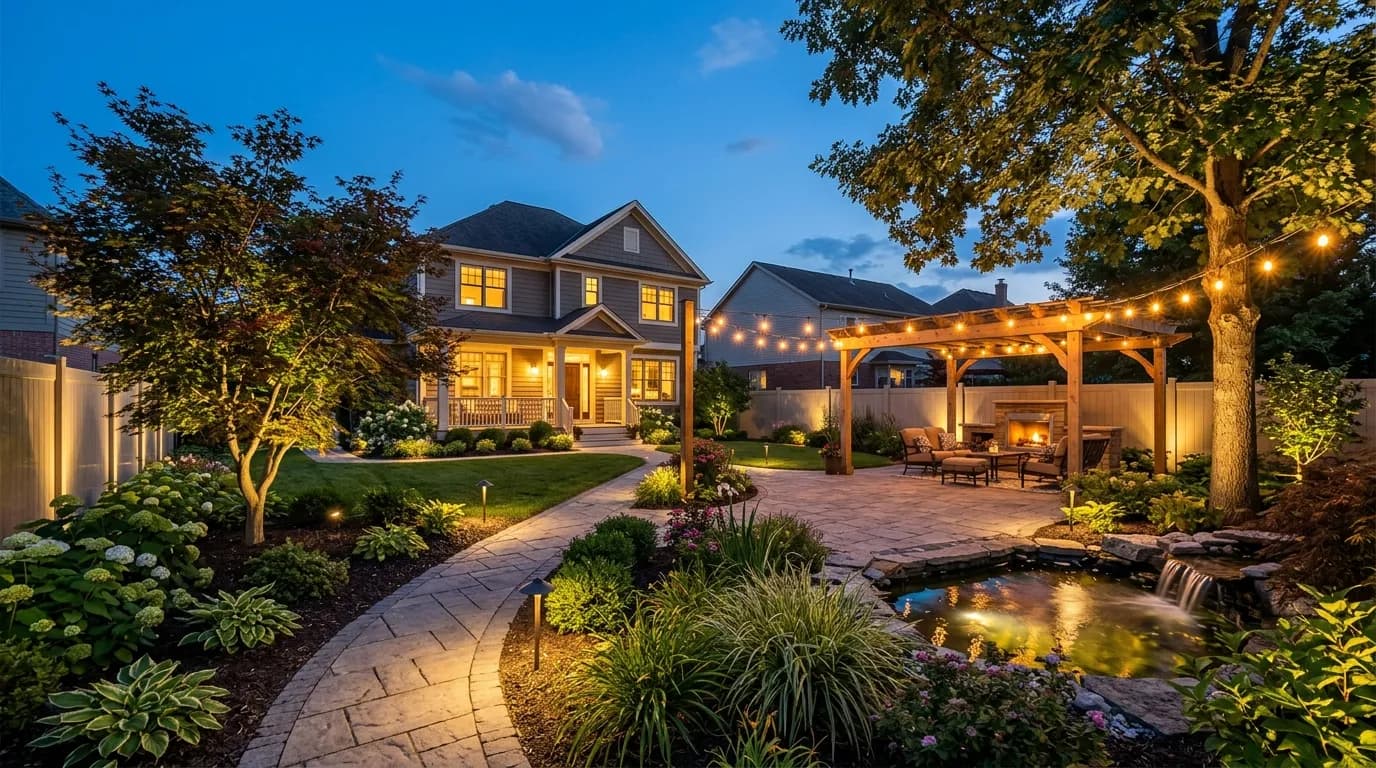
Your yard ends when the sun goes down — unless you have great outdoor lighting. The right lighting extends your outdoor living hours, dramatically improves security, boosts curb appeal after dark, and adds thousands of dollars to your home's perceived value. Done well, outdoor lighting turns a good yard into a spectacular one.
This guide covers 40 of the best outdoor lighting ideas for 2026 — organized by category — with cost estimates, product tips, and design principles that professional landscape designers use.
Why Outdoor Lighting Matters More Than People Think
Most homeowners underestimate the impact of outdoor lighting. Consider: your neighbors and anyone passing by see your home most during the evening hours, when people are driving home from work and walking through the neighborhood. A beautifully lit home makes an impression 365 nights a year. Landscape lighting also deters burglars (well-lit properties are 300% less likely to be targeted), improves safety on steps and paths, and extends your usable outdoor living space by 3–5 hours per evening.
The average homeowner spends $1,500–$5,000 on professional landscape lighting. The average return: 50–100% added value in buyer perception and home appraisals. That's one of the highest ROI improvements you can make to your property.
String Lights and Festoon Lighting Ideas
1. Backyard Canopy String Lights
Zigzag weatherproof Edison-bulb string lights between poles, pergola beams, or fence posts to create a warm overhead canopy of light. Use 8–12-foot poles set 10–12 feet apart for the classic "cafe lights" effect. Globe bulbs (G40 or G50 size) cast the warmest, most inviting glow.
Cost: $80–$250 for lights; $200–$600 for professional installation
Pro tip: Use warm white (2700K) bulbs, not bright white (4000K+) — the difference between romantic and clinical
2. String Lights Along the Fence
Drape string lights along the top of a fence line for a casual, festive border. Combine with climbing plants (jasmine, clematis) for a lush, illuminated garden wall. Staple gun the wire to wood fence posts or use S-hooks on metal fences.
3. Patio Umbrella Lights
Solar-powered string lights threaded through a patio umbrella's ribs and spokes illuminate your outdoor dining area without any wiring. Remove with the umbrella at season's end. Cost: $20–$50.
4. Pergola Curtain Lights
Hang 12–15 strands of vertical curtain lights (icicle-style) from pergola beams to create a shimmering wall of light on one side of a covered patio. Especially beautiful in evenings, creating an enclosed outdoor room feel.
5. Tree-Wrapped Fairy Lights
Wrap fairy lights (micro-LED, 100–200 count) around tree trunks and lower branches for an enchanted garden effect. Use outdoor-rated lights and wrap in a loose spiral from base to canopy edge. Uplighting the same tree simultaneously creates a magical layered effect.
Path Lighting Ideas
Path lighting serves double duty: safety and aesthetics. A well-lit pathway communicates "welcome" to every visitor.
6. Classic Low-Voltage Path Lights
Traditional low-voltage bollard path lights (12–18 inches tall) installed 6–8 feet apart along a walkway provide gentle, glare-free illumination. Choose fixtures with a top cap that shields the bulb — no bare bulb glare directly at eye level.
Cost: $15–$60 per fixture; 8–10 fixtures for a 50-foot path
7. Recessed Ground Lights (Hardscape Uplights)
Flush-mount recessed ground lights set directly into pavers or concrete create a sleek, modern path lighting effect. The light source is invisible — only the illuminated surface is seen. Beautiful on stone or concrete paths; pair with uplighting on border plantings for a layered look.
Cost: $40–$120 per fixture installed
8. Solar Path Lights
No-wire solar path lights are perfect for DIY installation. Today's premium solar lights (GIGALUMI, Nekteck, Aootek brands) deliver 8–12 hours of good-quality light on a full charge. Stick them in the ground and done.
Cost: $30–$80 for a set of 8–12 lights
9. Step Riser Lights
Recessed LED lights in stair risers (vertical face of each step) eliminate trip hazards and create a stunning glowing staircase effect. Essential for any outdoor staircase with evening traffic.
Cost: $20–$50 per step light installed
10. Illuminated Stepping Stones
Glow-in-the-dark or solar-charged stepping stones glow softly at night without any wiring. Effect is subtle but charming for garden paths. Best used in conjunction with other lighting rather than as the sole path lighting.
> Want to see how outdoor lighting would transform your specific yard? Generate a free AI landscape design at Yardcast → Upload your yard photos and get 3 photorealistic designs showing lighting placement, plant combinations, and outdoor living layouts — all tailored to your property.
Uplighting and Spotlighting Ideas
Uplighting is what separates a professional landscape lighting design from amateur work. Uplighting trees, walls, and architecture creates drama, depth, and visual complexity.
11. Uplight Specimen Trees
Place 2–3 uplights at the base of a specimen tree, aiming at the trunk and lower branches. This creates the most dramatic possible lighting effect — the silhouette of a lit tree against a dark sky. Use narrow-beam (15°) spots for tall, narrow trees; wide-beam (40°) floods for spreading deciduous canopies.
12. Facade Grazing
Position spotlights close to a wall or fence and aim them parallel to the surface to "graze" the texture. Brick, stone, and wood fence boards take on incredible dimension and depth when lit this way. The shadows created by textured surfaces are the main visual effect.
13. Silhouette Lighting
Place a floodlight on the wall behind a plant (not in front of it) to create a dramatic silhouette shadow. Ornamental grasses, agave, tall ornamentals, and architectural shrubs make spectacular shadow subjects. One of the most striking — and least used — effects in residential landscape lighting.
14. Moonlighting from Trees
Mount lights high in a tree canopy and aim them downward to mimic the natural effect of moonlight filtering through leaves. The dappled light patterns on the ground below are extraordinarily beautiful. Requires climbing or a professional arborist to install lights in tall trees.
15. Garden Bed Downlights on Posts
Mount downward-aimed lights on 3–5 foot posts positioned behind planting beds. The light spills down over the plants from above, illuminating foliage and flowers while keeping the light source itself out of direct sight lines. Creates a theatrical "stage lighting" effect on your garden beds.
Patio and Deck Lighting Ideas
16. Recessed Deck Lights
Recessed LED lights set into deck boards or deck fascia (the outer trim board) illuminate the deck surface from within. Subtle, elegant, and extremely effective for safety. Code-compliant options are available for most deck board thicknesses.
Cost: $30–$80 per light; typically 6–12 lights for an average deck
17. Post Cap Lights
Replace standard post caps on deck railings with illuminated post cap lights. These fit 4×4 and 6×6 posts, illuminate with soft downward-directed light, and are available in solar (no wiring) or low-voltage (wired) versions.
18. Outdoor Wall Sconces
Mount sconces on the exterior wall of your home, garage, or fence to provide ambient illumination across the patio. Position at 7–8 feet height (eye level plus a bit) and choose fixtures that direct light both up and down for maximum coverage.
19. Under-Rail LED Strip Lights
Attach weatherproof LED strip lights to the underside of deck railings for a contemporary low-glow effect. The railing is invisible; only the warm wash of light on the deck surface is seen. Choose warm white (2700K) or amber for the most flattering effect.
20. Outdoor Floor Lamps
Outdoor floor torchieres and lanterns (designed for exterior use) add ambient light to seating areas without any installation — just plug in (or use battery-powered models). Ideal for renters or anyone who wants flexibility in their lighting arrangement.
Fire and Accent Lighting Ideas
21. Fire Pit as Centerpiece Lighting
A propane or wood-burning fire pit provides the most intimate and atmospheric outdoor lighting possible. The dancing, warm-toned light from an open flame creates social focal energy that no electric light can replicate. Position seating in a circle at 6–8 feet from the fire's edge.
22. Tiki Torches in Rows
Line a path or patio border with tiki torches for an island-inspired atmospheric effect. Citronella oil repels mosquitoes while providing light. Not a substitute for primary path lighting, but an excellent atmospheric supplement on entertaining nights.
23. Garden Lanterns on Stakes
Place large decorative lanterns (battery-powered or candle) at strategic points in garden beds — next to a bench, at a path bend, or flanking an entrance. These are movable, require no installation, and add charming warmth.
24. Illuminated Planters
Self-contained illuminated planters (LED-embedded into the pot) glow from within, making the plant inside a floating, glowing sculpture. Available in cube, bowl, and urn shapes. Particularly dramatic when planted with grasses, succulents, or other architectural plants.
25. Color-Changing LED Spotlights
RGB landscape spotlights allow color programming for holidays, entertaining, or seasonal variations. While constant color-changing can feel gimmicky, a fixed warm amber or soft blue for specific zones (pool, water feature, accent tree) can be stunning.
Smart Outdoor Lighting Ideas
Modern smart lighting systems make outdoor lighting more versatile, efficient, and impressive than ever.
26. Smart Low-Voltage Transformer
Systems like Kichler Smart or VOLT Smart use Wi-Fi-connected transformers that let you control every zone, adjust brightness, set schedules, and create scenes from your phone. One transformer (150–300W) typically powers an entire average yard's lighting system.
27. Motion-Activated Security Lights
Mount motion-activated LED floodlights on eaves and corners facing the driveway, side yards, and rear of the house. Modern smart versions (Ring, Kichler) integrate with your home security system and send alerts when triggered.
28. Sunset-Synchronized Scheduling
Smart lighting systems set to turn on "15 minutes before sunset" and off at "sunrise" automatically adjust daily as days get longer or shorter. Your yard is always lit at the right time, every day of the year, without manual adjustment.
29. Zone Scene Control
Create "scenes" — pre-programmed combinations of brightness levels and active zones — for different uses: "Entertaining" (bright ambient + feature lighting), "Evening Relaxing" (dim ambient + fire features), and "Security" (full bright across all zones).
Specialty and Creative Outdoor Lighting Ideas
30. Fountain and Pond Lighting
Submersible LED lights in ponds, fountains, and water features are transformative. The water becomes a glowing jewel in the landscape. Use warm white for natural water effects; consider blue for contemporary pools. Submersible LEDs last 25,000+ hours and require no maintenance.
31. Outdoor Art and Sculpture Lighting
If you have a garden sculpture, birdbath pedestal, or large urn, light it with a tight-beam spotlight from 45° above. The sculpture becomes a focal point visible from inside the home at night.
32. Outdoor Kitchen Lighting
Task lighting over an outdoor grill and prep area is functional necessity. Under-counter LED strips provide glare-free work surface light; overhead pendants add ambiance over the bar seating area. Use rated-for-outdoor or wet-location fixtures in kitchen areas.
33. Driveway Edge Lighting
Low bollard lights or flush ground lights along the driveway edge guide arrival and departure while making the property's front sweep look dramatic and intentional after dark.
34. Flowering Plant Spotlights
Position narrow-beam spotlights at the front of flower beds, aimed upward through blooming perennials or annuals. The illuminated flowers glow like stained glass at night — completely different from their daytime appearance, and extraordinarily beautiful.
35. Swing and Hammock Area Lighting
Hang string lights above a garden swing or hammock area to create a dedicated cozy evening nesting spot. This small zone lighting creates a destination within your yard — a spot you'll actually use, long after sunset.
Outdoor Lighting by Style
36. Modern and Minimalist Lighting
For contemporary homes: flush ground lights, hidden LED strips, recessed deck lights, and minimal fixtures with clean metal housings (black or brushed nickel). Avoid visible bulbs; emphasis is on the lit surface, not the fixture.
37. Cottage and Farmhouse Lighting
For traditional homes: Edison-bulb string lights, lantern-style post lights, vintage bronze fixtures, and soft warm-white color temperatures throughout. Visible fixtures are fine — choose ones with classic silhouettes.
38. Tropical and Resort-Style Lighting
For warm-climate homes: torches, uplighted palms, underwater lighting in pools, paper or rattan-shade outdoor pendants, and warm amber color temperatures. Emphasize the lush foliage.
39. Mediterranean and Tuscan Lighting
For stucco and tile homes: wrought iron lanterns, wall-grazing on stucco walls, uplighted olive or citrus trees, and candle lanterns on tables. Warm orange-amber tones mimic candlelight.
40. Xeriscape and Desert Lighting
For drought-tolerant landscapes: dramatic uplighting of agave, cactus, and succulents creates incredible sculptural shadow play. Low path lights along gravel paths and spotlight on a lone desert specimen tree create graphic, minimalist beauty.
Outdoor Lighting Design Principles
Regardless of which ideas you use, these principles make the difference between amateur and professional results:
Avoid glare. Never let anyone see the bare bulb of a spotlight directly. Always position fixtures so the light source is shielded or aimed away from sight lines.
Layer your light. Combine ambient (general illumination), accent (focal points), task (functional areas), and decorative (atmosphere) sources. A single type of light creates a flat, boring effect.
Use warm color temperatures. 2700K–3000K (warm white) is almost always correct for residential landscapes. 4000K+ looks institutional.
Illuminate the dark edges. Aim at least one light toward the perimeter of your yard to push back the darkness and make the space feel larger.
Less is more. 8–15 well-placed fixtures almost always looks better than 30 poorly placed ones. Restraint is a virtue in landscape lighting design.
The right outdoor lighting doesn't just illuminate your yard — it reveals it. Features that are merely attractive by day become dramatic, dimensional, and beautiful at night when lit with intention.
[Ready to see your yard fully designed — including lighting placement? Get 3 free AI landscape designs at Yardcast →](/redesign)