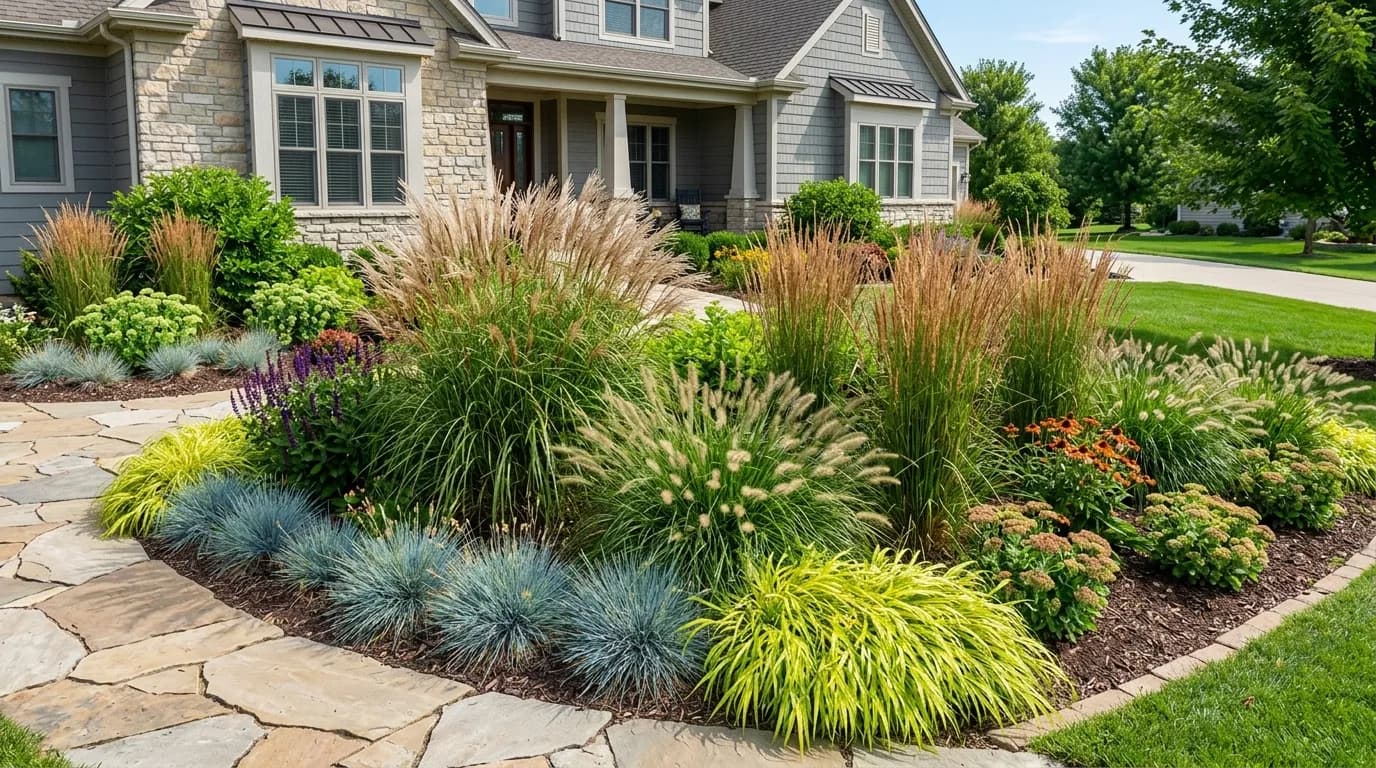
Ornamental grasses are one of the most underused plants in residential landscaping — and one of the most rewarding. They offer year-round texture, graceful movement in the breeze, dramatic seed heads in fall, and winter structure when everything else goes dormant. They're drought-tolerant, deer-resistant, and largely pest-free once established. This guide covers the 30 best ornamental grasses for home landscapes, organized by size, use, and climate so you can find the right grass for your specific situation.
Why Ornamental Grasses Belong in Every Landscape
Before diving into specific varieties, here's why grasses deserve a place in your yard:
Year-round interest. Most ornamental grasses look great in all four seasons — fresh green growth in spring, lush fullness in summer, warm seed heads in fall, and architectural structure in winter.
Low maintenance. Once established, most ornamental grasses need almost no care — just one annual cutback in late winter before new growth emerges.
Drought tolerance. The majority of popular ornamental grasses are highly drought-tolerant once their root systems are established. Many native prairie grasses can survive months without rain.
Wildlife habitat. Grass seed heads provide food for birds through fall and winter. The dense clumps provide nesting habitat for ground-nesting birds and overwintering beneficial insects.
Erosion control. The deep, fibrous root systems of many ornamental grasses — especially native prairie species — excel at stabilizing slopes and preventing erosion.
Design versatility. Grasses work in formal modern designs, naturalistic prairie gardens, coastal landscapes, drought-tolerant xeriscapes, and traditional borders.
Cost efficiency. Grasses are fast-growing and can be divided every 3–5 years to multiply your stock for free.
Ready to see them in your yard? Use Yardcast's free AI landscape design tool to visualize how ornamental grasses would look in your specific space with your home style.
Big Statement Grasses (Over 4 Feet Tall)
1. Karl Foerster Feather Reed Grass (Calamagrostis × acutiflora 'Karl Foerster')
Height: 5–6 feet | Zones: 4–9 | Sun: Full to partial
The workhorse of ornamental grasses. Karl Foerster is one of the most widely planted ornamental grasses in North America for good reason — it's adaptable, vertical, and provides four seasons of interest. In spring, bright green vertical blades emerge early; in summer, feathery pink-bronze plumes appear on 6-foot stems; in fall, the whole plant turns a warm gold; in winter, the dried tan stems and seed heads persist with dignity. It's resistant to rust (a common grass disease), thrives in average soil, and stays tightly clumped without spreading aggressively. Perfect for adding vertical accents, screening, or lining a driveway or path.
Best use: Vertical accent, screening, mass planting along fences or driveways
2. Miscanthus 'Gracillimus' (Maiden Grass)
Height: 5–7 feet | Zones: 5–9 | Sun: Full sun
The classic landscape grass. Maiden grass forms a graceful, fountain-shaped clump with narrow silver-green blades that shimmer in the breeze. In late summer, coppery pink plumes emerge and age to silver-white, persisting through winter. The clump turns warm gold in fall. This is the grass that made ornamental grasses famous in American landscaping in the 1980s and 90s. Choose cultivars carefully — 'Gracillimus' is clumping; some miscanthus species can self-seed aggressively in warmer climates. Check your local invasive species lists before planting.
Best use: Specimen focal point, mass planting in large spaces, year-round textural anchor
3. Pampas Grass (Cortaderia selloana)
Height: 8–12 feet | Zones: 7–11 | Sun: Full sun
Bold, dramatic, and unmistakably architectural. Pampas grass produces enormous silvery-white or pale pink plumes on 10–12 foot stems that tower above surrounding plants. It's a focal point plant — one well-placed clump can anchor an entire landscape composition. The downside: in warm climates (especially California, Florida, Texas), it can become invasive. Before planting, check your state's invasive species list. In cold climates where it's non-invasive, it's a magnificent specimen plant.
Best use: Single specimen focal point in large yards; coastal and southwestern landscapes
4. Giant Muhly (Muhlenbergia lindheimeri)
Height: 4–5 feet | Zones: 7–10 | Sun: Full sun
Native to Texas and northern Mexico, giant muhly is one of the most beautiful grasses for warm climates. In fall, it produces enormous clouds of silvery-purple-pink flower panicles that catch the light like smoke. The effect is stunning — especially when backlit by morning or evening sun. It's extremely drought-tolerant and heat-loving. Plant in masses of 5–9 for a breathtaking fall display.
Best use: Mass planting for dramatic fall display; Texas, southern and southwestern gardens
5. Switchgrass (Panicum virgatum)
Height: 3–6 feet depending on cultivar | Zones: 5–9 | Sun: Full to partial
One of the top native prairie grasses for landscape use. Switchgrass has excellent cultivar selection for different design effects: 'Shenandoah' turns brilliant red-burgundy in fall; 'Heavy Metal' stays rigidly upright in steel-blue; 'Dallas Blues' has wide, powder-blue foliage with large, airy panicles. It's an excellent habitat plant — 35+ species of birds and insects depend on it. Extremely drought-tolerant once established.
Best use: Native garden, prairie-style planting, wildlife habitat, erosion control on slopes
Mid-Size Grasses (2–4 Feet Tall)
6. Little Bluestem (Schizachyrium scoparium)
Height: 2–4 feet | Zones: 3–9 | Sun: Full sun
The native prairie grass that turns orange-red to copper in fall — one of the most spectacular fall color shows of any plant, grass or otherwise. Little Bluestem is the quintessential American prairie grass, native to nearly every state. In summer it's blue-green; in fall, the whole plant transforms to brilliant rust and copper that glows in the low-angle autumn sunlight. White fluffy seed heads persist into winter. Extremely drought-tolerant. Plant in masses for the full prairie effect, or use as an individual specimen in a sunny border.
Best use: Fall color, native prairie garden, meadow-style planting, sunny dry slopes
7. Blue Oat Grass (Helictotrichon sempervirens)
Height: 2–3 feet | Zones: 4–8 | Sun: Full sun
The bluest grass in the landscape. Blue oat grass forms a tight, spiky mound of intensely blue-grey foliage that stays evergreen in mild climates. Tan oat-like seed heads on 4-foot stems add height in summer. It's one of the best ornamental grasses for modern and minimalist landscapes, where its geometric mound form and steel-blue color contrast beautifully with dark hardscape. Pair with black-eyed Susans, purple coneflower, or any warm-toned perennial for maximum color contrast.
Best use: Modern landscapes, blue-grey color accent, xeriscape, front border mounds
8. Feather Grass (Stipa tenuissima / Nassella tenuissima)
Height: 2–3 feet | Zones: 7–10 | Sun: Full sun
Sometimes called Mexican feather grass, this delicate grass produces fine, hair-like foliage that moves in the slightest breeze with a liquid, flowing quality unlike any other plant. In early summer, the seed heads are golden and wispy, creating a shimmering haze across the landscape. Drought-tolerant and adapted to poor soils. Note: It can self-seed prolifically in some climates — check local invasive lists before planting in California and the Southwest.
Best use: Movement and texture accent, modern/minimal designs, dry gardens, slope stabilization
9. Hakonechloa (Hakonechloa macra 'Aureola' or 'All Gold')
Height: 18–24 inches | Zones: 5–9 | Sun: Part shade to full shade
The gold standard for shade gardens. Hakonechloa (Japanese forest grass) is one of the very few ornamental grasses that thrives in shade. 'All Gold' is a brilliant golden-yellow that lights up dark corners; 'Aureola' has gold-and-green striped leaves that cascade in an elegant waterfall habit. It's a slow grower but becomes more magnificent each year. Perfect under trees, along north-facing foundations, or wherever shade makes most plants struggle.
Best use: Shade gardens, woodland understory, under trees, north-facing beds, container planting
10. Muhly Grass (Muhlenbergia capillaris)
Height: 2–3 feet | Zones: 6–10 | Sun: Full sun
Pink muhly grass is famous for its extraordinary fall display — in September and October, the plant disappears under an enormous cloud of pink-to-magenta feathery flower panicles that catch the backlight like a pink mist. The mass of color is astonishing. It's a tough, heat-tolerant native grass that thrives with little care. Plant in groups of 3–5 for the best display. Best in zones 7–10 where fall is long.
Best use: Mass planting for fall drama, coastal gardens, hot and humid climates, Southern US
Small Grasses and Edging Varieties (Under 2 Feet)
11. Blue Fescue (Festuca glauca)
Height: 10–12 inches | Zones: 4–8 | Sun: Full sun
The classic low mounding grass for edging and groundcover. Blue fescue forms perfect, tight blue-green spheres that are remarkably architectural in design. It's evergreen in mild climates and semi-evergreen in colder zones. Use it as a repeated accent, a border edging plant, or mass it as a groundcover across a sunny slope or bed. Best in well-drained soils — it dislikes clay and wet feet. Divide every 2–3 years to keep the centers fresh.
Best use: Edging, mass groundcover, container planting, rock garden accent, modern minimalist design
12. Black Mondo Grass (Ophiopogon planiscapus 'Nigrescens')
Height: 6–8 inches | Zones: 5–9 | Sun: Part shade to full shade
Technically not a true grass (it's in the lily family), but used in landscapes exactly like one. Black mondo grass has near-black foliage — a stunning and unusual color in the plant world. Pair it with silver, chartreuse, or bright green plants for maximum contrast. Slow-growing but tough and long-lived. Works beautifully in Asian-inspired gardens, modern landscapes, and dark-themed container combinations.
Best use: Dark color accent, Asian garden, modern design, shade groundcover, contrast planting
13. Carex (Sedge Grasses)
Height: 6–24 inches depending on species | Zones: 4–9 | Sun: Part to full shade
The carex genus offers dozens of ornamental sedge species that solve the shade grass problem — most ornamental grasses need full sun, but carex species thrive in partial to full shade. Standouts include Carex 'Ice Dance' (bright white margins, shade-tolerant), Carex 'Evergold' (gold-centered, arching leaves), and Carex morrowii 'Silk Tassel' (fine, shiny leaves). They're also more moisture-tolerant than most grasses — excellent near rain gardens or in moist low spots.
Best use: Shade groundcover, rain gardens, moist areas, woodland understory, edging in shade
14. Variegated Hakone Grass (Hakonechloa macra 'Stripe It Rich')
Height: 14–18 inches | Zones: 5–9 | Sun: Part shade
A newer introduction with cream-and-green striped foliage that brightens shady corners. The cascading habit and variegated coloring create a striking layered groundcover effect under trees and in shaded borders. Pairs beautifully with hostas, ferns, and astilbe.
Best use: Shade accent, layering under trees, brightening dark corners
Ornamental Grass Design Ideas
The Prairie Mass Planting
The most impactful way to use ornamental grasses: mass them in large drifts of a single species — 9, 15, or 25 plants — for a wave-like effect. A hillside covered in 'Shenandoah' switchgrass turning burgundy in October is one of the great sights in residential gardening. This approach requires confidence (you have to commit to the scale) but produces extraordinary results.
How to execute it: Choose one grass variety suited to your climate and light. Plant 3 feet apart (for larger varieties) or 18 inches apart (for smaller varieties). Mulch heavily in year 1. By year 3, the planting will be a solid mass.
The Four-Season Border
Create a mixed border where ornamental grasses provide the backbone, with perennials woven between. A classic combination: Karl Foerster grass as vertical accents (5-6 ft), black-eyed Susans and purple coneflower as the summer show, asters for fall color, and the dried grass skeletons providing winter structure. This border is never bare and never boring.
The Modern Minimalist Approach
In contemporary landscapes, ornamental grasses shine as specimens within a field of decomposed granite or gravel. Place a single specimen Karl Foerster or 'Hameln' dwarf fountain grass in a surround of dark gravel with a backdrop of board-form concrete or dark steel. The contrast between the soft, moving grass and the rigid, dark hardscape is quietly dramatic.
Using Grasses Near Water
Ornamental grasses look especially beautiful near water features, ponds, or rain gardens. Their reflection in water and the way they move in the breeze while water ripples creates a serene, Japanese-garden-inspired effect. For wet or occasionally wet areas, choose moisture-tolerant species like Miscanthus, carex sedges, or Panicum virgatum switchgrass.
How to Maintain Ornamental Grasses
The only rule you need to know: Cut warm-season grasses back in late winter (February–March), and cut cool-season grasses back in late winter as well. Do NOT cut them back in fall — the dried foliage and seed heads provide wildlife habitat, winter beauty, and insulation for the root crown.
Specific maintenance steps:
- 1Wait until late winter, when new green growth starts to emerge from the base
- 2Tie the dried foliage into a bundle with twine (this makes cutting cleaner)
- 3Cut the entire clump back to 4–6 inches above the ground
- 4Divide large clumps every 3–5 years in spring if the center becomes woody or dead
What NOT to do:
- Don't cut back in fall (despite what some sources say — the winter structure is valuable)
- Don't cut too early in spring (frost can damage the exposed crowns)
- Don't over-fertilize (high nitrogen causes floppy growth)
- Don't over-water established clumps (most grasses are drought-tolerant; wet feet cause rot)
Cost Guide: What to Expect for Ornamental Grasses
| Grass Type | Plant Cost (1-gal) | Plant Cost (3-gal) | Establishment |
|---|---|---|---|
| Karl Foerster Reed Grass | $8–$14 | $18–$28 | 1–2 seasons |
| Miscanthus 'Gracillimus' | $10–$16 | $20–$35 | 1–2 seasons |
| Little Bluestem | $6–$12 | $14–$22 | 1–2 seasons |
| Blue Fescue | $6–$10 | $12–$18 | 1–2 seasons |
| Muhly Grass | $8–$14 | $16–$26 | 1–2 seasons |
| Hakonechloa | $10–$18 | $22–$35 | 2–3 seasons |
| Switchgrass (Panicum) | $6–$12 | $14–$22 | 1–2 seasons |
Professional installation adds $50–$100 per plant for site prep, planting, and mulching — or do it yourself to save significantly.
Want a design that incorporates ornamental grasses beautifully? Generate your free AI landscape design at Yardcast — describe your climate, style, and yard size, and our AI will create a custom plan with the right grasses for your specific conditions.
Choosing the Right Grass for Your Climate
Northeast & Midwest (Zones 4–6)
Best picks: Karl Foerster, Little Bluestem, Switchgrass 'Shenandoah', Blue Oat Grass, Blue Fescue, Hakonechloa (shade). Avoid: most Miscanthus varieties need longer growing seasons; pampas grass won't survive cold winters.
Southeast (Zones 7–9)
Best picks: Muhly Grass, Gulf Muhly, Liriope, Carex, Miscanthus 'Gracillimus', Pampas Grass (where non-invasive). Look for heat and humidity tolerance.
Southwest & Texas (Zones 7–10)
Best picks: Big Muhly, Mexican Feather Grass (check invasive status), Gulf Muhly, Blue Grama, Sideoats Grama, Buffalo Grass, Deer Grass. Focus on extreme heat and drought tolerance.
Pacific Northwest (Zones 7–9)
Best picks: Karl Foerster, Blue Oat Grass, Hakonechloa, Carex. Cool wet winters favor cool-season grasses; avoid grasses that need hot dry summers to thrive.
California (Zones 8–11)
Best picks: California Fescue, Deer Grass, Blue Oat Grass, Gulf Muhly. Avoid invasive Mexican Feather Grass and Pampas Grass — both are on California's invasive species list.
Frequently Asked Questions About Ornamental Grasses
Q: What is the best low-maintenance ornamental grass?
Karl Foerster feather reed grass is the #1 recommendation for homeowners wanting low maintenance. It needs just one annual cutback, tolerates drought once established, doesn't spread invasively, and looks great in all four seasons. It's adaptable to zones 4–9 and works in sun to part shade.
Q: Which ornamental grasses spread aggressively?
Some ornamental grasses can become invasive. Yellow groove bamboo and running bamboo (technically a grass) spread via underground rhizomes. Some miscanthus species self-seed aggressively in warm climates. Mexican feather grass (Nassella tenuissima) is invasive in California. Always research the specific cultivar and check your state's invasive species list before planting.
Q: When should I cut back ornamental grasses?
Late winter to early spring — just before new growth emerges (usually February–March in most climates). Do NOT cut them back in fall. The dried structure provides winter beauty and wildlife habitat. Wait until you see new green growth pushing up from the base, then cut the old growth to 4–6 inches.
Q: Can ornamental grasses grow in shade?
Most ornamental grasses need full sun. For shade, choose hakonechloa (Japanese forest grass), carex sedges, or black mondo grass. These are the best shade-tolerant options that provide a grass-like effect in lower light.
Q: How far apart should I plant ornamental grasses?
Space large varieties (Miscanthus, Karl Foerster) 3–4 feet apart. Space medium varieties (switchgrass, muhly) 2–3 feet apart. Space small varieties (blue fescue, carex) 12–18 inches apart. They'll fill in and touch within 2–3 seasons.
Q: Do ornamental grasses come back every year?
Yes — almost all ornamental grasses used in landscaping are perennial. They die back (or go semi-dormant) in winter and return reliably each spring. A well-established clump can persist and improve for 10–20+ years with minimal care.