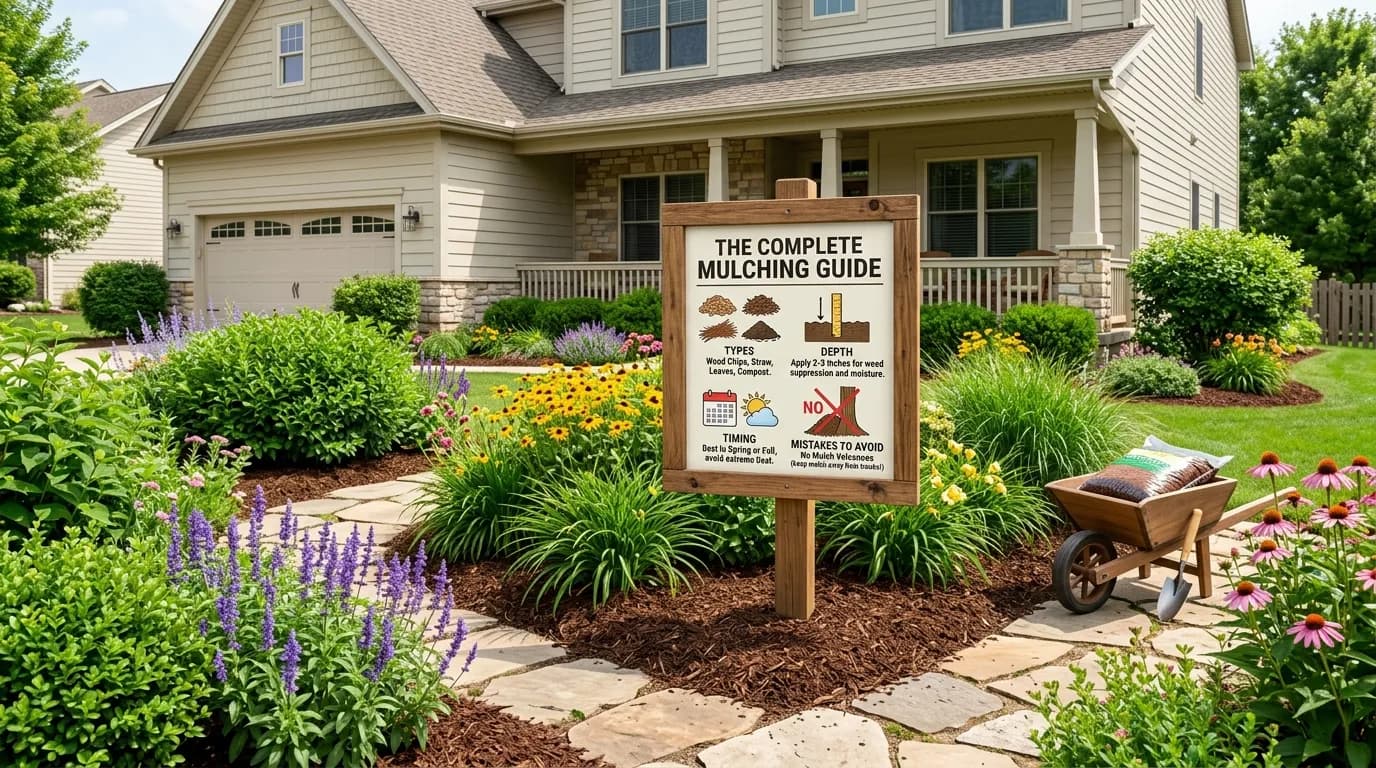
Fresh mulch is the cheapest way to make any landscape look professionally maintained. But the wrong mulch, wrong depth, or wrong technique can damage plants and waste money.
Mulch Types Compared
Organic (Decomposes — feeds soil)
| Type | Cost/yard | Pros | Cons | Best For |
|---|---|---|---|---|
| Hardwood bark | $25-40 | Classic look, slow to decompose | Can mat, float in heavy rain | Most landscape beds |
| Pine bark | $30-45 | Won't mat, acidifies slightly | Lighter, blows in wind | Acid-loving plants (azaleas, blueberries) |
| Pine straw | $5-8/bale | Cheap, acidifies, stays put on slopes | Needs refreshing 2x/year | Southern gardens, slopes |
| Cypress | $30-45 | Resists insects, slow decomposition | Harvesting harms wetlands | Use only if sustainably sourced |
| Cocoa hulls | $35-50 | Chocolate scent, attractive | Toxic to dogs, expensive | Small ornamental beds (no pets) |
| Leaf mold | Free | Best for soil biology, rich in nutrients | Not as "clean" looking | Woodland gardens, back beds |
| Compost | $25-40 | Feeds plants, improves soil | Not decorative, weeds may sprout | Vegetable gardens, top-dressing |
Inorganic (Doesn't decompose — permanent)
| Type | Cost/yard | Pros | Cons | Best For |
|---|---|---|---|---|
| River rock | $80-150 | Permanent, won't wash away | Retains heat, doesn't feed soil | Desert/xeriscape, drainage areas |
| Decomposed granite (DG) | $40-60 | Compacts firm, clean modern look | Hot in sun, no soil benefit | Paths, modern design, succulent gardens |
| Rubber mulch | $80-120 | Doesn't decompose, soft | Chemicals leach, smells in heat | Playgrounds only (not landscape beds) |
| Landscape fabric + stone | Varies | Permanent weed barrier | Degrades, prevents soil improvement | Under gravel paths only |
The Right Depth
- 2-3 inches: Standard for most planting beds. This is the sweet spot.
- 4 inches: Acceptable for paths and areas with aggressive weeds.
- 1-2 inches: Appropriate around perennials and small plants.
- Never exceed 4 inches. Excess mulch suffocates roots, harbors pests, and creates an environment for bark beetles and fungal disease.
The Critical Gap
Keep mulch 3-4 inches away from all trunks and stems. Mulch piled against bark (the "mulch volcano") causes:
- Bark rot and canker diseases
- Root girdling (roots grow into the mulch and strangle the trunk)
- Pest habitat (voles nest in mulch against trunks)
- Moisture retention that promotes fungal infection
This is the #1 mulching mistake in America. If you see mulch volcanoes, pull it back.
When to Mulch
- Spring (March-April): After soil warms but before weeds germinate. Most common time.
- Fall (October-November): Protects roots over winter, suppresses spring weeds. Arguably the better time.
- After planting: Always mulch immediately after installing new plants.
- Annual refresh: Top-dress with 1" of fresh mulch each spring to maintain the 3" depth.
Don't mulch when:
- Soil is frozen (locks in cold)
- Ground is waterlogged (traps excess moisture)
- Plants are actively sprouting in spring (can smother emerging perennials)
How Much Do You Need?
Formula: Length × Width × Depth (in inches) ÷ 324 = cubic yards needed
Example: A 20ft × 4ft bed at 3" deep = 20 × 4 × 3 ÷ 324 = 0.74 cubic yards ≈ 1 yard
Quick reference:
- 1 cubic yard covers ~100 sq ft at 3" depth
- Most suburban front yards need 3-5 cubic yards
- Bulk delivery ($25-45/yard + $50-100 delivery) is much cheaper than bags ($5-7 per 2 cubic foot bag)
Installation Steps
- 1Pull weeds — Remove all existing weeds by hand. Mulch suppresses future weeds but won't kill existing ones.
- 2Edge beds — Cut clean edges before mulching for a crisp professional look.
- 3Apply mulch — Dump, rake, and spread to 3" depth. Work around plants, keeping 3-4" gap from stems/trunks.
- 4Water lightly — Settle the mulch and prevent it from blowing away in wind.
Dyed Mulch: Yes or No?
Red, black, and brown dyed mulch is polarizing. The dye is vegetable-based and safe for plants. But:
Pros: Consistent color, fades slower, can match house trim
Cons: Looks artificial, dye can stain concrete and hands, often made from recycled pallets (may contain chemicals)
Verdict: Natural undyed hardwood bark looks the most professional and is used by 90%+ of landscape architects. Save dyed mulch for playgrounds.
The ROI
A $50-100 annual mulch application:
- Reduces watering by 25-50% (saves $50-200/year on water)
- Suppresses weeds (saves 2-3 hours/week of weeding)
- Builds soil over time (adds organic matter as it decomposes)
- Increases curb appeal (fresh mulch = "someone takes care of this property")
Your Yardcast design includes mulch type recommendations matched to your region and style — plus a soil amendment guide that explains when to use compost vs. bark mulch.