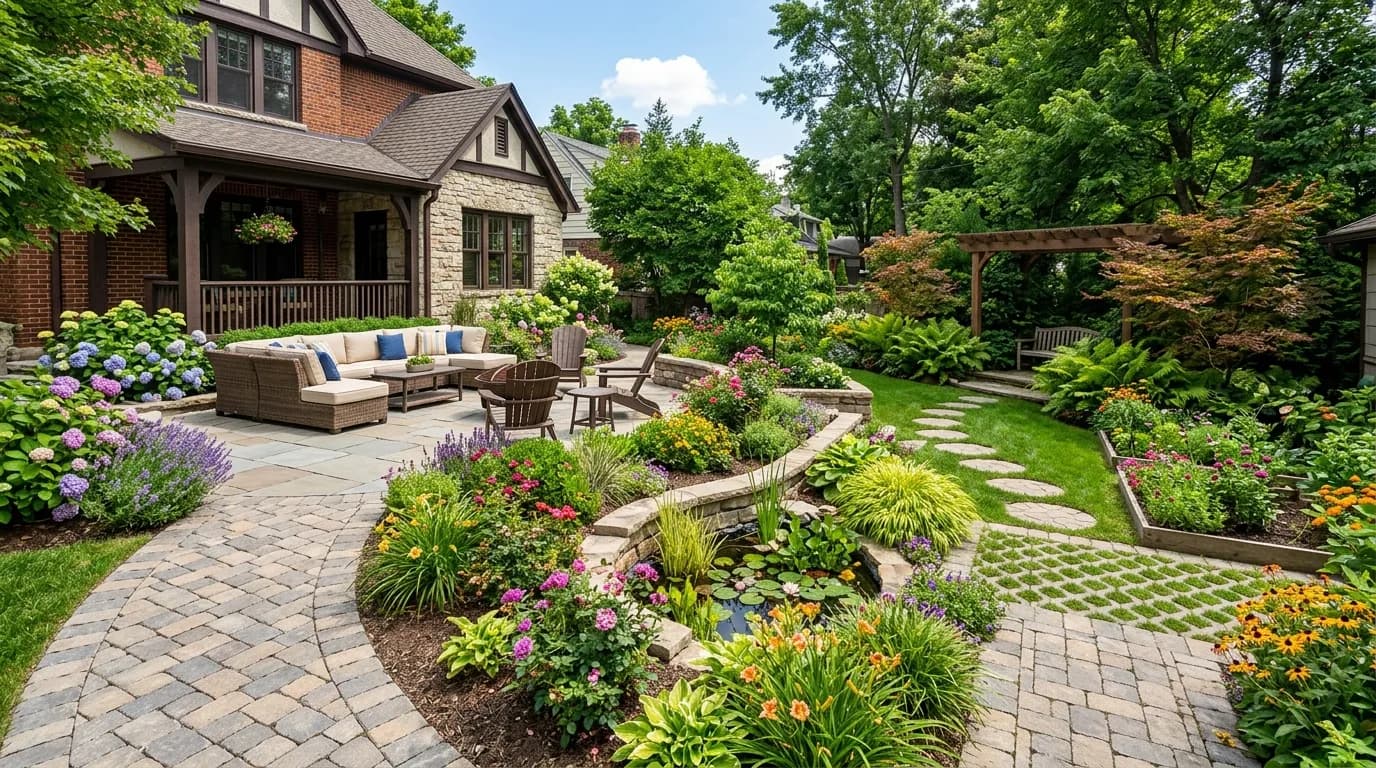
Pavers are one of the most versatile materials in residential landscaping. Durable, beautiful, available in materials from budget concrete to premium bluestone, and installable in dozens of patterns — pavers can build a patio, define a path, border a garden bed, surface a driveway, or create an entire outdoor living room.
Here are 35 paver landscaping ideas organized by application — patios, paths, garden beds, driveways, pool surrounds — with specific materials, patterns, costs, and design principles.
Understanding Paver Materials
Before the ideas, know your options:
Concrete Pavers
Most popular. Available in hundreds of colors, shapes, and textures. Durable (40+ years with proper base). Cost: $3–$8/sq ft for materials. Best for: most patios, paths, and budget-conscious projects.
Natural Bluestone
Classic grey-blue flagstone from Pennsylvania and New York quarries. Irregular or cut-square formats. Premium but timeless. Cost: $8–$15/sq ft. Best for: traditional gardens, front entry paths, premium patios.
Travertine
Tumbled or cut Italian travertine. Beige-cream tones, porous texture. Pool surrounds and Mediterranean-style patios. Non-slip when tumbled. Cost: $10–$20/sq ft.
Brick Pavers
Traditional clay brick. Classic look for Colonial, Craftsman, and traditional homes. Very durable (50+ years). Cost: $5–$12/sq ft. Best for: front walkways, driveways, traditional gardens.
Porcelain Pavers
High-density porcelain tiles sized for outdoor use. Extremely durable, stain- and frost-resistant, available in large formats (24×24 in or larger). Cost: $10–$25/sq ft. Best for: modern patios, pool surrounds, indoor-outdoor transitions.
Flagstone
Irregular natural stone (limestone, sandstone, Pennsylvania bluestone, Goshen stone). Set in sand, gravel, or mortar. The most natural-looking option. Cost: $4–$15/sq ft. Best for: stepping stone paths, cottage gardens, naturalistic designs.
Patio Ideas
1. The Classic Square Paver Patio
A 16×20 ft concrete paver patio in a running bond pattern with a 6-inch soldier course border. This is the starting point for most patio projects. Budget: $1,600–$3,000 materials. Add string lights and a fire pit and you have a complete outdoor room.
2. A Herringbone Pattern Patio
The same concrete pavers laid in a 45° herringbone pattern creates far more visual interest than running bond. The angled pattern makes a small patio feel larger and more dynamic. The herringbone is also the most dimensionally stable pattern — resists spreading under foot traffic.
3. A Two-Tone Paver Patio
Mix two contrasting paver colors — charcoal grey field with buff or tan border pavers — for a defined look that ties into the house colors. The border acts as a visual frame, making the patio feel intentionally designed rather than just paved.
4. A Mixed Material Patio
Combine concrete pavers with a natural stone accent — a bluestone or travertine threshold, a natural stone seating wall cap, or inset stone bands every 4 ft. The combination adds material interest without the cost of full natural stone. Budget: 20–30% premium over concrete-only.
5. A Flagstone Patio with Groundcover Joints
Irregular flagstone set with 2–3 inch joints planted with creeping thyme, moss, or sedum. The groundcover softens the hardscape and turns the joints into a garden feature. Creeping thyme is fragrant when walked on. This is the most natural-looking patio option available at any price point.
6. A Raised Paver Patio with Retaining Wall
On sloped yards, a raised paver patio 12–24 inches above grade — retained by a single course of seat-wall blocks — creates a level outdoor room and adds a built-in seating element. The retaining wall doubles as party seating. Adds $2,000–$4,000 to a standard patio project.
7. A Fire Pit Conversation Circle
A circular patio (18–20 ft diameter) built around a central fire pit using curved-cut or specialized curved paver units. The circle creates an intentional gathering space where the fire is the focus. Pairs with a ring of seating — chairs, a built-in bench, or boulder seats.
8. An Outdoor Kitchen Paver Platform
A paver platform 12–16 ft wide and 8–10 ft deep designed specifically to support an outdoor kitchen — grill, prep counter, built-in storage. Pavers handle heat, water, and grease far better than wood decking. Use porcelain or high-density concrete pavers for the cooking zone.
9. A Paver and Gravel Combination Patio
Alternating sections of pavers and pea gravel — pavers for the seating area and path to the house, gravel for the in-between spaces. The combination reduces material cost, creates visual interest, and allows water infiltration. Edge the gravel sections with soldier-course pavers to prevent migration.
10. A Modern Large-Format Patio
24×24 inch or 24×48 inch porcelain pavers set with tight 1/8-inch joints create a sleek, contemporary surface that reads like interior flooring brought outside. The large format amplifies visual space in small areas. Best with modern architecture. Installation requires a very flat, rigid base — more demanding than standard pavers.
Design Your Paver Layout With AI →
Not sure what paver pattern, material, or layout works for your specific yard? Yardcast generates 3 complete AI landscape designs using photos of your actual space. See the patio layout, plant placements, lighting zones, and material choices before spending a dollar. The design comes with a full cost estimate and materials list.
[Get My Free Paver Design Preview →](/redesign)
Path & Walkway Ideas
11. A Stacked Flagstone Garden Path
Irregular flagstone pieces set in a meandering path through a garden bed — the most natural-looking path option. Set stones 1 inch above grade on a sand base; they'll settle flush. Spacing: 18–22 inches center-to-center (natural walking stride). Plant creeping groundcovers between stones over time.
12. A Straight Brick Paver Walkway
A formal straight path in traditional brick — soldier course edges with a herringbone or running bond field — is the most classic front yard walkway. 3 ft wide for a primary path, 2 ft for a garden side path. Brick weathers beautifully and improves with age.
13. Stepping Stones in a Lawn
Large concrete stepping stones (18×24 inch or round 18-inch) set flush with the lawn grade creates a casual garden path without defining a hard edge. Set stones deep enough that the mower passes over them without blade contact. Cost: $5–$20 per stone at a landscape supplier.
14. A Decomposed Granite Path with Paver Edging
A 4-ft wide decomposed granite path framed by a single course of concrete or brick edging pavers creates a naturalistic path with clean edges. DG (decomposed granite) is the most naturalistic surface and handles slope well. Frame it with pavers and it looks designed rather than casual.
15. A Belgian Block Border Path
Belgian block granite cobblestones (4×4×4 inch cubes) set in two rows create a formal border or complete path in a traditional garden. The weathered grey color suits traditional, colonial, and cottage designs. Cost: $4–$8 per block. Very long-lasting — Belgian block paths in European cities are centuries old.
Garden Bed Edging Ideas
16. A Brick Mowing Edge
A single row of brick pavers set flush with the lawn grade along the border of a garden bed creates a maintenance-free mowing edge — the mower wheel rides on the brick, keeping the blade off the bed. No more hand-trimming. This is the single most labor-saving landscape improvement for high-maintenance homeowners.
17. Soldier Course Edging
Concrete or brick pavers set vertically (on edge) in the soil as a linear edging. Creates a clean, formal line between lawn and bed. More labor-intensive than flat mowing edge but more visually prominent. Works especially well along formal garden beds.
18. A Raised Bed with Paver Walls
Stack concrete retaining wall blocks 2–3 courses high to create a raised planting bed. Fill with quality topsoil and compost. Raised beds with block walls drain well, warm up faster in spring, and define the garden space sharply. Cost: $150–$400 for a 4×8 ft raised bed in wall block.
19. Paver Stepping Discs Through a Garden
Circular concrete discs (18–24 inch diameter) set through a garden bed allow maintenance access without stepping on plants. Placed every 24–30 inches, they also function as design elements — focal points in the bed composition.
Driveway Ideas
20. A Concrete Paver Driveway
A concrete paver driveway in herringbone pattern (the most structurally stable pattern for vehicle traffic) with a contrasting border course dramatically upgrades curb appeal compared to poured concrete. Pavers flex under freeze-thaw cycles rather than cracking. Any single paver can be removed and replaced if utility work is needed. Cost: $15–$25/sq ft professionally installed for a standard two-car driveway.
21. A Grass-Joint Paver Driveway
Wide pavers (18×18 or 24×24 inch) set on gravel with 4–6 inch grass joints. The grass grows between the pavers, creating a naturalistic surface that is 40–60% impervious surface — better for stormwater management and visually softer than full paving. Used in traditional and cottage-style homes.
22. Belgian Block Driveway Apron
Install Belgian block granite as a decorative apron at the street entry of an asphalt or concrete driveway — a 2–4 ft band of cobblestone at the curb cut. This creates a premium look without replacing the entire driveway surface. Cost: $1,000–$3,000 for a standard 2-car driveway apron.
Pool Surround Ideas
23. Tumbled Travertine Pool Deck
Tumbled travertine is the premier pool surround material: non-slip when wet, cool underfoot in sun (doesn't absorb heat like dark concrete), frost-resistant, and exceptionally durable. Cream and beige tones suit any pool finish color. Cost: $12–$20/sq ft installed.
24. Porcelain Paver Pool Surround
Large-format porcelain pavers (24×48 inch) create a seamless, contemporary pool deck with minimal joints (fewer places for water to penetrate). Choose a textured finish for slip resistance. The large format makes small pool surrounds feel more expansive.
25. A Pebble Mosaic Feature
Within a travertine or concrete paver pool deck, include an inset section of pebble mosaic — a custom pattern (compass rose, leaf motif, simple geometric) created from smooth river pebbles set in a mortar base. This becomes the focal point of the pool area and is completely custom.
Creative & Accent Ideas
26. A Paver Outdoor Dining Room
Define an outdoor dining area with a 12×14 ft paver "rug" — a different colored or textured paver inset into the main patio surface. The change in material signals "this is the dining zone." No walls, no furniture required — just the material change.
27. A Paver Chess Board
A 4×4 square section of alternating light and dark pavers creates a permanent chess or checkers board in the garden or patio. Use standard concrete pavers in two colors. Pair with oversized chess pieces stored in a nearby bench box. A memorable garden feature for families.
28. A Stepping Stone Water Feature Border
Large irregular flagstones placed around the perimeter of a pond or water feature allow close access to the water and create a naturalistic edge that's attractive from all angles. Set stones 30–40% overhanging the water edge for the most natural effect.
29. A Paver Herb Wheel
A circular patio section (8–10 ft diameter) divided into 6–8 wedge-shaped beds by paver "spokes" radiating from a central hub. Each wedge is a separate herb planting. The wheel is both functional and beautiful — an old English kitchen garden tradition made practical.
30. A Gravel Parking Pad with Paver Border
A gravel parking area (for an RV, boat, or extra car) framed with a 2-course concrete paver border contains the gravel, creates clean edges, and looks intentional. The border also prevents gravel from migrating onto grass or beds. Cost: $500–$1,500 depending on size.
Installation Tips That Prevent Costly Mistakes
Base depth is everything. Pavers are only as stable as their base. For pedestrian areas: 4–6 inches of compacted gravel + 1 inch bedding sand. For driveways and heavy loads: 6–8 inches of compacted aggregate base. Skipping depth is the #1 cause of sinking, shifting, and cracking pavers.
Slope away from structures. Every paver surface must drain water away from the house — minimum 1/8 inch drop per foot of run. Mark this out with string lines before laying a single paver.
Use polymeric sand. Regular sand joints wash out within one season. Polymeric sand hardens in the joints after activation with water, blocking weeds and resisting washout for 3–5 years. A $30 bag covers a standard patio.
Rent a plate compactor. Hand tamping is insufficient for a stable paver base. A plate compactor ($60–$100/day rental) ensures the gravel base is adequately compacted and that the finished surface won't shift.
Cut pavers correctly. Field cuts require a diamond blade wet saw or angle grinder with a diamond blade. For a straight-edged patio, most cuts are manageable. For curves and complex patterns, rent a masonry saw or hire a mason for the cutting day only.
Plan Your Paver Project
The most important step before buying a single paver: get the design right. Proportions matter — a patio that's too small for the seating it needs to hold, a path that's too narrow for two people to walk side-by-side, or a material that clashes with the house are the common mistakes that turn a well-executed installation into a disappointing result.
Yardcast generates 3 AI landscape designs for your specific yard — including hardscape layout, plant placement, lighting, and complete cost estimates — using photos of your actual space. See what pavers look like in your yard before committing to any material or layout.
[Get My Free Paver Landscape Design →](/redesign)
Upload your photo, describe your style and goals, and see 3 complete design options in 60 seconds. No account required, always free to preview.