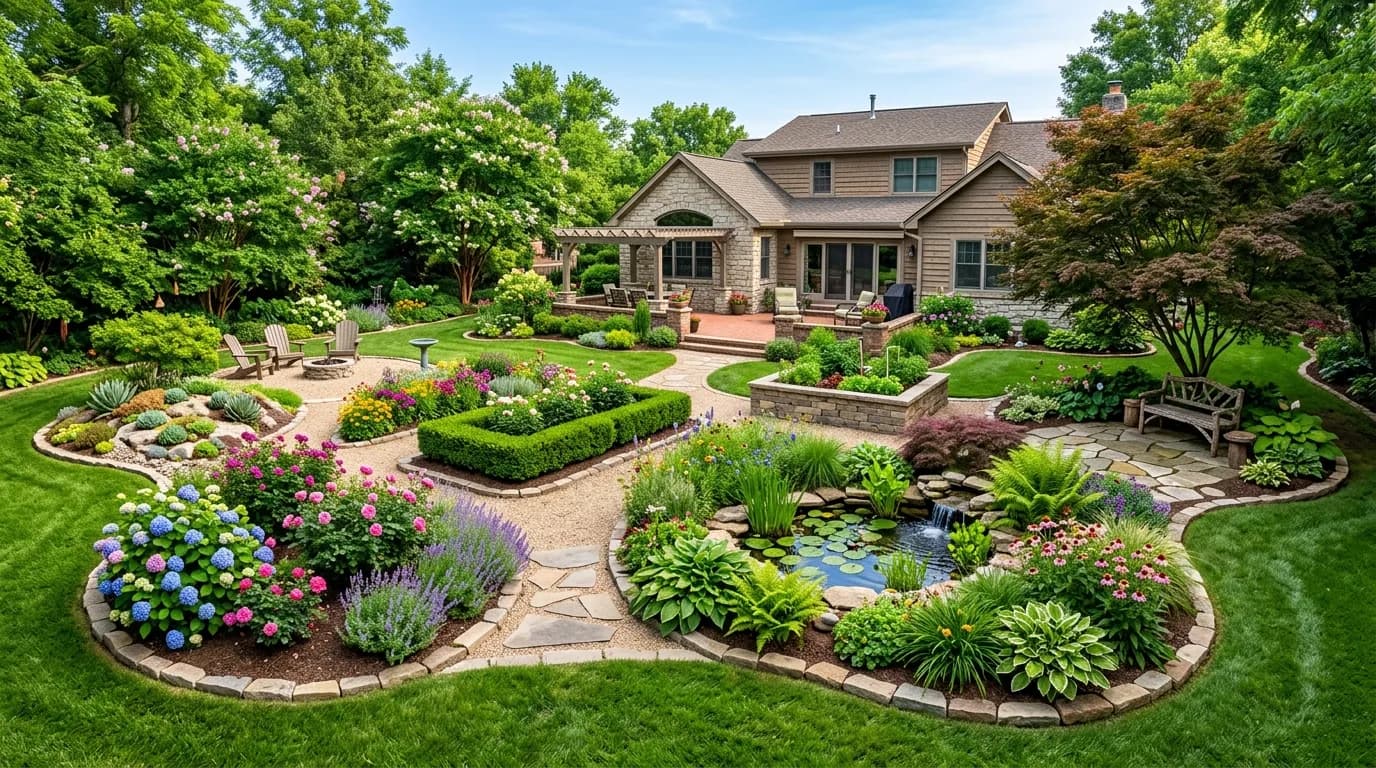
A landscape island — sometimes called a garden island or planting bed island — is a freestanding bed surrounded by lawn, driveway, or hardscape. Unlike borders that hug a fence or foundation, islands sit in the open, creating focal points that break up flat expanses and add dimension to your property.
Whether you have a sprawling suburban lot or a compact city yard, landscape islands can instantly upgrade your curb appeal and property value.
Why Landscape Islands Work
Visual anchoring. A well-placed island gives the eye a destination. Instead of a flat sheet of grass, there's a layered, textured composition that makes the entire yard feel designed.
Traffic flow. Islands naturally guide foot traffic and vehicle movement, especially in front yards where they can frame a driveway turnaround or define a walkway.
Low cost, high impact. Compared to full-yard redesigns, a single island bed can cost $500–$3,000 installed and dramatically change how your property looks from the street.
Design Principles
Shape
Curves almost always look better than straight lines for freestanding islands. Use a garden hose laid on the ground to experiment with shapes before digging. Kidney shapes, teardrops, and flowing ovals work well in most yards.
Scale
A common mistake is building too small. As a rule of thumb, your island should be at least one-third the width of the lawn area it sits in. A 30-foot-wide yard needs at least a 10-foot-wide island to look proportional.
Height Layering
Every island needs three layers: tall (center/back — ornamental trees, tall grasses), medium (mid-ring — shrubs, perennials), and low (outer edge — groundcovers, edging plants). This creates a natural "mound" shape that looks full from every angle.
25 Island Ideas by Style
Tropical Islands (1–5)
1. Palm Paradise — Pygmy date palm center, bird of paradise mid-layer, liriope border. River rock mulch. Works in zones 9–11.
2. Bromeliad Bowl — Low, circular island packed with colorful bromeliads around a specimen croton. Crushed shell mulch. Almost zero maintenance.
3. Plumeria Focal Point — Single flowering plumeria tree surrounded by ti plants and society garlic. Incredible fragrance May through October.
4. Banana Drama — Ornamental red banana as centerpiece, elephant ears and caladiums filling in, mondo grass edge. Dramatic and lush.
5. Tropical Rock Garden — Large boulders with pockets of tropical plants, LED uplighting, river rock ground cover. Resort vibes.
Modern Islands (6–10)
6. Grass Sculpture — Single specimen Karl Foerster grass in a circular steel-edged bed with white marble chips. Minimalist perfection.
7. Agave & Steel — Three agaves of different sizes in decomposed granite with corten steel edging. Architectural and drought-proof.
8. Boxwood Geometry — Clipped boxwood spheres in a geometric pattern with black river rock. Formal but contemporary.
9. Mixed Grass Meadow — Five species of ornamental grass (different heights, colors, textures) in a flowing bed. Movement in every breeze.
10. LED-Lit Minimalist — Low succulents with integrated LED strip lighting in the edging. Stunning at night, zero water needs.
Natural Islands (11–15)
11. Pollinator Patch — Echinacea, bee balm, milkweed, and black-eyed Susan packed tight. Butterflies and bees all season.
12. Rain Garden Island — Blue flag iris, joe pye weed, and sedges in a slightly depressed bed that captures runoff. Functional and beautiful.
13. Prairie Circle — Native switchgrass, little bluestem, and compass plant in a 12-foot circle. Authentic prairie feel.
14. Woodland Fern Garden — Ostrich ferns, hostas, and coral bells under a small dogwood. Perfect for shady yards.
15. Wildflower Meadow Bed — Seed a circular bed with regional wildflower mix. Mow once a year. Nature does the rest.
Desert Islands (16–18)
16. Agave Throne — Single massive blue agave centered in decomposed granite with smaller succulents radiating outward.
17. Cactus Collection — Mixed cacti (barrel, prickly pear, cholla) in crushed lava rock. Statement piece for arid climates.
18. Desert Bloom — Red yucca, desert marigold, and penstemon for surprising color in a water-wise bed.
Cottage Islands (19–22)
19. Rose Obelisk — Climbing rose on a rustic obelisk surrounded by lavender and catmint. Classic romance.
20. Herb Spiral — Stacked stone spiral planted with rosemary, thyme, sage, and oregano. Beautiful and edible.
21. Hydrangea Haven — Mass planting of Endless Summer hydrangeas with a boxwood border. Blue or pink depending on soil pH.
22. Cut Flower Island — Dahlias, zinnias, and cosmos planted in rows for a constant supply of bouquets.
Traditional Islands (23–25)
23. Magnolia Statement — Single magnolia underplanted with azaleas and cast iron plant. Timeless Southern elegance.
24. Japanese Zen — Dwarf Japanese maple, raked gravel, moss, and a single stone lantern. Peaceful minimalism.
25. Formal Boxwood — Diamond-shaped bed with boxwood hedge perimeter, annual color center, and brick edging. Estate-level curb appeal.
Installation Basics
Cost range: $500–$5,000 depending on size, plants, and whether you DIY.
Materials needed:
- Topsoil/compost mix (2–6 cubic yards)
- Mulch (1–3 cubic yards)
- Edging (30–80 linear feet)
- Landscape fabric (optional, prevents weeds)
- Plants (6–30 depending on island size)
Timeline: A professional crew can install a medium island in 4–6 hours. DIY, plan for a full weekend.
Try It With AI
Want to see exactly what a landscape island would look like in YOUR yard? Try our Island Designer — upload a photo, paint the area, and AI generates a custom design in both bed options with plant lists and cost estimates.