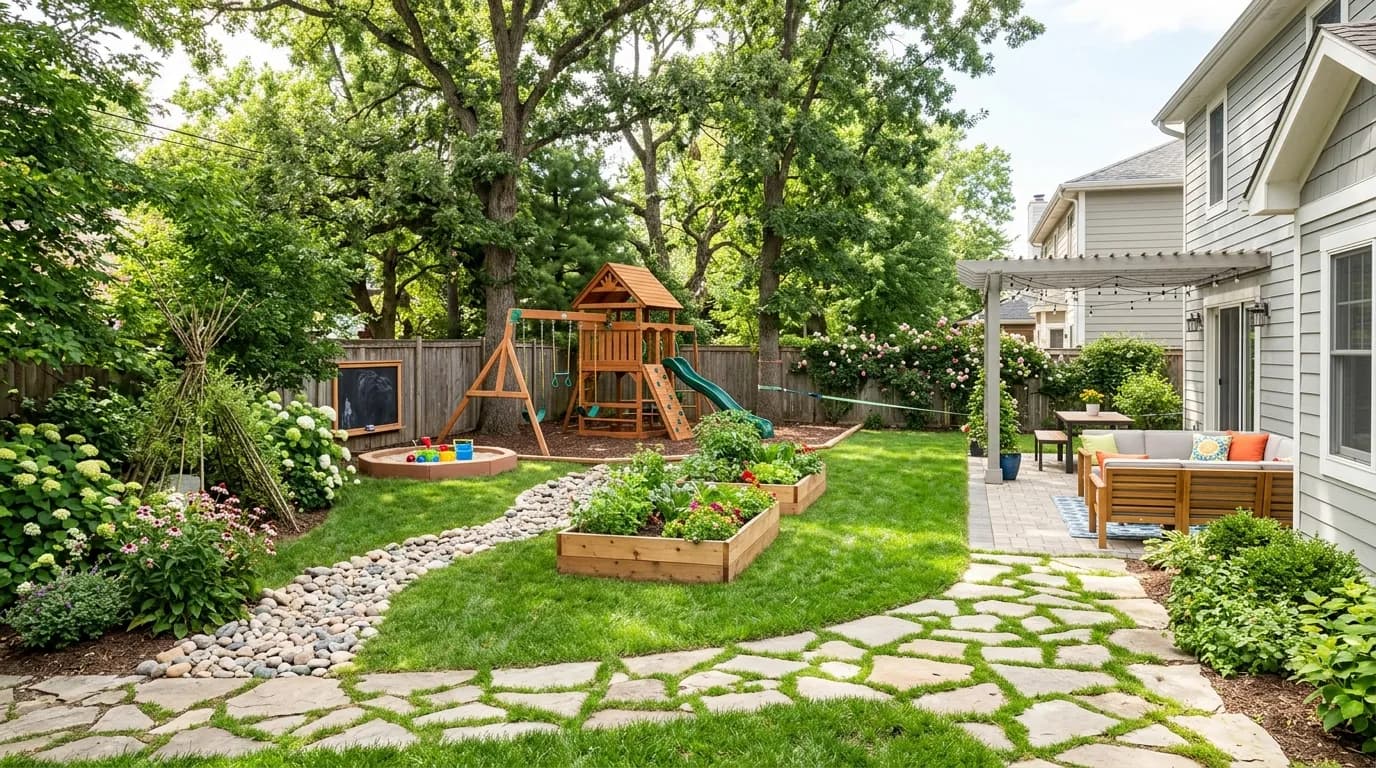
The best kid-friendly backyards do something most people think is impossible: they're genuinely fun for kids AND genuinely beautiful for adults. The secret isn't compromise — it's thoughtful design that anticipates how kids actually play, ages alongside them, and integrates into a cohesive landscape rather than looking like a daycare dropped into your yard.
This guide covers 30 ideas for kid-friendly backyards organized by age, budget, and function — including safety considerations most parents don't think about until it's too late.
Planning a Kid-Friendly Backyard: Start With These Questions
Before buying any equipment or redesigning any space, answer these:
- 1What ages are your kids now, and what ages will they be in 5 years? A toddler play area looks very different from a tweens' hangout space. Design for where they're going, not just where they are.
- 1Do you want them supervised or can they play independently? If supervised play, position the play area in direct sightline from the kitchen or main living area window.
- 1How much of the yard do you want to dedicate to kid space? The most successful family yards zone the space: one area dedicated to active play, one for gardens/quiet activities, and the rest for adult entertaining and landscaping.
- 1What's your budget? Kid-friendly backyards range from $500 (DIY sandbox and swing) to $50,000 (custom play structure, sports court, pool). There are excellent options at every price point.
- 1What do your kids actually love? The most important question. A kid who loves sports needs different infrastructure than one who loves digging, building, or growing things.
Play Structure Ideas
1. Custom Wooden Play Structure
A well-designed wooden play structure — with climbing walls, slides, swings, and a fort platform — is the classic centerpiece of a kid-friendly backyard. Redwood and cedar are naturally rot-resistant and last 20+ years with minimal maintenance.
Design tip: Position with shade — morning sun, afternoon shade. Nothing ends backyard play sessions faster than a scorching hot plastic slide in direct afternoon sun.
Cost: $2,000–$8,000 for a quality structure | $500–$1,500 for a basic kit
Ages: 3–12 years
2. Rope Course and Ninja Warrior Elements
Monkey bars, cargo nets, balance beams, rope swings, and climbing walls can be combined into a backyard ninja course. These provide serious physical development benefits and kids of all ages love them.
Installation options: Modular systems from companies like Backyard Adventures or DIY using commercial-grade components.
Cost: $1,500–$8,000 | DIY: $500–$2,500
Ages: 5–14 years
3. Tree Fort
A tree fort built into an existing mature tree is one of the most beloved childhood memories you can give your kids. A proper one — built with structural lag bolts (not nails), proper wood sizing, and safety railings — is surprisingly durable and safe.
Key safety note: Never use wire or rope wrapped around a tree to support a fort — it girdles and kills the tree. Use structural tree attachment bolts (TABs) that flex with tree movement.
Cost: $2,000–$10,000 professionally built | DIY possible for skilled builders
Ages: 6–14 years
4. Swing Set
A simple A-frame swing set with 2–3 swings, possibly a disc swing or tire swing, is the lowest-cost high-fun addition to any kid-friendly backyard. Position with 6 feet of clear space in front and behind the swing arc.
Surface: Install rubber mulch, engineered wood fiber, or rubber tiles under and around swings — never grass or hard soil.
Cost: $300–$2,000
Ages: 2–12 years
5. In-Ground Trampoline
In-ground trampolines are flush with the lawn — no frame sticking up, no net tower dominating the yard, just a jumping surface at grade. They're dramatically more attractive than above-ground trampolines and arguably safer (if someone bounces off, they land on grass, not from a height).
Cost: $3,000–$7,000 installed | Requires proper drainage under the pit
Ages: 4–16 years
6. Zip Line
A backyard zip line — stretching from one end of the yard to the other — is an instant hit for active kids ages 6+. Requires at minimum 70 feet of yard length and two secure anchor points.
Cost: $500–$2,500 for the system | Anchor posts or trees required
Ages: 6–16 years
> Designing a family backyard? Yardcast's AI generates custom landscape designs that integrate play areas, entertaining zones, and planting beds into a cohesive design — showing you exactly how it will look before you build anything. Get 3 free design previews for your yard →
Water Play Ideas
7. Splash Pad
A splash pad — ground-level jets, sprinklers, and water features embedded in a hard surface — provides water play without the safety concerns of a pool. Many municipalities now offer splash pad kit systems for residential use.
Cost: $2,500–$12,000 installed | Requires water line and drain
Ages: 1–10 years
8. Play Pool (Above Ground)
A good above-ground pool — like an Intex or Bestway — provides real swimming capability for a fraction of in-ground cost. Modern above-ground pools with a deck surround can look substantially better than the blue-oval stereotype.
Cost: $500–$5,000 with basic deck | $5,000–$15,000 with a proper deck surround
Ages: 2–16 years
9. Natural Swimming Pond or Plunge Pool
A small plunge pool (8×12 ft, 4–5 ft deep) takes up a fraction of the space of a full pool but provides all the cooling relief kids need. Natural swimming ponds use plant filtration and look like a natural landscape feature.
Cost: Plunge pool: $15,000–$35,000 | Natural pond: $25,000–$60,000
Ages: 4–adult
10. Backyard Slip and Slide
A simple tarp slip and slide on a gentle lawn slope costs almost nothing and provides hours of summer entertainment. Layout on a slope of at least 5–8% for good speed. Position away from trees and sprinkler heads.
Cost: $20–$200 | Seasonal, no permanent installation needed
Creative Play Ideas
11. Dedicated Digging Zone
A designated digging area — a 4×6 ft or larger bed filled with clean play sand or soft soil — is one of the best investments for young children. Kids have an instinctive urge to dig; give them a sanctioned place for it.
Tip: Sink 6-inch pressure-treated landscape timbers as a border to clearly define the digging zone. This prevents the "dig zone" from expanding into your garden beds.
Cost: $50–$200 | Very DIY-friendly
12. Mud Kitchen
A simple outdoor "mud kitchen" — a play kitchen made from scrap wood or a salvaged outdoor cabinet — with "burners" (metal pie plates), "pots" (buckets), and a water source nearby unlocks hours of imaginative play. Wildly popular with ages 2–8.
Cost: $50–$400 DIY | Kits available on Etsy and Amazon for $150–$600
Ages: 2–8 years
13. Raised Garden Bed for Kids
Growing their own food is one of the most educational, patience-building, and confidence-giving experiences you can give children. A dedicated kids' garden bed — their own project, their own plants, their own harvest — builds a relationship with growing things that lasts a lifetime.
Best starter plants: Cherry tomatoes, snap peas, sunflowers, zucchini, radishes. Fast to germinate, forgiving, and rewarding.
Cost: $100–$500 for a raised bed + soil
Ages: 4–16 years (adjust complexity by age)
14. Chalkboard Wall or Fence
An exterior chalkboard — made with chalkboard paint on a wood fence, concrete block, or dedicated board — gives kids a giant outdoor art surface that washes clean with the hose.
Cost: $30–$100 in chalkboard paint | Apply to any smooth exterior surface
Ages: 3–10 years
15. Outdoor Art Station
A weather-protected table (like a picnic table under a pergola or covered porch) stocked with outdoor-safe art supplies becomes a creative hub. Add a sand table for tactile play in the same zone.
Sports and Active Play Ideas
16. Half Basketball Court
A half-court basketball slab — typically 20×25 to 25×30 feet — is one of the best investments for families with tweens and teens. It outlasts every other play structure and kids use it into their twenties.
Cost: $5,000–$15,000 for a concrete slab with hoop | Modular sport tiles on existing concrete: $1,500–$4,000
Ages: 6–adult
17. Multi-Sport Goal
An adjustable multi-sport goal post works for soccer, lacrosse, and hockey practice. Pair with a net rebounder and you have a practice area that doesn't require a partner.
Cost: $200–$800
18. Lawn Bowling or Bocce Court
A bocce court (8×60 ft minimum) is excellent for families with kids of all ages — grandparents and toddlers can both participate. Fill with decomposed granite or crushed oyster shell.
Cost: $500–$3,000 installed
19. Horseshoe Pit or Cornhole Area
A permanent horseshoe pit or a dedicated flat area for cornhole boards is a simple, low-cost addition that gets family involvement across all ages and visits.
20. Batting Practice Net
For baseball/softball families, a permanent batting cage net or pitching net gives kids a place to practice without a trip to the batting cages.
Cost: $300–$1,500 for a portable/semi-permanent net | $5,000–$15,000 for a permanent cage
Outdoor Living Ideas Kids (and Parents) Love
21. Outdoor Movie Theater
A portable projector and inflatable screen set up in the backyard creates an instant movie night experience. Run an extension cord, set up some outdoor seating, and you have one of the best family experiences possible.
Cost: $300–$1,000 for a quality setup | Seasonal use
22. Camping Zone
Designate a flat area of lawn as a dedicated "camping zone" — clear of overhead hazards, close enough to the house for nervous first-time campers, and large enough for a tent or two. Add a nearby fire pit or fireplace for authenticity.
23. Hammock Grove
Two or more hammocks strung between trees (or hammock posts) create a shady, relaxing zone that kids love for reading, hanging out, and quiet time. Hammock posts let you place hammocks anywhere, even without mature trees.
Cost: $200–$800 for posts + hammocks
24. Outdoor Living Room With Kids' Corner
An adult patio space with a dedicated kids' section — a small table and chairs set in the same patio area, visible from the adult seating — keeps the family together while giving kids their own space.
25. Stargazing Area
A simple clear patch of lawn, a few outdoor loungers or a large outdoor rug, and minimal lighting in the surrounding areas creates an excellent stargazing zone. Add a telescope for a science-forward family.
Safety First: Hardscape and Design Considerations
26. Soft Surfaces Under Play Equipment
The single most important safety decision is what goes under and around play equipment. Falls from play structures are the #1 cause of playground injuries.
Acceptable impact-attenuating surfaces:
- Engineered wood fiber (EWF) — 6 inch depth for structures up to 8 ft high
- Rubber mulch — 6 inch depth, stays in place better than EWF
- Poured-in-place rubber — expensive but the best surface; zero maintenance, no replenishment
- ADA-accessible rubber tiles
Not acceptable: Grass, dirt, sand, concrete, wood chips (too coarse)
27. Fencing the Play Zone
If you have a pool, a water feature over 12 inches deep, or a backyard that opens to a road or alley, fence the play zone. Pool fencing is legally required in most states. Self-latching, self-closing gates are required within pool fence perimeters.
Cost: $1,500–$4,000 for perimeter pool fence + gate
28. Eliminate Hazardous Plants
Before children play freely in a yard, audit existing plants for toxicity. Common plants with toxic properties: oleander (extremely toxic), yew (berries and leaves), foxglove, lantana, lily of the valley, and many others. Remove or fence off any plant that poses a genuine ingestion risk for young children.
29. Sight Lines From the House
Design the play area so it's visible from the main kitchen window or back door. This isn't just convenience — it's safety. If you can't see where your kids are playing from inside the house, you'll either be outside constantly supervising or be unaware of problems.
30. Sun and Shade
An outdoor space that gets direct afternoon sun in summer will be unusable for children from noon to 5 PM in most U.S. climates. Provide shade over the primary play and seating areas — via a pergola, shade sail, or strategic tree placement.
Fast-growing shade trees: Autumn Blaze Maple (Zone 3–8), Tulip Poplar (Zone 4–9), Eastern Redbud (Zone 4–9), American Sweetgum (Zone 5–9). Plant now; shade in 5–8 years.
Kid-Friendly Backyard Design by Age
| Age Group | Priority Features | Avoid |
|---|---|---|
| Toddlers (1–3) | Sandbox, gentle water spray, soft grass, visibility from house | Open water, tall structures, trip hazards |
| Young kids (4–7) | Play structure, digging zone, mud kitchen, swing set | Trampoline without close supervision |
| Tweens (8–12) | Sports area, in-ground trampoline, zip line, ninja elements | "Babyish" play structures they've outgrown |
| Teens (13–17) | Basketball court, hammocks, outdoor seating, fire pit area | Nothing — they'll customize it themselves |
Budgeting a Kid-Friendly Backyard
| Budget | Best Investments |
|---|---|
| Under $1,000 | Sandbox/digging zone, basic swing set, mud kitchen, chalkboard fence |
| $1,000–$5,000 | Play structure kit, in-ground trampoline, raised garden beds, splash pad |
| $5,000–$15,000 | Custom play structure, half basketball court, zip line, above-ground pool with deck |
| $15,000+ | In-ground trampoline + sports court + custom play structure + pool |
FAQ: Kid-Friendly Backyard Ideas
Q: What age is best to install a play structure?
A: Install when your oldest child is 3–4 years old — they'll get the most years of use. If your children are already 8–10, a climbing wall, sports equipment, or in-ground trampoline serves them better than a traditional swing set.
Q: How much does a kid-friendly backyard cost?
A: Meaningful kid-friendly backyards start at around $500 for basic play additions and can run $20,000–$40,000 for a fully built-out space with sports court, play structure, and pool. Most families land in the $2,000–$8,000 range for a well-designed, complete play area.
Q: How do I keep a kid-friendly backyard looking nice?
A: Zone your space. Keep the play area in one distinct area with defined edges — not scattered across the whole yard. Use durable materials in the play zone (rubber mulch, not gravel; powder-coated metal hardware on equipment). Dedicate the rest of the yard to adult landscaping. The key is containment, not conflict.
Q: What's the safest surface under a playset?
A: Engineered wood fiber (EWF) or rubber mulch at 6 inch depth are the best balance of safety, cost, and practicality. Poured-in-place rubber is the safest and lowest maintenance but most expensive. Never use grass, dirt, or sand under play structures — they don't provide adequate impact attenuation.
Q: What should I include in a backyard for multiple kids of different ages?
A: Layer elements by age: a sandbox and mud kitchen for young ones; a play structure for the middle ages; an in-ground trampoline and sports area that grows with teens. A fire pit area with outdoor seating eventually becomes the teen and family gathering space when play structures have been outgrown.
Q: How do I make my backyard safe for kids?
A: Key safety priorities: impact-absorbing surface under play equipment, pool fencing with self-latching gates if you have water, removal of toxic plants, clear sightlines from the house, and shade over primary play areas. These five items account for the vast majority of child backyard injuries.
Q: Can I design a kid-friendly backyard that still looks nice?
A: Absolutely — the key is deliberate zoning, quality materials, and treating the play area as a designed element rather than an afterthought. An in-ground trampoline, a cedar play structure painted to match your house trim, and defined borders around a play area look dramatically better than a plastic playset dropped in the middle of a lawn.
Q: What landscape design mistakes do parents make?
A: The most common mistakes: (1) installing a play structure in full afternoon sun — unusable in summer; (2) no defined surface under equipment — muddy, unsafe, and messy; (3) designing the play area so it's not visible from inside the house; (4) choosing a toddler-appropriate setup when kids are already 6+; (5) no shade or water access near the play zone.