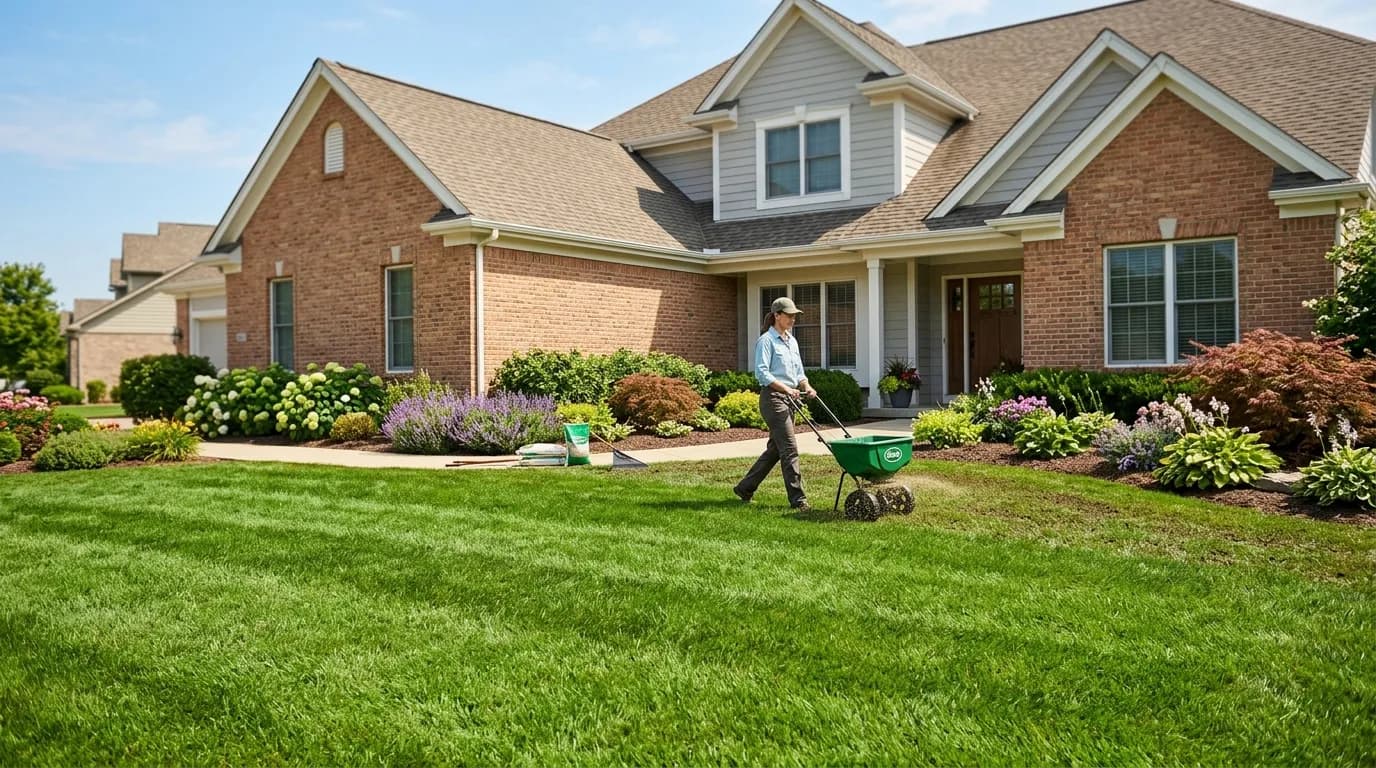
A thin, patchy lawn is one of the most common frustrations homeowners face — and one of the most fixable. Overseeding (spreading grass seed over an existing lawn without tearing it out) is the most cost-effective way to restore lawn density, fill bare patches, introduce improved grass varieties, and achieve that lush, carpet-like turf most homeowners are after.
Done correctly, overseeding can transform a 40%-bare lawn to near-full density in a single growing season. Done incorrectly, you'll waste money on seed that never germinates. Here's the complete guide.
What Is Overseeding and Why Does It Work?
Overseeding means spreading grass seed over an existing lawn. The goal is to:
- Fill bare patches and thin areas where existing grass has died
- Increase overall turf density (more grass blades per square foot = better weed suppression and appearance)
- Introduce improved grass varieties with better disease resistance, drought tolerance, or color
- Rejuvenate an aging lawn without the expense and disruption of complete renovation
Unlike reseeding (which involves tearing out existing turf), overseeding works with your existing lawn — adding new plants between the existing grass. The result is a denser, more uniform lawn at a fraction of the cost and effort of a full renovation.
Best Time to Overseed a Lawn
Timing is the single most important factor in overseeding success. Grass seed needs soil temperatures in a specific range to germinate, plus adequate moisture and enough growing time to establish before temperature extremes.
Cool-Season Grasses (Tall Fescue, Kentucky Bluegrass, Fine Fescue, Perennial Ryegrass)
Best time: Late summer to early fall (August 15 – October 1)
This is the optimal window for cool-season grasses — soil is still warm from summer (60–65°F for germination), air temperatures are cooling (reducing stress on seedlings), and fall rains typically arrive to maintain moisture. Seedlings have 6–8 weeks to establish before hard frost.
The second-best window is early spring (March 15 – April 30), but spring overseeding competes with weed pressure and the seed has less time to establish before summer heat stress arrives.
States with cool-season grasses: Pacific Northwest, New England, Mid-Atlantic, Midwest (north), Upper South (zones 5–7)
Warm-Season Grasses (Bermuda, Zoysia, St. Augustine, Buffalo Grass, Centipede)
Best time: Late spring to early summer (May 1 – June 15)
Warm-season grasses need soil temperatures of 65–70°F minimum (70–80°F for optimal germination). Overseeding should happen after the last frost but with enough warm weather ahead for establishment before fall dormancy.
States with warm-season grasses: Southeast, Gulf Coast, South Texas, Arizona, Southern California, Hawaii (zones 7–11)
Important exception: In warm-season lawns, many homeowners overseed with annual ryegrass in fall for winter-green color. The ryegrass grows through winter and naturally dies as temperatures rise in spring, allowing the warm-season grass to resume growth.
What You Need Before Overseeding
1. Soil Test (Strongly Recommended)
A $15–25 soil test from your county extension office tells you your soil pH and nutrient levels. Grass seed won't germinate or establish well in soil with wrong pH (ideal: 6.0–7.0 for most grasses) or severe nutrient deficiencies. If your soil pH is below 5.8, lime application 2–4 weeks before overseeding will dramatically improve results.
2. Choosing the Right Seed
Use the same grass type as your existing lawn, or a compatible grass for a specific purpose:
| Goal | Best Seed Choice |
|---|---|
| Match existing cool-season lawn | Kentucky bluegrass blend or tall fescue |
| Shade tolerance improvement | Fine fescue (creeping red, chewings) |
| High-traffic durability | Perennial ryegrass or tall fescue |
| Drought tolerance | Tall fescue, buffalo grass |
| Warm-season lawn | Bermuda, zoysia |
| Winter color in warm-season lawn | Annual ryegrass |
Avoid bargain seed mixes with high percentages of annual grasses or crop/weed seeds. Look for seed mixes with high germination rates (80%+) and low inert matter/weed content. Named cultivars from reputable seed companies consistently outperform generic mixes.
3. Equipment
- Lawn mower (for pre-overseeding mow)
- Dethatcher or vertical mower (power rake) — the most important tool
- Broadcast spreader or slit seeder (for seed application)
- Rake (for leveling and seed-to-soil contact)
- Lawn roller (optional but helpful)
How to Overseed a Lawn: Step-by-Step
Step 1: Mow Low
2–4 weeks before overseeding, mow your lawn shorter than normal — down to 1.5–2 inches for cool-season grasses, as short as 0.5–1 inch for warm-season grasses. This reduces competition from existing grass and allows more light and water to reach new seedlings.
Step 2: Dethatch (The Critical Step)
Thatch is the layer of dead organic matter that accumulates between the soil surface and the green turf canopy. More than ½ inch of thatch acts as a physical barrier — seed lands on top of it, can't reach soil, and fails to germinate.
Use a dethatching rake, power rake, or vertical mower to break up and remove thatch. This is the single step most homeowners skip, and the single biggest cause of overseeding failure. After dethatching, the soil surface should be partially visible through the existing grass.
Power dethatch rental: $60–90/day from equipment rental stores. Worth every dollar.
Step 3: Core Aerate (Highly Recommended)
Core aeration pulls plugs of soil from the lawn, creating channels for seed, water, and fertilizer to reach the root zone. On compacted lawns, aeration before overseeding dramatically improves establishment. The holes left by aeration create ideal seedbeds.
Rent a core aerator or hire a service ($75–200 depending on lawn size). Leave the soil cores on the lawn — they break down and improve soil structure.
Step 4: Apply Starter Fertilizer
Before spreading seed, broadcast a starter fertilizer (high in phosphorus — the middle number on the fertilizer bag, like 12-24-8). Phosphorus drives root development in new seedlings. Apply per package directions; too much fertilizer burns seedlings.
Step 5: Spread the Seed
Apply seed at the correct rate using a broadcast spreader (large open areas) or drop spreader (precision near beds and sidewalks). For overseeding, use approximately ½ the rate listed on the seed bag for new lawn establishment — you're adding to existing grass, not planting from scratch.
Recommended rates for overseeding:
- Tall fescue: 4–6 lbs per 1,000 sq ft
- Kentucky bluegrass: 1–2 lbs per 1,000 sq ft
- Perennial ryegrass: 4–6 lbs per 1,000 sq ft
- Bermuda grass: 1–2 lbs per 1,000 sq ft
Make two passes in perpendicular directions for even coverage.
Step 6: Work Seed into Soil
After spreading, use a leaf rake to gently work seed into the top ¼ inch of soil. Seed-to-soil contact is essential — seed that sits on top of thatch or other organic matter without touching soil will fail. If you used a slit seeder (which cuts furrows and drops seed simultaneously), this step is done automatically.
A lawn roller with slight water weight pressed over the area improves seed-to-soil contact further.
Watering New Grass Seed: The Most Common Failure Point
New grass seed needs consistent moisture to germinate. This is where most overseeding efforts fail — people either water too little or forget to water for even one or two days during critical germination.
Germination period (weeks 1–3):
- Water 2–3 times per day, keeping the top ½ inch of soil consistently moist
- Each watering session: 5–10 minutes
- Never let the surface dry out completely during germination
Once germinated and reaching 1 inch tall:
- Reduce to 1 deep watering per day
- Allow the surface to dry slightly between waterings
- Begin transitioning to deeper, less frequent watering
After mowing two or three times:
- Transition to regular lawn watering schedule: deep watering 1–2 times per week
- Roots are now establishing deeper and can handle periods without water
Pro tip: Morning watering is best — water on foliage dries before evening, reducing disease pressure. Automatic irrigation timers are invaluable for maintaining consistent moisture without daily manual watering.
🌿 Want a Complete Lawn and Landscape Makeover?
→ See 3 AI-generated landscape designs for your specific yard at yardcast.ai/redesign
Overseeding fixes your lawn — but your yard might need more than a better lawn. A Yardcast AI landscape design shows you exactly how to transform your outdoor space with a complete design: plants, hardscape, layout, cost estimates, and a phased installation plan. Upload your photos and see 3 options in 40 seconds, completely free.
First Mowing After Overseeding
Wait until new grass reaches 3–3.5 inches before the first mowing. This typically takes 3–6 weeks from overseeding, depending on germination speed and growing conditions. When you do mow:
- Set the mower to the highest setting for the first 2–3 mowings
- Keep mower blades sharp to avoid pulling up new seedlings
- Only mow when the soil surface is dry to avoid compaction or ripping
Common Overseeding Mistakes
Skipping dethatching: The #1 cause of overseeding failure. Seed can't germinate on top of thatch.
Poor timing: Overseeding in summer heat (for cool-season grasses) or fall (for warm-season grasses) when conditions don't support establishment.
Using the wrong seed: Overseeding a warm-season lawn with cool-season seed, or vice versa, creates a patchy, inconsistent lawn.
Inconsistent watering: Missing even one day during germination can set back the entire effort. If you can't commit to daily watering for 3 weeks, wait for a stretch of rainy weather or install temporary irrigation.
Mowing too soon: Mowing before new seedlings are 3+ inches pulls them out of the ground. Patience here is critical.
Applying weed killer: Most pre-emergent and post-emergent herbicides kill germinating grass seed along with weeds. Avoid applying any weed control for 6–8 weeks before or after overseeding.
How Long Does It Take to See Results?
- Germination: 5–21 days depending on grass type and conditions (ryegrass is fastest, Kentucky bluegrass is slowest)
- First mowing: 3–6 weeks after overseeding
- Visible improvement: 4–8 weeks
- Full density achieved: 1–2 full growing seasons for complete fill-in, especially for Kentucky bluegrass
Frequently Asked Questions About Overseeding
Should I aerate before overseeding?
Core aeration before overseeding dramatically improves results on compacted soils — especially in high-traffic areas. The aeration holes act as perfect seedbeds. If you can only do one mechanical step, choose between dethatching (highest priority) and aeration (second priority). On loose, healthy soils, dethatching alone is usually sufficient.
Can I overseed without dethatching?
Technically yes, but results will be significantly worse. Without removing thatch, seed can't reach soil for germination. If your lawn has minimal thatch (less than ¼ inch), you can overseed without dethatching, but seed-to-soil contact through existing grass is still challenging without some mechanical help.
How much seed do I need for overseeding?
Calculate your lawn area (length × width in square feet) and use approximately half the seeding rate listed on the bag for new lawn establishment. For most cool-season grasses, expect to use 3–6 lbs per 1,000 sq ft of overseeding; for warm-season grasses, 1–3 lbs per 1,000 sq ft.
Can I overseed with a different grass type?
You can mix compatible grass types — for example, overseeding a Kentucky bluegrass lawn with perennial ryegrass to improve wear tolerance and shade coverage. However, mixing incompatible types (cool-season with warm-season grasses) creates a lawn that looks patchy year-round as one type thrives while the other goes dormant.
What if it rains right after I overseed?
Light rain after overseeding is generally beneficial — it provides the consistent moisture that seed needs to germinate. Heavy rain can wash seed away on slopes or into gutters. If significant rain is forecast immediately after spreading, apply seed as close to rain as possible and ensure the seed is raked in to minimize surface movement.
Do I need to cover seed with straw after overseeding?
For flat lawns, straw mulch isn't necessary if you're watering consistently. It can help retain moisture and protect seed on slopes or in very hot, windy conditions. If you do use straw, apply a thin layer — you should still see most of the soil through the straw. Penn Mulch or paper-based erosion control blankets are cleaner alternatives that break down without needing removal.