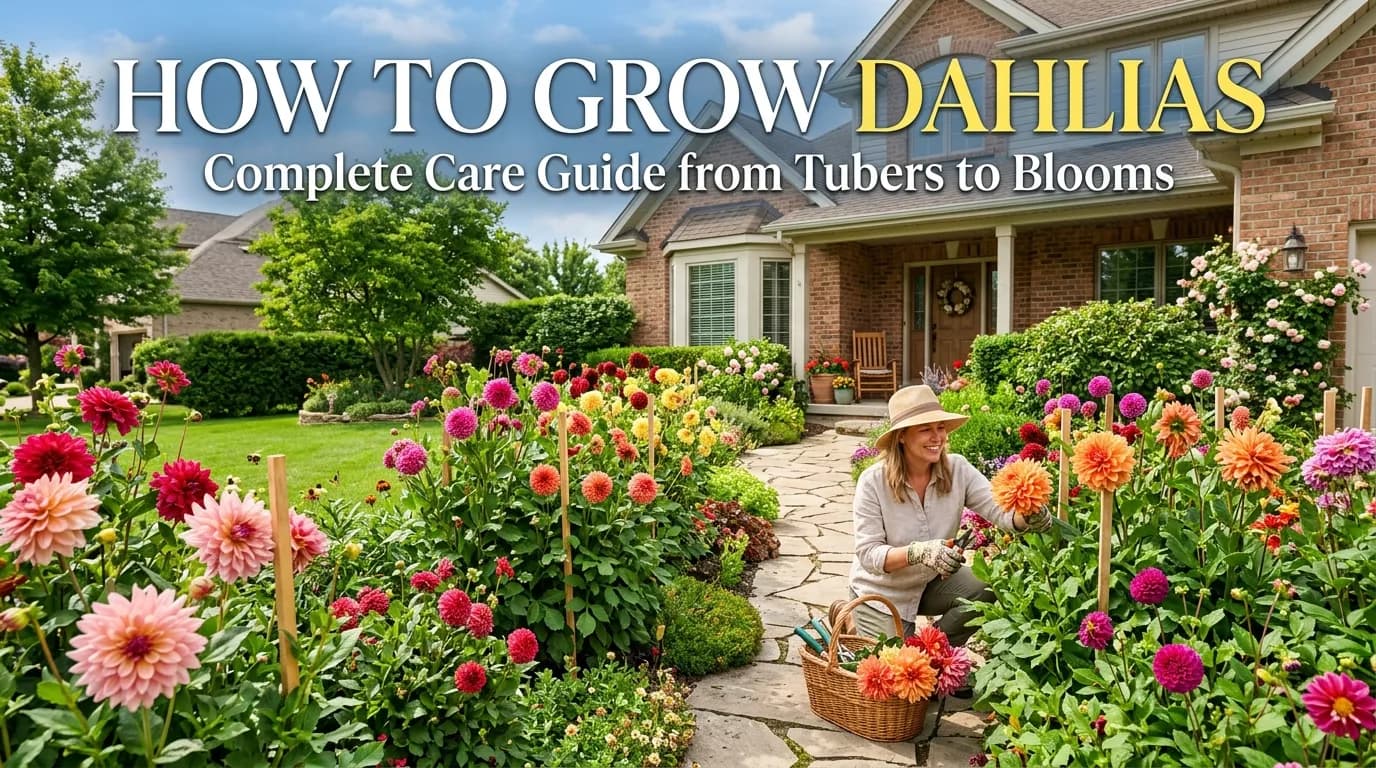
Few flowers command attention the way dahlias do. From petite pompon types the size of a golf ball to dinner-plate varieties spanning 12 inches across, dahlias deliver spectacular color and form from midsummer through the first hard frost — often 4–5 months of non-stop blooms. They're the crown jewel of the cutting garden, a bold focal point in mixed borders, and one of the most satisfying plants you can grow from tubers.
The great news: dahlias are far easier to grow than their impressive flowers suggest. This complete guide covers everything from choosing and planting tubers to maximizing blooms, managing pests, and storing tubers over winter — so you can get spectacular results year after year.
Understanding Dahlias: Types and Varieties to Know
Dahlias belong to the Dahlia genus and are native to Mexico and Central America. They're tender perennials — meaning they grow vigorously in warm weather but die back in frost. In zones 8–10, tubers can often overwinter in the ground. In colder zones, tubers are dug and stored indoors each fall.
Dahlia types by flower form:
| Type | Bloom Size | Notes |
|---|---|---|
| Dinner Plate | 8–14 inches | Massive blooms; dramatic focal points |
| Ball | 2–4 inches | Perfect, rounded spheres; great for cutting |
| Pompon | Under 2 inches | Compact; prolific bloomers |
| Cactus | 4–10 inches | Spiky, quilled petals; very striking |
| Waterlily | 4–8 inches | Flat, layered petals like a water lily |
| Single | 2–4 inches | Simple daisy-like blooms; great for pollinators |
| Anemone | 3–5 inches | Central pincushion surrounded by outer petals |
| Collarette | 3–5 inches | Single outer petals + inner "collar" of shorter petals |
Best varieties by purpose:
- Cutting garden: 'Café au Lait' (creamy blush), 'Bishop of Llandaff' (red with dark foliage), 'Karma Choc' (rich chocolate-burgundy)
- Container growing: Dwarf varieties 'Figaro' series, 'Gallery' series (under 18 inches)
- Pollinator gardens: Single-flowered types like 'Bishop's Children' mix
- Pure drama: 'Hollyhill Big Pink', 'Thomas Edison' (purple dinner plate), 'Kelvin Floodlight' (yellow dinner plate)
When and Where to Plant Dahlias
Timing: Dahlias need warm soil — wait until soil temperature is consistently above 60°F and all frost danger has passed. This is typically:
- Zones 3–4: Late May to early June
- Zones 5–6: Mid-May to late May
- Zones 7–8: Early to mid-April
- Zones 9–10: March (or September for a fall planting)
Sun: Full sun — minimum 6 hours, ideally 8+. More sun = more blooms. Dahlias in shade become leggy and produce far fewer flowers.
Soil: Well-drained, fertile, slightly sandy loam with pH 6.5–7.0. Dahlias despise waterlogged soil; tubers will rot in poorly drained conditions. Amend heavy clay with compost and coarse sand before planting.
Spacing:
- Dinner plate and large varieties: 24–36 inches apart
- Medium varieties: 18–24 inches
- Dwarf/bedding dahlias: 12–18 inches
How to Plant Dahlia Tubers: Step by Step
1. Inspect your tubers: Healthy tubers are firm and plump. Discard any that are shriveled, soft, or show mold. Each tuber or clump needs at least one visible "eye" (growth point) to sprout — look for tiny pink or white buds near the neck of the tuber.
2. Prepare the planting hole: Dig a hole 6–8 inches deep and about 12 inches wide. Mix a handful of balanced fertilizer (5-5-5 or similar) or compost into the bottom of the hole.
3. Set the tuber: Lay the tuber horizontally in the hole with the eye facing up. For single tubers, the eye is at the top of the narrow "neck" end. Cover with 2–3 inches of soil — do NOT fill the hole completely yet.
4. Install your stake now: Large dahlias (over 3 feet) will need staking. Drive a sturdy 5–6 foot stake 12–18 inches into the ground right next to the tuber at planting time — before growth starts — to avoid spearing the tuber later.
5. Do NOT water yet: This surprises many new growers. Don't water until you see sprouts emerging — usually 2–4 weeks. Watering before sprouting encourages rot. Trust the process.
6. Fill in gradually: As the sprout grows, gradually fill in soil around the stem until the planting hole is level with the ground.
Want Your Dahlias to Shine in a Professional Landscape Design?
Dahlias are stunning as cut flowers, but planted en masse in a border or mixed with ornamental grasses, salvia, and late-summer perennials, they become something truly spectacular. Yardcast's free AI landscape design tool generates three professional-grade garden designs for your specific yard, including plant placement, companion plant combinations, and a phased installation plan — all in about 60 seconds.
See what your garden could look like →
How to Care for Dahlias Through the Season
Watering
Once sprouts emerge, establish a consistent watering routine. Dahlias need about 1–2 inches of water per week during active growth. Water deeply 2–3 times per week rather than shallow daily watering. Inconsistent moisture leads to hollow stems and flowers that don't open properly.
Signs of underwatering: Wilting in the afternoon; small, poorly formed flowers
Signs of overwatering: Yellow leaves; soft, rotting stems at the base
Fertilizing
Dahlias are heavy feeders but benefit from a specific fertilizing approach:
- At planting: Low nitrogen slow-release fertilizer (5-10-10 or similar) mixed into the hole
- At 30 days: Side-dress with the same balanced fertilizer
- Once budding begins: Switch to a LOW-nitrogen, HIGH-potassium formula (like tomato fertilizer 5-10-10 or a dedicated dahlia fertilizer). High nitrogen at this stage causes lush foliage but poor blooming.
- Every 3–4 weeks during bloom: Continue the low-nitrogen, high-potassium feed
What NOT to do: Do not fertilize with high-nitrogen fertilizers (lawn fertilizer) once plants are established — you'll get beautiful leaves and disappointingly few flowers.
Pinching for More Blooms (Critical Step)
This is the most counterintuitive but important step for maximizing dahlia performance: pinch out the central growing tip when plants are 12–16 inches tall.
When the main stem has 3–5 sets of leaves, cut or pinch it just above a set of leaves. This forces the plant to branch and develop multiple stems instead of one, resulting in dramatically more flowers. You'll sacrifice a few weeks of early bloom for 3–4x the total flower count over the season.
Deadheading
Remove spent flowers as soon as petals begin to fade. Dahlias that are allowed to set seed slow their bloom production significantly. Cut stems at an angle just above a set of leaves or lateral bud. This also keeps your cutting garden productive — frequent cutting = more blooms.
Pro tip for cut flowers: Cut dahlia stems early morning or late evening for longest vase life. Immediately plunge into cool water. Dahlias can last 7–10 days as cut flowers when properly conditioned.
Managing Common Dahlia Pests and Problems
Powdery mildew: White powdery coating on leaves, especially in humid conditions. Improve air circulation by spacing plants properly and pruning interior stems. Treat with a baking soda solution (1 tsp per quart of water + dish soap) or a copper fungicide at first sign.
Slugs: Leave ragged holes in young leaves. Use iron phosphate slug bait (safe for gardens with pets). Beer traps also work for light infestations.
Earwigs: Chew petals and new growth at night. Trap in rolled newspaper placed near plants; dispose of in morning.
Aphids: Cluster on stem tips and buds. Knock off with a strong stream of water or apply insecticidal soap spray.
Borers and caterpillars: Dahlia stem borers are a serious pest in some regions. If you notice sudden wilting of a single stem, look for a small entrance hole near the base. Remove and destroy affected stems.
Botrytis (gray mold): Gray fuzzy mold on buds in cool, humid weather. Improve air circulation, water at the base only, and remove any infected plant material immediately.
Digging and Storing Dahlia Tubers for Winter
In zones 3–7, dahlias must be dug and stored before the ground freezes.
When to dig: Wait until the first hard frost blackens the foliage — this cures the tuber and increases its sugar content, which helps it store better. Then dig within a few days before a hard freeze.
How to dig:
- 1Cut stems to 4–6 inches above the ground
- 2Gently loosen the soil in a wide circle (18+ inches from the stem) with a fork
- 3Lift the entire clump carefully — tubers extend 12+ inches in all directions
- 4Shake off loose soil gently; do not wash
Curing: Let clumps dry in a shaded, well-ventilated space for 24–48 hours (not in direct sun, which causes shriveling).
Dividing: You can store whole clumps or divide into individual tubers. If dividing, each piece needs at least one eye (growth point) attached at the neck. Cutting through a crown without an eye will not grow.
Storage: Pack in slightly damp (not wet) perlite, vermiculite, peat moss, or coarse coco coir. Store at 40–50°F in a cool, dark, frost-free location (unheated garage, basement, crawlspace). Check monthly; if tubers shrivel, mist lightly. If they rot, remove affected tubers and check moisture levels.
In zones 8–10, tubers can often overwinter in the ground with a thick 4–6 inch layer of mulch over the planting area. Cut stems to 6 inches after frost and mulch heavily.
Growing Dahlias in Containers
Dahlias grow beautifully in large containers — use dwarf or medium varieties (Gallery series, Knockout varieties) for best results. Requirements:
- Pot size: Minimum 12 inches wide and 14 inches deep; 15–20 gallon preferred for larger types
- Mix: Well-draining potting mix; never use garden soil in containers
- Watering: Daily in hot weather — containers dry out much faster than ground beds
- Fertilizing: Every 2 weeks with balanced liquid fertilizer (once growing), then switch to low-N formula when budding
- Overwintering: Either bring indoors to a frost-free location or dig tubers and store as described above
Designing with Dahlias in Your Landscape
Dahlias work best when designed into your landscape intentionally, not randomly scattered. Start with a professional landscape design from Yardcast — upload your yard photo, describe your style (cottage, modern, traditional), and get three AI-generated designs with dahlia placement, companion planting, and implementation timeline.
Great dahlia companions:
- Ornamental grasses: Provide movement and contrast with dahlia's bold blooms
- Salvias: Rich blue/purple tones complement warm dahlia colors perfectly
- Zinnias: Same season, same sun needs, complementary shapes
- Japanese anemones: Extend the border season as dahlias slow
- Verbena bonariensis: Tall, airy purple; weaves between dahlias beautifully
- Cannas: Tropical bold foliage contrast; both are tender tubers, same care cycle
FAQ: How to Grow Dahlias
<script type="application/ld+json">
{
"@context": "https://schema.org",
"@type": "FAQPage",
"mainEntity": [
{
"@type": "Question",
"name": "When should I plant dahlia tubers?",
"acceptedAnswer": {
"@type": "Answer",
"text": "Plant dahlia tubers after your last frost date when soil temperature is consistently above 60°F. This is typically late May to early June in zones 3–4, mid-May in zones 5–6, early April in zones 7–8, and March in zones 9–10. Planting too early in cold soil causes tubers to rot rather than sprout. In frost-free areas (zones 9–10), dahlias can also be planted in September for a winter-to-spring bloom season."
}
},
{
"@type": "Question",
"name": "How deep do you plant dahlia tubers?",
"acceptedAnswer": {
"@type": "Answer",
"text": "Plant dahlia tubers 4–6 inches deep, laid horizontally with the eye (growth point) facing upward. In heavy clay soil, plant slightly shallower (3–4 inches) to improve drainage around the tuber. After the shoot emerges, gradually fill in the planting hole until soil level is even with the ground. Do not water before the shoot emerges — wet soil without active growth causes tuber rot."
}
},
{
"@type": "Question",
"name": "How long do dahlias take to bloom after planting?",
"acceptedAnswer": {
"@type": "Answer",
"text": "Dahlias typically bloom 8–12 weeks after planting, depending on variety, soil temperature, and growing conditions. Smaller varieties (pompon, ball types) bloom faster — often 8 weeks. Dinner-plate varieties take longer, 10–12 weeks. If you pinch plants for more branching, expect blooms 1–2 weeks later than unpinched plants, but you'll get dramatically more flowers over the season. Dahlias bloom from midsummer through frost — typically July through October in most of the US."
}
},
{
"@type": "Question",
"name": "Do dahlias come back every year?",
"acceptedAnswer": {
"@type": "Answer",
"text": "Dahlias are tender perennials — in frost-free zones 8–10, tubers can overwinter in the ground and regrow each spring. In zones 3–7, dahlias must be dug after the first fall frost and stored indoors over winter, then replanted in spring. With proper storage at 40–50°F in slightly damp perlite or vermiculite, tubers reliably regrow for many years. In fact, dahlia clumps multiply each year — one tuber often becomes 5–15 tubers by fall, giving you more plants every season."
}
},
{
"@type": "Question",
"name": "Why are my dahlias not blooming?",
"acceptedAnswer": {
"@type": "Answer",
"text": "The most common reasons dahlias don't bloom: (1) Too much nitrogen — high-N fertilizers cause lush foliage but few flowers; switch to a low-nitrogen, high-potassium formula. (2) Not enough sun — dahlias need 6–8+ hours of direct sun daily. (3) Plants not pinched — dahlias that aren't pinched when young produce fewer stems and flowers. (4) Planted too early in cold soil — cold soil slows or halts growth. (5) Overwatering before sprouts emerge. (6) Tuber damage — check for rot or absence of an eye on the tuber."
}
},
{
"@type": "Question",
"name": "How do you overwinter dahlia tubers?",
"acceptedAnswer": {
"@type": "Answer",
"text": "After the first hard frost blackens the foliage: cut stems to 4–6 inches, dig the clumps carefully with a fork, let them cure (dry) in shade for 24–48 hours, then pack in barely damp perlite, vermiculite, or peat moss. Store at 40–50°F in a frost-free, dark location — an unheated but frost-free garage, basement, or crawlspace works well. Check monthly: if tubers shrivel, mist lightly with water. If they rot, remove affected tubers and adjust moisture. In zones 8–10, mulch tubers in the ground with 4–6 inches of mulch after cutting stems."
}
},
{
"@type": "Question",
"name": "What is the best fertilizer for dahlias?",
"acceptedAnswer": {
"@type": "Answer",
"text": "Use a balanced, low-nitrogen fertilizer for dahlias. At planting and early growth, a 5-5-5 or 5-10-10 formula works well. Once plants begin budding, switch to a formula low in nitrogen and high in phosphorus and potassium — such as 5-10-10 or a dedicated dahlia/bloom booster fertilizer. Avoid high-nitrogen lawn fertilizers, which cause excessive foliage growth at the expense of flowers. Fertilize every 3–4 weeks through the bloom season."
}
},
{
"@type": "Question",
"name": "How tall do dahlias grow?",
"acceptedAnswer": {
"@type": "Answer",
"text": "Dahlia height varies enormously by variety: dwarf/bedding types grow 12–18 inches (perfect for containers and borders); medium varieties reach 3–4 feet; and dinner-plate or large exhibition varieties can reach 4–6 feet or more. Most standard garden dahlias sold at nurseries grow 3–4 feet tall and need staking to support their large blooms. Stakes should be 5–6 feet tall and installed at planting time to avoid disturbing the tubers later."
}
}
]
}
</script>