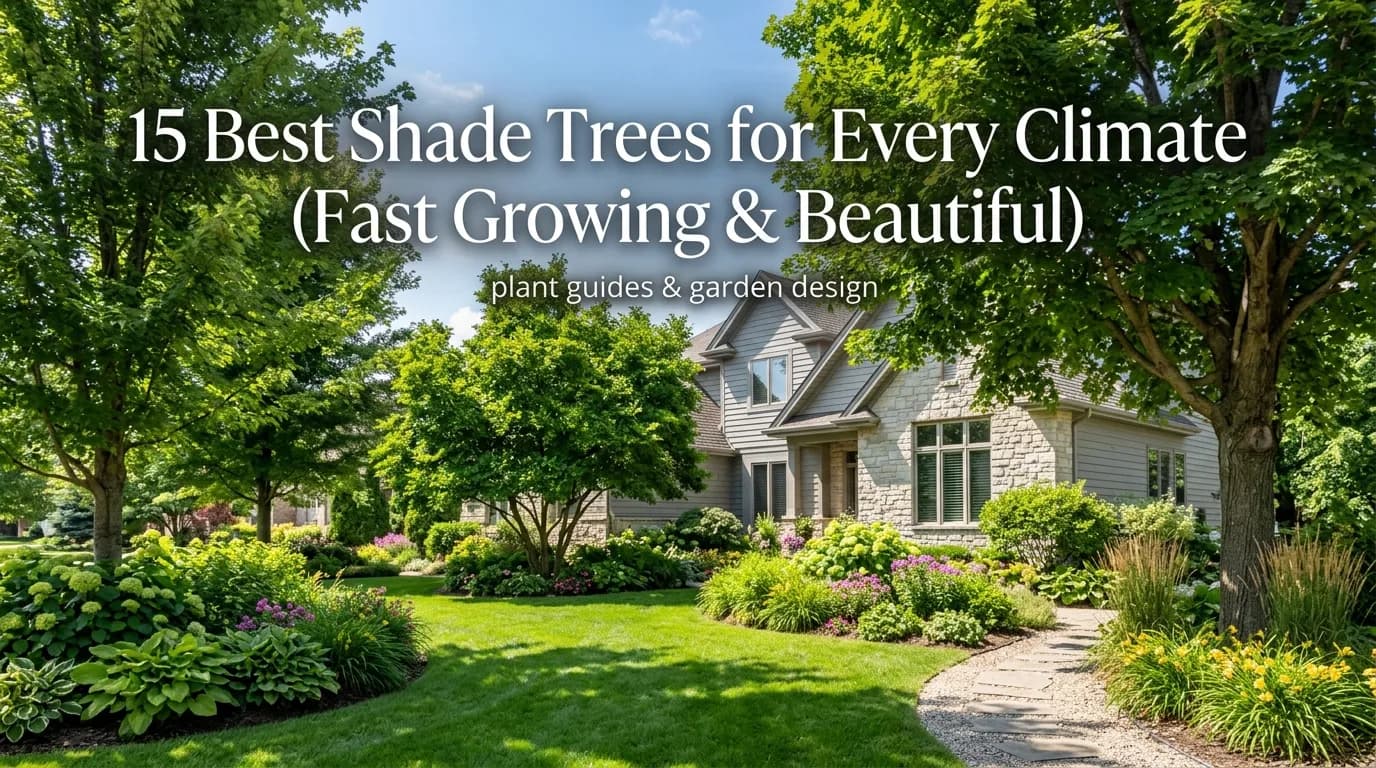
A single well-placed shade tree reduces home cooling costs by 25–35% and adds an average of $7,000–$15,000 to property value. Here are the 15 best shade trees sorted by climate zone.
How to Choose a Shade Tree
Before picking a species, consider:
- Mature spread — How wide will the canopy get? Match to the area you want to shade.
- Growth rate — Fast growers (2+ ft/year) give quick results but may have weaker wood. Medium growers (1–2 ft/year) are generally stronger.
- Root system — Avoid aggressive roots near foundations, driveways, and septic systems.
- Deciduous vs. evergreen — Deciduous trees provide summer shade and allow winter sun through. Evergreens block sun year-round.
Fast-Growing Shade Trees (2+ ft/year)
1. Red Maple (Acer rubrum)
- Zones: 3–9
- Mature size: 40–60 ft tall, 35–45 ft spread
- Growth rate: 2–3 ft/year
- Fall color: Brilliant scarlet red
- Best for: Northeast, Midwest, Southeast
The quintessential American shade tree. Spectacular fall color, adaptable to most soils, and grows fast enough to provide meaningful shade within 5–7 years.
2. Tulip Poplar (Liriodendron tulipifera)
- Zones: 4–9
- Mature size: 60–90 ft tall, 35–50 ft spread
- Growth rate: 3+ ft/year
- Fall color: Golden yellow
- Best for: East Coast, Southeast
One of the fastest-growing hardwoods in North America. Tulip-shaped flowers in spring. Massive canopy provides dense shade.
3. October Glory Red Maple
- Zones: 5–9
- Mature size: 40–50 ft tall, 35 ft spread
- Growth rate: 2–3 ft/year
- Fall color: Orange-red to brilliant red (peaks in October)
A cultivar selected for later, more reliable fall color than the species. Tolerates urban conditions well.
4. Autumn Blaze Maple
- Zones: 3–8
- Mature size: 50 ft tall, 40 ft spread
- Growth rate: 3+ ft/year
- Fall color: Orange-red
A hybrid of red and silver maple — silver maple's speed with red maple's stronger wood and better color. Extremely popular for shade.
5. Sawtooth Oak (Quercus acutissima)
- Zones: 5–9
- Mature size: 40–60 ft tall, 40–60 ft spread
- Growth rate: 2–3 ft/year
- Fall color: Yellow-brown
- Best for: Southeast, lower Midwest
Faster than most oaks. Produces small acorns that attract wildlife. Massive canopy at maturity.
Medium-Growth Shade Trees (1–2 ft/year)
6. Northern Red Oak (Quercus rubra)
- Zones: 3–8
- Mature size: 60–75 ft tall, 45–65 ft spread
- Growth rate: 1.5–2 ft/year
- Fall color: Deep red to russet
The strongest shade tree on this list. Will be standing 200 years from now. Worth the slightly slower growth.
7. Bald Cypress (Taxodium distichum)
- Zones: 4–10
- Mature size: 50–70 ft tall, 25–35 ft spread
- Growth rate: 1.5–2 ft/year
- Fall color: Copper-orange
Deciduous conifer — soft needles turn copper in fall. Tolerates wet soil and even standing water. Perfect for low areas.
8. London Plane Tree (Platanus × acerifolia)
- Zones: 5–9
- Mature size: 70–100 ft tall, 65–80 ft spread
- Growth rate: 1.5–2 ft/year
The most planted urban tree in the world. Tolerates pollution, compacted soil, and heat. Beautiful mottled bark.
9. Chinese Elm (Ulmus parvifolia)
- Zones: 5–9
- Mature size: 40–50 ft tall, 35–50 ft spread
- Growth rate: 1.5–2 ft/year
- Fall color: Yellow to reddish-purple
Not to be confused with Siberian elm (invasive). Chinese elm is elegant with attractive exfoliating bark. Excellent urban tree.
10. Sweetgum (Liquidambar styraciflua)
- Zones: 5–9
- Mature size: 60–75 ft tall, 40–50 ft spread
- Growth rate: 1.5–2 ft/year
- Fall color: Spectacular — yellow, orange, red, purple simultaneously
The best fall color of any shade tree. Choose 'Rotundiloba' (fruitless cultivar) to avoid the spiny gumballs.
Best for Hot/Dry Climates
11. Live Oak (Quercus virginiana)
- Zones: 7–10
- Mature size: 40–60 ft tall, 60–100 ft spread
- Growth rate: 1–2 ft/year
- Evergreen: Yes (semi)
The iconic Southern shade tree. Massive horizontal spread creates a cathedral-like canopy. Extremely long-lived (500+ years).
12. Desert Museum Palo Verde
- Zones: 8–11
- Mature size: 25–30 ft tall, 25–30 ft spread
- Growth rate: 2–3 ft/year
- Flower: Bright yellow clusters in spring
The best shade tree for the desert Southwest. Green bark photosynthesizes even without leaves. Thornless hybrid cultivar.
13. Chinese Pistache (Pistacia chinensis)
- Zones: 6–9
- Mature size: 30–40 ft tall, 30–40 ft spread
- Growth rate: 1.5–2 ft/year
- Fall color: Orange to crimson
The best fall color tree for warm climates. Drought-tolerant once established. Perfect for the Southwest and California.
Best for Cold Climates
14. Sugar Maple (Acer saccharum)
- Zones: 3–8
- Mature size: 60–75 ft tall, 40–50 ft spread
- Growth rate: 1–1.5 ft/year
- Fall color: Orange, yellow, red
The classic New England shade tree. Slower than red maple but the fall color is unmatched. Also produces maple syrup.
15. Hackberry (Celtis occidentalis)
- Zones: 2–9
- Mature size: 40–60 ft tall, 40–60 ft spread
- Growth rate: 1.5–2 ft/year
The toughest shade tree in North America. Survives zone 2 cold, drought, urban pollution, and poor soil. Underused and underrated.
Placement Guide
- South side of house — Maximum summer shade, allows winter sun
- West side — Blocks hot afternoon sun (biggest cooling impact)
- Plant 15–20 feet from foundation — Close enough to shade, far enough to avoid root issues
- Don't plant under power lines — Check mature height vs. overhead clearance
ROI of Shade Trees
| Metric | Value |
|---|---|
| Property value increase | $7,000–$15,000 per mature tree |
| Cooling cost reduction | 25–35% |
| Energy savings per year | $100–$250 |
| Lifespan | 50–500 years depending on species |
| Break-even | 2–5 years (from energy savings alone) |
Design the perfect shade tree placement for your yard with Yardcast — AI-generated plans show exactly where to plant for maximum impact.