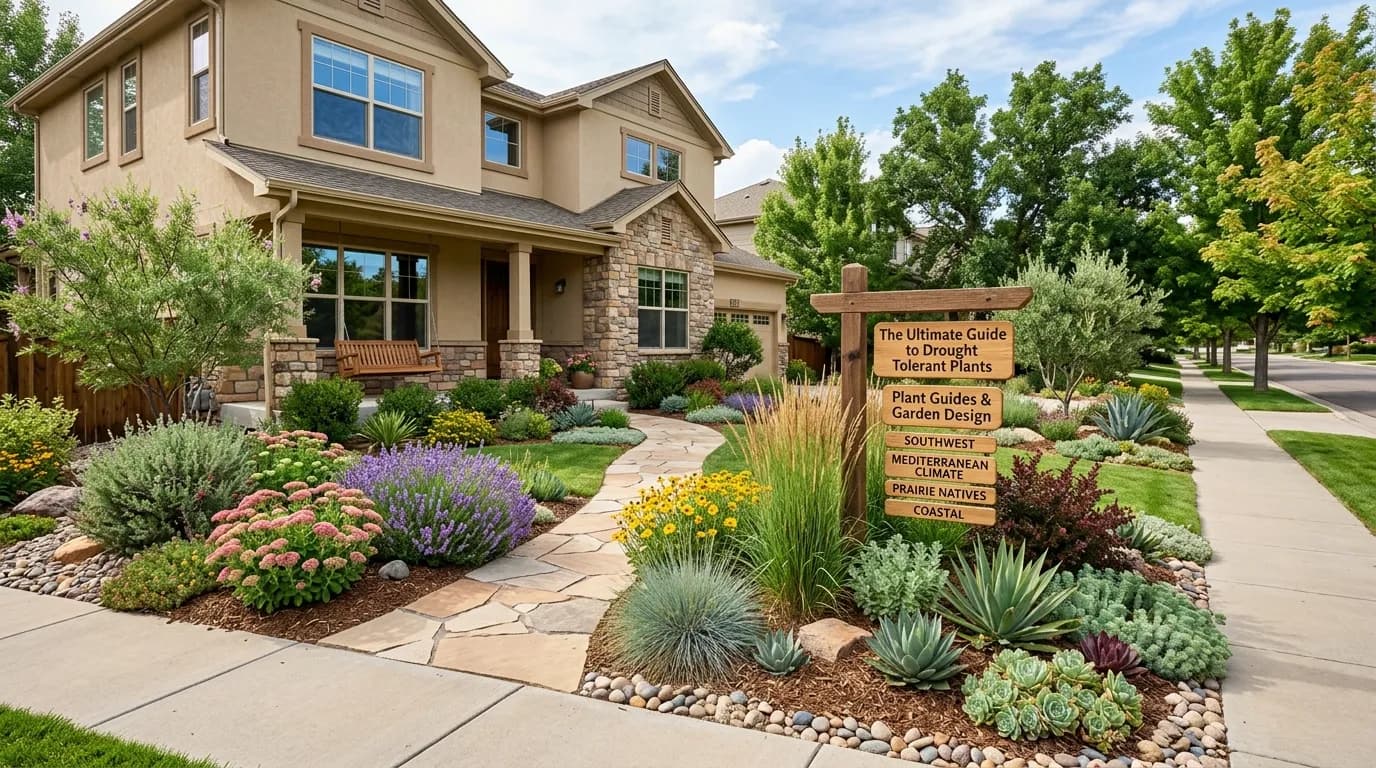
With water restrictions becoming more common, utility costs rising, and droughts intensifying across the country, drought-tolerant landscaping has moved from niche to necessity. The good news: water-wise gardens are often more beautiful, more wildlife-friendly, and more resilient than traditional thirsty lawns.
What "Drought Tolerant" Actually Means
Drought tolerance isn't binary. Most plants need regular water during establishment (the first 1-2 growing seasons), then reduce or eliminate irrigation once their root systems develop. True drought-tolerant plants can survive on natural rainfall alone after establishment, while still looking attractive.
A common misconception: drought-tolerant means dry and barren. In reality, some of the most lush, colorful, and dynamic gardens in America are xeriscaped — from the lavender fields of Santa Barbara to the native meadows of Texas Hill Country.
Southwest: Arizona, New Mexico, Nevada
The American Southwest is ground zero for drought-tolerant gardening. Rainfall averages just 4-12 inches annually in most areas, and summer temperatures regularly exceed 110°F. Yet the Sonoran and Chihuahuan deserts are extraordinarily biodiverse.
Top performers:
| Plant | Type | Water | Highlight |
|---|---|---|---|
| Agave | Succulent | Extreme drought | Architectural focal point; many sizes |
| Prickly Pear (Opuntia) | Cactus | Extreme drought | Edible fruit; pads |
| Red Yucca | Perennial | Very low | Coral spikes attract hummingbirds |
| Desert Marigold | Perennial | Very low | Yellow flowers nearly year-round |
| Texas Sage (Cenizo) | Shrub | Very low | Silver-purple after rain events |
| Palo Verde | Tree | Low | Yellow spring bloom; filtered shade |
| Ocotillo | Shrub | Very low | Dramatic red spikes; sculptural |
Design tip for the Southwest: Use decomposed granite as groundcover instead of mulch. It reflects heat, suppresses weeds, and looks native. Arrange plants in naturalistic clusters to mimic desert plant communities.
Southern California (Mediterranean Climate)
California's Mediterranean climate — dry summers, mild wet winters — matches thousands of plants from around the world. The challenge isn't summer heat but matching plants to the wet-dry cycle.
Top performers:
| Plant | Type | Water | Highlight |
|---|---|---|---|
| California Poppy | Annual/perennial | Very low | State flower; self-seeds freely |
| Lavender | Subshrub | Very low | Fragrant; deer resistant |
| Rosemary | Shrub | Very low | Culinary herb; blue flowers |
| Manzanita | Shrub/Tree | Very low | Red bark; white/pink flowers |
| California Lilac (Ceanothus) | Shrub | Very low | Blue flower clusters; native bees love it |
| Salvia (many species) | Perennial | Low | Huge variety; hummingbird magnet |
| Matilija Poppy | Perennial | Very low | Giant white flowers; dramatic |
Design tip: California native gardens look best when plants are allowed to intermingle naturally, creating a tapestry effect. Avoid rigid spacing — plant irregularly and let the garden self-organize over time.
Texas
Texas spans multiple climate zones — from humid East Texas to the arid Big Bend — but even the wetter eastern regions experience summer droughts that stress traditional plants. Native Texas plants have evolved to handle the extremes.
Top performers:
| Plant | Type | Water | Highlight |
|---|---|---|---|
| Blackfoot Daisy | Perennial | Very low | White flowers spring through frost |
| Flame Acanthus | Shrub | Very low | Orange tubular flowers; attracts butterflies |
| Mexican Feathergrass | Ornamental grass | Very low | Fine texture; graceful movement |
| Autumn Sage (Salvia greggii) | Shrub | Very low | Red, pink, coral; blooms spring–fall |
| Esperanza | Shrub | Low | Yellow trumpets; tropical look |
| Pavonia (Rock Rose) | Shrub | Very low | Pink hibiscus-like flowers |
| Turk's Cap | Shrub | Low | Shade-tolerant; hummingbirds adore it |
Mountain West: Colorado, Utah, Idaho
The Mountain West presents dual challenges: drought conditions plus cold winters. The key is finding plants that handle both extreme summer drought and temperatures that can drop to -20°F.
Top performers:
| Plant | Type | Water | Highlight |
|---|---|---|---|
| Penstemon | Perennial | Very low | Tubular flowers; native bees |
| Blue Grama Grass | Native grass | Very low | Eyelash seed heads; lawn alternative |
| Apache Plume | Shrub | Very low | White flowers; feathery pink seed heads |
| Rabbitbrush | Shrub | Very low | Yellow fall flowers; tough as nails |
| Pinyon Pine | Tree | Very low | Edible seeds; slow-growing |
| Russian Sage | Perennial | Very low | Lavender-blue; silvery foliage |
| Sedum (stonecrop) | Succulent | Very low | Ground cover; fall color |
Pacific Northwest
Despite its reputation for rain, the Pacific Northwest experiences summer drought — Seattle gets essentially zero rain July-August. Native plants are adapted to this summer dry period and require no supplemental irrigation once established.
Top performers: Red flowering currant, Oregon grape (Mahonia), salal, oceanspray, red osier dogwood, sword fern, and native sedges.
Universal Design Principles for Drought-Tolerant Gardens
1. Build the soil first. Add 3-4 inches of compost to new beds. Good soil holds water efficiently — drought-tolerant plants in good soil need even less irrigation.
2. Use the right mulch. In hotter climates, decomposed granite or gravel mulch (2-3 inches) works better than wood mulch. In cooler climates, shredded bark mulch is excellent. Both dramatically reduce evaporation.
3. Group by water needs. Don't plant a cactus next to a fern. Hydrozoning — grouping plants with similar water needs — makes irrigation efficient and prevents over/under-watering.
4. Install drip irrigation. Even drought-tolerant plants need water during establishment (typically 1-2 seasons). Drip irrigation uses 30-50% less water than overhead sprinklers. Add a timer and forget about it.
5. Leave space for mature size. Drought-tolerant plants often grow slowly but reach impressive sizes. Give them room and avoid the temptation to fill in gaps with fast-growing annuals.
Water Savings You Can Expect
The average American household uses 30% of its water (about 9,000 gallons/month) on outdoor irrigation. Switching from a traditional lawn to drought-tolerant landscaping reduces this by 50-75%, saving 4,500-6,750 gallons per month. At typical water rates, that's $30-60 saved per month, or $360-720 per year.
Get a Custom Drought-Tolerant Design for Your Yard
Every yard is different. Yardcast's AI landscape design tool analyzes your specific location, hardiness zone, and rainfall patterns to recommend the best drought-tolerant plants for your property. Upload photos of your yard, answer a few questions, and get a custom design in both bed options with the $29.99 Design Pack.
[Design a drought-tolerant yard →](/redesign)