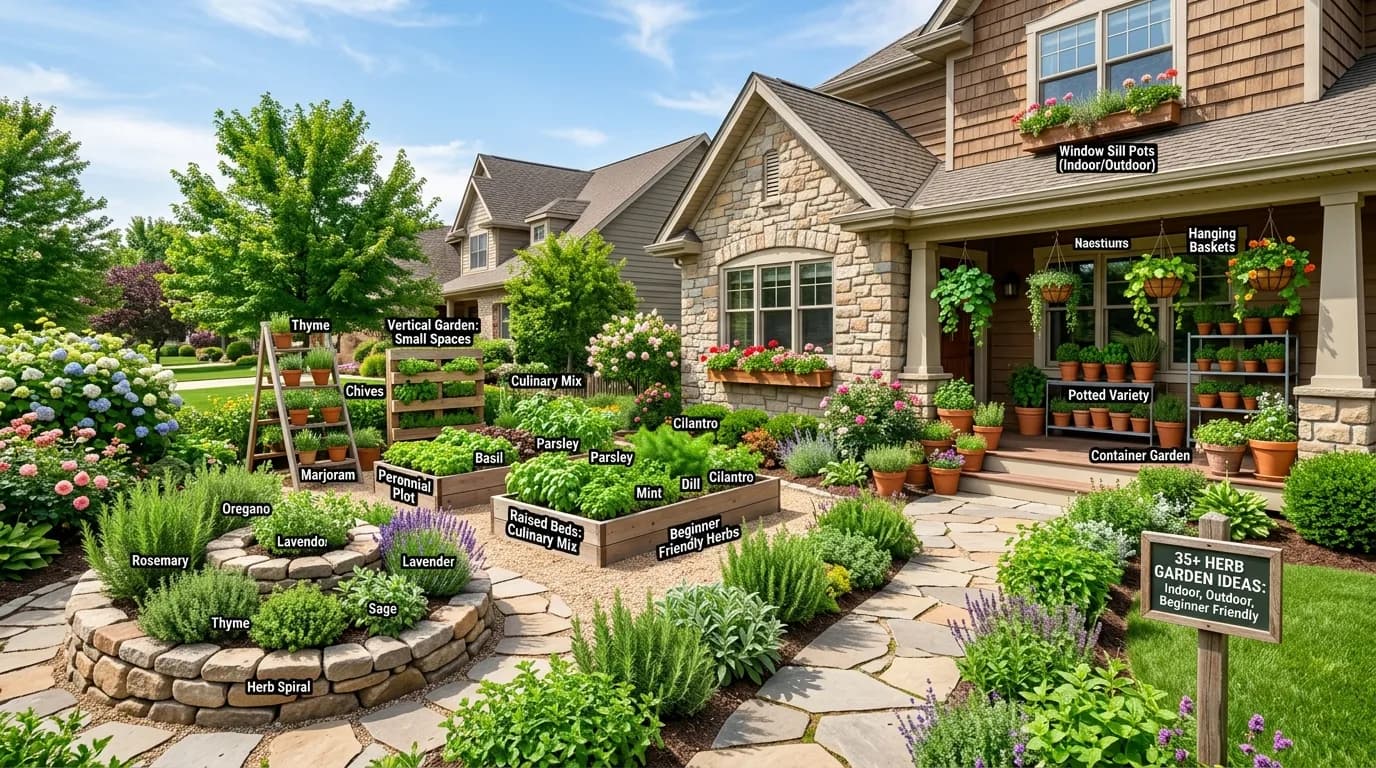
An herb garden is the most useful garden you can grow. Fresh herbs make every meal better. Medicinal herbs have real health benefits. Fragrant herbs transform patios and pathways. And almost every herb is easy to grow, fast to establish, and beautiful in its own right. Whether you have a kitchen windowsill, a 4x4 raised bed, or a large backyard, these 35 herb garden ideas will help you design something functional and gorgeous.
Why Every Yard (and Home) Should Have an Herb Garden
Herbs are the rare garden plants that are beautiful AND useful. They:
- Provide fresh flavors for cooking year-round
- Attract pollinators (bees particularly love lavender, thyme, and oregano)
- Repel pest insects naturally (basil repels aphids, mint repels ants)
- Grow in almost any soil and many grow in drought conditions
- Cost almost nothing — a $3 seed packet grows dozens of plants
The most important design consideration: plant herbs as close to your kitchen as possible. An herb garden you actually use is one within 20 steps of your back door. Beautiful herb gardens buried in the back of the yard never get harvested.
→ Planning a full yard design? [Get 3 AI landscape designs at Yardcast](/redesign) — including herb garden placement, bed layouts, and plant lists. Free preview in 60 seconds.
Outdoor Herb Garden Ideas
1. Classic Raised Herb Bed
A 4x4 or 4x8 raised bed filled with rich, well-draining soil is the ideal environment for most culinary herbs. Divide it into sections with small wooden stakes or buried bricks. Plant tall herbs (rosemary, sage, fennel) at the back; medium herbs (basil, parsley, cilantro) in the middle; and spreading herbs (thyme, oregano) along the front edges.
2. Spiral Herb Garden
An herb spiral is a mounded, circular garden that rises in a spiral pattern, creating multiple microclimates in one small space. The top is dry and hot (perfect for Mediterranean herbs like rosemary and thyme). The bottom stays moister (great for parsley and chives). Build one from stacked stones or bricks in about an afternoon.
3. French Potager-Style Herb Garden
A potager is a formal French kitchen garden combining vegetables, herbs, and flowers in geometric beds. Create a symmetrical layout with low box hedges or lavender defining the edges. Fill the interior with herbs, lettuces, and edible flowers like calendula and nasturtium. Beautiful enough to be the centerpiece of a backyard.
4. Herb Wheel Garden
An old wagon wheel laid flat on the ground — or a design mimicking one using bricks set in a circle with spokes — divides the planting area into pie-slice sections. Each section gets one herb variety. The circular design is eye-catching and keeps aggressive herbs like mint contained in their own section.
5. Pathway Herb Border
Plant creeping herbs along either side of a garden path: creeping thyme, Roman chamomile, and Corsican mint release fragrance when stepped on lightly. Over time, they soften the path's edges and create a sensory experience every time you walk through the garden.
6. Herb Garden with a Focal Point
Add an obelisk, rustic trellis, or birdbath as a focal point in the center of a formal herb garden. Train climbing herbs (hops, climbing nasturtium) or fruiting plants (espalier apple) on the obelisk. Everything radiates from the center, creating a garden with strong visual structure.
7. Cottage-Style Herb Border
Line the edge of a fence or house wall with an informal mix of herbs and cottage flowers: lavender, catmint, sage, fennel (the bronze variety), chamomile, and borage. This "wild" style actually takes less planning than formal designs and looks more romantic.
8. Xeriscaped Mediterranean Herb Garden
Mediterranean herbs (rosemary, lavender, thyme, sage, oregano) evolved in dry, rocky, alkaline soil with intense sun. Group them together in a gravel-mulched bed with minimal irrigation. They'll thrive on neglect. This style works particularly well in the Southwest and drought-prone states.
9. Four-Season Herb Garden
Design for year-round interest by including: spring (chives, parsley, cilantro), summer (basil, dill, lemon verbena), fall (sage, thyme, oregano, rosemary), and winter (rosemary, sage, evergreen thyme in mild climates — or overwintered in containers). Add ornamental herbs for structure: bronze fennel, Russian sage, and purple sage look beautiful even when not harvested.
10. Children's Pizza Garden
A child-friendly herb and vegetable garden shaped like a pizza — circular with "slices" separated by small stones or wooden dividers. Each slice grows one pizza ingredient: basil, oregano, a small tomato, bell pepper, onion chives, and even mini garlic. This gets kids excited about cooking with what they grow.
Container Herb Garden Ideas
11. Kitchen Window Box
A window box mounted below the kitchen window — or a long planter on the sill — is the most convenient herb garden possible. Plant with basil, chives, parsley, and a compact rosemary. Reach out the window while cooking for fresh herbs in seconds.
12. Tiered Herb Ladder
A wooden step ladder with boards laid across the rungs makes a perfect tiered herb display. Use 6–8" clay pots for each herb and arrange by height: rosemary and sage on top, basil and parsley in the middle, thyme and oregano on the bottom rungs. An easy DIY project for under $50.
13. Galvanized Trough Planter
A long galvanized stock trough (available at farm stores) makes a beautiful and durable herb planter. Drill drainage holes in the bottom and fill with potting mix. Plant with 6–8 culinary herbs. The industrial metal aesthetic works beautifully in modern, farmhouse, and rustic garden styles.
14. Self-Watering Herb Pot
For gardeners who travel frequently or forget to water, self-watering herb containers with built-in reservoirs are a game-changer. Fill the reservoir every 1–2 weeks and the wicking system delivers consistent moisture to the roots. Herbs stay productive through even hot, dry stretches.
15. Terracotta Collection
A collection of 8–12 terracotta pots in varying sizes, each holding one herb variety, arranged on steps or a tiered shelf. Label each pot with a small chalkboard stake. The natural terracotta color unifies the collection while the varying sizes add visual interest.
16. Mint Isolation Pot
Mint is invasive and will take over any garden bed within a season. But in a container, it's tame, productive, and beautiful. Grow peppermint, spearmint, chocolate mint, and apple mint in separate containers — or sink them (pots and all) into a bed to contain the runners.
17. Hanging Herb Baskets
Wire hanging baskets lined with coconut fiber and planted with trailing herbs — trailing rosemary, thyme, oregano, and sweet alyssum — make beautiful porch decorations. Hang at eye level for easy harvesting while enjoying the patio.
Raised Bed Herb Garden Ideas
18. Divided Raised Bed
Use a large raised bed (8x4 or 8x8) with interior dividers — lengths of cedar board, buried bricks, or terracotta edging — to separate herb families. One section for Mediterranean herbs, one for tender annuals (basil, cilantro), one for perennials (chives, tarragon, lovage). Dividers keep aggressive herbs from crowding out more delicate ones.
19. Keyhole Bed Design
A keyhole garden is a circular or horseshoe-shaped bed with a narrow path cut into the center. Standing in the middle, you can reach every plant without stepping on soil. Perfect for herb gardens where you need to harvest regularly without compacting the soil.
20. Tiered Raised Bed Staircase
On a sloped yard, build two or three terraced raised beds at different levels. The tallest herbs go in the highest bed (rosemary, fennel, lovage). Medium herbs in the middle. Low-growing creeping herbs in the front beds. The terraced effect looks formal and elegant.
21. Herb and Vegetable Companion Planting Bed
Many herbs improve vegetable growth when planted nearby. Classic companions: basil with tomatoes, dill and chamomile near brassicas, chives near carrots and roses, borage near squash, and French marigolds throughout. A mixed herb-vegetable bed uses companion planting to reduce pests naturally.
Specialty Herb Garden Ideas
22. Tea Garden
Design a dedicated tea herb garden with: chamomile, lemon verbena, spearmint, peppermint, lemon balm, lavender, and echinacea. Dry excess herbs in summer for winter tea blends. Add a small bench nearby so you can sit and enjoy the fragrance. A truly therapeutic garden space.
23. Medicinal Herb Garden
Traditional medicinal herbs have backed by centuries of use: echinacea (immune support), valerian (sleep), calendula (skin healing), elderberry (immune system), St. John's Wort (mood), and lemon balm (stress relief). Design this garden near a quiet sitting area — it's meant to be a healing space, not just a harvest zone.
24. Culinary World Herb Tour
Group herbs by culinary tradition: Italian (basil, flat-leaf parsley, oregano, rosemary, sage), French (tarragon, chervil, chives, thyme), Mexican (cilantro, epazote, Mexican oregano, hierba santa), Asian (lemongrass, Thai basil, shiso, galangal). Label each section with a small sign. Beautiful, educational, and delicious.
25. Fragrant Herb Walk
Create a winding path lined with fragrant herbs that release scent as you brush against them or step lightly on the low-growing varieties: lavender, rosemary, lemon thyme, scented geraniums, chamomile, and catmint along the edges. This "sensory walk" turns routine garden time into an aromatherapy experience.
26. Pollinator Herb Garden
Many herbs are excellent pollinator plants when allowed to flower. Let some of your thyme, oregano, chives, and cilantro bolt and bloom. Add borage, anise hyssop, and bee balm specifically for pollinators. By midsummer this garden will be alive with bees and butterflies.
27. Dyeing Herb Garden
Historically, herbs produced natural fabric dyes. This specialty garden is fascinating and functional: woad (blue), weld (yellow), madder (red), chamomile (gold), St. John's Wort (green), and yarrow (yellow-gold). A conversation piece unlike any other in the neighborhood.
28. Biblical or Ancient Herb Garden
Many herbs have deep historical and spiritual significance: hyssop, coriander, rue, wormwood, fenugreek, cumin, and mandrake are all mentioned in ancient texts. A historically-themed herb garden with interpretive labels can be a genuinely educational and contemplative space.
Indoor Herb Garden Ideas
29. Countertop Herb Tower
A small vertical tower planter (12–24") sits on the kitchen counter and holds 8–12 herb varieties in stackable pots. These need at minimum 4–6 hours of direct sunlight (south-facing window) or a grow light. Compact, productive, and looks modern on any kitchen counter.
30. Hydroponic Herb Garden
Indoor hydroponic systems like AeroGarden, Click & Grow, and iFarm grow herbs in water without soil. They include grow lights on timers, eliminating the need for a sunny window. Herbs grow 2–3x faster than in soil. A hydroponic unit on the counter can supply a family's herb needs year-round.
31. Mason Jar Herb Garden on a Shelf
Line a kitchen shelf with mason jars, each holding one herb in potting mix. Add a bright grow light strip above the shelf. Chic, Instagram-worthy, and actually functional. Use clip-on labels for a farmhouse aesthetic.
32. Window Herb Garden Shelf
Install a floating shelf directly in front of a sunny south or west-facing window. Stagger 4–6 small pots of herbs across it. The light filters through the leaves, making the kitchen glow green. Requires the right window — 4+ hours of direct sun daily.
Herb Garden Design Tips
What to Plant Together (and What to Separate)
Good companions:
- Rosemary, sage, thyme, and oregano (all Mediterranean, same sun/water needs)
- Basil, parsley, and chives (similar water needs, do well together)
- Mint in its own container (too aggressive for mixed planting)
Keep separate:
- Fennel dislikes most other herbs and vegetables — plant it alone or at a distance
- Mint will crowd everything — always contain it
- Dill and cilantro bolt quickly and reseed everywhere — give them their own section
Essential Soil Requirements
Most herbs prefer: well-draining soil (never waterlogged), slightly alkaline to neutral pH (6.5–7.0), modest fertility (rich soil makes Mediterranean herbs leggy with less flavor), and full sun (6+ hours for most culinary herbs).
Harvesting to Encourage Growth
The key to productive herbs: harvest frequently. Cutting stems back by one-third encourages bushier growth and delays bolting. Never harvest more than one-third of a plant at once. For herbs like basil, pinch the flowers as soon as they appear to extend the harvest season by weeks.
Want to incorporate an herb garden into a complete yard design? [Try Yardcast's AI landscape designer](/redesign) — upload your yard photos and get 3 professional designs with plant lists, bed layouts, and installation cost estimates. Free preview.