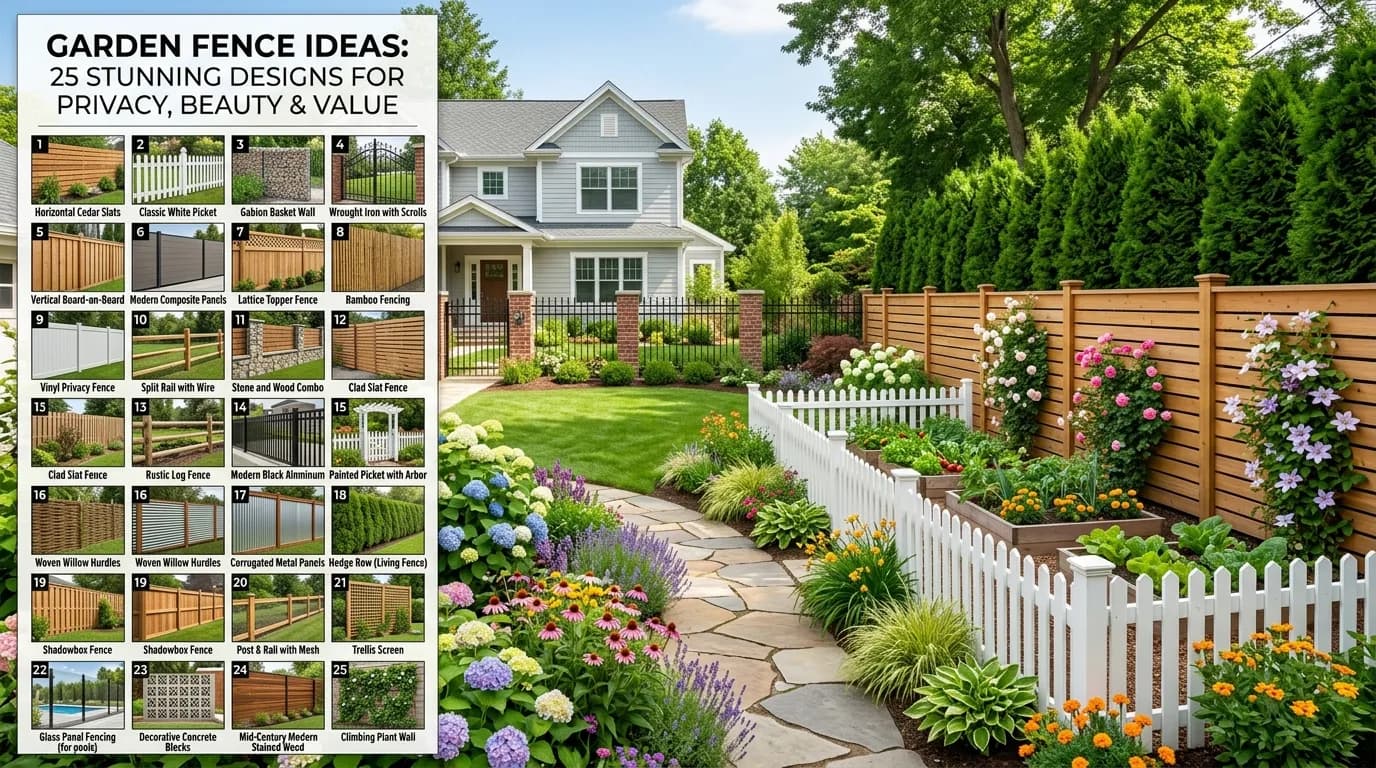
A garden fence is one of the most impactful single investments you can make in your outdoor space. The right fence adds privacy, defines spaces, controls foot traffic, keeps pets and children safe, and — perhaps most importantly — dramatically elevates your home's curb appeal and value. Studies show that quality fencing can return 50–75% of its cost in added home value.
But choosing the wrong fence — the wrong material, height, or style — can just as easily detract from your landscape. This guide covers 25 garden fence ideas across every style, budget, and use case, with cost breakdowns and plant pairings to help you maximize the impact of your fencing choice.
Privacy Fence Ideas
1. Classic Wood Privacy Fence
The 6-foot cedar or redwood privacy fence remains the gold standard for backyard privacy. Natural wood weathers to a beautiful silver-gray or can be stained in any color. Cedar and redwood naturally resist rot and insects without chemical treatment.
Best for: Full privacy, suburban backyards, pet containment
Cost: $15–$30/linear foot installed
Lifespan: 15–25 years with regular staining/sealing
Plant pairings: Climbing hydrangea, American wisteria, or columnar arborvitae planted 3 feet in front to soften the fence line
2. Horizontal Slat Fence
Horizontal boards rather than vertical pickets create a modern, architectural look that has dominated landscape design trends for the past decade. Use 1×6 cedar boards with 1/4-inch gaps for a contemporary privacy fence that doubles as a design feature.
Best for: Modern and contemporary homes, premium curb appeal
Cost: $20–$40/linear foot installed (more labor-intensive than vertical)
Tip: Apply a semi-transparent dark stain (Cabot Australian Timber Oil in Black Walnut is popular) for a sleek, charcoal finish
3. Bamboo Privacy Screen
For a tropical or zen aesthetic, bundled bamboo panels or individual bamboo poles create an exotic privacy screen. Pre-made bamboo panels ($20–$60 for 4×8 sections) can be wired to existing fence posts for a quick transformation.
Best for: Tropical, zen, or Asian-inspired gardens
Cost: $8–$25/linear foot for DIY installation
Caution: Natural bamboo weathers and requires sealing; synthetic bamboo roll panels are more durable for permanent use
4. Metal Privacy Louvers
Powder-coated aluminum or Corten steel louver panels are the premium choice for privacy fencing. Angled slats block sightlines while allowing airflow and light — a key advantage over solid wood. These look exceptional on modern, industrial, and desert-style homes.
Best for: Contemporary homes, desert climates, low-maintenance preference
Cost: $45–$90/linear foot installed
Lifespan: 30–50 years — virtually maintenance-free
5. Living Privacy Hedge (Fence Alternative)
A row of fast-growing evergreen shrubs — Green Giant arborvitae (grows 3–5 feet/year), Leyland cypress, or Sky Pencil holly — creates a living privacy screen that improves with age. A living hedge provides noise reduction, wildlife habitat, and aesthetic benefits that no wooden fence can match.
Best for: Long-term investment, noise reduction, wildlife-friendly yards
Cost: $300–$600 per 10 linear feet of mature privacy height
Timeline: Green Giant arborvitae reaches 8 feet in 3–4 years from a 4-foot plant
> Want to see exactly how a fence would look on your property? Generate a free AI landscape design at Yardcast → Upload your yard photos and get 3 photorealistic designs showing different fence styles, plant combinations, and landscaping approaches — all customized to your actual home.
Decorative Garden Fence Ideas
6. White Picket Fence
No fence communicates cottage charm like a white-painted picket fence. The classic American style works beautifully on colonial, craftsman, and cottage-style homes. Vinyl picket fencing ($15–$25/linear foot installed) requires no painting and maintains its bright white finish indefinitely.
Best for: Cottage gardens, front yards, colonial/craftsman homes
Plant pairings: Roses, lavender, salvia, and catmint spilling over the pickets = perfect cottage garden
7. Split-Rail Fence
A rustic split-rail fence (2 or 3 rails between rough wooden posts) defines property lines and planting beds without blocking views. Ideal for rural and farmhouse-style properties where an open feeling is preferred. Often combined with wire mesh backing for pet or livestock containment.
Cost: $8–$15/linear foot installed — one of the most affordable fence options
Plant pairings: Native wildflowers, ornamental grasses, and climbing roses thread beautifully through rail fences
8. Wrought Iron Garden Fence
Ornamental wrought iron (or more affordable powder-coated aluminum that mimics its look) adds classic elegance to formal, traditional, and Victorian-style landscapes. Intricate scrollwork and finials create a decorative boundary that enhances rather than conceals the garden.
Best for: Front yards, formal gardens, Victorian and traditional homes
Cost: $25–$60/linear foot for ornamental iron; $15–$30 for aluminum alternatives
9. Stone Wall Fence
A dry-stacked or mortared stone wall as a garden boundary is a landscape investment that lasts generations. Stone walls 24–36 inches high define space, retain slight elevation changes, and develop beautiful moss and lichen patinas over time.
Cost: $25–$75/linear foot for dry-stacked stone; $50–$125 for mortared stone walls
ROI: Among the highest of any hardscaping investment — adds substantial resale value
10. Board on Board Cedar Fence
The board-on-board (or "good neighbor") fence style places boards on alternating sides of the fence rail, creating a fence that looks finished from both sides and provides complete privacy while allowing slight airflow. Popular in residential settings where both sides of the fence should look attractive.
Cost: $18–$32/linear foot installed
Tip: Leave 1/2-inch overlap on alternating boards for complete privacy with slight airflow
Garden Bed Fencing Ideas
11. Low Picket Border Fence
An 18–24 inch decorative picket fence around a flower bed adds a charming, cottage-garden feel while keeping lawn grass from encroaching into beds. Available in wood, vinyl, or metal in dozens of styles. Especially effective around rose gardens and cottage-style perennial beds.
Cost: $5–$15/linear foot for low decorative fencing
DIY difficulty: Easy — most stake directly into the ground with no posts required
12. Rustic Branch or Twig Fence
Bundles of branches, willow wands, or bamboo stakes wired together create an organic, naturalistic garden border that costs almost nothing if you have branches to prune. This style suits cottage gardens, naturalistic landscapes, and kitchen gardens beautifully.
Cost: Nearly free if you have pruning material; or $2–$8/foot for bundled willow hurdles
Bonus: Adds a handcrafted, artisanal quality that manufactured fencing never achieves
13. Metal Edging as Low Fence
Heavy-gauge steel garden edging installed 4–6 inches above grade creates a modern, clean garden border that functions as a low fence. Black powder-coated steel edging (COr-Ten or painted black steel) is particularly popular in modern and minimalist landscapes.
Cost: $3–$10/linear foot for quality steel edging
Lifespan: 20+ years for quality steel edging
14. Gabion Basket Garden Wall
Gabion baskets — wire cages filled with rocks — create a dramatic industrial-meets-natural garden boundary. Filled with locally-sourced fieldstone, basalt, or recycled concrete, gabion walls are structurally sound and visually striking. They can be planted with sedum and creeping thyme in the rock crevices for a living effect.
Cost: $20–$50/linear foot for a 3-foot high gabion wall
Best for: Modern, industrial, and xeriscaped landscapes
15. Espalier Fruit Trees as Living Fence
Training fruit trees — apple, pear, fig — flat against a wall or wire trellis system creates a "living fence" that's ornamental, productive, and spatially efficient. An espalier fence along a sunny south-facing wall is a classic French kitchen garden technique that's experiencing a strong revival.
Cost: $200–$600 to establish 10 linear feet of espalier fence
Payoff: Abundant fruit production from a narrow footprint; stunning in bloom
Fence and Landscape Integration
16. Fence as Trellis for Climbing Plants
Any solid fence becomes a living landscape feature when planted with climbing vines. Pair your fence material with appropriate climbers:
- Wood privacy fence: Climbing hydrangea, Virginia creeper, or clematis (use removable panels for easy staining access)
- Chain link fence: Fast-growing annual vines (morning glory, moonflower) for seasonal transformation; or evergreen ivy for year-round coverage
- Metal or masonry: Wisteria, climbing roses, espaliered fruit trees
17. Fence with Built-In Planter Boxes
Attach cedar planter boxes to the top or face of a fence to add a planted dimension. Window-box style planters on a fence face with trailing plants (petunias, sweet potato vine, lobelia) create a living fence element with maximum visual impact from the street or patio.
Cost: $15–$40 per planter box, easily DIY-built
18. Fence Backdrop for Feature Plants
Use your fence as a dark backdrop to make specimen plants pop. A dark-stained fence (black, charcoal, or deep navy) behind white peonies, silver ornamental grasses, or bright red Japanese maples creates a dramatic garden composition — the dark background makes every plant color more vivid.
Front Yard Fence Ideas
19. Low Metal Picket for Curb Appeal
A 30–36 inch ornamental metal or vinyl picket fence along the front property line dramatically improves curb appeal without blocking the view of your home and landscape. This fence height signals an intentional, cared-for property without the closed-off feeling of a privacy fence.
Design tip: Match fence color to your front door or window trim color for a coordinated, polished appearance
20. Boxwood or Privet Hedge "Fence"
A formal clipped hedge of boxwood or privet along the property line is the classic alternative to a front yard fence. Boxwood (Buxus) clipped to 24–36 inches creates a crisp, formal border that never looks out of place on traditional or colonial homes. Note: Boxwood blight is a concern in some regions; consider Inkberry holly or 'Det' Ilex as alternatives.
21. Fieldstone Pillar Fence
Stone or brick pillar posts with wood or iron infill panels create a high-end estate fence look. Pillar posts every 6–8 feet with horizontal wood boards or iron pickets in between signal quality craftsmanship and dramatically elevate curb appeal.
Cost: $50–$120/linear foot — a premium option for premium results
ROI: Very high for homes in the $400K+ range
Modern Fence Ideas
22. Corten Steel Fence Panels
Corten (weathering) steel fence panels develop a beautiful rust-orange patina over 2–3 years and then stabilize, requiring zero maintenance. Laser-cut geometric or organic patterns in the panels create a sculptural fence that's as much art as function.
Cost: $40–$80/linear foot installed
Best for: Contemporary, industrial, and desert modern landscapes
23. Concrete Block Screen Wall
Architecturally poured concrete or decorative concrete block creates a minimalist, monolithic fence that suits modern architecture perfectly. Can be topped with steel, wood, or glass panels for added height. Paired with architectural specimen plants (agave, yucca, ornamental grasses) for maximum modern impact.
Cost: $40–$90/linear foot depending on complexity
24. Cable and Post Privacy Screen
Stainless steel cables running horizontally between powder-coated steel posts create a modern, semi-transparent fence that suggests enclosure without blocking views. Cable fencing is popular for pool surrounds, deck railings, and open-feeling boundaries.
Cost: $100–$200/linear foot for quality cable fence with steel posts
25. Glass Panel Privacy Screen
Tempered glass panels between metal posts create an invisible fence that maintains views while blocking wind. Popular for pool surrounds, rooftop gardens, and waterfront properties where views are the primary asset.
Cost: $150–$300/linear foot — the premium option for premium settings
How to Choose the Right Garden Fence
Before purchasing, clarify:
- 1Purpose — Privacy, decoration, pet containment, or property definition?
- 2Height — Local zoning typically restricts front yard fences to 3–4 feet, rear fences to 6 feet
- 3Material — Balance cost, lifespan, maintenance, and aesthetics
- 4Neighbors — "Good neighbor" fence styles look finished from both sides
- 5HOA rules — Check restrictions on materials, colors, and heights
Fence Cost Comparison Table
| Material | Cost/Linear Foot | Lifespan | Maintenance |
|---|---|---|---|
| Split rail wood | $8–$15 | 15–20 yr | Low |
| Vinyl picket | $15–$25 | 25–30 yr | Very low |
| Cedar privacy | $18–$32 | 15–25 yr | Moderate |
| Aluminum ornamental | $20–$40 | 30+ yr | Very low |
| Wrought iron | $25–$60 | 50+ yr | Low |
| Corten steel | $40–$80 | 50+ yr | None |
| Glass panels | $150–$300 | 30+ yr | Low |
Integrating Your Fence into the Landscape
The best garden fences don't just stand alone — they integrate into a cohesive landscape design. Key integration principles:
- Soften hard lines with foundation plantings along fence bases
- Use the fence as a backdrop for specimen plants and garden art
- Repeat fence colors in other landscape elements (pots, furniture, front door)
- Consider the view from inside — your fence is one of the most-seen elements from your windows
Planning a fence as part of a larger landscape design produces dramatically better results than adding a fence to an existing landscape as an afterthought. A professional landscape plan shows exactly how your fence, plants, hardscaping, and lighting will work together before you spend a dollar.
[Design your fence and landscape together — get 3 free AI landscape designs at Yardcast →](/redesign)