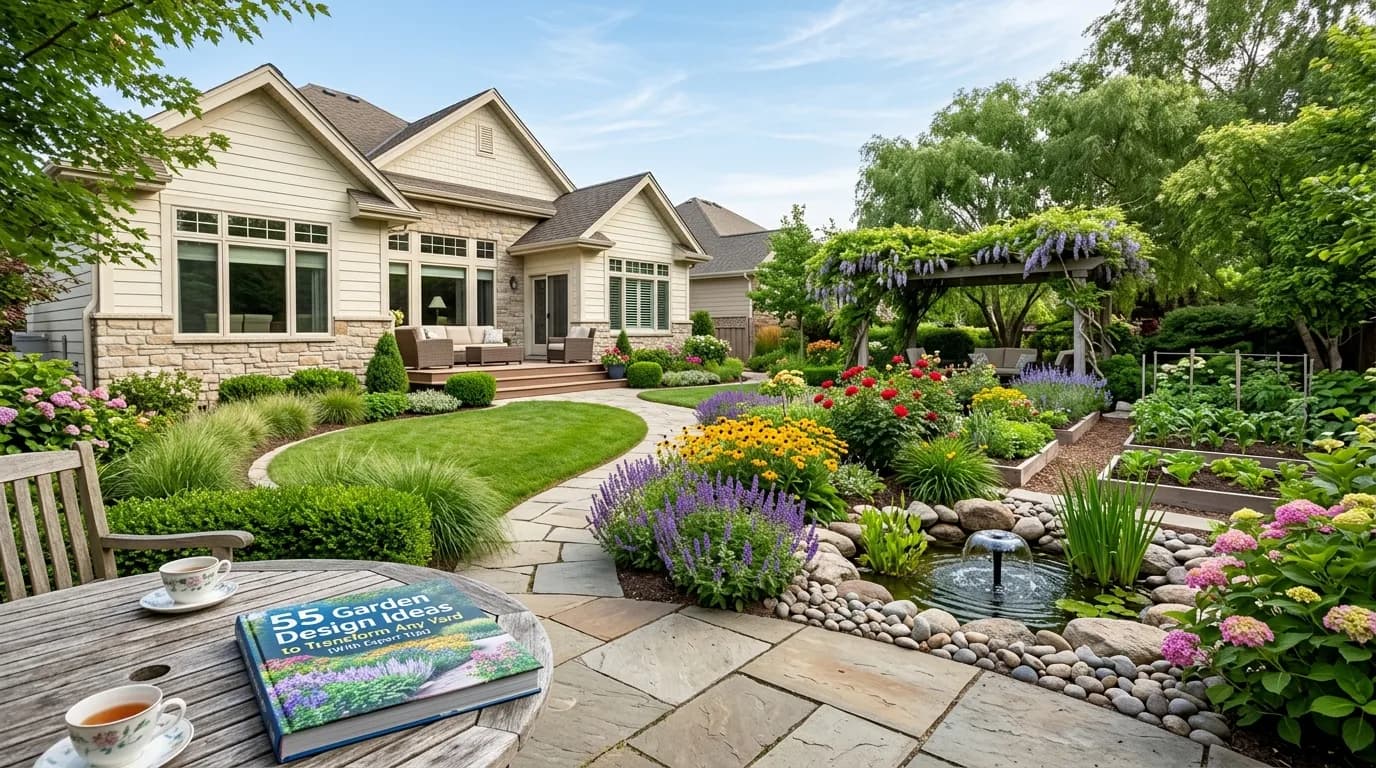
Great garden design doesn't require a landscape architect or a six-figure budget. The best gardens are ones that reflect your lifestyle, work with your climate, and give you something beautiful to look at from the kitchen window. Whether you're starting from bare dirt or reimagining an overgrown mess, these 55 garden design ideas will give you the inspiration — and the practical framework — to build something you'll love for years.
What Makes a Garden Design Work?
Before diving into specific ideas, understand the three fundamentals every successful garden design shares:
1. Structure before plants. Beds, paths, hardscape, and focal points create the "bones" of a garden. Without structure, even the most beautiful plants look messy. Start by defining where you'll walk, where you'll sit, and what you want to see first when you look outside.
2. Plants in the right place. A drought-tolerant agave in a swampy clay bed will die no matter how beautiful it looks in the nursery. Before buying anything, know your: USDA hardiness zone, sun exposure (full sun = 6+ hours, partial = 3–6, shade = under 3), soil drainage, and average annual rainfall.
3. A focal point. Every great garden has at least one "destination" — a specimen tree, a water feature, a sculptural boulder, a pergola. It gives the eye somewhere to travel and the garden a sense of intentionality.
With those principles in mind, here are 55 garden design ideas organized by style, space, and goal.
Cottage Garden Design Ideas
Cottage gardens are the most forgiving and romantic of all garden styles — loose, layered, slightly chaotic, and wildly beautiful.
1. Mixed border planting. Layer roses, delphiniums, and foxglove in the back; echinacea, salvia, and catmint in the middle; creeping thyme and alyssum at the front edge. The overlapping bloom times mean something is always flowering May through September.
2. A picket fence entrance. A white or weathered wood picket fence with climbing roses (Try 'New Dawn' or 'Zephirine Drouhin') instantly signals "cottage garden" before visitors even enter.
3. Gravel paths with self-seeding plants. Allow cottage garden classics like nigella, forget-me-not, and aquilegia to self-seed between gravel path stones. It looks effortless but costs almost nothing after the first season.
4. Vintage garden ornamentation. Old watering cans, terracotta urns, and stone troughs planted with herbs add authentic cottage charm. Source from antique markets or estate sales for $10–40 per piece.
5. Fragrance-first plant selection. Choose plants for scent: old garden roses, lavender, sweet peas, honeysuckle, and stocks. A cottage garden that smells as good as it looks creates a completely different experience.
Modern Minimalist Garden Ideas
Clean lines, restrained plant palettes, and high-quality materials define the modern garden. Less is always more.
6. Monochromatic planting. Pick one flower color and use it exclusively — all white, all purple-blue, all yellow-orange. Paired with a single species of ornamental grass, this creates striking visual impact with minimal effort.
7. Architectural specimen plants. A single large agave, a row of columnar Italian cypress, or one sweeping Japanese maple acts as living sculpture. Plant it in a bed of raked gravel or minimalist groundcover.
8. Concrete and steel edging. Corten steel or poured concrete edging creates sharp, permanent bed lines that look intentional and require zero maintenance once installed. Cost: $3–8/linear foot for steel; $8–15 for concrete.
9. A reflecting pool or rill. Even a narrow, 18-inch-wide water channel running the length of a patio adds drama and calm. Modern rills can be DIY'd with a concrete liner and submersible pump for $500–1,500.
10. Night lighting as design. In modern gardens, the lighting plan is part of the design. Use uplights on specimen trees, linear path lights, and wall-washer fixtures to create a completely different garden experience after dark.
Small Garden Design Ideas
Small spaces reward creativity. The best small garden designs use every square foot intentionally.
11. Go vertical. Install a trellis, wire grid, or living wall panel on a fence or wall. Train espaliered fruit trees, climbing roses, or columnar evergreens flat against the wall. You multiply your planting area without expanding your footprint.
12. Layered pots in varying heights. Group containers of different heights — tall grasses in large pots, trailing plants in medium containers, low-growing herbs in small terracotta bowls — to create a lush garden feel in even a tiny patio.
13. The diagonal path trick. Run a path diagonally across a small garden rather than straight. It visually lengthens the space by 15–20% and creates two distinct planting beds on either side.
14. Mirror illusion. A weatherproof mirror mounted on a garden wall doubles the perceived depth of a small space. Use a large mirror (minimum 3×4 feet) framed in cedar or galvanized steel for a modern look.
15. Focal point at the end. In a small, long garden, place a strong focal point at the far end — an urn, a small fountain, a topiary ball — to draw the eye and make the space feel like a journey, not just a rectangle.
> 💡 Ready to visualize your small garden? Generate 3 AI designs for your specific yard in 60 seconds →
Backyard Garden Design Ideas
The backyard is where you actually live outdoors. Design it for how you use it, not just how it looks.
16. Zone by activity. Divide your backyard into zones: dining (patio/deck), lounging (lawn or seating area), play (kids' zone or open lawn), growing (vegetable/herb garden), and beauty (planted beds). Clear zones make the space feel larger and more functional.
17. The "outdoor room" concept. Define areas with structural elements — a pergola overhead, a hedge or fence on two sides, a change in hardscape — to create rooms that feel enclosed and intimate, not exposed.
18. Fire pit as anchor. A fire pit or outdoor fireplace becomes a natural gathering anchor. Design seating in a circle around it and plant fragrant herbs nearby (lavender, rosemary) so the warmth releases their scent.
19. A destination garden shed or studio. A beautifully designed garden shed or studio at the back of the garden gives the eye a destination and the space a sense of architecture. Paint it a dramatic color — forest green, black, deep navy — to make it pop.
20. Rain garden in low spots. If water pools in parts of your backyard, turn the problem into a feature: a rain garden planted with moisture-tolerant natives (swamp milkweed, joe-pye weed, cardinal flower) that absorbs runoff beautifully.
Front Yard Garden Design Ideas
Your front yard is a public statement. Make it say something good.
21. Layered foundation planting. Replace a single row of juniper shrubs with layered plantings: small flowering trees or large shrubs at the back, medium perennials in the middle, low groundcovers at the front. Aim for year-round structure.
22. Eliminate lawn in strips. Narrow strips between the sidewalk and house are notoriously hard to maintain. Replace them with low-growing drought-tolerant groundcover (creeping thyme, blue star creeper, sedge) or gravel with ornamental grasses.
23. A defined entry path. A path that leads clearly from the street to the front door — in flagstone, brick, or pavers — gives visitors a clear route and the house a polished, organized feel. Line it with low boxwood, ornamental grass, or lavender.
24. Seasonal color in containers. Two large containers flanking the front door, changed seasonally (pansies in spring, dahlias in summer, ornamental kale in fall, evergreen boughs in winter) keeps the front yard looking intentional year-round with minimal effort.
25. Night-blooming and fragrant plants. Visitors approaching in the evening will notice jasmine, moonflower, or four-o'clocks planted near the entry. Fragrance is a powerful but often overlooked design element.
Low-Maintenance Garden Design Ideas
These ideas minimize ongoing work without sacrificing beauty.
26. Native plant meadow. Replace a section of lawn with native wildflowers and grasses — little bluestem, black-eyed Susan, purple coneflower, butterfly weed. Once established (usually year 2–3), a native meadow needs nothing: no watering, no fertilizing, no mowing except once in late winter.
27. Gravel garden with drought-tolerant plants. A well-designed gravel garden needs almost no maintenance. Remove existing lawn, lay landscape fabric, spread 3 inches of crushed gravel, and plant agave, yucca, ornamental grasses, lavender, and Russian sage at wide spacing.
28. Automatic drip irrigation. Install drip irrigation with a smart controller (Rachio 3 or RainBird ST8I) before planting. Plants establish faster, water bills drop 40–60%, and you never have to remember to water.
29. Shrub-dominant design. Design beds where 70% of the space is filled by well-chosen shrubs (native shrubs, dwarf conifers, ornamental grasses) and only 30% by perennials. Shrubs are much lower maintenance than perennials and provide year-round structure.
30. Mulch generously. A 3–4 inch layer of quality wood chip mulch suppresses 90% of weeds, retains moisture, and dramatically reduces maintenance. Refresh once per year in spring. This single change can cut bed maintenance time in half.
Garden Design Ideas by Style
31. Japanese Zen garden: Sand or gravel raked in patterns, moss, stepping stones, and carefully pruned dwarf pines or Japanese maples. Serene, contemplative, and nearly maintenance-free once established.
32. Mediterranean garden: Terracotta pots, olive trees, lavender, rosemary, bougainvillea, and warm-colored tile. Works in USDA zones 8–11 (or in containers anywhere). The most water-efficient garden style that still looks lush.
33. Tropical garden: Banana trees, bird of paradise, elephant ear, hibiscus, and palm underplanted with colorful ground covers. Requires zone 9+ in the ground; can be done with containers anywhere.
34. Prairie/naturalistic garden: Large drifts of ornamental grasses (Panicum, Schizachyrium) mixed with native perennials (echinacea, liatris, rudbeckia). Looks wild but designed — three-season interest with minimal maintenance.
35. Formal garden: Clipped hedges, symmetrical layouts, geometric bed shapes, and topiary. High initial investment but long-lasting structure. Box (Buxus) and yew (Taxus) are the classic choices; American holly is a great native alternative.
Garden Design Ideas for Specific Problems
36. Sloped yard: Install terraced retaining walls (timber, dry-stacked stone, or concrete block) to create flat planting areas. This converts an unusable slope into multiple garden "rooms" at different levels.
37. Shady yard: Embrace the shade with hostas, astilbe, bleeding heart, Japanese forest grass, hellebore, and woodland ferns. A shade garden with thoughtful plant selection can be lush and beautiful — stop trying to grow sun-lovers in shade.
38. Windy garden: Create windbreaks with structural evergreens (arborvitae, spruce, leyland cypress) before worrying about ornamental planting. Reduce wind speed by 50% and everything else becomes easier.
39. Clay soil garden: Amend clay beds with compost and grit to improve drainage, then choose clay-tolerant plants: astilbe, joe-pye weed, inkberry, royal fern, red osier dogwood. Or build raised beds above the clay entirely.
40. No-budget garden: Focus on structure (free from salvage), self-seeding annuals (zinnias, cosmos, bachelor's button — $2–5 per seed packet), and divisions from friends' plants. The most charming gardens are often the most budget-built.
Garden Design Ideas with Hardscape
41. Flagstone patio with creeping plants. Install irregular flagstone with 1–2 inch gaps, then plant creeping thyme, woolly thyme, or moss between stones. After one season it looks like it's been there for decades.
42. A dry creek bed. River rocks installed in a meandering pattern solve drainage problems while adding a naturalistic design element. Excellent for routing water away from the house.
43. Garden steps in a slope. Timber railroad tie steps, stacked stone risers, or poured concrete steps turn a sloped area into an attractive feature with defined planting beds on either side.
44. Raised garden beds as design elements. Cedar or steel raised beds aren't just for vegetables. A cluster of three raised beds (different heights: 12", 24", 36") filled with cutting flowers, herbs, and vegetables creates a beautiful kitchen garden with excellent drainage.
45. A pergola with climbing plants. A simple cedar pergola (DIY around $1,500–$2,500) creates instant architecture. Train climbing roses, wisteria, or a Virginia creeper to cover it within 2–3 seasons.
Garden Design Ideas for Color
46. Color-sequenced borders. Plan your mixed border so colors move through a sequence — cool blues and purples in spring (allium, iris, salvia), warm oranges and yellows in summer (rudbeckia, hemerocallis, helenium), rich reds and burgundies in fall (sedums, asters, heuchera).
47. The silver trick. Silver and gray-leaved plants (artemisia, stachys, salvia officinalis, lamb's ear) make every other color around them look more vibrant. They also look beautiful alone in moonlight.
48. White gardens at night. A garden viewed at dusk or night comes alive with white flowers: white cosmos, phlox, lilies, agapanthus. Combine with night-fragrant plants (nicotiana, evening primrose) for a completely different evening experience.
49. Repeat your key plant. Pick one plant and repeat it throughout the garden — the same ornamental grass, the same salvia, the same sedge. Repetition creates cohesion and makes a complex planting look intentional rather than random.
50. Foliage-first thinking. Flowers last 2–4 weeks; foliage lasts all season. Design beds where 60–70% of the visual interest comes from foliage texture and color (chartreuse hosta, burgundy heuchera, blue-green agave, silver artemisia). Add flowers as accent, not structure.
Water Features in Garden Design
51. Container water garden. A large terracotta bowl or half barrel filled with water and planted with a small water lily, water hyacinth, and a dwarf rush is a complete water garden for under $150. Attracts birds and pollinators.
52. Pondless waterfall. A waterfall that cascades into a buried reservoir (no open pond) is safe for children, skips the mosquito problem, and adds the sound of moving water for $800–2,500 DIY.
53. A simple bird bath garden. A birdbath at the center of a pollinator garden makes the space feel alive. Keep it filled and watch birds bathe daily — one of the most satisfying garden experiences you can have.
Sustainable Garden Design Ideas
54. A closed-loop garden. Compost your kitchen scraps and garden waste on site. Use the compost to feed your beds. Collect rainwater in a barrel to water containers. A truly self-sustaining garden dramatically reduces both costs and environmental impact.
55. Lawn-to-meadow conversion. If you have lawn that nobody uses, converting even 50% to a native meadow reduces mowing, eliminates irrigation, and creates habitat. Cost to establish: $1–3/sq ft in seed mix; pays back in the first season through eliminated maintenance costs.
How to Choose the Right Garden Design Style for Your Yard
With 55 ideas, the challenge isn't finding inspiration — it's filtering it. Ask yourself three questions:
1. How do I actually use this space? Do you entertain? Do kids play there? Do you want to grow food? Do you just want to look at it from inside? The answer should drive your design far more than aesthetics.
2. How much time do I want to spend maintaining it? Be honest. A high-maintenance cottage garden is stunning, but if you're only available on weekends and those weekends are busy, you'll end up with a neglected mess. Design for the maintenance time you'll actually give it, not your aspirational version of yourself.
3. What does my site demand? Sun, soil, drainage, and climate constrain your choices more than anything else. The best garden designs work with what a site wants to be, not against it.
Once you've answered those three questions, you have a design filter. Use it ruthlessly.
Visualize Your Garden Design Ideas in 60 Seconds
Reading about garden design ideas is one thing. Seeing them rendered on your actual yard is a completely different experience.
Yardcast lets you upload photos of your current yard and get 3 AI-generated photorealistic garden design concepts in under 60 seconds — each with a plant list matched to your climate zone, a cost estimate, and a phased installation plan. You can try it free before you pay anything.
The process:
- 1Upload 2–4 photos of your yard (front, back, or both)
- 2Select your preferred style (cottage, modern, tropical, zen, Mediterranean, etc.)
- 3Set your budget range and maintenance preference
- 4Wait 40–60 seconds
The AI generates 3 distinct concepts — not generic mockups, but designs rendered onto your actual property photos. You see your house, your existing trees, your actual lot — transformed by each design concept.
Preview all 3 designs free. Download the full 44-page contractor PDF (renders, plant list, cost breakdown, phased plan) for $29.