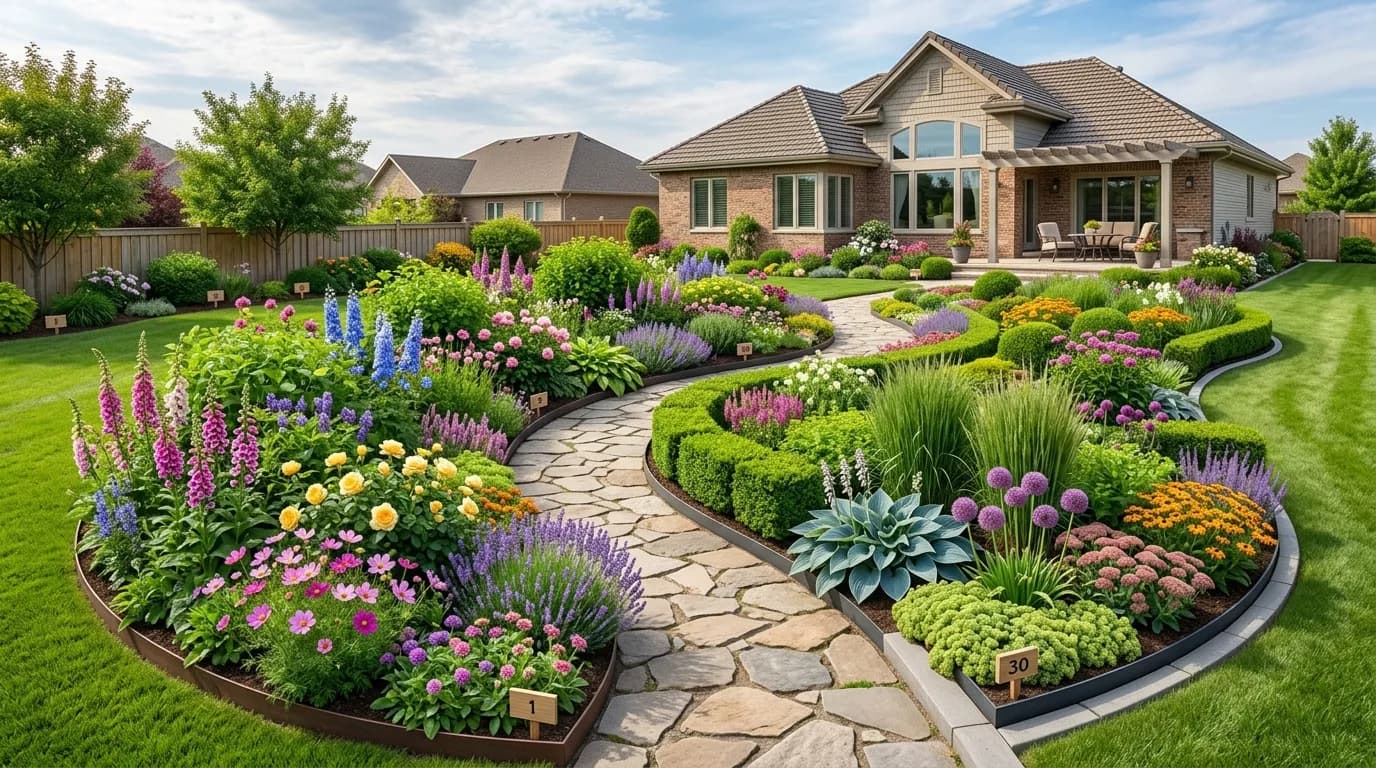
Garden borders are the single most impactful design element in any yard. They create the backbone of a landscape, define zones, provide year-round color and texture, and transform a flat expanse of lawn into a layered, intentional garden. Whether you want a classic English cottage border overflowing with roses and perennials or a crisp modern border with architectural plants and clean edges, this guide covers 30 ideas to inspire your next project.
What Makes a Great Garden Border?
Before diving into ideas, it helps to understand the principles that separate a stunning border from a chaotic jumble of plants.
Structure: Every great border has a framework — usually evergreen shrubs, ornamental grasses, or repeat plantings — that looks good even when nothing is blooming.
Layering: Tall plants at the back, medium in the middle, low at the front. This "thriller, filler, spiller" logic applies to borders exactly as it does to containers.
Repetition: Repeating the same plant or color every 8–12 feet creates visual rhythm. A border that uses 40 different plants once each looks busy; a border that uses 10 plants in groups of 3–5 looks designed.
Edging: A sharp, well-maintained edge between the border and the lawn does 50% of the work. Even an average border looks good with a crisp edge; a beautiful border looks mediocre with a sloppy one.
Cottage and Traditional Borders
1. The Classic English Mixed Border
The mixed border — perennials, roses, and a few shrubs — is the foundation of English garden design. A successful mixed border includes: delphinium or foxglove for vertical height, roses (shrub types like 'Ballerina' or 'Carefree Beauty') for repeat bloom, geraniums and nepeta at the front, and asters and rudbeckia for fall. The key is color coordination — pick a palette (soft pastels, warm oranges and purples, or cool blues and whites) and stick to it.
2. Rose and Lavender Border
Few combinations are more romantic or more fragrant. Plant English roses (David Austin varieties like 'Olivia Rose,' 'Crocus Rose,' or 'The Lady Gardener') behind a front edging of lavender. The lavender covers the bare ankles of the roses, repels deer and aphids, and bloom periods alternate so something is always happening. Add salvias in the gaps for non-stop summer color.
3. Cottage Garden Annual Border
For pure, exuberant color, plant a border entirely with annual flowers: zinnias, cosmos, sunflowers, bachelor's buttons, larkspur, and sweet William. Sow directly from seed in spring, thin as needed, and let them self-seed for following years. Cost: $20–$50 for a 50-foot border. Reward: constant cutting flowers and an informal, joyful look from June through frost.
4. Tulip and Allium Spring Border
Design the border around a spring bulb spectacular: layers of tulips in three weeks of bloom (early, mid, late varieties), large purple allium globes that bridge spring and summer, and foliage from emerging perennials that hides the tulip leaves as they fade. By June the perennials take over seamlessly. This takes planning in fall but the spring show is worth it.
5. Peony and Iris Border
Peonies and irises are two of the most beloved perennials, and they peak at almost the same time — late May through June. Pair them with catmint (Nepeta) for a cool blue filler, and white phlox for summer continuation. Both peonies and iris are long-lived (50+ years) and increase in beauty with age. Minimal maintenance required after establishment.
Modern and Minimalist Borders
6. Grasses and Sedums Border
For a contemporary, low-maintenance border, combine ornamental grasses with sedums and other succulent perennials. Karl Foerster grass provides vertical structure; Blue Oat grass adds cool color; Sedum 'Autumn Joy' provides a horizontal counterpoint that turns from pink to rust to bronze as the season progresses. This border looks excellent from June through February and needs no staking, little irrigation, and annual cutting back in early spring.
7. Black and White Monochrome Border
Choose all white flowers with dark foliage: white phlox, white coneflowers, white cosmos, and 'Black Lace' elderberry or 'Diabolo' ninebark for dark foliage contrast. This restrained palette looks sophisticated and modern, photographs beautifully, and feels fresh rather than fussy. Add white-variegated grasses (Miscanthus 'Morning Light') for movement.
8. Architectural Plant Border
Combine plants chosen for form rather than flower: the bold paddle leaves of Hosta 'Sum and Substance,' the spiky form of Yucca, the dark strappy foliage of Phormium (New Zealand flax), and the sphere shape of globe blue spruce. This type of border looks structured and intentional even in winter and requires almost no maintenance.
9. Linear Grass Border
A single species of ornamental grass — planted in a long, dense row — creates a dramatic, contemporary border. Blue Lyme grass, Japanese forest grass (Hakonechloa), or blue fescue all work well depending on sun exposure. The uniformity is the point: it reads as a designed element rather than a plant collection.
10. Steel Edged Gravel and Perennial Border
Install a cor-ten steel edge, fill the bed with fine gravel, and plant through it with selected perennials (Kniphofia, Echinacea, Stipa grasses). The gravel mulch suppresses weeds completely, retains moisture, and creates a contemporary aesthetic popular in New American Garden style. Zero annual mulching required.
Border Ideas by Color Theme
11. Hot Color Border: Reds, Oranges, and Yellows
A "hot" border maximizes visual impact: Helenium 'Sahin's Early Flowerer' in burnt orange, Rudbeckia fulgida in yellow, Crocosmia 'Lucifer' in scarlet, and red Dahlias anchoring the heights. This combination is electrifying in late summer and works especially well against a dark fence or evergreen hedge backdrop.
12. Cool Blue and Purple Border
For a calm, meditative atmosphere: blue veronica, purple salvia, blue agapanthus (zones 7–10), catmint, and 'Blue Fortune' agastache create a peaceful wave of cool color. White Shasta daisies and silver artemisia provide contrast. This color scheme works all season and photographs beautifully in soft morning light.
13. White Garden Border (Sissinghurst Style)
The famous White Garden at Sissinghurst inspired generations of gardeners. Recreate the look with: Rosa 'Iceberg,' Crambe cordifolia (giant white cloud flower), white Phlox 'David,' Stachys byzantina (silver lamb's ears), and Allium 'Mount Everest.' The key is including silver and grey foliage to keep the white from looking washed out against green grass.
14. Pastel Romantic Border
Soft pink, lavender, peach, and pale yellow create a dreamy, romantic border perfect for cottage gardens and south-facing beds. Try pink astilbe, pale yellow achillea, soft blue salvia, peach roses, and lavender catmint. Keep the whites to a minimum — too much white breaks the soft palette.
15. Autumn Color Border
Design specifically for fall glory: Asters in purple and pink, rudbeckia and helenium in gold and orange, switchgrass turning red-orange, and Japanese anemones in white and pink. Add beautyberry for intense purple fruit clusters. This border earns its place in the landscape from late August through November.
Low-Maintenance Border Ideas
16. Native Plant Border
A border planted entirely with regional natives requires minimal care after establishment: no irrigation once established, no fertilizer, and pest pressure is managed by the diverse ecosystem they support. For the Midwest: prairie dropseed, purple coneflower, wild blue indigo, and black-eyed Susan. For the Northeast: native asters, Joe Pye weed, mountain mint, and ferns. For the Southeast: coreopsis, native azaleas, beautyberry, and southern ferns.
17. Shrub-Dominant Border
A border built around shrubs rather than perennials needs the least maintenance of any design approach. Use hydrangeas (Annabelle, Incrediball, Quick Fire), ornamental grasses, and slow-growing conifers as the foundation. Fill the gaps with bulbs and a few perennials. Shrubs give you reliable, repeatable structure year after year without replanting.
18. Ground Cover Border
Instead of mulched beds that need annual refreshing, plant the border in dense ground covers that eliminate bare soil entirely: 'Walker's Low' catmint, creeping phlox, ajuga, or vinca. Once established in 2–3 years, these borders suppress weeds naturally, never need mulching, and look tidy with almost no effort.
19. Ornamental Edibles Border
Combine beauty and productivity: kale and chard for colorful foliage, artichokes for dramatic architectural form, bronze fennel for feathery texture, and nasturtiums for trailing orange and yellow flowers. Add herbs — rosemary, purple sage, thyme — for fragrance and culinary use. This border is 100% productive and beautiful simultaneously.
20. Xeriscape Border
For hot, dry climates: combine agave, ornamental sage (Salvia greggii), desert marigold, red yucca, and black-dalea into a border that survives on rainfall alone after establishment. Add gravel mulch and cor-ten steel edging for a contemporary Southwest aesthetic. Water once per week for the first growing season; then leave it alone.
Edging and Material Ideas
21. Natural Stone Edge
Irregular flat stones (limestone, sandstone, or local fieldstone) laid along the border edge create a natural, organic look that suits cottage gardens and informal landscapes. The stones warm up in the sun and create a hospitable microclimate for small plants that can sprawl over them.
22. Brick Mow Border
A soldier-course brick border (bricks laid vertically, flush with the lawn) lets you mow right over it without trimming. This "mow border" approach eliminates the most tedious lawn-care task and keeps the border edge perfectly clean. Cost: $10–$20 per linear foot installed.
23. Cor-Ten Steel Edge
Cor-ten (weathering steel) creates a clean, contemporary edge that oxidizes to a warm rust color and lasts indefinitely without maintenance. It bends easily into curves and works beautifully with modern planting schemes. Cost: $4–$8 per linear foot for DIY installation.
24. Wooden Railway Sleeper Edge
Reclaimed timber or new railway sleepers create bold, chunky borders that suit naturalistic, informal, or vegetable gardens. Stack two sleepers for a raised effect that's easier to plant into and gives excellent drainage. Long-lasting if using treated timber; naturally durable with oak or black locust.
25. Living Hedge Border
Use a low clipped hedge as the front edge of a deeper border: lavender, catmint, santolina, or dwarf boxwood all work. This creates a "nested" effect — the clipped hedge is the frame, the mixed planting is the picture. Formal and informal combined, it works for almost every house style.
Specialty and Statement Borders
26. Sensory Border for Children
Design a border kids can interact with: lamb's ears (irresistibly soft), lemon verbena (rub the leaves for scent), strawberries at the front for picking, sunflowers for height, snapdragons for pinching open. This border makes children interested in the garden rather than trampling it.
27. Butterfly and Pollinator Border
Plant for maximum wildlife value: milkweed for monarchs, coneflowers for goldfinches, Joe Pye weed for swallowtails, and goldenrod for late-season bees. Include a single flat stone for butterflies to bask. This border is alive with movement and sound all summer and requires minimal care after establishment.
28. Fragrance Walk Border
If the border runs along a path or walkway, plant for scent at nose and knee height: sweet peas (annual climbers), David Austin roses, moonflower vine on a trellis, bearded iris, and daphne. Space them so different fragrances greet you at different points along the walk. The sensory experience makes the garden feel immersive.
29. Seasonal Color Relay Border
Design the border to have a peak performer at every point in the season: spring bulbs (tulips, alliums), early perennials (peonies, iris), summer stars (roses, phlox, dahlias), late summer favorites (rudbeckia, asters), and fall structure (ornamental grasses, seed heads, late asters). This takes more planning but results in a border that earns its keep 10 months of the year.
30. Mirror Border
If you have a long, narrow garden, plant identical borders on both sides of a central path. Mirror planting — the same plants in the same positions on both sides — creates a formal, structured look that makes a small garden feel larger and grander. Works especially well with a focal point (urn, topiary, bench) at the far end.
Design Your Border Before You Plant
The most common mistake homeowners make is visiting the nursery without a plan, impulse-buying plants that catch their eye, and ending up with a border that looks random. Before you spend a dollar on plants, get a visual.
Yardcast's AI design tool lets you upload a photo of your yard, describe your style, climate, and budget, and generate three landscape design options — including border suggestions — in about 60 seconds. You'll see which plants work together, how they're spaced, and what the result will actually look like. It's free to try.
How to Plan a Garden Border: A Step-by-Step Guide
Step 1: Mark the bed. Use a garden hose to mark out the border shape. Photograph it from the house, upstairs, and Google Earth if possible to understand the proportions from all views.
Step 2: Decide the depth. A 4-foot-deep border can be reached from both sides without stepping in. A 6–8 foot border needs stepping stones. Anything deeper than 8 feet needs a path through it.
Step 3: Choose your palette. Pick 2–3 colors and commit. Add silver/grey foliage as a connector.
Step 4: Select 3–5 structure plants. These are the anchor plants that will define the border year-round — usually evergreen shrubs or ornamental grasses.
Step 5: Fill with perennials in groups of 3–5. One of each perennial looks like a collection; 3–5 planted together looks designed.
Step 6: Add bulbs for spring. Tuck tulip and allium bulbs between perennials in fall — they'll bloom before the perennials fill in.
Step 7: Edge sharply before planting. The edge defines the border. Cut a crisp line with a flat spade or half-moon edger. Install physical edging if desired.
Get a free AI-generated landscape design with border recommendations →
Garden Border Costs
| Border Type | DIY Cost (per 50 linear ft) | Professional Cost |
|---|---|---|
| Annual flower border | $50–$150 | $400–$900 |
| Perennial mixed border | $300–$700 | $1,500–$3,500 |
| Shrub-dominant border | $500–$1,500 | $2,000–$5,000 |
| Native plant border | $200–$500 | $1,000–$2,500 |
| Edging only (cor-ten steel) | $200–$400 | $500–$1,000 |
Frequently Asked Questions
What is the best plant for a garden border?
There's no single best plant, but the most versatile garden border performers are: catmint (Nepeta 'Walker's Low') for edging, Karl Foerster grass for structure, rudbeckia for late summer color, and ornamental sedums for low-maintenance filler. These four alone can create a handsome, low-maintenance border in most climates.
How deep should a garden border be?
A minimum of 3–4 feet gives you room for front, middle, and back layers. Most designers recommend 5–6 feet for a proper mixed border. If you can only access from one side, keep the depth to 4 feet maximum so you can reach the back without stepping in the bed.
How do I keep my garden border looking tidy?
Three habits keep a border looking sharp: (1) edge it 2–3 times per season with a flat spade or edging tool, (2) deadhead spent flowers regularly to encourage reblooming, and (3) cut down dead perennial stalks in early spring (not fall — they provide winter habitat and structural interest).
What's the easiest garden border to maintain?
A border built around ornamental grasses, shrubs, and ground covers — with deep mulch or a gravel layer over landscape fabric — is the lowest-maintenance option. One annual maintenance pass (cutting grasses in spring, refreshing mulch or gravel) is all it requires.
How do I design a garden border for year-round interest?
Choose at least one plant for each season: spring bulbs, early perennials (peonies, iris), summer flowers (roses, rudbeckia), late summer/fall asters, and winter structure (evergreen shrubs, ornamental grass seed heads, dogwood stems). Repetition of a few key plants every 8–10 feet also helps the border read as designed rather than random.
Should I use edging in my garden border?
Yes — always. Edging (steel, stone, brick, or wood) prevents grass from encroaching into the border, keeps mulch in place, and makes the border look sharper with virtually zero maintenance. It's the single best investment in border aesthetics.