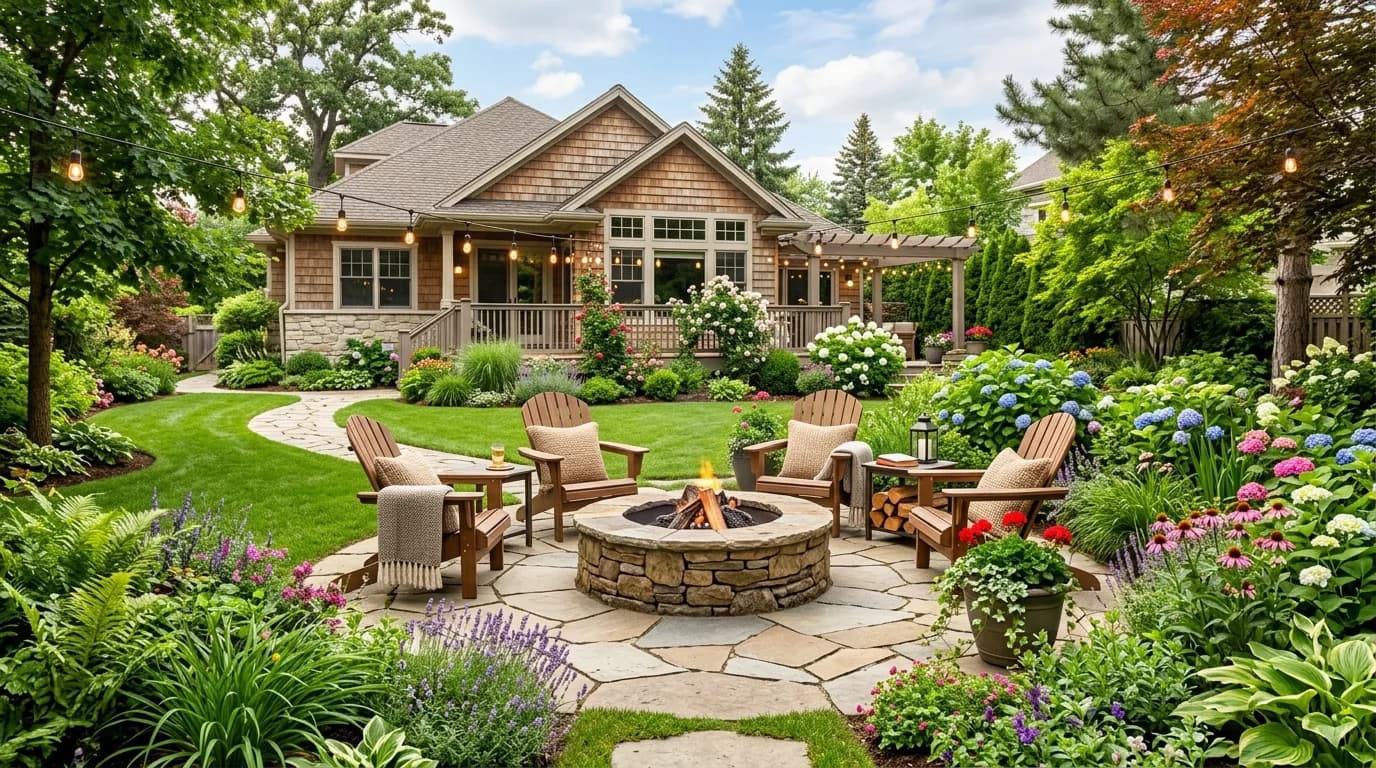
A fire pit is the single most-used backyard feature for most families. But most fire pits are installed without any thought to the surrounding landscape — they're surrounded by bare grass, no seating definition, no screening, no lighting.
Here's how to design a fire pit area that becomes the heart of your outdoor living space.
Location Rules First
Distance requirements: Most municipalities require fire pits to be at least 10 feet from structures (house, fence, tree canopy). Check your local ordinances.
Ground level: Sunk-in fire pits feel more intimate. Grade-level pits are easier to install. Raised fire pits (like tabletop versions) work on existing patios.
Wind direction: Identify your prevailing wind direction. Position seating upwind from the fire.
Drainage: Fire pits need good drainage to prevent waterlogging. Avoid low spots that collect water.
The 4-Zone Layout
The best fire pit areas use a four-zone design:
Zone 1 — Hardscape: 12–15 foot diameter paved area surrounding the fire pit. Gravel, pavers, decomposed granite, or concrete. This is your primary seating area.
Zone 2 — Seating Perimeter: Curved seating wall (12–18 inches tall, 18 inches wide for comfortable sitting), or 4–6 Adirondack chairs, or a built-in bench. Seating at the same distance from fire on all sides.
Zone 3 — Planting Border: 3–5 foot wide planting bed outside the seating area. Provides visual definition, privacy, and connects the fire pit to the broader landscape.
Zone 4 — Screening: Trees, large shrubs, or a fence at the back creates enclosure and privacy. This transforms an exposed backyard spot into an intimate room.
Best Plants Around a Fire Pit
What to avoid: Anything highly flammable (ornamental grasses right next to fire, conifers), thorny plants in seating areas, plants that drop branches in wind.
What to plant:
Ornamental grasses — at Zone 3, 4–6 feet from fire. Movement and sound in the breeze. Cut back in spring, no other care.
Native perennials — Coneflower, Black-Eyed Susan, Joe Pye Weed in Zone 3. Long-blooming, wildlife-friendly, minimal care.
Small trees for screening — Serviceberry, Redbud, or multi-stem crape myrtle at Zone 4. Beautiful in bloom, light-dappled shade.
Fragrant plants — Lavender, rosemary, and low-growing thyme at the edges of Zone 1 are subtly fragrant when brushed. Adds a sensory layer.
Lighting for the Fire Pit Area
Path lighting along the route from house to fire pit. Solar or wired 4–6 inch path lights keep the walk safe after dark.
String lights between trees or on a pergola structure overhead. 3000K (warm white) creates the best atmosphere.
Uplighting on trees at Zone 4. One directional light at the base of each specimen tree creates dramatic nighttime theater.
In-grade lights in the hardscape at Zone 1 edges keep feet visible without competing with the fire.
Seating Surfaces
Gravel ($1–3/sq ft): Most economical, excellent drainage, slight crunch underfoot, can be difficult in heels.
Decomposed granite ($2–4/sq ft): Compact, stable surface. Natural look. Needs edging to stay contained.
Concrete pavers ($6–12/sq ft installed): Most durable, cleanest look, easiest to maintain.
Flagstone ($8–15/sq ft installed): Natural and beautiful, but irregular surface requires more care in placement.
Fire Pit Size Guide
Small gathering (2–4 people): 24–30 inch fire pit, 10–12 foot paved area
Medium gathering (4–8 people): 36–42 inch fire pit, 14–18 foot paved area
Large gathering (8–12 people): 48+ inch fire pit, 20–24 foot paved area
Get Your Fire Pit Area Designed
Tell Yardcast you want an outdoor entertainment area and our AI designs the complete fire pit zone — hardscape, seating layout, plant selection, and lighting plan — sized to your backyard and style.