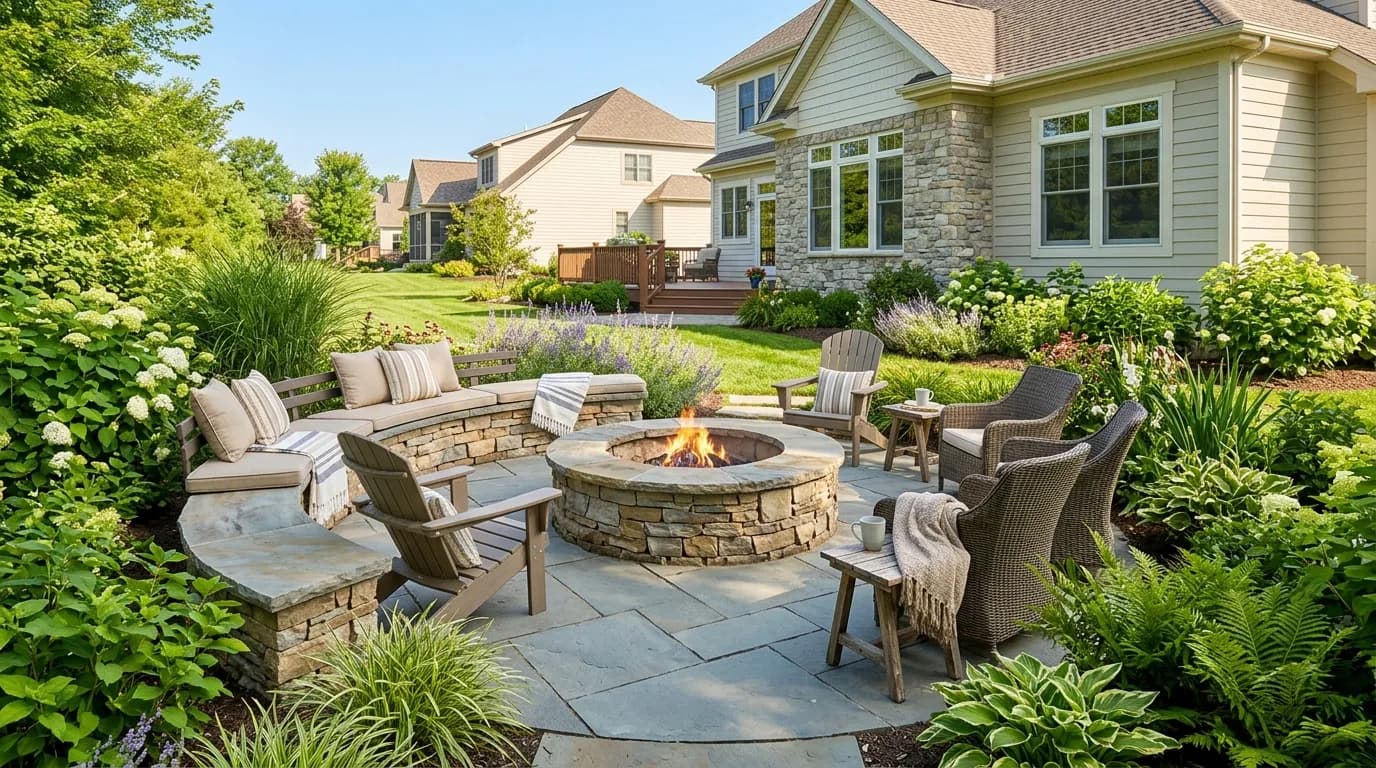
A fire pit isn't just a hole with fire — it's the social anchor of your outdoor space. Done right, it extends your outdoor season by 6-8 weeks, increases your home value by 5-10%, and becomes the place everyone gravitates to.
Here's how to design the landscape around it.
Placement Rules
Safety clearances
- 10ft minimum from any structure (house, fence, shed, pergola)
- 10ft minimum from overhanging tree branches
- 20ft minimum from anything flammable (woodpile, propane tank)
- Not under any overhead structure or power lines
- Check local fire codes — many municipalities have additional setback requirements
Best positions
- Visible from the house — you want to see the glow from the kitchen/living room
- Downwind from the patio — check prevailing wind direction so smoke blows away from seating
- Slightly below grade — a sunken fire pit area (6-12" lower) creates natural seating and wind protection
- Away from property lines — neighbors don't want smoke. 15ft minimum is considerate.
The Fire Pit Itself
Built-in stone/block (most popular)
- Cost: $200-800 DIY, $1,500-5,000 professional
- Size: 36-44" diameter is ideal. Smaller feels cramped, larger loses intimacy.
- Materials: Natural stone, concrete retaining wall blocks, or fire-rated brick
- Base: 4" compacted gravel pad extending 12" beyond the pit edge
- Always: Use a fire ring insert ($50-100) inside — protects the stone from direct heat damage
Propane/gas (clean, convenient)
- Cost: $800-3,000 for complete setup
- Advantages: No smoke, instant on/off, no wood storage needed
- Best for: Covered patios, rooftop decks, areas with burn restrictions
- Note: Requires gas line installation ($500-1,500) if not already present
Seating Layout
The seating around a fire pit is critical. There are two proven arrangements:
The Circle
- Built-in seating wall (18" high, 12-18" deep) around 3/4 of the pit
- Leave one section open for access
- Radius: 5-6ft from the edge of the pit (any closer and it's too hot)
- Total seating: 8-12 people comfortably
The Furniture Ring
- 4-6 Adirondack chairs or deep-seating pieces arranged in a circle
- Same 5-6ft radius from pit edge
- Advantage: movable — adjust for wind direction, group size
- Pro tip: Use all matching chairs for visual unity
Planting Around the Fire Pit
Plants around a fire pit serve three purposes: define the space, provide privacy, and add fragrance. But safety comes first.
Safe plants (3ft+ from pit edge)
- Ornamental grasses: Karl Foerster, maiden grass, switchgrass — their movement catches firelight beautifully. Plant at least 4ft from the fire.
- Fragrant shrubs: Lavender, rosemary, gardenia — release scent in the warmth. Keep 5ft+ from flames.
- Low perennials: Catmint, salvia, sedum — use as a planting border around the gravel pad.
Plants to AVOID near fire
- Highly flammable: Juniper, cedar, pine, dry ornamental grasses in winter
- Sap-producing: Eucalyptus, pine — sap pops and sparks
- Messy: Anything that drops berries, seed pods, or excessive leaves onto the pit area
- Overhanging: No branches within 10ft vertically of the fire
The living room effect
Surround the fire pit area with a semi-circle of taller plantings (5-8ft shrubs or grasses) to create walls. This:
- Blocks wind (reducing smoke issues)
- Creates privacy from neighbors
- Defines the fire pit as its own outdoor "room"
- Increases perceived warmth by reducing convective heat loss
Hardscape
Gravel pad
Every fire pit needs a non-combustible surface extending 3-4ft beyond the pit edge in all directions. Options:
- Pea gravel ($2-4/sq ft): Casual, permeable, easy
- Decomposed granite ($3-6/sq ft): More refined, compacts firm
- Pavers ($8-20/sq ft): Premium, permanent, level
- Flagstone ($10-30/sq ft): Natural, organic look
Pathways
Connect the fire pit to the house with a clear path (3-4ft wide minimum). Light it with low-voltage path lights so people can navigate safely after dark.
Lighting
Fire provides its own light, but you need supplemental lighting for safety and ambiance:
- Path lights from the house to the fire pit area
- Step lights if there's any grade change
- Uplighting on surrounding trees (firelight + uplight = dramatic shadows)
- No overhead lights — they compete with the fire's glow and kill the ambiance
- String lights can work if they're warm white (2200-2700K) and mounted 10ft+ high
Year-Round Use
Extending the season
- Wind screen: Tempered glass panels on 2 sides blocks wind without blocking the view
- Blanket basket: Waterproof basket near the seating with throw blankets
- Heat reflector: A curved stone or metal wall behind the seating reflects heat back toward you
- Covered firewood storage: Keep dry wood within arm's reach but not a fire hazard
Off-season
When the fire pit isn't in use:
- Cover it with a fitted metal cover or capstone
- Plant a large pot of seasonal flowers on the cover
- Use the seating area for summer gatherings sans fire
- The landscaping around it should look great even without flames
Your Yardcast design includes fire pit placement, surrounding planting recommendations, and lighting plan — all optimized for your yard's specific layout.