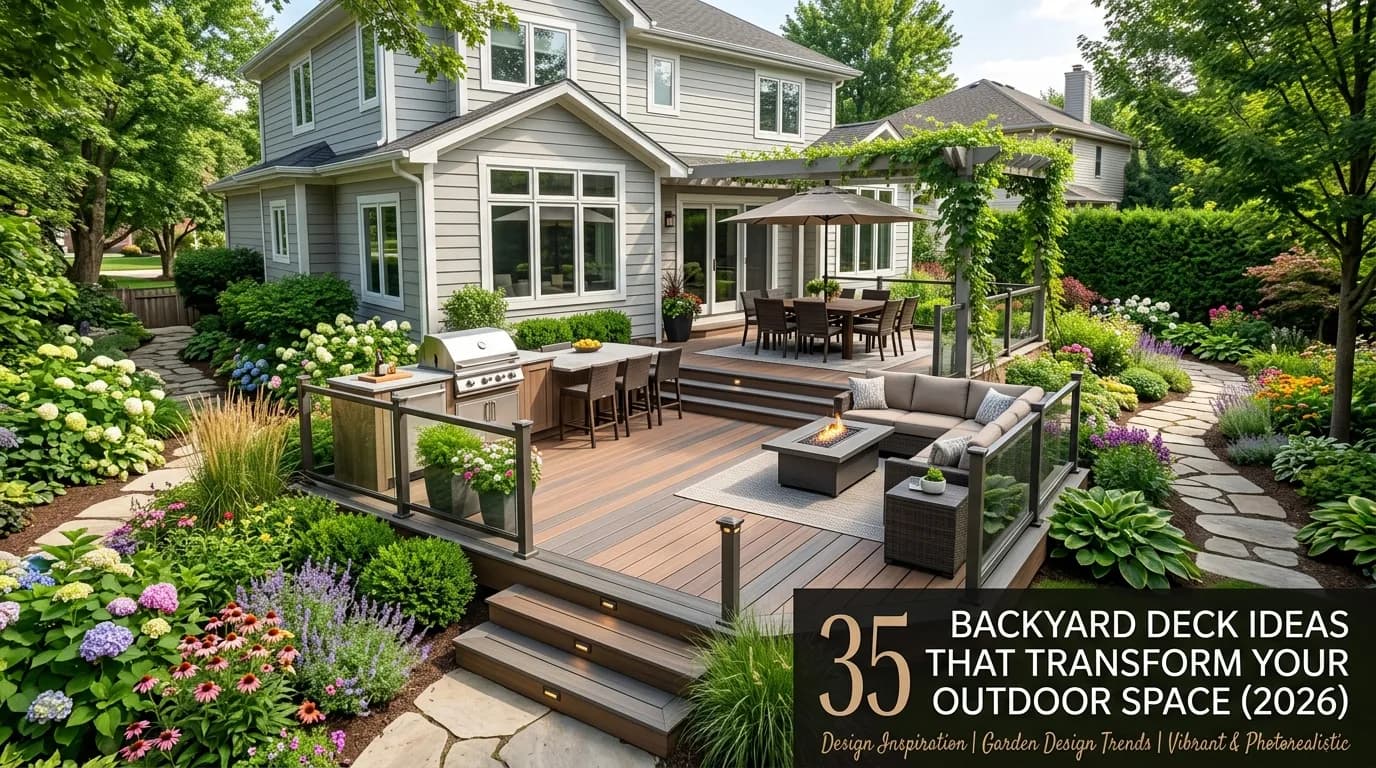
A well-designed deck is one of the highest-ROI investments you can make in your home. According to Remodeling Magazine's Cost vs. Value Report, a wood deck returns 66–82% of its cost at resale — more than most kitchen or bathroom renovations. But the real value isn't in the numbers: it's in how a great deck changes how you use your home every single day.
Whether you're starting from scratch or updating an existing deck, this guide covers 35 backyard deck ideas ranging from simple budget builds to showstopper multi-level entertainment platforms. We'll also cover the landscaping that makes each deck design work — because a deck without thoughtful planting around it is just a platform.
How to Choose the Right Deck Design for Your Backyard
Before jumping into specific ideas, consider these four factors:
Your yard's size and grade: A flat lot with a walkout basement calls for different solutions than a sloped yard or a raised first floor. Grade changes often create opportunities for elevated decks with storage underneath.
Primary use: Dining, lounging, entertaining, cooking, or a mix? Each use pattern has optimal furniture arrangements and built-in features.
Privacy and sun exposure: A south-facing deck in Phoenix needs shade structures. A north-facing deck in Seattle needs protection from rain. Your neighbors' sightlines determine where you need screening.
Material and maintenance budget: Pressure-treated pine is the most affordable ($15–$25/sq ft installed). Composite decking (Trex, Fiberon) costs more upfront ($35–$60/sq ft) but lasts 25–30 years with minimal maintenance. Hardwoods like ipe or tigerwood run $50–$80/sq ft but are stunning and incredibly durable.
Ground-Level Deck Ideas
1. Floating Deck on a Flat Yard
A floating deck — not attached to the house, built just above grade — is the simplest and most code-friendly deck option in most municipalities. No ledger board connection, no frost footings in many climates. A 12x16 foot floating deck in pressure-treated pine runs $2,500–$5,000 DIY. Surround with planted borders to anchor it visually.
2. Wraparound Deck
A wraparound deck extending along two or three sides of the home creates multiple outdoor "rooms" — shaded morning coffee spots, sunny afternoon lounging, evening entertaining zones. Most effective on craftsman, farmhouse, or Victorian-style homes. Add varied railing styles to define each zone.
3. Low-Profile Concrete Patio + Composite Deck Combo
For a contemporary look on a flat lot, combine a polished concrete slab at grade with an adjacent elevated composite deck. The material contrast (smooth gray concrete vs. warm wood tones) creates visual interest. Use large concrete pavers as a transition zone between the two surfaces.
4. Ground-Level Deck with Built-In Firepit
Frame a fire pit into a corner of a ground-level deck using concrete pavers or a steel fire pit ring. Build the deck boards around it, leaving a 6-inch noncombustible surround. L-shaped built-in seating around the pit maximizes space and creates a natural gathering point. Add string lights overhead for evening atmosphere.
5. Deck + Pergola in One
Design the deck with integrated pergola posts — 6x6 cedar posts set in concrete footings that extend 9–10 feet above the decking to support a pergola overhead. This creates an outdoor room feeling, provides partial shade, and gives you a structure for string lights, climbing plants, and eventually, a permanent fabric or polycarbonate roof.
Elevated Deck Ideas
6. Raised Deck with Storage Underneath
If your first floor is 3–6 feet above grade, the space under an elevated deck is prime real estate. Enclose it with lattice or board-and-batten skirting, add a double door, and you have dry, secure storage for lawn equipment, cushions, bikes, and holiday decorations. More functional than any garage shelf system.
7. Deck Over Slope with Sweeping Views
A sloped backyard often delivers the best deck sites: build a deck at the back of the house and you're immediately elevated above the slope, with views over the yard and beyond. The depth of the elevated space underneath can be 4–8+ feet — enough for a covered patio-level space, a built-in grill station, or an outdoor bar.
8. Second-Story Deck off Master Bedroom
French doors from the master suite to a private elevated deck create one of the most sought-after features in residential real estate. Keep this deck smaller (10x12) and more intimate — a bistro table, two chairs, and a planter are enough. Morning coffee in a private treetop setting changes your daily routine.
9. Treetop Deck Among the Canopy
If you have mature trees, design the deck to weave around them — frame deck boards around trunk bases (never attach to a living tree). Being elevated into the canopy creates a profoundly different outdoor experience. The sound, the shade, the sense of enclosure in a tree canopy is unmatched by any other outdoor structure.
10. Cascading Steps from Elevated Deck to Yard
Wide, shallow steps (each step 14–16 inches deep, 6–7 inches tall) cascading from an elevated deck to the lawn below become a design feature in their own right. Build each landing wide enough for a planter or pot. Plant ornamental grasses, lavender, or rosemary along the stair edges to soften the transition.
Multi-Level Deck Ideas
11. Two-Level Deck with Distinct Zones
The most popular deck design for larger homes: an upper level (attached to the house at door height) for dining and cooking, a lower level at garden level for lounging and evening gathering. Separate the levels by 18–24 inches to create distinct "rooms" while maintaining visual connection. Different railing styles or colors at each level reinforce the zone distinction.
12. Split-Level Deck with Step-Down Conversation Pit
Sunken conversation pits are making a major comeback. Build the main deck at door height, then step down 18 inches into a sunken seating area with built-in benches on three sides. The lowered position creates intimacy and wind protection — sunken seating feels completely different from chairs on an open deck.
13. Deck + Lower Patio Combination
Attach the deck to the house at door level, then connect it via wide steps to a separate concrete, flagstone, or paver patio at grade. The patio can be larger and more casual — great for kids' play, lawn games, or overflow seating for parties. The deck and patio serve different functions at different times of day.
14. Wraparound Multi-Level with Hot Tub
A wraparound deck is the perfect framework for a hot tub installation: position the hot tub at an intermediate level, slightly recessed, on the corner where two wings of the deck meet. This gives hot tub users a sense of privacy while remaining connected to both the dining and lounging zones of the main deck.
Deck Landscaping Ideas: Making It Work
A deck surrounded by bare lawn or mulch looks unfinished. Landscaping around and beneath your deck is what makes it feel like it belongs there.
Before designing your deck landscape, [use Yardcast's AI design tool](/redesign) to visualize exactly how plants, beds, and lighting will look around your specific deck — upload photos of your yard and get 3 professionally designed options in 60 seconds.
15. Planted Borders at Deck Edge
Run a 3–4 foot planting border along all deck edges that face the yard. Use a mix of heights: ornamental grasses at the back (3–4 ft), perennials in the middle (1.5–2.5 ft), and ground cover or low annuals at the front. This "softens" the deck edge and integrates it into the landscape.
16. Container Garden on the Deck
If you can't plant around the deck, plant on it. Large containers (20–24 inch diameter) of ornamental grasses, dwarf shrubs, or tall tropicals create vertical structure on the deck surface. Place containers at corners and at railing midpoints to define the space without cluttering it.
17. Climbing Plants on Deck Posts and Railing
Train climbing plants — clematis, climbing roses, star jasmine, or trumpet vine — up deck posts and along the railing. Within 2–3 seasons, the deck structure becomes a garden structure. Choose vines appropriate for your zone and sun exposure. This is the single most transformative thing you can do to a new deck at minimal cost.
18. Shade Trees Positioned for Maximum Benefit
If you're planting trees around a new deck, plant them on the west and southwest sides: that's where afternoon sun hits hardest. A deciduous tree (maple, oak, honeylocust) 15–20 feet from the deck will shade it in summer and let sun through in winter. Allow 10–15 feet clearance from the deck structure for roots and canopy.
19. Deck Lighting Integrated with Plantings
Landscape lighting around the deck creates evening magic: in-ground uplights aimed at specimen trees, low path lights along the steps, and string lights overhead on the pergola or between posts. Solar stake lights in the planted borders extend the visual boundary of the deck into the garden.
20. Planting Under the Elevated Deck
The space beneath an elevated deck is shady and dry — perfect conditions for shade-tolerant ground covers: pachysandra, liriope, sweet woodruff, or hostas. This turns an otherwise wasted zone into a planted garden. Use landscape fabric plus mulch if the space is completely enclosed or accessed rarely.
Material & Style Deck Ideas
21. Natural Cedar Deck
Western red cedar has a warm reddish tone, natural rot resistance, and takes stain beautifully. It's significantly lighter than pressure-treated pine, making it easier to work with for DIY builders. Cedar grays attractively if left unsealed. Apply a penetrating oil stain every 2–3 years to maintain the warm color. Cost: $20–$35/sq ft installed.
22. Composite Decking in Gray or Brown Tones
Composite decking from brands like Trex, TimberTech, or Fiberon now looks remarkably like natural wood — but never splinters, needs no staining, and won't warp or rot. Gray tones (Trex Havana Gold, Fiberon Weathered Teak) work beautifully with modern home styles. A 400 sq ft composite deck will look identical in 15 years to how it looks on install day.
23. Ipe Hardwood Deck
Brazilian ipe (pronounced ee-pay) is the gold standard of deck materials: it's harder than most hardwoods, naturally resistant to moisture and insects, lasts 40+ years with minimal maintenance, and has a rich chocolate-brown color that grays to silver if left untreated. Cost: $50–$80/sq ft installed. A lifetime investment.
24. Mixed Material Deck: Wood Frame + Concrete Accents
Combine composite or cedar deck boards with concrete pavers, precast steps, or a concrete feature wall. The material mix creates a contemporary, architectural look. Use the same concrete color/tone for all non-wood elements for cohesion.
25. Black Metal Railing + Natural Wood Deck
The most popular railing trend of the last decade: black powder-coated metal balusters with a natural wood top cap (cedar or composite). The contrast is elegant, modern, and doesn't compete with the planting or architecture. Works on traditional and contemporary homes alike. Cost: $80–$150 per linear foot installed.
Specialty Deck Ideas
26. Pool Deck Surround
A deck surrounding an in-ground pool should be designed for wet feet and intense sun: composite decking (non-slip texture, heat-resistant colors) or natural stone are ideal. Plan for 8–10 feet of deck width around the pool for furniture, towels, and walking clearance. Add built-in seating, a dive platform, and shade structure on the north end.
27. Rooftop Deck on a Flat Roof Garage or Addition
If your home has a flat-roofed garage, lower addition, or accessory structure, that roof is a deck waiting to happen. Rooftop decks require structural assessment and proper waterproofing — budget for professional engineering. But the payoff is extraordinary: a private elevated outdoor space with views unavailable at grade.
28. Screened Deck or Three-Season Room
In mosquito-prone regions (Southeast, Midwest, Pacific Northwest) or heavily wooded properties, a screened deck changes how you use the space. Install 18x16 fiberglass screen panels between deck posts. Add a screen door. You can use the space from late spring through early fall without insects. Upgrade to a three-season room with storm panels for year-round use.
29. Floating Island Deck in the Garden
Build a small deck "island" — 10x10 to 12x12 feet — in the middle of the garden, away from the house, connected by a gravel or stepping stone path. This creates a destination in the yard: a reading retreat, yoga platform, or small gathering spot surrounded by planting on all sides. Transformative for larger properties.
30. Dock-Style Deck Over Low Ground or Wet Area
For properties with low-lying wet areas, standing water, or a small pond, a dock-style elevated deck built on helical pile footings creates a unique outdoor experience. Use composite decking for water proximity. Add a rope railing for a nautical feel. Plants like native sedges, iris, and cardinal flower at the water's edge complete the picture.
Deck Feature Ideas
31. Built-In Bench Seating Along Railing
Replace part of your deck railing with built-in bench seating — a 16-inch deep bench, 18 inches high, with the railing continuing above as a backrest. Built-in benches maximize seating without furniture clutter, create a defined edge to the deck, and can include storage underneath (flip-top lid). Cost: $200–$600 DIY per 8-foot section.
32. Outdoor Bar and Grill Station
Frame a built-in outdoor kitchen counter — typically 36 inches high by 24 inches deep — along one edge of the deck. Use concrete board or stone tile for the countertop, and leave a rough opening for a built-in grill, a mini-fridge, and storage. A properly designed outdoor kitchen area can be the most-used feature on the entire deck.
33. Integrated Planter Boxes
Frame built-in planter boxes into corners and along deck edges. Use 2x6 lumber to create boxes 16–18 inches deep, lined with landscape fabric. Fill with lightweight potting mix. Built-in planters are structural, permanent, and eliminate the "container collection" clutter look while creating defined green zones on the deck.
34. Deck with Outdoor Shower
Integrate a corner outdoor shower into a pool deck, beach-access property, or any deck adjacent to a side yard: a simple teak platform, a privacy wall (cedar, composite board, or bamboo), and a plumbed shower head. Requires running a hot and cold supply line. This feature adds enormous practical value for active families.
35. Fire Feature Integrated into Deck
A propane fire table set into a deck cutout (with noncombustible pavers or concrete surround), or a gas fire pit integrated into a peninsula of the deck, creates year-round usability. In most climates, a fire feature extends the usable deck season by 4–6 weeks in both spring and fall. This single feature may be the highest-ROI addition to any deck.
Deck Cost Guide by Size and Material
| Size | Pressure-Treated Pine | Cedar | Composite | Ipe |
|---|---|---|---|---|
| 10x10 (100 sq ft) | $1,500–$2,500 | $2,000–$3,500 | $3,500–$6,000 | $5,000–$8,000 |
| 12x16 (192 sq ft) | $3,000–$5,000 | $4,000–$7,000 | $7,000–$12,000 | $10,000–$16,000 |
| 16x20 (320 sq ft) | $5,000–$8,000 | $6,500–$11,000 | $11,000–$19,000 | $16,000–$26,000 |
| 20x24 (480 sq ft) | $7,500–$12,000 | $10,000–$16,000 | $16,000–$28,000 | $24,000–$38,000 |
Prices are for deck structure only, installed by a licensed contractor. Does not include permits, railing upgrades, built-ins, or landscaping.
Planning to build or renovate a deck? See how it fits into your complete backyard design. [Try Yardcast's free AI landscape designer](/redesign) — upload photos of your yard (even with an existing deck or empty backyard), and get 3 AI-generated designs showing how your deck, plantings, lighting, and outdoor spaces could all work together. Free preview, no card required.