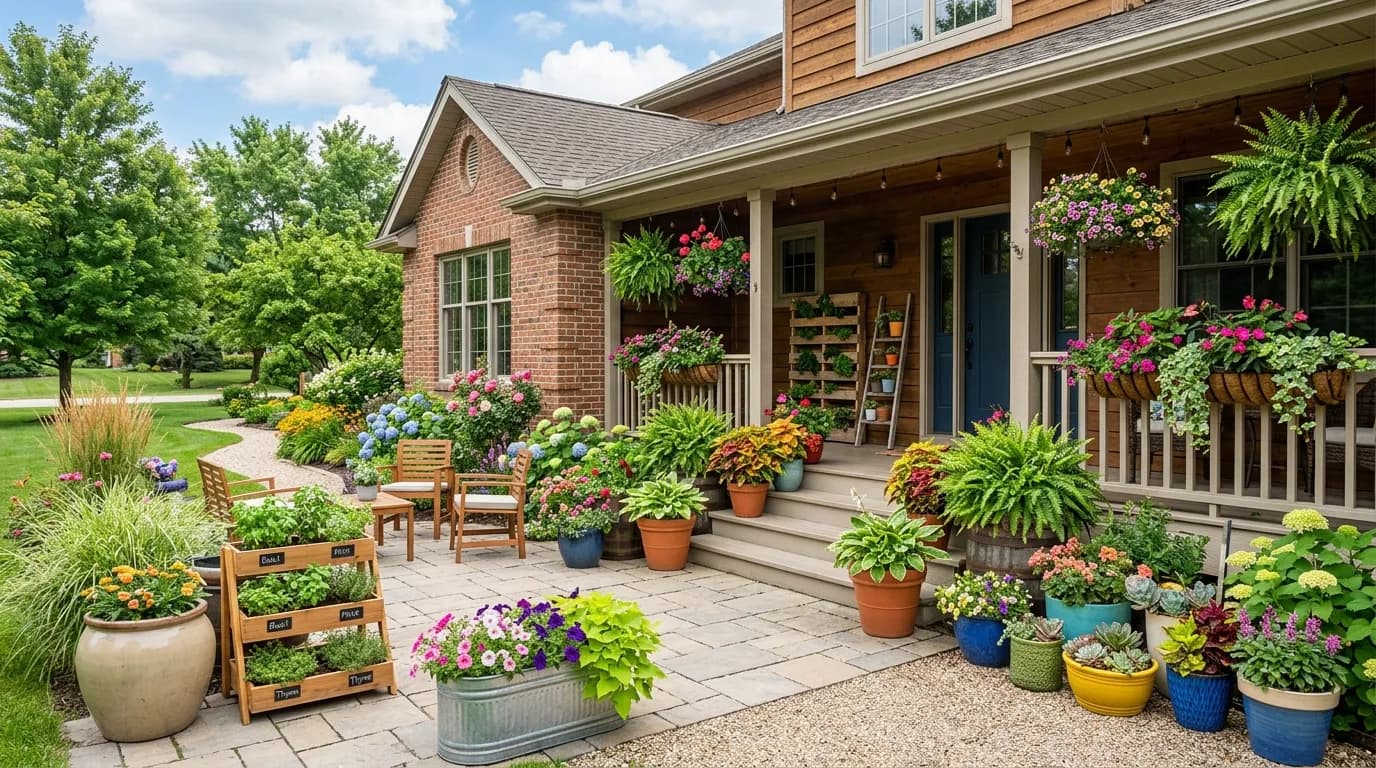
Container gardening is the great equalizer. No yard? No problem. Renting? Doesn't matter. Even if you have a sprawling backyard, containers add flexibility, drama, and color that fixed beds can't match. Whether you're working with a 6-foot balcony or a 1,000 square-foot patio, these 30 container garden ideas will help you design something beautiful and productive.
Why Container Gardening Works Everywhere
Container gardens work in places traditional landscaping can't: apartment balconies, rental homes where you can't dig, rooftops, concrete patios, and even indoors near sunny windows. You control the soil quality completely. You can move plants when seasons change. You can experiment with bold tropical plants that wouldn't survive your winters — and overwinter them inside.
The one thing containers demand: consistent watering. Pots dry out faster than ground soil, especially in heat or wind. Self-watering containers and drip irrigation solve this for busy gardeners.
→ Want help designing your full outdoor space? [Get 3 AI landscape designs at Yardcast](/redesign) — free preview in 60 seconds.
Patio Container Garden Ideas
1. The Bold Statement Planter
Use a single large (24"+) container with one dramatic plant — a banana tree, elephant ear, or Japanese maple. Place it at the corner of a patio or beside a door. These "anchor" containers create a professional, curated look instantly.
2. Three-Pot Color Trio
Group three pots of graduating heights (12", 16", 20") in the same color family — try all terracotta or all matte black. Plant one with a tall grass or spike, one with a mounding petunia or calibrachoa, and one with a trailing sweet potato vine. This "thriller, filler, spiller" formula works every time.
3. Mediterranean Patio Garden
Fill large containers with olive trees, lavender, rosemary, and thyme. These plants love heat, tolerate drought, and smell incredible. Use terra cotta pots for the authentic Tuscan look.
4. Cottage-Style Cluster
Group 6–8 mismatched pots — vintage tins, ceramic crocks, wooden boxes — filled with cottage staples: sweet alyssum, petunias, snapdragons, and English daisies. The "messy beautiful" look works because the lush plants unify everything.
5. Modern Minimalist Arrangement
Two or three identical large concrete or matte black rectangular planters with clipped boxwood spheres or ornamental grasses. Restrained, architectural, and looks expensive without being complicated.
Balcony Container Garden Ideas
6. Vertical Tower Garden
When floor space is at a premium, go vertical. A tiered tower planter (or a hanging shoe organizer over the railing) lets you grow 20–30 plants in 2 square feet. Perfect for herbs, strawberries, and succulents.
7. Railing Planter Boxes
Railing planters hook over balcony railings to use space you'd otherwise waste. Fill them with trailing plants — million bells, lobelia, sweet potato vine — that cascade down for a lush, romantic look.
8. Compact Pollinator Garden
Even a 4-foot balcony can support a pollinator garden. Cluster pots of lavender, salvia, coneflower, and sweet alyssum. You'll attract bees and butterflies by mid-summer — impressive for a rental.
9. Strawberry Pot
A traditional strawberry jar has pockets on the sides for planting. Fill the top with a compact geranium and stuff the pockets with strawberry runners, thyme, or trailing herbs. Decorative and edible.
10. Japanese-Inspired Balcony Zen Garden
A small bonsai juniper or dwarf Japanese maple, a tray of white gravel raked in patterns, and smooth river stones create a meditative focal point on even the smallest balcony. Add a small tabletop water fountain and the transformation is complete.
Vegetable Container Garden Ideas
Container vegetable gardens are one of the fastest-growing trends in gardening. Fresh produce + minimal space = a compelling combination.
11. Tomato Tower
A 15–20 gallon container holds one indeterminate tomato plant beautifully. Add a cage or obelisk trellis and you'll harvest all summer. 'Patio', 'Tumbling Tom', and 'Bush Early Girl' are bred specifically for containers.
12. Salad Bowl Garden
Plant a wide, shallow container (12–16" wide, 8" deep) with a mix of lettuce varieties, arugula, spinach, and nasturtium. Cut the outer leaves as you need them and the center keeps growing — one container can supply salads for weeks.
13. Three Sisters Container
The Native American "three sisters" planting — corn, beans, and squash — can be adapted to large containers. Use a half-whiskey barrel (25–30 gallons) with a compact corn variety, pole beans, and a small zucchini or pattypan squash.
14. Potato Grow Bag
Grow bags (15–20 gallons) are perfect for potatoes. Plant 2–3 seed potatoes in the bottom, cover, and as plants grow, keep adding soil. At harvest, dump the bag and grab your potatoes. No digging.
15. Pepper Patio Garden
Peppers love heat and container-growing intensifies it. Use 5-gallon containers for bell peppers, jalapeños, and sweet banana peppers. Cluster several together on a south-facing patio or deck for maximum production.
→ Planning a full backyard overhaul? [Try Yardcast's AI landscape designer](/redesign) — upload your photos and get 3 designs including planting zones, container areas, and more.
Flower Container Garden Ideas
16. Seasonal Color Rotation
Plan your containers in three seasonal rotations: spring (pansies, violas, snapdragons), summer (petunias, zinnias, marigolds), fall (ornamental kale, mums, ornamental peppers). Replanting four times a year keeps curb appeal at peak year-round.
17. All-White Moon Garden
Plant a cluster of containers with all-white flowers — white impatiens, white begonias, white petunias, white lobularia. In the evening, white flowers seem to glow. Magical for patio entertaining.
18. Tropical Foliage Display
Use large containers to grow tropical plants that create a resort-at-home vibe: elephant ears (Colocasia), canna lilies, bird of paradise, bougainvillea, and mandevilla vines. These overwinter as houseplants in cold climates.
19. Cut Flower Garden in Pots
Plant a "cutting garden" in containers: zinnias, sunflowers, dahlias, and cosmos. Grow your own fresh flower arrangements all summer. Use 5-gallon pots for each variety for maximum bloom production.
20. Bulb Spectacular
Layer spring bulbs in pots using the "lasagna" method — tulips at the bottom, daffodils in the middle, crocuses at the top. Cover with soil and let them stratify over winter. In spring you'll get a staggered 8-week bloom show.
Herb Container Garden Ideas
21. Culinary Herb Wheel
A circular planter divided into sections — one each for basil, parsley, chives, oregano, and thyme — puts kitchen herbs at your fingertips right outside the back door. Use a large terracotta strawberry pot or a wooden wagon wheel planter.
22. Fragrant Herb Wall
Mount vertical planters on a fence or wall and fill with scented herbs: lavender, mint, lemon balm, scented geranium, and rosemary. A fragrant living wall that looks gorgeous and costs almost nothing to fill.
23. Mint Isolation Container
Mint is invasive when planted in the ground — it will take over everything within two seasons. But in a container, it's well-behaved and enormously productive. One 5-gallon pot of peppermint or spearmint supplies endless fresh mint all summer.
Water Feature Container Ideas
24. DIY Container Water Garden
A half-whiskey barrel with a waterproof liner becomes a mini water garden. Add a small pump ($25–$50), a water lily, some submerged oxygenating plants, and a few goldfish. Self-contained ecosystem, zero digging, endlessly relaxing.
25. Fountain Pot
A large sealed ceramic pot with a submersible pump (drilled through the bottom or run over the rim) creates a beautiful bubbling fountain. Stack two or three pots of graduating sizes for a tiered fountain effect.
Creative Container Garden Ideas
26. Repurposed Object Planters
Old colanders, vintage crates, galvanized stock tanks, vintage trunks, and broken wheelbarrows all make charming planters. Drill drainage holes in anything that doesn't already have them. The patina of aged, repurposed containers adds character no store-bought pot can match.
27. Succulent Centerpiece Bowl
A shallow, wide bowl planted densely with succulents of varying textures — echeveria, sedum, haworthia, sempervivum — creates a living centerpiece for an outdoor dining table. These survive neglect, need almost no water, and look like living sculpture.
28. Color-Blocked Container Row
Lining a fence or wall with identical containers in a repeating color pattern creates a bold, graphic look. Five black pots each containing one species — three with a grass, two with agave — looks intentional and striking.
29. Night Garden Containers
Choose plants that bloom at night or have luminous white/silver foliage: moonflower vine, four o'clocks, night-blooming jasmine, dusty miller, and white impatiens. Add solar stake lights between containers for a magical evening atmosphere.
30. Seasonal Wreath Planter
Use a round, wreath-shaped wire frame filled with moss and planted with succulents, herbs, or air plants as a vertical wall feature. It looks like living art and survives far better than cut-flower wreaths.
Container Gardening Basics: What You Need to Know
Choosing the Right Container Size
The rule: the bigger, the better. Larger containers hold more soil, which means more moisture, more nutrients, and more room for roots. Minimum sizes:
- Herbs: 6–8" deep
- Annuals: 10–12" diameter
- Tomatoes and large vegetables: 15–20 gallons
- Shrubs and dwarf trees: 25–30 gallons or larger
The Best Potting Mix
Never use garden soil in containers — it compacts and drains poorly. Use a quality potting mix (not potting soil, which can vary). For vegetables, use a mix with some added compost. For cacti and succulents, mix regular potting mix with 50% perlite or coarse sand.
Watering and Fertilizing
Containers dry out 2–5x faster than ground soil. Check daily in summer heat. Self-watering containers with built-in reservoirs dramatically reduce maintenance. Because watering leaches nutrients, container plants need regular feeding — a slow-release granular fertilizer at planting, plus liquid fertilizer every 2 weeks during the growing season.
Winter Storage
In cold climates, protect containers in winter:
- Bring tender tropical plants inside as houseplants
- Move hardy but vulnerable containers to a garage or shed
- Wrap large ceramic or terracotta containers in burlap (they can crack in freeze-thaw cycles)
- Concrete and fiberglass planters are generally frost-safe
Ready to take your outdoor space further? [See what Yardcast can design for your yard](/redesign) — AI-generated landscape plans with plant lists, cost estimates, and PDF site plans. Free to preview.