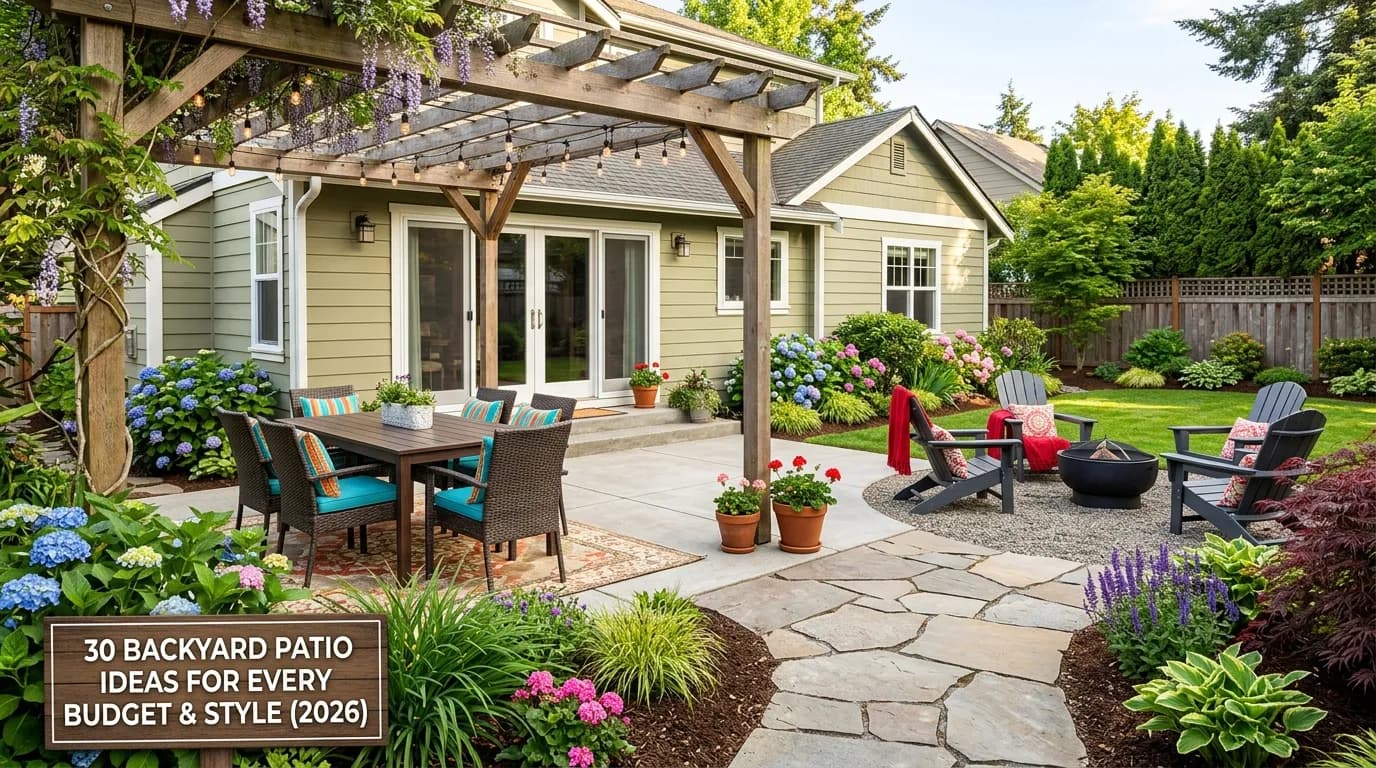
A backyard patio is the single highest-ROI investment you can make in your outdoor space. It creates a defined "room" outside, extends your usable living area, and — if done right — adds tens of thousands of dollars to your home value. Whether you're working with $500 or $50,000, there's a patio design that fits your yard, your style, and your budget.
Before you break ground, it pays to see the design first. Generate a free AI landscape design for your backyard →
Budget Patios Under $1,000 (Ideas 1–8)
1. Gravel Patio With Edging
Gravel is the most affordable patio material that still looks polished. Install steel or aluminum edging to define the shape, lay 3–4 inches of compacted gravel (decomposed granite, pea gravel, or crushed stone), and you have a functional, well-draining patio for $3–$5 per square foot. A 10x12 space costs under $500 in materials.
Best for: Quick installs, sloped yards, and anyone who wants a laid-back, Zen aesthetic.
2. Stepping Stone Grid
Create a patio-like surface by spacing large flagstones or concrete pavers on a grid, with groundcover plants (creeping thyme, elfin thyme, or baby's tears) filling the gaps. This approach creates a charming, organic-looking surface for about $200–$400 in materials. The groundcover fills in within one season.
3. Brick Paver Patio (DIY)
Brick pavers give you the look of an expensive masonry patio at a fraction of the cost when you install them yourself. Set on a compacted gravel base with a sand layer, a 12x12 brick paver patio costs roughly $600–$900 in materials. Rent a plate compactor ($75/day) to get a professional result.
4. Pallet Wood Deck
Reclaimed wood pallets — often free from hardware stores or industrial suppliers — can be transformed into a floating deck platform in a weekend. Sand thoroughly, treat with exterior wood sealer, and arrange as a 10x10 platform on level ground. Add string lights and two chairs for a complete outdoor room under $200.
5. Concrete Slab (Basic)
A basic concrete slab runs $4–$7 per square foot professionally poured, or about $2–$3 per square foot if you do it yourself. It's not glamorous, but it's durable, level, and provides the foundation for outdoor furniture, an umbrella, and a grill. Paint or stain it to add character.
6. Outdoor Rug + Gravel Base
Layer a large outdoor rug over a gravel base for instant patio feel without hardscaping. Use a 8x10 or 9x12 outdoor rug in a bold pattern, anchor the corners with potted plants or furniture legs, and you have a defined outdoor room for under $300.
7. Cinder Block Bench Wall
Stack cinder blocks into low bench-height walls along two sides of your gravel or grass area, top with smooth wooden boards or precut bench cushions, and you have built-in seating that defines the space. Total cost: $100–$200.
8. Pergola-Covered Gravel
Add a basic wood pergola kit (available at home improvement stores for $500–$1,500) over a gravel base. The vertical structure creates a "room" feeling and provides a place to hang string lights, outdoor curtains, or climbing plants. The combination of gravel + pergola feels far more expensive than it is.
Mid-Range Patios: $1,000–$10,000 (Ideas 9–18)
9. Flagstone Patio With Mortar Joints
Natural flagstone set in mortar (instead of sand) creates a sophisticated, permanent surface that looks high-end and lasts decades. Material costs run $15–$30 per square foot; professional installation adds another $10–$20. The result: a patio that looks like it belongs in an architectural magazine.
10. Stamped Concrete Patio
Stamped concrete mimics the look of flagstone, brick, or slate at about 60% of the cost. A skilled concrete contractor can create almost any pattern or texture. Typical costs: $10–$18 per square foot installed. Great for large areas where natural stone would be prohibitively expensive.
Want to visualize a stamped concrete patio in your actual yard? Generate your AI design →
11. Composite Deck With Built-In Seating
Composite decking (Trex, TimberTech, Fiberon) looks like wood but never needs sealing, staining, or replacing. A 12x16 composite deck with built-in bench seating along two edges runs $8,000–$15,000 installed — but lasts 25+ years with zero maintenance beyond occasional washing.
12. Paver Patio With Fire Pit Center
A classic paver patio in a circular layout with a stone or metal fire pit at the center is one of the most universally appealing patio designs. The fire pit creates a natural focal point and extends the season well into fall and spring. Budget $3,000–$7,000 for professional installation.
13. Multi-Level Patio
On sloped properties, a multi-level patio connects different elevations with short retaining walls and step transitions. This transforms a challenging slope into a design feature, creating distinct "zones" — a dining level, a lounge level, a garden level. Costs vary widely: $5,000–$20,000+ depending on the grade change and materials.
14. Covered Patio With Corrugated Metal Roof
Install a simple steel post frame with a corrugated metal roof over your patio area. This provides rain protection without the enclosed feel of a screen room. It's faster than a traditional roof, costs $3,000–$8,000 for a 14x20 space, and looks modern with the right paint color.
15. Patio + Outdoor Kitchen Rough-In
Build your patio now and rough-in the outdoor kitchen infrastructure — gas line, electrical conduit, plumbing — so you can add the full kitchen later without demolishing the patio to run utilities. This forward-thinking approach saves $2,000–$5,000 on a future kitchen addition.
16. Travertine Tile Patio
Travertine is a natural limestone with a warm, elegant look that stays cooler than concrete or dark stone in hot climates. Popular in Florida, Texas, Arizona, and Southern California. Costs $12–$25 per square foot installed. The classic cream and ivory tones pair beautifully with tropical and Mediterranean landscaping.
17. Curved Patio With Landscape Borders
Instead of a rectangular slab, design your patio with a curved edge that flows into planting beds. The soft curve makes the patio feel organic and intentional, while the adjacent planting beds (filled with ornamental grasses, flowering perennials, and shrubs) frame the space. This is how professional landscape architects approach patio design.
18. Shaded Pergola Patio With Ceiling Fan
A substantial pergola with a louvered or slatted roof (not a solid structure), ceiling fan, and LED string lights creates an outdoor room that's usable 10 months of the year in most climates. Add a concrete or paver floor, outdoor furniture, and a ceiling fan to circulate air, and you have a true outdoor living room. Budget $8,000–$20,000 for this level of build.
Premium Patios: $10,000+ (Ideas 19–25)
19. Full Outdoor Kitchen Patio
A built-in outdoor kitchen with countertops, a built-in gas grill, refrigerator, sink, and storage cabinets is the pinnacle of patio upgrades. Costs range from $15,000 for a simple setup to $50,000+ for a full chef's kitchen with pizza oven, kegerator, and island seating for 8. For outdoor entertainers, nothing compares.
20. Pool-Adjacent Patio With Wet Bar
Design your patio as an extension of your pool deck, with a covered wet bar, lounge chairs, and smooth-surface paving that's safe for bare feet. Pool patio design requires careful planning: you need adequate space for chairs, non-slip surface materials, proper drainage, and code-compliant setbacks from the water.
21. Rooftop Terrace Patio
If you have a flat or low-slope roof, you may have an untapped outdoor room overhead. Rooftop patios require structural engineering review, waterproofing systems, and proper drainage — but the result is spectacular: panoramic views, privacy, and a truly unique outdoor space. Costs typically start at $20,000.
22. Four-Season Room / Screened Patio
A screened enclosure converts an open patio into a three-season or four-season room. Aluminum framing, screening or glass panels, ceiling fans, and optional heating/cooling create a space usable year-round. This is the top choice for areas with mosquitoes, high humidity, or cold winters. Typical costs: $15,000–$40,000 depending on size and glazing.
23. Natural Stone Patio With Water Feature
Commission a natural fieldstone or slate patio designed around a central water feature — a stone fountain, a recirculating stream, or a reflecting pool. The combination of natural stone and moving water creates an atmosphere of complete calm. This is the choice for buyers who want their backyard to feel like a high-end resort.
24. Smart Outdoor Patio
Integrate smart technology: automated motorized pergola louvers that open/close based on weather, outdoor speakers wired through the pergola posts, smart LED lighting on scenes and schedules, and an outdoor TV with weather-resistant housing. A fully smart patio experience adds $5,000–$15,000 to any base patio build.
25. Full Landscape + Patio Package
Commission a landscape architect to design your entire backyard as a unified composition: patio, planting beds, lawn area, lighting, water features, and privacy screening all designed together. The integrated approach produces results far superior to piecemeal additions. Expect to invest $30,000–$100,000 for a premium whole-backyard design and installation.
Design Principles That Apply to Every Patio (Ideas 26–30)
26. Size Up, Not Down
The most universal patio design mistake is building it too small. A 10x10 patio fits a table and four chairs — and nothing else. At minimum, design for 12x16 (192 sq ft). If you're adding a dining table, lounge area, AND a grill, 16x20 (320 sq ft) is where the design starts breathing. When in doubt, go bigger.
27. Orient for Morning or Evening Use
Before finalizing your patio location, think about when you'll use it most. East-facing patios get morning sun and afternoon shade — ideal for morning coffee and early evening use in hot climates. West-facing patios catch the sunset but can be brutal in summer afternoons. South-facing maximizes sun all day. Match orientation to your lifestyle.
28. Always Plan for Lighting
A patio without lighting is unusable after dark — and evening is often the most pleasant time to sit outside. Plan lighting at three levels: ambient (overhead string lights, lanterns, or a pergola with integrated LEDs), task (a focused light over the grill or dining table), and accent (path lights, step lights, and uplights on plantings around the perimeter).
29. Transition Thoughtfully Between Indoors and Out
The most elegant patios are designed as extensions of the indoor space, not as an afterthought bolted onto the back of the house. Match the door threshold height exactly to the patio surface to avoid a trip hazard. Use interior design cues — color palette, material texture, furniture style — outdoors to create flow.
30. Use an AI Design Tool Before You Build
The most expensive patio mistake is realizing you don't love the result after spending $10,000 on installation. Before committing to any design, generate a realistic visualization of how it will look in your actual yard. You can experiment with paver colors, pergola placement, plantings, and layout in minutes — for free.
See your patio design before breaking ground → Generate a free AI design
Frequently Asked Questions
What is a good size for a backyard patio?
For a small backyard, a 10x12 or 12x12 patio accommodates a bistro set or small lounge. For a medium yard, 12x16 to 16x20 gives you room for dining + lounge. Large backyards can support 20x24 or larger — especially if you're adding an outdoor kitchen. When in doubt, size up.
What is the cheapest type of patio to build?
Gravel patios are the most affordable option ($3–$5/sq ft materials), followed by concrete pavers installed DIY ($5–$8/sq ft). Stamped concrete is mid-range ($10–$18/sq ft installed) and flagstone or composite decking runs highest ($20–$40+/sq ft).
Does a patio increase home value?
Yes — significantly. A well-designed patio typically returns 60–80% of its cost in added home value, and premium outdoor living spaces (with outdoor kitchens, covered pergolas, or fire pits) can return 100%+ in hot real estate markets. Outdoor living is one of the top selling features buyers request.
Do I need a permit for a backyard patio?
Ground-level patios typically don't require permits. Decks elevated more than 30 inches above grade, structures with electrical or gas, and screen rooms typically do. Always check with your local building department before adding any permanent structure.
What patio material lasts the longest?
Brick and natural stone patios, when properly installed on a compacted base, can last 50–100 years. Concrete slabs typically last 25–50 years. Composite decking lasts 25–30 years. Pressure-treated wood decks last 15–20 years with maintenance.
How do I choose a patio style?
Match the architecture of your home: a craftsman house suits flagstone or brick; a modern home suits large-format concrete pavers or smooth limestone; a cottage suits tumbled brick or flagstone with creeping groundcover. Your interior design palette should also carry through to the outdoor space.