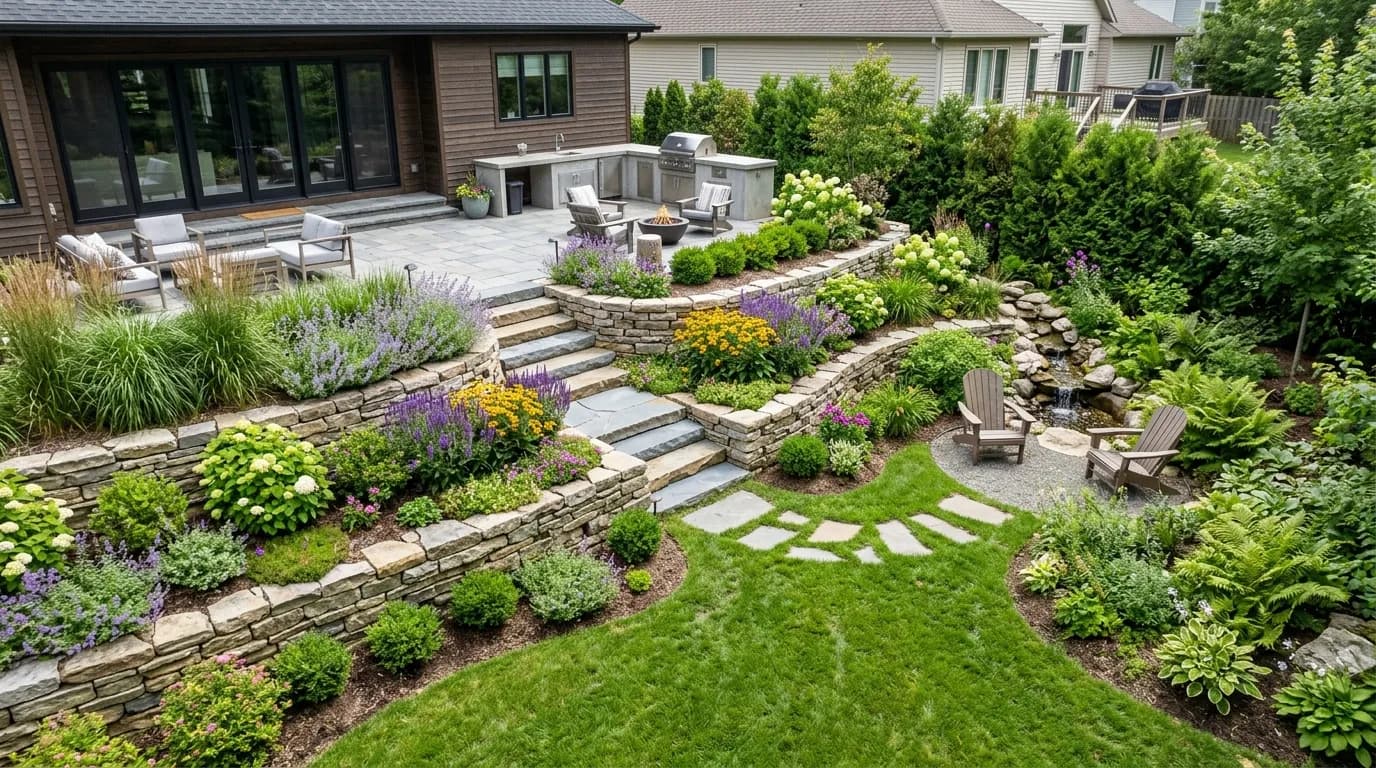
Most homeowners see a sloped backyard as a challenge. The most creative ones see it as an advantage. Slopes create natural privacy, dramatic focal points, cascading water features, and terraced zones that flat yards can never match.
This guide covers 30 design ideas across every type of slope — gentle grades, steep hillsides, side slopes, and yards that slope toward or away from the house — with cost estimates, plant recommendations, and design principles for each.
Understanding Your Slope (Before You Design)
Before designing, categorize your slope. Most DIY and moderate professional projects work well on gentle to moderate grades.
| Slope Gradient | Rise per 10 ft | Design Options |
|---|---|---|
| Gentle (1–5%) | 0–6 inches | Most anything: lawn, groundcovers, simple terracing |
| Moderate (5–15%) | 6–18 inches | Terracing, retaining walls, stone steps, groundcovers |
| Steep (15–25%) | 18–30 inches | Retaining walls required, terracing, stairs, erosion control planting |
| Very steep (25%+) | 30+ inches | Engineering required, limited options without major grading |
Which direction does your slope face? South and west-facing slopes get more sun and heat up faster — choose drought-tolerant plants. North and east-facing slopes are shadier and cooler — choose shade-tolerant and moisture-loving species.
Terracing Ideas
1. Stacked Stone Terraces
Natural boulders and fieldstone stacked into 2–4 foot retaining walls with planting pockets between. Each terrace creates a separate "room" — one for seating, one for a garden, one for a fire pit. Cost: $3,000–$12,000 depending on wall height and square footage.
2. Timber Retaining Walls
Pressure-treated 6×6 timbers create a rustic, affordable terracing system. Best for gentle to moderate slopes. Cost: $1,500–$5,000 for a basic system. Lifespan 15–20 years before replacement.
3. Concrete Block Retaining Walls
Segmental retaining wall blocks (like Allan Block or Versa-Lok) are engineered for structural integrity and stack without mortar. Clean, modern look. Excellent for DIY. Cost: $2,500–$8,000 DIY, $6,000–$20,000 professional.
4. Gabion Wall Terraces
Steel wire baskets filled with river rock or crushed stone. Industrial-modern aesthetic, excellent drainage, and very structural. Plants can grow through and soften over time. Cost: $4,000–$15,000.
5. Brick Terrace Steps
Interconnected brick planters and steps that step down the slope in a geometric pattern. Works beautifully on moderate grades and formal home styles. Cost: $5,000–$15,000.
Want to visualize how terracing would look on your specific yard? [Upload a photo and get 3 AI-generated designs at Yardcast in 60 seconds →](/redesign)
Water Feature Ideas for Sloped Yards
6. Natural Stream Bed
A slope is the ideal setting for a naturalistic stream. Line a channel with river rocks and boulders, add a recirculating pump at the base, and plant moisture-loving species (iris, ferns, sedge, canna lily) along the banks. Cost: $3,000–$12,000 depending on length.
7. Cascading Waterfall
Build a series of ledgestone shelves that water tumbles down. Combines beautifully with a lower pond. Sound of moving water adds ambiance and masks traffic noise. Cost: $4,000–$20,000.
8. Pondless Waterfall
All the drama of a waterfall without the maintenance of an open pond. Water collects in an underground reservoir and recirculates. Safe for children, low maintenance. Cost: $3,500–$10,000.
9. Rain Chain Garden
Replace downspouts with decorative copper rain chains that guide water down the slope through a series of linking cups or rings into a planted rain garden at the base. Functional, beautiful, and eco-friendly. Cost: $300–$1,500 depending on length and material.
10. Tiered Fountain
A series of stacked stone or concrete bowls that overflow into each other down the slope. Classic formal look, very maintainable. Cost: $2,000–$8,000.
Lawn and Groundcover Solutions
11. Groundcover Banks
For slopes too steep to mow safely, replace grass with spreading groundcovers. Best options:
- Creeping juniper — evergreen, drought-tolerant, excellent erosion control
- Cotoneaster horizontalis — berries for birds, red fall color
- Vinca minor — shade-tolerant, fast-spreading, lavender flowers
- Pachysandra — deep shade, formal look
- Ice plant — drought-tolerant, stunning flower color (zones 8–10)
- Native sedges — low maintenance, naturalistic, good habitat
Cost: $500–$2,500 for a 500 sq ft bank depending on plants selected.
12. Wildflower Meadow Slope
Seed or plant a wildflower mix that naturalizes on the slope. After establishment (2–3 years), requires only annual mowing. Beautiful in bloom, habitat-rich, zero irrigation needed once established. Cost: $200–$1,500 to establish.
13. Prairie Grass Bank
Native bunch grasses (switchgrass, little bluestem, prairie dropseed) planted in drifts. Year-round interest from seedheads and fall color, no irrigation after establishment, excellent erosion control. Cost: $800–$3,000 to plant.
14. Mondo Grass Stripes
Low-growing Ophiopogon (mondo grass) in alternating green and black stripes following the contour of the slope. Graphic, modern, zero mowing. Cost: $1,500–$4,000.
Staircase and Path Ideas
15. Natural Stone Steps
Large flagstone steps set into the slope, each 12–18" tread with 6–7" rise. Plant creeping thyme, sedum, or blue star creeper in the gaps for a living stair. Cost: $3,000–$10,000 depending on height and length.
16. Concrete Step Landings with Gravel Treads
Poured concrete risers with compacted decomposed granite or pea gravel treads. Modern, affordable, excellent drainage. Cost: $2,000–$6,000.
17. Timber Step Path
Railroad ties or landscape timbers set horizontally across the slope at step intervals, with compacted gravel fill. Rustic, budget-friendly, good DIY project. Cost: $1,000–$3,500.
18. Zigzag Switchback Path
Instead of going straight up a steep slope, create a switchback path that traverses back and forth. More gradual grade, allows planting beds on each side, and creates a sense of journey. Works beautifully with naturalistic plantings.
19. Steel Corten Stair Edging
Thin-gauge weathering steel folded to create stair risers. As it weathers, it turns a rich rust orange. Very contemporary, complements modern and Japanese garden styles. Cost: $4,000–$12,000.
Outdoor Living on Slopes
20. Cantilevered Deck
Build a deck that cantilevers out from the slope, creating a level outdoor living area with a view. Dramatic, fully utilizes the slope, no grading required. Cost: $15,000–$40,000 depending on size and engineering requirements.
21. Hillside Seating Terrace
Cut a level terrace into the slope and create a seating area framed by planting beds on the uphill side. Natural backdrop of plants, privacy without fencing. Cost: $5,000–$15,000.
22. Carved Amphitheater
On a gentle to moderate slope, carve semicircular seating into the hillside with stone or concrete retaining walls creating the tiers. Perfect for outdoor movie nights, fire pit seating, or small events. Cost: $8,000–$25,000.
23. Upper and Lower Zone Design
Divide the slope into two distinct zones: upper for lawn/garden, lower for patio and entertaining. A staircase connects them. The grade change provides privacy and visual separation. This is the most popular design approach for residential sloped yards.
24. Rooftop-Style Deck
If the slope drops away from the back of your house, a deck can be built at ground level of the house but 8–12 feet above the lower yard — essentially a rooftop over the lower yard space. Creates two full levels of outdoor living. Cost: $20,000–$60,000.
Planting Design for Sloped Yards
25. Slope-Appropriate Plant Palettes
Erosion control must-haves (deep-rooted, spreading):
- Native grasses, Day lilies, Russian sage, Creeping juniper, Cotoneaster, Crown vetch (invasive in some states — check)
Slope showstoppers (for focal planting):
- Japanese maple (Acer palmatum) — dramatic form, year-round interest
- Weeping cherry — spring bloom that cascades down the slope naturally
- Ornamental grasses — swaying in the wind, seed heads in fall and winter
- Rosemary — cascades beautifully, fragrant, drought-tolerant
Plants that hold slopes without spreading invasively:
- Little bluestem, Knock Out roses, Black-eyed Susan, Coneflower, Salvia, Lavender, Karl Foerster grass
26. Contour Mass Planting
Plant in horizontal drifts that follow the slope's contour lines. This is both more stable (root masses interlock across the slope) and more visually dramatic than vertical planting schemes.
27. Layered Canopy Design
Use the slope's natural height variation to layer a canopy: tall trees at the top (for backdrop and privacy), mid-height shrubs in the middle zone, low groundcovers at the base. The slope creates the stage; the plants create the drama.
Practical Slope Management
28. French Drain System
If your slope channels water toward your house, a French drain (perforated pipe in gravel-filled trench running across the slope) intercepts and redirects it. Essential for slopes that grade toward the foundation. Cost: $1,500–$5,000.
29. Erosion Control Blanket + Native Plantings
On steep bare slopes, install biodegradable erosion control blankets (coconut coir or straw fiber mats) before planting. The blankets hold soil until plants establish (12–24 months), then decompose naturally. Cost: $200–$500 for materials.
30. Dry Creek Bed with Native Plantings
A decorative dry creek bed following a natural drainage channel down the slope. Combines erosion control with visual interest. River rocks direct water away from problem areas while native grasses and wildflowers soften the edges. Cost: $1,500–$6,000.
Sloped Yard Design by Budget
Under $2,000: Groundcover bank planting + timber steps + erosion control fabric. Practical, low maintenance, establishes in 2–3 years.
$2,000–$8,000: One or two concrete block retaining wall terraces + flagstone steps + native planting palette. Creates usable zones without major engineering.
$8,000–$25,000: Full terracing with stone retaining walls + waterfall or stream feature + lower patio + professional planting design. The "magazine-worthy" outcome.
$25,000+: Cantilevered deck + engineered retaining walls + full landscape design. Investment-grade transformation.
See How Your Sloped Yard Can Look
A slope is best understood visually. The same design concept can look radically different based on your specific grade, sun exposure, home style, and the existing trees on your property.
[Upload a photo of your sloped backyard to Yardcast → get 3 photorealistic AI landscape designs showing how terracing, water features, and plantings would look on your actual yard →](/redesign)
It takes 60 seconds. Free to preview. You don't need to describe your slope or draw anything — the AI reads your yard photo and designs around what it sees.
FAQ: Sloped Backyard Ideas
Q: How do I stop my sloped yard from eroding?
A: The most effective strategies are: (1) plant deep-rooted groundcovers or grasses that interlock soil, (2) install retaining walls to create level terraces, (3) use erosion control fabric during plant establishment, (4) add mulch 3–4" deep to hold soil moisture and reduce surface runoff. Any combination of these works best.
Q: Do I need a permit to build a retaining wall?
A: Most jurisdictions require a permit for retaining walls over 4 feet tall. Under 4 feet typically does not require a permit, though rules vary by location. Walls over 4 feet typically need an engineer's stamp on the design. Always check with your local building department before starting.
Q: How much does it cost to terrace a sloped backyard?
A: Basic terracing with concrete block retaining walls: $3,000–$10,000. Natural stone terracing: $8,000–$25,000. Professional-grade engineering with full landscape design: $15,000–$50,000+. DIY timber retaining walls are the most budget-friendly option at $1,500–$5,000 for basic terracing.
Q: What are the best plants for a sloped yard?
A: Deep-rooted, spreading plants that control erosion: creeping juniper, native grasses (switchgrass, little bluestem), day lilies, rosemary (zones 8–11), cotoneaster, and wildflower mixes. Avoid heavy trees on steep slopes — their weight and root damage can destabilize the hillside.
Q: Can I flatten my sloped backyard?
A: Yes, but it's typically very expensive ($5,000–$30,000+) and requires grading equipment, cut-and-fill engineering, drainage solutions, and retaining walls where the grade changes. For most homeowners, designing with the slope (terracing, groundcovers, water features) is far more cost-effective and results in a more dramatic final design.
Q: What landscaping is best for a steep slope?
A: For slopes over 15% grade: groundcovers with deep roots (creeping juniper, vinca, ornamental grasses), naturalistic stone steps with planting pockets, and retaining walls that create level terraces. Lawn on steep slopes is impractical to mow safely and control erosion poorly.
Q: How do I build steps on a sloped yard?
A: The most DIY-friendly method: timber landscape timbers as horizontal risers set into the slope, with compacted gravel fill for the treads. For a more permanent solution, use large flat flagstones (18"×24" minimum per step) set on a 4–6" gravel base with a slight backward lean (1/8" per foot) to prevent water from pooling on the step surface.
Q: Does a sloped yard decrease property value?
A: An unimproved steep slope can reduce perceived value due to limited usable space. However, a well-designed sloped yard with terracing, water features, and good planting often commands a premium — the "dramatic" factor makes it memorable and desirable. Buyers respond strongly to well-executed hillside designs.