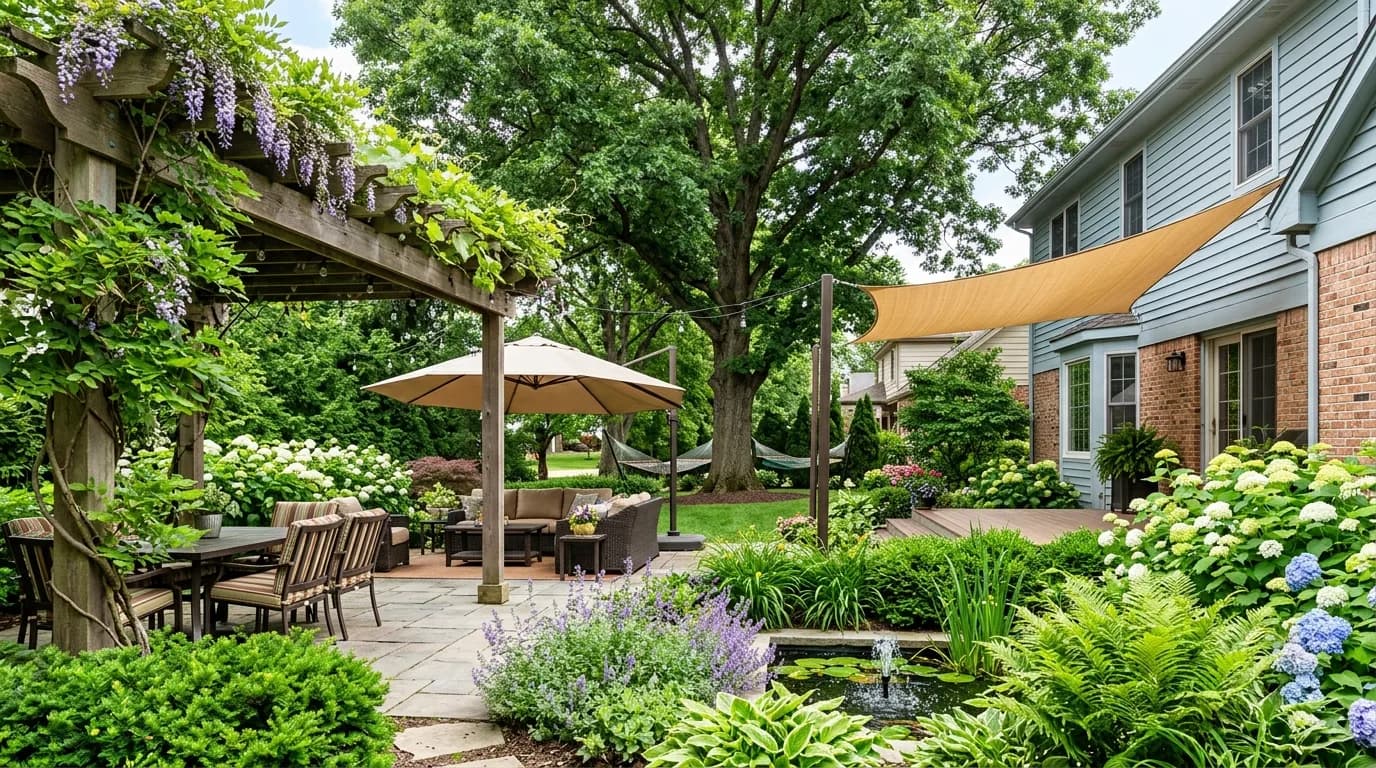
A backyard without shade isn't a backyard you'll actually use in July. If summer temperatures regularly hit 85°F or above where you live, creating shade isn't optional — it's the single most important upgrade you can make to your outdoor space.
This guide covers every type of backyard shade solution, ranked by cost, effectiveness, installation difficulty, and how fast each one delivers results.
Why Shade Matters More Than You Think
Shaded outdoor spaces are used 3–4× more than exposed ones during warm months. Beyond comfort, shade:
- Reduces surface temperatures by 10–20°F on hardscape like concrete and pavers
- Cuts cooling costs by blocking solar gain near windows and doors
- Protects outdoor furniture from UV damage, extending its life by years
- Creates privacy as a side benefit (especially dense plantings and pergolas)
- Significantly boosts the perceived value and usability of outdoor spaces
Before choosing a shade solution, consider: How permanent do you want it? How fast do you need shade? What's your budget?
Shade Solutions Compared: Cost & Timeline
| Solution | Cost Range | Time to Shade | Permanence |
|---|---|---|---|
| Shade sail | $100–$600 | Immediate | Seasonal |
| Patio umbrella | $100–$1,000 | Immediate | Portable |
| Retractable awning | $1,500–$5,000 | Immediate | Permanent |
| Pergola (wood) | $3,000–$12,000 | Immediate | Permanent |
| Pergola (aluminum) | $4,000–$15,000 | Immediate | Permanent |
| Covered patio addition | $8,000–$25,000 | Immediate | Permanent |
| Gazebo (pre-built) | $1,500–$8,000 | 1 weekend | Permanent |
| Shade trees (small) | $100–$500 | 3–5 years | Permanent |
| Shade trees (balled/burlap) | $500–$3,000 | 2–4 years | Permanent |
| Shade cloth structure | $200–$800 | Immediate | Seasonal |
| Vine-covered trellis | $200–$1,500 | 2–3 seasons | Permanent |
| Living wall (green wall) | $2,000–$10,000 | 1–2 seasons | Permanent |
25 Backyard Shade Ideas
Overhead Structures (Immediate Shade)
1. Shade Sail
The fastest, most affordable shade upgrade. Shade sails are triangular or rectangular fabric canopies attached to anchor points (posts, house wall, tree). A 16×16-ft sail provides 256 sq ft of shade for $150–$400. Use multiple overlapping sails for complete coverage. Pros: affordable, flexible, stylish. Cons: requires anchor points, must come down in winter in cold climates.
2. Retractable Awning
The most practical shade upgrade for a house-attached patio. Motorized awnings extend up to 20 feet from the house, shade the patio plus interior rooms, and retract in seconds. Cost: $2,000–$5,000 installed. Add a wind sensor for automatic retraction.
3. Pergola with Shade Cloth
A wood or aluminum pergola with shade cloth panels threaded through the rafters is the best balance of cost and effectiveness. The structure provides definition; the cloth provides actual shade. You can adjust shade percentage (30%, 50%, 70%) by choosing different cloth densities. Total cost: $4,000–$10,000.
4. Bioclimatic Pergola (Louvered Roof)
The premium option. Motorized louvers open and close to control sunlight, ventilation, and rain. When it rains, close the louvers and stay dry. When you want sun, open them. Cost: $8,000–$25,000 for a 12×16-ft structure. Worth it for serious outdoor living.
5. Covered Patio Addition
A permanent roof structure attached to the house — either a solid patio cover or a screened enclosure. This is the most weatherproof option and can be used year-round in mild climates. Cost: $12,000–$35,000 depending on materials and region.
6. Pergola with Wisteria or Climbing Roses
Plant fast-growing vines at pergola bases and train them up posts and across the top. By summer 2–3, you have a living roof. Wisteria is aggressive and covers a 10×16-ft pergola in 2 years. Climbing roses need 3 years for full coverage. Cost: $3,000–$8,000 for pergola + $50–$200 for vines.
7. Freestanding Gazebo
Pre-built gazebos arrive as kits and assemble in 1–2 weekends. A 12×12-ft octagonal gazebo with roof provides complete overhead shade and defines a destination point in the yard. Steel kits: $1,500–$4,000. Wood kits: $3,000–$8,000. Add curtains for wind and privacy.
8. Large Patio Umbrella (9–13 ft)
The most flexible shade solution — move it anywhere, close it in storms. A quality 11-ft cantilever umbrella with offset pole provides excellent shade without a pole in the center of your seating area. Cost: $200–$800. Use a weighted base (50–100 lbs) for stability.
9. Market Umbrella Collection
For a larger patio, cluster 3–4 matching 9-ft market umbrellas to cover a big dining area without installing any structure. This works well for entertaining spaces where you want to cover 400+ sq ft on a budget.
10. Shade Structure with Privacy Panels
Combine a pergola frame with bamboo, wood slat, or reed privacy panels on the sides. This creates a defined outdoor room with shade AND privacy — doubling the function. Add string lights for evening use.
Shade Trees (Best Long-Term Investment)
11. Fast-Growing Shade Trees
The best investments for permanent shade. Some trees reach useful size in 3–5 years:
- Red Maple (Zones 3–9): Grows 13–24 inches/year, reaches 40–60 ft. Spectacular fall color.
- Tulip Poplar (Zones 4–9): Grows 15–25 inches/year, reaches 60–90 ft. Straight trunk, shade beneath.
- Thornless Honeylocust (Zones 3–8): Grows 13–24 inches/year, reaches 30–70 ft. Fine texture, dappled shade.
- River Birch (Zones 4–9): Grows 12–24 inches/year, reaches 40–70 ft. Beautiful peeling bark.
- Bur Oak (Zones 3–8): Grows 10–15 inches/year, long-lived. Best investment for the long term.
12. Multi-Stem Clump Trees
Plant birch or serviceberry in clump form (3 trunks from one root ball). Clump trees grow wider faster than single-trunked specimens and provide more horizontal shade coverage relative to their height. Ideal for small yards where you can't plant a forest canopy.
13. Columnar Trees for Side Shade
If your problem is afternoon western sun, columnar trees (Skyrocket juniper, Italian cypress, columnar maple) planted as a screen along the west fence line will block low-angle afternoon sun without spreading into the yard. Plant 6–10 ft apart for a continuous screen.
14. Espalier Trees on West-Facing Walls
Train fruit trees or other species flat against a west-facing wall using wire and hardware. The tree shades the wall (reducing solar gain indoors) without taking up yard space. Apples, pears, and figs espalier well. Takes 3–5 years to develop.
15. Japanese Maple Canopy
Japanese maples top out at 10–25 ft but have beautiful, dense canopies. Plant one specimen tree near your seating area for dappled, filtered shade. They work best as part of a larger shade strategy (pair with a structure for full shade, use the maple for filtered shade and beauty).
Vines and Living Shade
16. Wisteria on Pergola or Arbor
Wisteria grows 10 feet per year once established and creates a complete living ceiling within 2–3 seasons. It blooms spectacularly in spring. Warning: wisteria is aggressive. Use Japanese or American wisteria rather than invasive Chinese wisteria in most regions.
17. Hops Vine
The fastest annual shade vine — hops grows 20+ feet in one season. Plant it at the base of a pergola in spring and have a full leafy canopy by August. It dies back in winter, leaving the structure open for winter light. Pairs beautifully with modern and farmhouse aesthetics.
18. Trumpet Vine (Campsis radicans)
Native vine with spectacular orange-red flowers in summer. Grows 25–40 feet, covers a large pergola in 2–3 years. Extremely drought tolerant once established. Warning: it spreads aggressively — remove suckers annually.
19. Grapes on a Pergola
Grapevines provide edible fruit AND shade. Train table grapes over a pergola for a Mediterranean-style living canopy. Takes 2–3 years to cover a standard 10×14-ft pergola. After that, they're self-maintaining with annual pruning.
20. Climbing Hydrangea
The best vine for shaded locations. Climbing hydrangea attaches directly to walls and structures with aerial roots and blooms with flat white flowers in early summer. Grows 30–50 feet at maturity. Slow for the first 2 years, then rapid.
Creative Shade Solutions
21. Shade Cloth Greenhouse Frame
Build a simple PVC or wood frame over a patio and stretch shade cloth (70% density) across the top. This is a no-permit, low-cost option for maximum shade — the same technology used in nurseries and agricultural operations. Cost: $300–$600 for a 12×16-ft structure.
22. Bamboo Pole Overhead Structure
For a tropical or bohemian aesthetic, create an overhead structure from bamboo poles lashed together with rope or twine. Cover with shade cloth, reed mats, or palm fronds. This works for warm climates and can be built in a weekend for under $500.
23. Planter Wall with Shade Structure
Combine raised planters along the perimeter of a patio with an overhead shade sail or pergola. The planters define the space, add greenery, and can hold tall ornamental grasses or hedges that provide additional side shade and privacy.
24. Outdoor Curtains
Add weather-resistant outdoor curtains to an existing pergola or between posts. This creates side shade (blocking low-angle morning and afternoon sun that overhead structures miss) and creates a sense of enclosure. Use Sunbrella or marine-grade fabric for longevity. Cost: $100–$400 per panel.
25. Build a Living Wall
A vertical garden on a south or west-facing fence/wall shades the hardscape and wall behind it, reducing radiant heat by 10–20°F. Living wall panels can be planted with ferns, succulents, or annuals. Cost: $2,000–$10,000 for a professional installation or $500–$1,500 DIY.
Choosing the Right Shade Solution for Your Yard
Best for renters or budget-conscious: Shade sails, patio umbrellas, shade cloth
Best for permanent backyard investment: Pergola + shade cloth or vine, or a combination of shade trees
Best for hot, sunny regions (Southwest, South): Motorized louvered pergola or solid patio cover
Best for small yards: Shade sail + 2–3 columnar trees or Japanese maple
Best for large yards: Large shade trees + secondary structure near the house
The most effective backyards combine overhead structure for immediate shade with shade trees for long-term cooling. Plant the trees the same year you install the structure — you'll be glad you did in 5 years.
Plan Your Shaded Backyard with AI
Not sure which combination of shade structures and trees will work for your specific yard layout and climate zone? Yardcast generates 3 photorealistic AI landscape designs based on your actual yard photos →. See exactly what a pergola with wisteria, or a living wall + shade sail combination would look like on your property — with a plant list, cost estimate, and contractor-ready PDF included.
Related: [Pergola Ideas](/blog/pergola-ideas) · [Best Shade Trees for Backyard](/blog/best-shade-trees-for-backyard) · [Outdoor Entertaining Ideas](/blog/outdoor-entertaining-ideas)