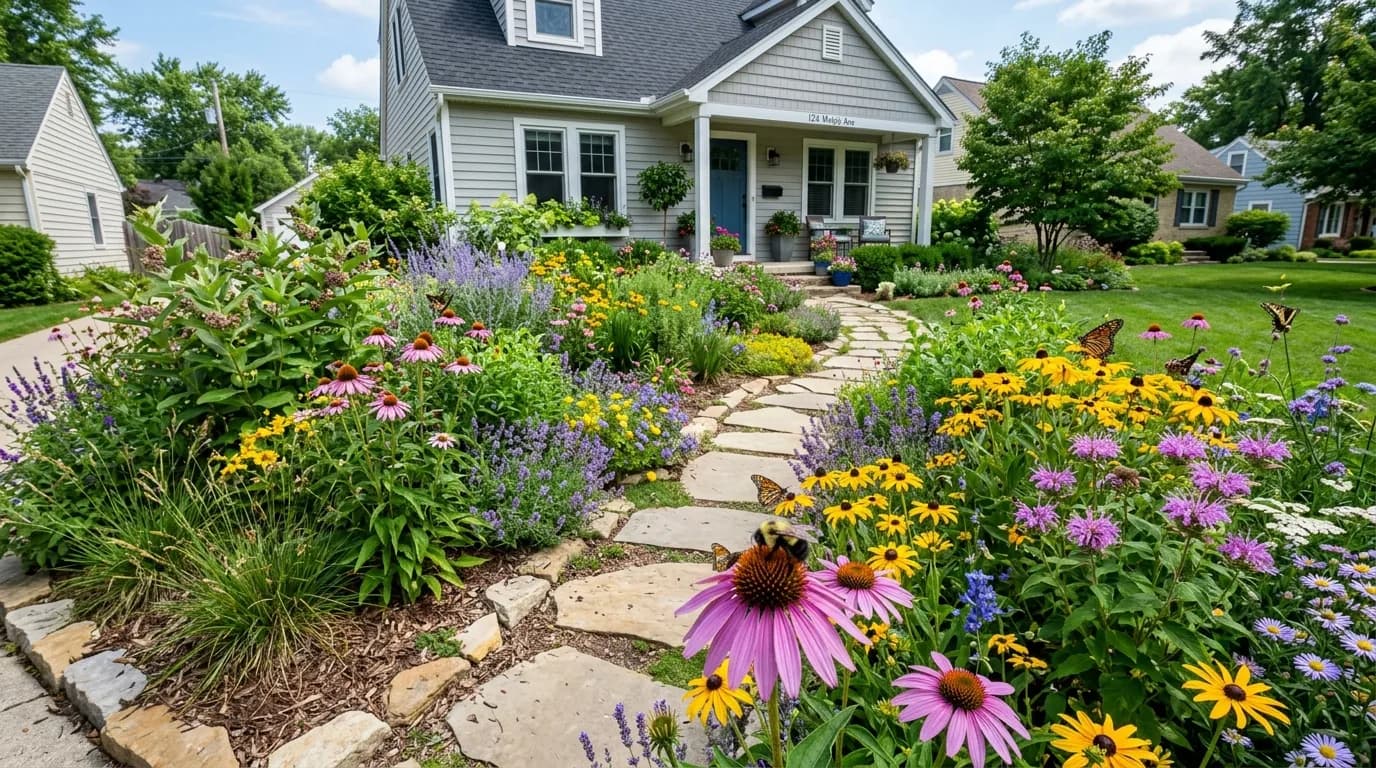
Pollinators are in crisis. Honeybee populations have declined 30% in the past two decades. Monarch butterfly numbers have crashed 80% since the 1980s. Bumblebee species across North America are disappearing faster than birds or mammals. And behind these headline statistics is a deeper truth: 35% of global food production depends on pollination.
Your garden can be part of the solution. A well-designed pollinator garden supports the food chain, creates a living, dynamic landscape that changes week to week through the season, and often requires less maintenance than conventional gardens. Here's how to design one that works.
Understanding What Pollinators Need
Different pollinators have different needs, and a great pollinator garden serves multiple species:
Bees (native and honeybees): Need nectar and pollen plants (food for adults and larvae), water (shallow, with landing spots), nesting habitat (bare soil patches for ground-nesters, hollow stems for cavity-nesters), and pesticide-free zones.
Butterflies: Need nectar plants for adult feeding AND host plants where they lay eggs and caterpillars feed. Without host plants, butterflies pass through your garden but don't reproduce there.
Hummingbirds: Primarily attracted to tubular flowers, especially red and orange ones. Need nectar-rich plants from spring through fall.
Moths: Often overlooked but important nighttime pollinators. Attracted to white, fragrant flowers that open in the evening.
Best Plants for Native Bees
Native bees (there are 4,000+ species in North America) are generally better pollinators than honeybees for most native plants. They evolved together. Native bees prefer single-petaled flowers where pollen is accessible — many double-flowered cultivars bred for visual appeal have reduced or inaccessible pollen.
| Plant | Bloom Season | Height | Notes |
|---|---|---|---|
| Lavender | Summer-fall | 2-3 ft | Highly attractive to bumblebees |
| Salvia (native varieties) | Spring-fall | 1-4 ft | Many species; bloom successively |
| Coneflower (Echinacea) | Summer-fall | 2-4 ft | 9 native species; all excellent |
| Wild bergamot (Monarda fistulosa) | Summer | 3-4 ft | Native; more reliable than cultivars |
| Anise hyssop (Agastache) | Summer-fall | 2-4 ft | Long blooming; multiple bee species |
| Borage | Spring-fall | 2 ft | Annual; self-seeds freely |
| Blue mistflower (Conoclinium) | Fall | 2-3 ft | Important late-season resource |
| Goldenrod (Solidago) | Fall | 2-6 ft | Critical fall resource; doesn't cause hay fever |
| Sunflowers | Summer-fall | 3-8 ft | Use native species over hybrids |
Important: Avoid neonicotinoid-treated plants, which are sold at many garden centers. Ask before you buy, or source from native plant nurseries.
Best Plants for Butterflies
Butterflies need two completely different types of plants: nectar plants for adult feeding, and host plants where they lay eggs and caterpillars feed. Without host plants, you'll see butterflies passing through but not breeding.
Nectar Plants for Adult Butterflies
| Plant | Attracts | Bloom Season |
|---|---|---|
| Butterfly bush (Buddleia) | Many species | Summer-fall |
| Zinnias | Painted ladies, swallowtails | Summer-frost |
| Joe Pye weed | Swallowtails, monarchs | Late summer |
| Lantana | Numerous species | Summer-frost |
| Verbena bonariensis | Swallowtails, monarchs | Summer-fall |
| Ironweed (Vernonia) | Many species | Late summer |
| Asters | Painted ladies, skippers | Fall |
Critical Host Plants (for caterpillars)
| Host Plant | Caterpillars Fed | Notes |
|---|---|---|
| Milkweed (Asclepias) | Monarch | Required for monarch reproduction |
| Passionflower | Gulf Fritillary | Aggressive spreader; beautiful |
| Fennel, dill, parsley | Black swallowtail | Easy to grow; plant extra |
| Spicebush (Lindera benzoin) | Spicebush swallowtail | Shrub; fall color too |
| Pawpaw | Zebra swallowtail | Native fruit tree |
| Native oaks | 550+ caterpillar species | Most important plant for birds |
| Native willows | 450+ caterpillar species | For moist areas |
The monarch crisis: Monarch populations have declined due primarily to milkweed loss. Every milkweed plant you add directly supports monarch recovery. Plant Asclepias tuberosa (butterfly weed, orange), A. incarnata (swamp milkweed, pink), or A. syriaca (common milkweed) — avoid tropical milkweed (A. curassavica) in warm climates as it disrupts migration patterns.
Best Plants for Hummingbirds
Hummingbirds are attracted to tubular flowers, particularly red and orange ones — they can see these colors particularly well. They're also highly attracted to movement and will investigate anything red in the garden.
| Plant | Color | Season | Notes |
|---|---|---|---|
| Bee balm (Monarda) | Red/pink/purple | Summer | Native; also great for bees |
| Cardinal flower (Lobelia cardinalis) | Red | Summer | Native; moist soil |
| Trumpet vine (Campsis) | Orange-red | Summer | Very aggressive spreader |
| Penstemon | Red/pink/purple | Spring-summer | Native; many species |
| Salvia (S. guaranitica) | Blue | Summer-fall | 'Black and Blue' especially good |
| Fuchsia | Red/pink | Cool season | Annual in cold climates |
| Coral honeysuckle (Lonicera sempervirens) | Red | Spring-fall | Native; not invasive like Japanese honeysuckle |
Design Principles for Pollinator Gardens
1. Plant in Drifts
Single plants of many species creates a confusing, inefficient foraging landscape for pollinators. They have to expend energy searching for each plant. Instead, plant 5-7 of the same species together. Pollinators can locate and exploit a 5-plant drift 10x more efficiently than individual plants scattered throughout a bed.
2. Bloom Succession: Spring Through Fall
A pollinator garden's greatest weakness is having nothing blooming in early spring (when queens are establishing colonies) or late fall (when bees and butterflies are building winter reserves). Plan your plant list to include:
- Early spring: Crocus, hellebore, willow, redbud
- Late spring: Phlox, columbine, wild geranium
- Summer: Coneflower, bee balm, rudbeckia, salvia
- Late summer: Ironweed, joe pye weed, verbena
- Fall: Asters, goldenrod, native sunflowers
3. Include Water Features
Butterflies need puddles (for minerals as much as water). Native bees need water close to nest sites. A simple shallow dish with pebbles (for landing) filled with water works perfectly. Change water every 2-3 days to prevent mosquito breeding.
4. Leave Bare Ground
70% of native bee species nest in the ground. They need patches of bare, undisturbed soil — 6-12 inches in diameter minimum. Resist the urge to mulch every inch of your garden. Leave some spots bare, especially in sunny, south-facing areas.
5. Provide Hollow Stems and Dead Wood
Cavity-nesting bees (mason bees, leaf-cutter bees) use hollow stems and dead wood. Leave ornamental grass clumps and perennial stems standing through winter — cut back only in early spring. Add a mason bee house if you want to actively encourage cavity nesters.
6. Eliminate Pesticides Entirely
You cannot have a pollinator garden and use pesticides. Systemic neonicotinoids (the most widely used class) persist in pollen and nectar for months after application. Even "organic" pesticides like pyrethrin are lethal to bees. A truly pollinator-friendly garden is 100% pesticide-free.
Dealing With "Messy" Perceptions
Native pollinator gardens can look messy compared to conventional, tidy landscapes. Managing this perception:
- Add structure: A formal fence, clean edging, or defined borders signal "intentional garden" rather than "neglected"
- Signage: A small "Certified Wildlife Habitat" sign (free from the National Wildlife Federation) educates passersby
- Front yard borders: Keep a narrow mown edge along the street for the "maintained" visual cue
Getting Certified
The National Wildlife Federation's Garden for Wildlife certification is free and signals environmental stewardship. Requirements: food sources (plants), water, cover (shelter), and places to raise young. Their plant finder tool identifies the most ecologically valuable natives for your zip code.
Design a Pollinator-Friendly Landscape
Yardcast's AI design tool can generate landscape designs that emphasize native and pollinator-supporting plants for your specific region and hardiness zone. Upload your yard photos and specify "native/wildlife" as your style priority for designs that balance beauty and ecological function.
[Create a pollinator-friendly landscape design →](/redesign)