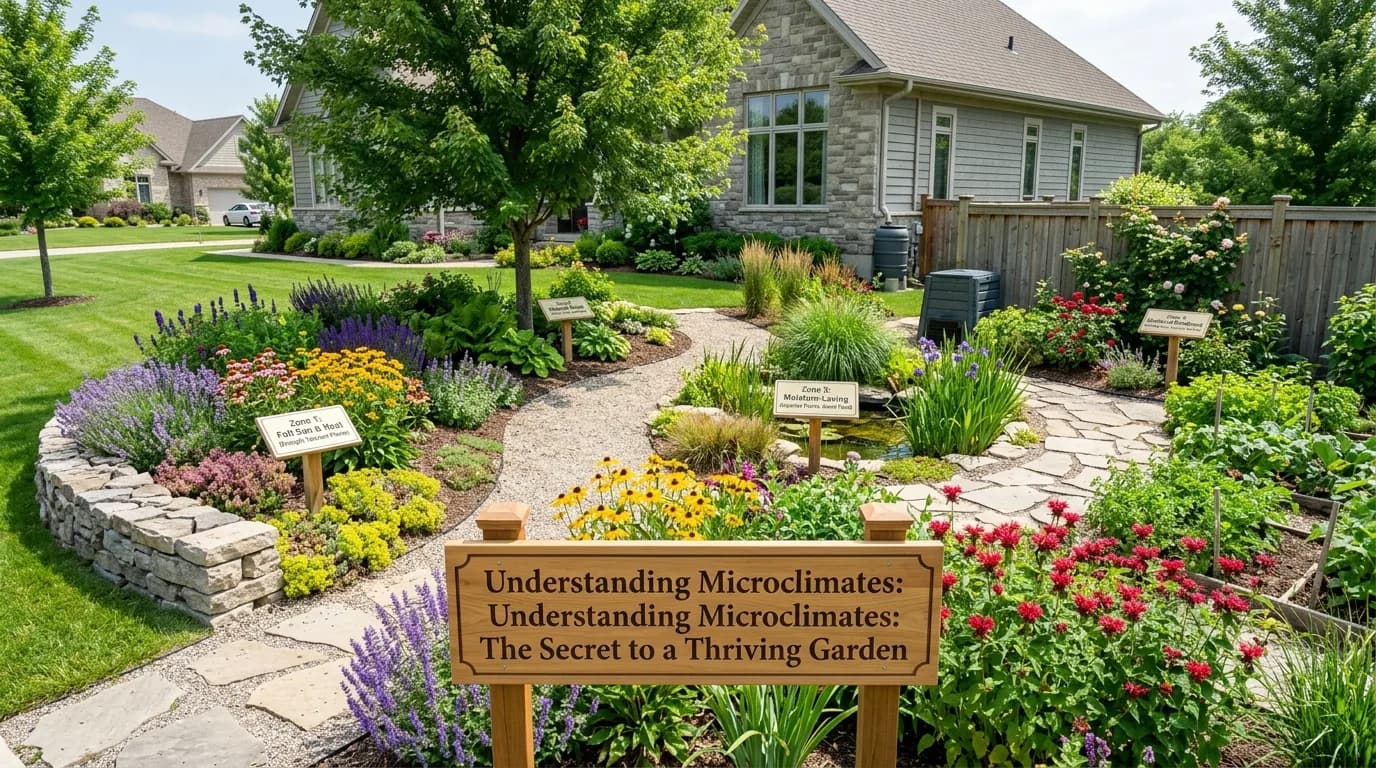
Your USDA hardiness zone is a rough guide — but your actual yard contains multiple microclimates, each with different temperature ranges, moisture levels, and wind exposure. Understanding these microclimates lets you grow plants that technically shouldn't survive in your zone.
Professional landscape architects always map microclimates before placing a single plant. Here's how you can too.
What Creates Microclimates
1. Sun Exposure
The south-facing side of your house receives the most direct sun and can be 10-15°F warmer than the north side in winter. This "heat trap" effectively pushes your south wall up by one full USDA zone.
Practical impact: A Zone 6 gardener can grow Zone 7 plants against a south-facing brick wall. The wall absorbs heat during the day and radiates it at night, protecting tender plants from freezing.
2. Wind
Wind dramatically increases water loss (evapotranspiration) and wind chill. A plant exposed to constant winter wind might experience conditions 10-15°F colder than what the thermometer reads.
Wind corridors form between buildings, along fence gaps, and down alleys. Plants in these corridors need to be 1 zone hardier than the rest of your yard.
Windbreaks (evergreen hedges, fences, berms) create a protected zone on the leeward side extending 5-10× the height of the barrier. A 6-foot fence protects plants 30-60 feet downwind.
3. Cold Air Drainage
Cold air is denser than warm air and flows downhill like water. It pools at the lowest points in your yard, creating frost pockets — areas that freeze first in fall and thaw last in spring.
Practical impact: The bottom of a slope can be a full zone colder than the top. Don't plant your fig tree at the bottom of the hill.
Hack: A low hedge or wall mid-slope can redirect cold air flow around your garden beds, like a levee redirecting a river.
4. Thermal Mass
Brick, stone, concrete, and water absorb heat during the day and release it at night. This moderates temperature swings and protects nearby plants from frost.
- Stone walls: Can raise nighttime temperatures 3-5°F for plants within 3 feet
- Concrete patios: Radiate heat upward, benefiting container plants and adjacent beds
- Water features: Large bodies of water moderate temperature swings by 5-10°F
- Gravel/rock mulch: Absorbs and radiates more heat than organic mulch — useful for heat-loving plants
5. Moisture Zones
Your yard has areas that stay consistently wet and areas that dry out fast:
- Roof drip line: Gets concentrated bursts of water during rain, then dries out. Alternates between flood and drought.
- Downspout discharge: Constantly moist. Good location for moisture-loving plants if it doesn't cause foundation issues.
- Mature tree canopy: Dry shade — the tree roots steal most of the moisture. One of the toughest conditions for plants.
- Low spots: Collect runoff. May stay wet for days after rain. Use rain garden plants here.
How to Map Your Microclimates
The Temperature Test (Winter)
On a cold morning (below freezing), walk your property at dawn. Feel the air temperature at ground level in different spots. Note where frost is heaviest (low spots, exposed areas) and where it's lightest (near walls, on elevated ground).
The Moisture Test
After a good rain, walk your property at 24 hours and again at 48 hours. Note where water is still standing, where soil is still wet, and where it's already dry. These patterns are permanent features of your site.
The Wind Test
On a windy day, walk the property and note where you feel wind and where you don't. Tie lightweight ribbons to stakes at various points and photograph them — they'll show you the wind pattern.
The Shadow Test
Photograph your yard from the same point at 9 AM, noon, and 3 PM on a summer day and a winter day (or use a sun calculator app). This maps your actual sun exposure — which can be very different from what you assume.
Exploiting Your Microclimates
Once you've mapped your zones, you can make dramatically better plant placement decisions:
South wall (warm microclimate):
- Zone-push tender plants (one zone warmer than your rating)
- Espaliered fruit trees
- Mediterranean herbs (rosemary, lavender, thyme)
- Fig trees, crepe myrtles, and other marginally hardy species
North side (cool/shade):
- Hostas, ferns, astilbe, heuchera
- Rhododendrons and azaleas
- Woodland wildflowers (trillium, bloodroot, Virginia bluebells)
- Moss garden (the ultimate shade solution)
Wind-protected pocket:
- Japanese maples (hate wind — leaf scorch)
- Hydrangeas (flowers damaged by wind)
- Tall perennials that flop in wind (delphiniums, hollyhocks)
Frost pocket (cold spot):
- Cold-hardy natives ONLY — don't fight the microclimate
- Spring-blooming plants that can handle late frosts
- Evergreen groundcovers (pachysandra, vinca)
Dry shade (under large trees):
- Solomon's seal, wild ginger, epimedium
- Dry-shade sedges (Carex pensylvanica)
- Hellebores — the king of dry shade
Your Yardcast design pack includes a complete microclimate analysis for your yard, with zone-by-zone plant recommendations.
Get your design → — includes microclimate analysis.