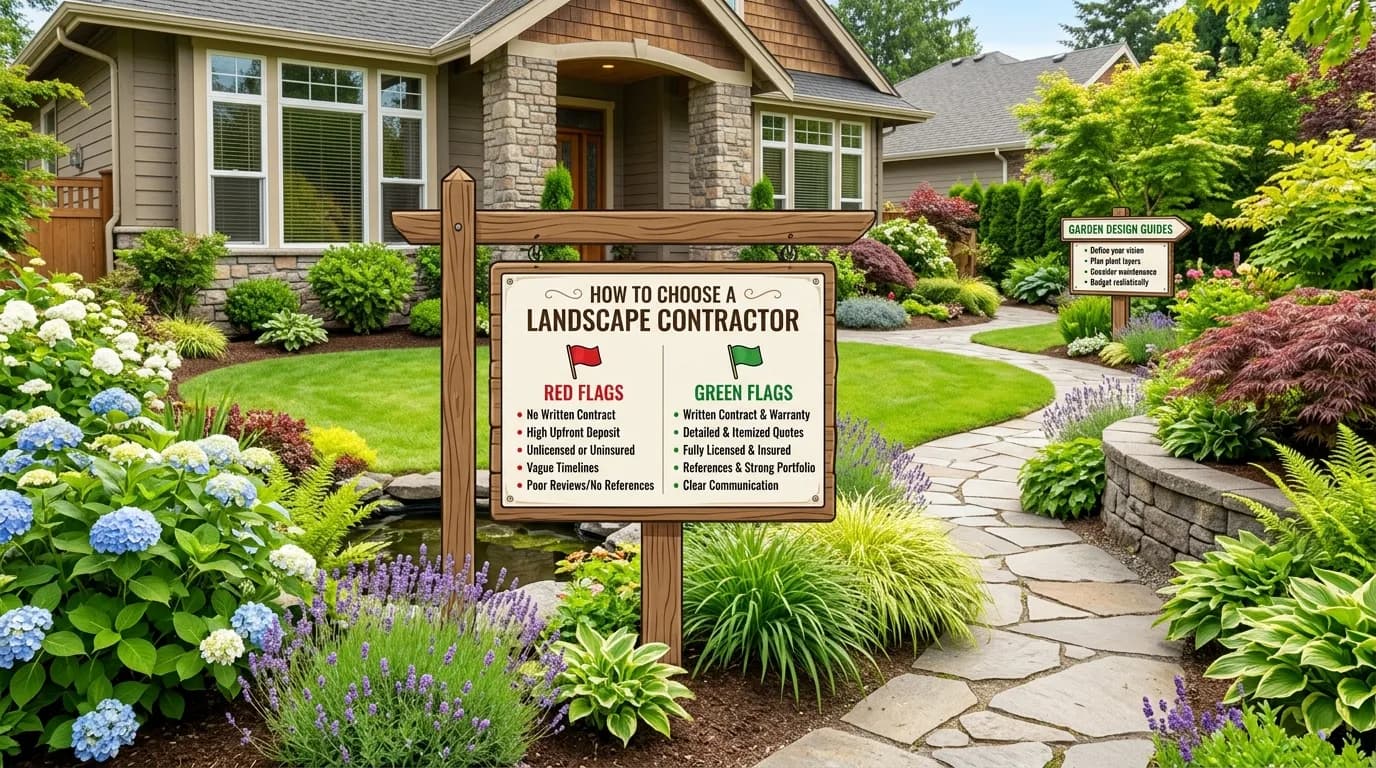
Hiring a landscape contractor is one of the biggest home improvement decisions you'll make. A great contractor transforms your property. A bad one takes your money and leaves a mess. Here's how to tell the difference.
Before You Call Anyone
Know What You Want
Have a clear idea of your project before contacting contractors:
- What's the scope? New plantings, hardscape, full design, or maintenance?
- What's your budget? Have a range in mind ($5K–$10K, $10K–$25K, etc.)
- What's the timeline? Urgent, this season, or flexible?
- Do you have a design? Contractors who also design charge 15–25% more than those who just install.
Get 3–5 Quotes (Not 2, Not 10)
Two quotes isn't enough comparison. Ten quotes wastes everyone's time. 3–5 gives you a clear picture of market pricing and contractor quality.
Green Flags (What to Look For)
1. Licensed and Insured
Non-negotiable. Ask for:
- Contractor's license — Requirements vary by state but most require licensing for projects over $500–$1,000
- General liability insurance — Minimum $1M. Covers property damage.
- Workers' compensation — Covers injuries to their crew on your property. If they don't have it and a worker gets hurt, YOU could be liable.
Ask for certificates. Call the insurance company to verify. Not "I have it" — show me.
2. Physical Business Address
Not a P.O. box. Not "we'll meet you on site." A real business with a real address. Google Street View it.
3. Detailed Written Proposal
A professional contractor provides:
- Itemized scope of work
- Material specifications (not just "plants" — which plants, what size, how many)
- Project timeline with milestones
- Payment schedule (never more than 50% upfront)
- Warranty details
4. Portfolio of Completed Projects
Photos of finished work in your area. Ideally, addresses where you can drive by and see the work in person (with the client's permission).
5. References You Can Call
Ask for 3–5 references from the last 12 months. Call them and ask:
- Did the project come in on budget?
- Was it completed on time?
- How was communication?
- Would you hire them again?
6. Industry Memberships
NALP (National Association of Landscape Professionals), ICPI (Interlocking Concrete Pavement Institute), local builder's association. These aren't guarantees of quality, but they signal professionalism.
Red Flags (Run Away)
1. Demands Cash Only or Full Payment Upfront
Legitimate contractors accept checks, credit cards, and structured payment schedules. "Cash only" means they're hiding revenue from taxes and insurance — and you have zero recourse if something goes wrong.
2. No Written Contract
If it's not in writing, it doesn't exist. Verbal agreements lead to disputes about scope, price, and timeline.
3. Way Below Market Price
If one bid is 40%+ below the others, something is wrong. They're either:
- Cutting corners on materials
- Uninsured (passing the risk to you)
- Planning to upsell mid-project
- Underestimating and will demand more money later
4. Pressure to Decide Immediately
"This price is only good today" is a sales tactic, not a business practice. Professional contractors give you time to compare and decide.
5. No Crew — Just a Truck
One person with a truck is a day laborer, not a contractor. Complex projects need a crew, equipment, and project management.
6. Can't Provide License or Insurance
Any hesitation on producing documentation = walk away. Period.
7. Bad Reviews with No Response
Check Google, Yelp, and BBB. Every contractor gets an occasional bad review — that's normal. What matters is how they respond. Professional contractors address complaints publicly and resolve them. Silence or hostility is a red flag.
How to Compare Quotes
Apples-to-Apples
Quotes are only comparable if they cover the same scope. Create a standard list:
- Same plants (species, size, quantity)
- Same hardscape materials
- Same square footage
- Same timeline
The Bid Breakdown
| Component | Budget Quote | Mid Quote | Premium Quote |
|---|---|---|---|
| Design fee | $0 | $500 | $1,500 |
| Materials | $3,000 | $5,000 | $8,000 |
| Labor | $2,000 | $4,000 | $6,000 |
| Equipment | $500 | $800 | $1,200 |
| Markup/overhead | $500 | $1,000 | $2,000 |
| Total | $6,000 | $11,300 | $18,700 |
The cheapest bid often has the thinnest margins — meaning they cut corners when unexpected problems arise. The most expensive bid should deliver premium materials and execution. The middle bid is often the best value.
Payment Structure
A fair payment schedule:
- Deposit: 10–30% at contract signing (never more than 50%)
- Progress payment: 30–40% at project midpoint
- Final payment: 30–40% upon completion and your satisfaction
Never pay in full before work is complete. The final payment is your leverage to ensure punch list items get done.
During the Project
Communication
- Expect a weekly update minimum (daily for large projects)
- Have one point of contact (project manager or owner)
- Document everything — photos, emails, texts
Change Orders
Any scope changes should be written, priced, and signed before work begins. "We found something unexpected" is legitimate — but get the change in writing with the cost impact before approving.
Inspection
Walk the site at the end of each work day (or at milestones for larger projects). Catch issues early. A good contractor welcomes this.
After Completion
Warranty
Standard warranties:
- Hardscape: 1–5 years (workmanship)
- Plants: 1 year replacement guarantee (industry standard)
- Irrigation: 1–2 years parts and labor
- Lighting: 1–2 years parts and labor
Get the warranty in writing with specific terms.
Final Walkthrough
Do a formal walkthrough with the contractor. Create a punch list of any items that need correction. Both parties sign off when complete.
Bring Your Own Design
One way to save 15–25% and get exactly what you want: bring a completed landscape design to contractors and let them bid on installation only.
Yardcast generates professional landscape designs with plant lists, costs, and specifications that any contractor can install. This puts you in control of the design while letting the contractor focus on what they do best — building.