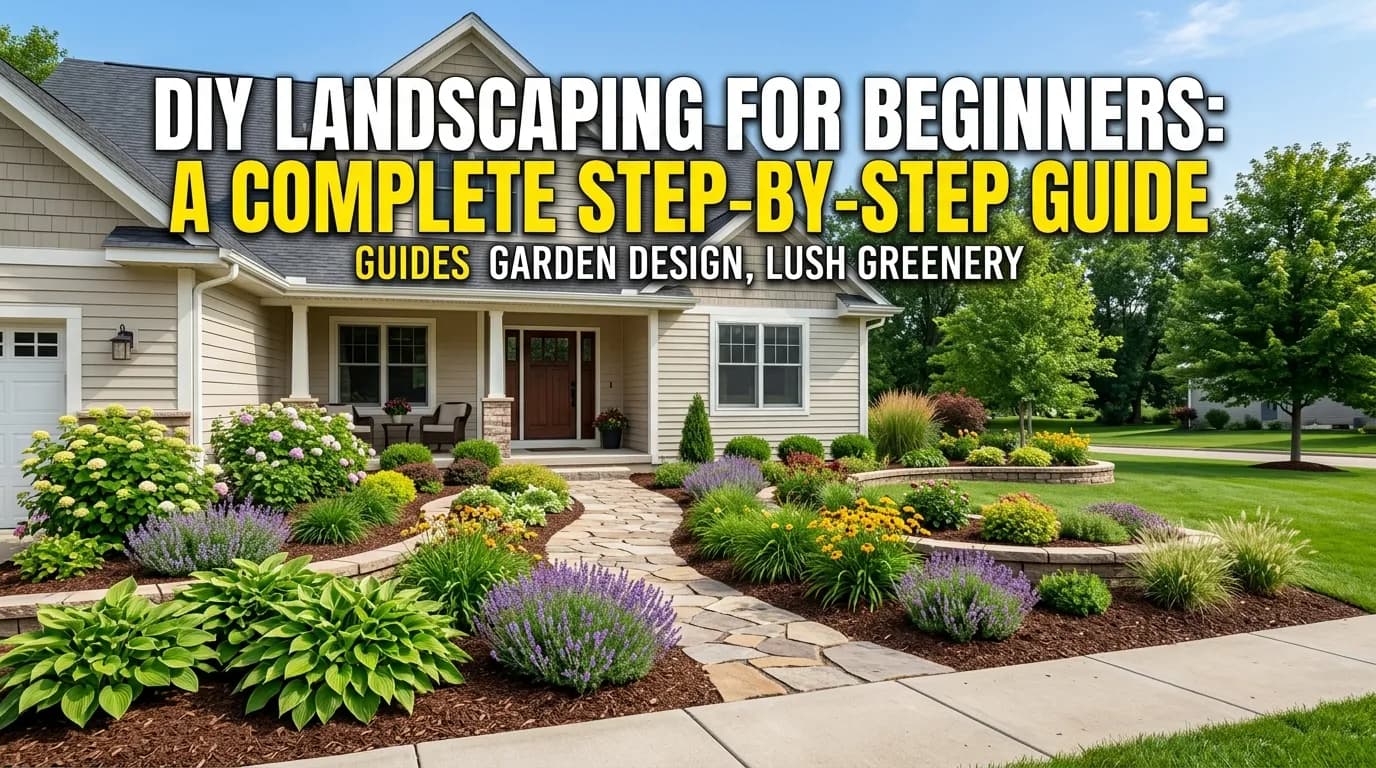
You don't need a degree in horticulture or a $10,000 budget to have a great-looking yard. Most landscaping is just digging holes and putting plants in them. Here's how to do it right the first time.
Step 1: Assess Your Yard
Before buying a single plant, understand what you're working with.
Sun Mapping
Go outside 3 times in one day (8 AM, 12 PM, 4 PM) and note which areas get:
- Full sun (6+ hours direct sunlight)
- Partial shade (3–6 hours)
- Full shade (less than 3 hours)
This determines what you can plant where. It's the single most important factor.
Soil Test
Buy a soil test kit ($15–$30 at any garden center) or send a sample to your county extension office ($10–$20, more accurate). You need to know:
- pH (most plants want 6.0–7.0)
- Texture (sand, loam, or clay)
- Nutrient levels (nitrogen, phosphorus, potassium)
Measure Your Space
Sketch your yard on paper. Measure the overall dimensions, mark fixed elements (house, driveway, fence, trees), and note problem areas (slopes, wet spots, shade).
Step 2: Create a Plan
Don't just buy random plants at Home Depot. Have a plan.
The 3-Layer Rule
Professional landscapes use 3 layers:
- 1Canopy layer — Trees (10+ feet tall)
- 2Mid layer — Shrubs (3–8 feet)
- 3Ground layer — Groundcovers, perennials, grasses (under 3 feet)
Layer from tallest in the back to shortest in the front. This creates depth and visual interest.
Start with Structure
Before flowers, plant your structural elements:
- Trees — 1–3 trees anchor the design
- Evergreen shrubs — Provide year-round structure
- Hardscape — Paths, edging, borders
Then fill in with perennials and groundcovers.
Right Plant, Right Place
Match plants to your conditions:
- Full sun + dry soil → Lavender, ornamental grasses, sedum
- Full sun + moist soil → Daylilies, coneflowers, bee balm
- Shade + dry → Hostas, ferns, wild ginger
- Shade + moist → Astilbe, ligularia, bleeding heart
Step 3: Prepare the Soil
Good soil = good plants. Bad soil = dead plants and wasted money.
For New Beds
- 1Remove existing grass (sod cutter rental: $70/day)
- 2Spread 3–4 inches of compost over the area
- 3Till or turn it into the top 8–10 inches
- 4Rake smooth
For Existing Beds
- 1Remove old mulch and weeds
- 2Add 2 inches of compost
- 3Turn into existing soil with a garden fork
Soil Amendments by Type
- Clay soil: Add compost + gypsum (breaks up compaction)
- Sandy soil: Add compost + peat moss (retains moisture)
- Acidic soil (pH < 6): Add garden lime
- Alkaline soil (pH > 7.5): Add sulfur or pine needles
Step 4: Install Hardscape First
Always install hardscape (paths, patios, edging, walls) before planting. You don't want to step on new plants.
Essential Hardscape for Beginners
- 1Edge your beds — Steel, aluminum, or stone edging keeps a clean line between lawn and beds. This alone makes any landscape look 3× more professional.
- 2Define paths — Even a simple stepping stone path creates flow and prevents people from walking through beds.
- 3Mulch ring around trees — 3–4 feet diameter, 2–3 inches deep. Never mound mulch against the trunk (volcano mulching kills trees).
Step 5: Plant
When to Plant
- Spring (March–May): Best for most perennials and shrubs
- Fall (September–October): Best for trees and spring bulbs
- Avoid: Midsummer (heat stress) and deep winter (frozen ground)
How to Plant (Properly)
- 1Dig a hole 2× wider than the root ball, same depth
- 2Remove the plant from its pot, loosen circling roots gently
- 3Set the plant so the top of the root ball is level with the surrounding soil
- 4Backfill with the original soil (not amended soil — roots need to adapt)
- 5Water deeply immediately
- 6Mulch 2–3 inches around the plant (not touching the stem)
Spacing
Follow the plant tag spacing recommendations. Yes, it looks sparse at first. In 2–3 years it fills in perfectly. Overcrowding causes disease and competition.
Step 6: Mulch Everything
Mulch is the secret to low-maintenance landscaping:
- Retains soil moisture (reduces watering by 50%)
- Suppresses weeds
- Regulates soil temperature
- Looks clean and professional
Best Mulch Types
- Shredded hardwood: Best all-around, decomposes slowly, feeds soil
- Pine straw: Great for acid-loving plants (azaleas, blueberries)
- River rock: Permanent, best for dry/xeric landscapes
- Rubber mulch: Around playgrounds only (doesn't feed soil)
Depth: 2–3 inches for wood mulch, 1–2 inches for rock. Refresh annually.
Step 7: Water Correctly
Overwatering kills more plants than underwatering. Seriously.
The Rules
- Deep and infrequent beats shallow and daily. Water deeply 1–2 times per week, not a little every day.
- Morning is best (6–10 AM). Less evaporation, leaves dry before nightfall.
- Soaker hoses > sprinklers. Water at the root zone, not the leaves.
- 1 inch per week is the general target for most plants and lawns.
First-Year Watering Schedule
- Weeks 1–4: Water every 2–3 days
- Months 2–3: Water every 4–5 days
- Months 4–6: Water weekly
- After year 1: Most established plants survive on rainfall alone
Step 8: Maintain
Weekly (15 minutes)
- Quick weed pull (catch them small)
- Deadhead spent flowers
- Check for pest damage
Optional upgrade (1 hour)
- Edge beds if needed
- Prune dead/damaged branches
- Check irrigation system
Seasonal
- Spring: Cut back ornamental grasses, divide perennials, refresh mulch
- Summer: Water deeply, watch for pests
- Fall: Plant bulbs, clean up dead annuals, final mulch
- Winter: Prune deciduous trees/shrubs while dormant
Common Beginner Mistakes
- 1Planting too deep — Crown rot kills slowly
- 2Volcano mulching — Mulch piled against tree trunks invites disease
- 3Ignoring mature size — That cute 2-foot shrub becomes a 10-foot monster
- 4All flowers, no structure — Flowers without shrubs/trees looks chaotic
- 5Not grouping by water needs — Drought-tolerant plants next to water-lovers = one is always unhappy
Budget Guide
| Project | Budget DIY | Mid-Range |
|---|---|---|
| Foundation plantings (front) | $200–$500 | $1,000–$3,000 |
| Backyard flower bed (200 sq ft) | $150–$400 | $600–$1,500 |
| Mulch (1,000 sq ft) | $100–$200 | $300–$500 |
| Edging (100 ft) | $50–$150 | $200–$600 |
| Single tree + planting | $50–$200 | $200–$600 |
Total starter landscape: $500–$1,500 DIY for a significant transformation.
Get a Professional Plan for $29.99
Don't guess — let Yardcast generate a custom landscape design for your yard. Upload a photo, answer a few questions, and get a professional design in both bed options with plant lists, costs, and installation guides.