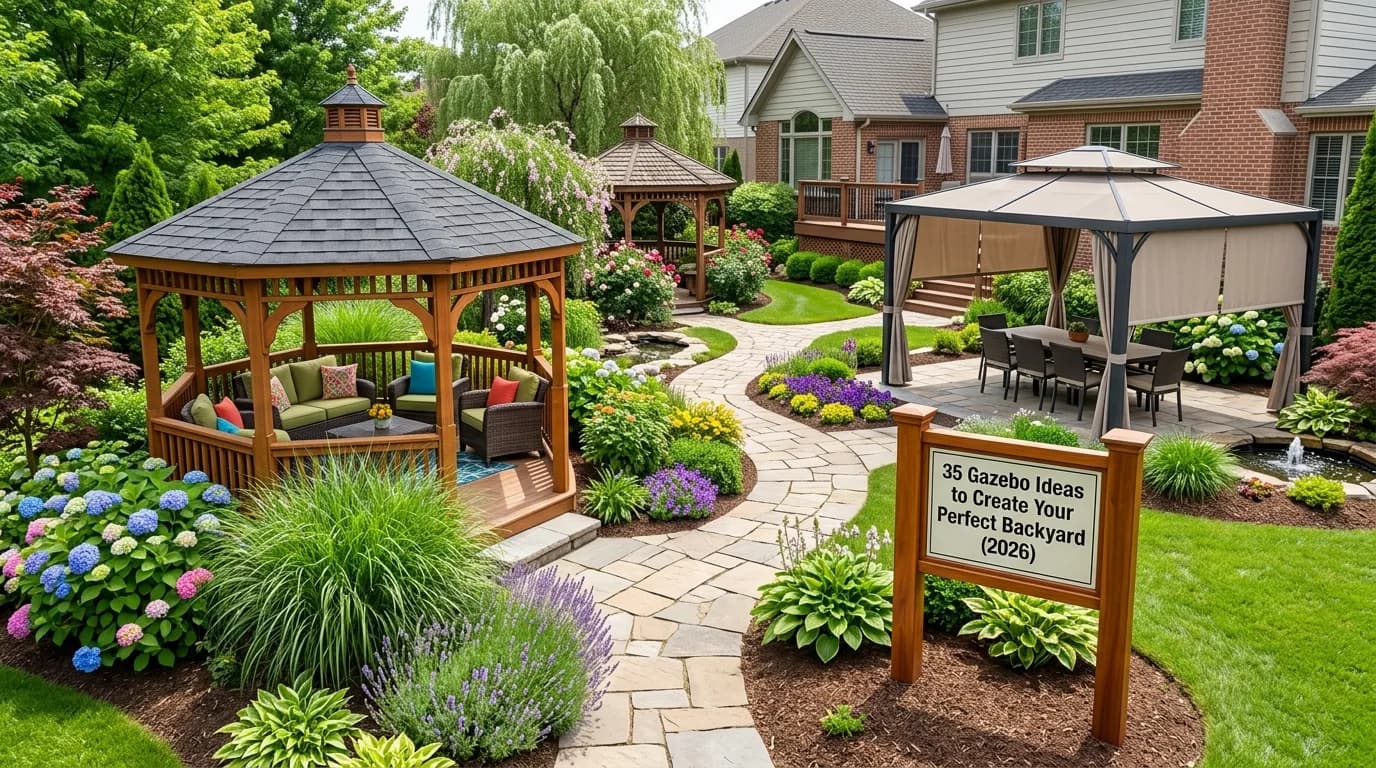
A gazebo transforms a yard from an open, directionless space into one with a defined heart — a destination, a room without walls, a place you actually want to spend time. Done right, a gazebo adds $10,000–$20,000 in home value, creates an outdoor living experience that rivals anything indoors, and becomes the most-used spot on your entire property.
This guide covers 35 gazebo ideas for 2026 — from modest DIY kits to architect-designed freestanding pavilions — with costs, material comparisons, landscaping pairings, and design principles that make the difference between a gazebo that collects cobwebs and one that gets used every summer evening.
Understanding Gazebo Types
Before diving into specific ideas, it helps to understand the main categories:
Traditional gazebo: Octagonal or hexagonal structure with a pointed roof, open sides (or removable screens), and a defined floor. The classic backyard gazebo that most people picture.
Rectangular gazebo: Four-sided structure with a flat or pitched roof — essentially an outdoor room with a solid overhead cover. More modern in appearance, more flexible in size.
Pergola-style gazebo: Open lattice or rafter roof, no solid ceiling. Provides structure and partial shade; can be covered with fabric, polycarbonate panels, or climbers.
Pop-up or kit gazebo: Temporary fabric-roofed structures (like a carport tent) — not permanent, no permits, and not a real landscaping feature. Useful for events but excluded from this guide.
Pavilion: Large, open-sided structure with a solid roof — essentially a gazebo at grand scale. Most common for event rentals; increasingly popular for high-end residential.
Classic Wood Gazebo Ideas
1. Classic Cedar Octagonal Gazebo
The quintessential backyard gazebo: octagonal shape, cedar construction, pointed hip roof with copper or cedar shingles, and open sides with built-in benches around the perimeter. Cedar naturally resists rot and insects without chemical treatment and weathers to a beautiful silver-gray over time.
Size: 10–14 feet diameter (most common residential size)
Cost: $3,500–$9,000 for cedar kit; $8,000–$20,000 for custom-built
Best location: Center of a lawn area, at the end of a garden path, or over a pond view
2. Rustic Log Gazebo
Constructed from peeled logs or rough-sawn lumber, rustic gazebos have an organic, cabin-in-the-woods quality. Particularly beautiful on wooded or heavily planted properties where the structure feels grown from the landscape rather than imposed upon it. Often paired with stone foundation and stone patio surround.
Cost: $6,000–$18,000 custom-built
Best paired with: Native plant gardens, woodland gardens, naturalistic ponds
3. Victorian Gingerbread Gazebo
Ornate decorative details — turned spindles, jigsaw-cut gingerbread trim, lattice panels, and a bell-shaped or pagoda roof — define the Victorian gazebo. This style was the height of lawn fashion in the 1880s and has never fully gone out of style. Particularly fitting for Victorian, Craftsman, and cottage-style homes.
Cost: $5,000–$15,000 for detailed woodwork gazebos
Color: White or cream paint with contrasting trim is the classic choice; dark green (Farrow & Ball "Mizzle") is a contemporary alternative
4. Craftsman Pergola-Gazebo Hybrid
Square structure with exposed rafter tails, tapered square columns on stone piers, and a partially open roof — half gazebo, half pergola. The Craftsman aesthetic translates beautifully to outdoor structures. Install a ceiling fan on the center beam for usable summer comfort.
5. DIY Kit Gazebo with Stain Upgrade
Pre-engineered gazebo kits (Yardistry, Lifetime, Cedarshed brands) provide good structural bones at $1,500–$4,000. The key to making a kit look custom: use a premium exterior stain (Cabot, Sikkens) in a sophisticated color rather than the bare wood finish most people leave. Add real potted plants, string lights, and quality outdoor furniture. The result reads as much more expensive than it is.
Modern Gazebo and Pavilion Ideas
6. Flat-Roof Contemporary Pavilion
A square or rectangular flat-roof pavilion with steel columns and a clean-lined roof creates the most contemporary possible outdoor structure. The roof can be polycarbonate (translucent, diffused light), standing-seam metal (solid, rain-sound), or layered ipe wood decking for a warm modern aesthetic.
Cost: $8,000–$25,000 custom built
Best for: Mid-century modern, contemporary, and minimalist home styles
7. Steel and Cable Tension Gazebo
A tensile fabric roof — white or natural-colored stretch fabric anchored to steel masts — creates a sculpture-like shade structure that looks more like architecture than landscaping. Common in commercial spaces, this look is increasingly available for residential use.
Cost: $5,000–$15,000
Note: Fabric roof requires replacement every 7–12 years
8. Steel Pergola with Motorized Louver Roof
Motorized louvered roof systems (Azenco, Renson, Soliso brands) allow the roof slats to rotate from fully open (maximum light and ventilation) to fully closed (weatherproof rain cover) with a wall switch or phone app. Integrated LED lighting, heaters, and ceiling fans make this the most functional outdoor structure available.
Cost: $8,000–$30,000 depending on size and features
ROI: These structures are considered permanent construction additions; significant impact on appraised value
9. Black Steel Minimalist Gazebo
Powder-coated black steel frames with a flat polycarbonate roof panel create an extremely clean, graphic outdoor structure. The black metal against green garden plants is one of the most effective design contrasts in outdoor design. Black steel requires virtually no maintenance and looks better as it ages.
10. Concrete and Wood Gazebo
Poured concrete columns with a tongue-and-groove cedar ceiling and standing seam metal roof create the most substantial, permanent-feeling gazebo possible. More construction than carpentry — requires forms, rebar, and a concrete pour — but creates an outdoor structure of genuine architectural quality.
Cost: $15,000–$40,000+ custom built
Best for: Permanent statement structures where long-term investment makes sense
> See how a gazebo would look in your actual yard before building. Generate a free AI landscape design at Yardcast → Upload your yard photos and get 3 photorealistic designs showing gazebo placement, surrounding plantings, patio layout, and lighting — customized to your specific space and style.
Gazebo Ideas by Setting
11. Poolside Cabana Gazebo
A rectangular pavilion next to a pool provides essential shade for lounge chairs, storage for pool equipment, and a sheltered spot for an outdoor kitchen or bar. Use materials that are comfortable wet — teak, ipe, concrete, or composite — and consider outdoor curtains for wind and privacy management.
Design note: Face the open side toward the pool and away from the prevailing wind direction. Install ceiling fans for summer comfort.
12. Garden Focal Point Gazebo
Position a gazebo at the end of a long garden axis — at the terminus of a formal allée, at the end of a rose garden, or across a lawn from the main house — so it serves as the visual destination that the eye is drawn toward. This is the classical garden use of a gazebo, originating in 18th-century English landscape design.
13. Hilltop or Elevated Gazebo
If your property has any elevated area — even a gentle rise — placing a gazebo at the high point creates a natural gathering place with views over the rest of the yard. The elevated position creates a sense of occasion when approaching the structure.
14. Waterside Gazebo
A gazebo positioned next to a garden pond, natural water feature, or stream is one of the most tranquil landscape settings imaginable. The sound of water, the reflection of the structure, and the wildlife attracted by the water all amplify the gazebo's appeal.
Plant pairing: Japanese iris, cattail, weeping willow (or dwarf weeping pussywillow for smaller yards), and ostrich ferns around the water edge
15. Privacy Screen Gazebo
On a narrow urban lot or in a yard with unpleasant views, a gazebo with one or two solid privacy panels (lattice + climbers, board-and-batten, or woven rattan screens) creates a sheltered retreat that makes the rest of the yard feel invisible.
Gazebo Landscaping Pairings
A gazebo without thoughtful landscaping is just a structure. The plantings around and approaching a gazebo make it feel like a destination.
16. Rose Arbor Approach
Create a formal rose-covered arbor or series of arches leading to the gazebo entrance. The approach becomes as beautiful as the destination. Use climbing roses (Zephirine Drouhin, Climbing Iceberg, or New Dawn) on the arbor supports; shrub roses in formal beds flanking the path.
17. Climbing Vine Covered Gazebo
Allow wisteria, climbing roses, or hydrangea anomala petiolaris to fully cover a gazebo over 3–5 years. A fully vine-covered gazebo reads not as a structure but as a living green room — dramatically different from a bare wood gazebo. Note: wisteria is very heavy and aggressive; ensure gazebo structure is robust enough to support significant weight.
18. Boxwood Parterre Surround
Formal clipped boxwood hedges creating a parterre (geometric low hedge pattern) around a gazebo base connect the structure to classic landscape design traditions. Best for formal, traditional, and classical home styles.
19. Native Meadow Planting Around Gazebo
Surround a naturalistic wood or rustic gazebo with a native wildflower and grass meadow, with a mown path approach. The wild, un-curated planting around a refined structure creates one of the most beautiful contrasts in garden design — the tension between the human-made and the natural.
20. Gravel Garden Gazebo Setting
Set a gazebo on a gravel terrace (decomposed granite, pea gravel, or crushed stone) with Mediterranean-style plantings — lavender, rosemary, cistus, olive trees in pots — around it. The minimal, xeriscape-inspired setting is elegant and extremely low-maintenance.
Gazebo Feature Ideas
21. Outdoor Kitchen Gazebo
Build an outdoor kitchen under a substantial (14×16 foot+) gazebo roof. The covered structure makes a built-in grill, counter, sink, and bar refrigerator functional in all weather. Add a TV for sports-watching and the space becomes a true outdoor entertainment hub.
Cost: Gazebo structure: $8,000–$20,000; Outdoor kitchen: $5,000–$25,000
Added value: Outdoor kitchens under covered structures consistently rank as one of the top 3 backyard features in homebuyer surveys
22. Screened Gazebo for Mosquito-Free Evenings
Add removable screen panels to a standard gazebo to create a mosquito-free outdoor room. Screen panel kits are available for most standard kit gazebos ($200–$500). For custom gazebos, built-in screen tracks allow panels to slide in and out seasonally.
23. Hot Tub Gazebo
Enclose a hot tub under a gazebo roof for year-round usability in all climates. The covered structure keeps snow and ice off the hot tub cover, provides privacy from neighbors, creates an atmospheric lighting environment, and protects the hot tub equipment from weather extremes.
Planning note: Hot tubs require 220V dedicated circuits; plan electrical before laying gazebo foundation
24. Daybed Gazebo
Install one or two full-size outdoor daybeds (teak frame + all-weather cushions) under a gazebo roof instead of conventional seating. The daybed transforms a gazebo from a social gathering spot to a personal retreat — a place for afternoon naps, reading, and the deepest possible relaxation.
25. Outdoor Fireplace Gazebo
Incorporate a freestanding outdoor fireplace or fire table under a gazebo (with appropriate clearance and venting if using a masonry firebox). The combination of overhead cover and fire makes outdoor evenings viable even in shoulder-season weather (fall, early spring) when the open air would be too cold.
Gazebo Ideas by Budget
26. Budget Gazebo ($1,500–$3,500): Metal or Wood Kit
Pre-engineered metal gazebo kits (Sunjoy, Kozyard, ABCCANOPY brands) provide decent structural bones at minimal cost. Upgrade the appearance: replace kit roofing with architectural shingles or corrugated metal, add string lights and landscape around the base, and invest in quality outdoor furniture. Total investment can look far more expensive than it is.
27. Mid-Range Gazebo ($3,500–$8,000): Cedar or Vinyl Kit, Pro-Assembled
Professional assembly of a quality cedar or vinyl gazebo kit (Yardistry, Cedarshed, Amish-made kits) provides solid construction, warranty, and more sophisticated design options than budget kits. This budget range also allows for a poured concrete or stone paver foundation, significant upgrade in curb appeal and longevity.
28. Upper Mid-Range Gazebo ($8,000–$18,000): Custom Carpenter-Built
Hire a skilled carpenter to build a custom gazebo to your specifications. At this budget you can specify cedar, ipe, or redwood lumber; custom decorative details; architectural roofing; and a properly engineered foundation. The result is a one-of-a-kind structure that fits your home's architecture perfectly.
29. Premium Gazebo ($18,000–$35,000): Landscape Architect Designed
A landscape architect-designed gazebo integrates perfectly with your overall landscape plan — sited for optimal views and sun angles, detailed to match your home's architecture, and landscaped with a curated planting scheme. At this level the gazebo becomes the centerpiece of a whole landscape composition.
30. Ultra-Premium ($35,000+): Permanent Outdoor Room
A fully enclosed outdoor room with operable walls (folding glass doors, motorized screens), climate control (mini-split HVAC), wet bar, outdoor kitchen, AV system, and architectural finishes is less gazebo than addition. At this level the structure is permitted, engineered, and significantly adds to appraised value.
Maintenance and Material Guide
31. Cedar Gazebo Maintenance
Cedar requires staining or sealing every 2–3 years to maintain color and prevent graying. Use a penetrating oil finish (Cabot Australian Timber Oil, Sikkens Cetol) rather than film-forming sealers, which peel. Left untreated, cedar grays attractively but surface checks (small cracks) develop over time.
32. Vinyl Gazebo: No Maintenance Required
Vinyl (PVC) gazebos never need painting, staining, or sealing. Clean with soap and water annually. The tradeoff: vinyl looks slightly less authentic than wood and can't be painted to change colors. Good choice for minimal maintenance.
33. Aluminum Gazebo: Rust-Proof and Lightweight
Powder-coated aluminum is the standard material for mid-range kit gazebos. Won't rust, won't warp, and can be painted if you want a color change. Lighter gauge aluminum (most kit gazebos) can flex in heavy wind — anchor to a concrete pad for stability.
34. Ipe and Hardwood Gazebos
Ipe (Brazilian walnut) and similar tropical hardwoods are virtually indestructible in exterior applications — resisting rot, insects, and weather for 50+ years with oil treatment every 2–3 years. The material cost is high ($8–$15/board foot versus $3–$5 for cedar) but the longevity is extraordinary.
35. Foundation Options for Gazebos
The foundation determines a gazebo's longevity more than any other factor: Poured concrete slab (4–6 inches thick, reinforced): most permanent option; requires forming and a concrete pour; best for any permanent gazebo. Pre-cast concrete piers: footings for each post only; good compromise between permanence and cost. Deck blocks: surface-set concrete blocks; adequate for light kit gazebos in non-frost climates. Gravel base with post anchors: simplest option for temporary or semi-permanent structures. For any gazebo intended to be permanent, pour at least a concrete pier foundation — direct soil contact causes rapid decay even in treated or rot-resistant lumber.
Planning Your Gazebo Project
Before ordering or building, answer these key questions:
Where will you site it? Walk your yard and note: where you already naturally gather, views you want to capture, screening from neighbors needed, slope and drainage, and access from the house.
What will you use it for? Dining (needs table clearance + access to kitchen), lounging (needs shade + privacy), entertaining (needs capacity + bar area), or relaxing alone (needs intimacy + natural setting).
What permits do you need? Most gazebos over 200 square feet require a building permit. HOAs often require design approval. Check before any construction begins.
What's your real budget? Always add 15–20% to your initial estimate for landscaping around the structure, foundation upgrades, electrical, and furniture — the items that make a gazebo feel complete.
A well-sited, well-built gazebo is not just a backyard feature — it's where your family will spend countless hours over decades. It's worth taking the time to get right.
[See exactly where a gazebo would look best in your yard — generate 3 free AI landscape designs at Yardcast →](/redesign)