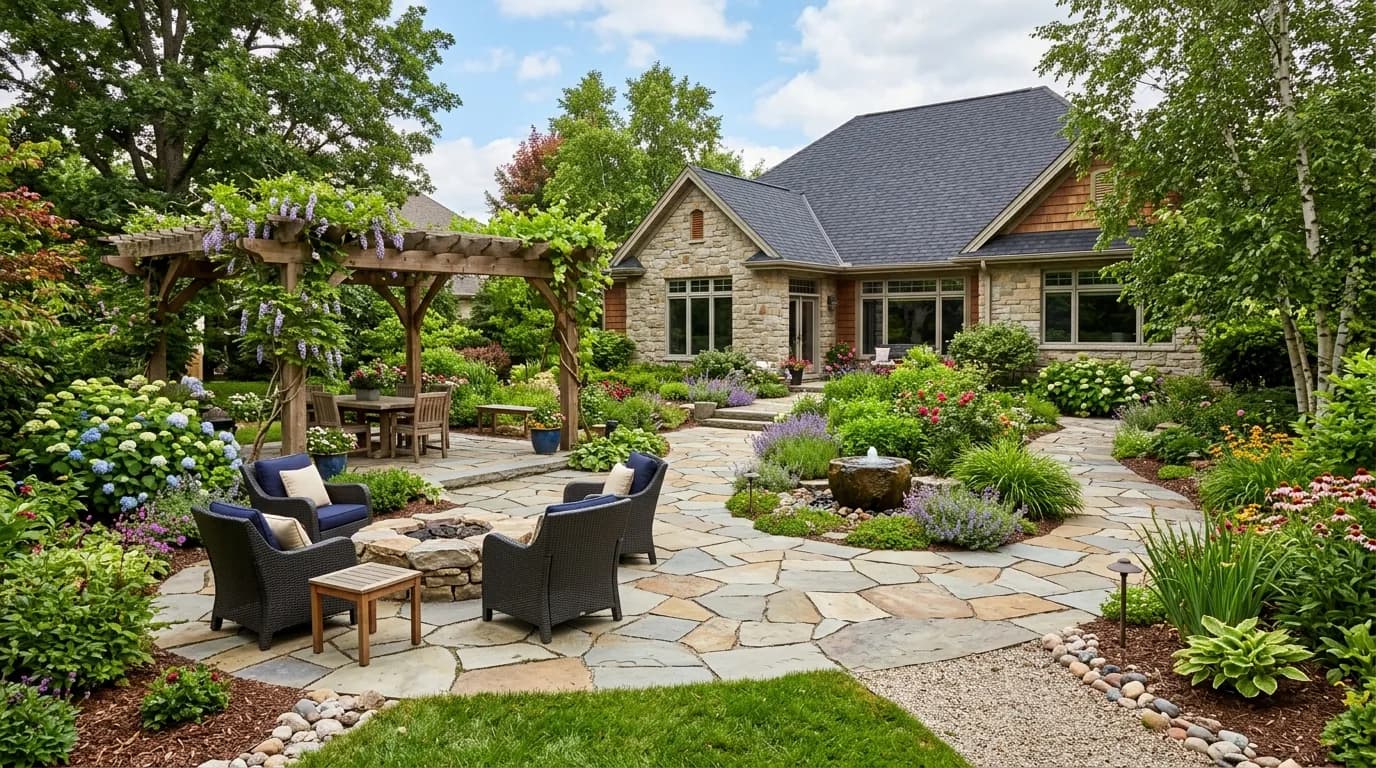
Flagstone is one of the most enduring and beautiful patio materials available. Natural stone — whether bluestone, slate, limestone, sandstone, or travertine — brings an organic warmth and individuality to outdoor living that no manufactured product can replicate. Each stone is unique, patinas beautifully with age, and integrates seamlessly with plants and natural surroundings. This guide explores 25 flagstone patio design ideas, stone types, installation methods, costs, and maintenance tips to help you create an outdoor living space you'll use for decades.
Why Choose Flagstone for Your Patio?
Flagstone patios outperform concrete and manufactured pavers on several fronts:
- Natural character: No two flagstone patios look alike; irregular edges and natural color variation create organic, authentic beauty
- Longevity: Properly installed natural stone lasts 50–100+ years
- Home value: Natural stone patios return 65–90% of installation cost in home value, compared to 50–70% for concrete
- Heat resistance: Light-colored flagstone stays cooler underfoot than dark pavers or concrete in summer sun
- Repairability: Individual stones can be lifted and reset without disturbing surrounding material
Flagstone Types and Colors
Pennsylvania Bluestone: The most popular flagstone in the Northeast. Blue-gray tones, 1–3 inch thickness. Excellent slip resistance when cleft-cut (rough textured). Cost: $4–$8/sq ft material.
Tennessee Crab Orchard Sandstone: Warm red, orange, and brown tones. Extremely durable, weathers beautifully. Popular in the Southeast. Cost: $3–$6/sq ft.
Indiana Limestone: Creamy tan to gray. Dense, hard, excellent for formal applications. Used on many historic estates. Cost: $4–$7/sq ft.
Arizona Flagstone (sandstone): Tan, rust, and salmon tones. Lightweight, easy to cut. Great for casual, Southwestern aesthetics. Cost: $2–$5/sq ft.
Black Slate: Dramatic dark gray to black. Formal and contemporary. Slippery when wet — use only in covered areas or treat with non-slip sealer. Cost: $3–$6/sq ft.
Travertine: Warm beige, ivory, gold tones. Porous (requires sealing), stays cool in heat, popular in warm climates. Cost: $6–$12/sq ft.
Granite Flagstone: Extremely hard and dense. Available in many colors. Excellent for high-traffic areas. Cost: $8–$15/sq ft.
Want to see how a beautiful flagstone patio would transform your actual backyard? [Try a free AI design preview at Yardcast →](/redesign) — upload your photos and see 3 professional designs in under a minute.
25 Flagstone Patio Design Ideas
1. Irregular Flagstone with Creeping Thyme
Leave 1–2 inch gaps between irregular flagstone pieces and plant creeping thyme, sedum, or dwarf mondo grass in the joints. The plants soften the stone's edges, release fragrance when walked on, and reduce weeding. A quintessential cottage garden look.
2. Cut Bluestone with Tight Joints
Cut (square-edged) bluestone with mortar joints gives a crisp, formal appearance similar to tile but with natural stone character. Ideal for contemporary or traditional home styles. Requires precise cutting and professional installation for best results.
3. Flagstone on Sand with Polymeric Sand Joints
The most DIY-friendly installation method: lay stones on a compacted gravel-and-sand base with polymeric sand swept into joints. No mortar required. Individual stones can be lifted and reset if settling occurs. Best for casual, naturalistic designs.
4. Flagstone + Concrete Border
Frame an irregular flagstone field with a concrete or cut-stone border for a polished look that contains the stone and simplifies maintenance. The border creates a clean transition to lawn or garden beds.
5. Flagstone Stepping Stone Path Through Garden
Rather than a solid patio, create a meandering path of large, widely-spaced flagstones through a garden bed. Plant groundcovers between stones. Adds movement and informality, uses less stone (lower cost), and allows more planting.
6. Circular Flagstone Gathering Area
Cut or carefully select stones to create a circular patio centered on a fire pit, specimen tree, or water feature. A 12–14 ft diameter circle accommodates a fire pit with 4–6 chairs. Use graduated sizes with larger stones at center.
7. Elevated Flagstone Terrace with Stone Retaining Wall
On sloped properties, create a level terrace using a natural stone retaining wall with flagstone patio on top. Match the wall stone to the patio stone for a unified look. Adds significant square footage and dramatic visual interest.
8. Bluestone Around a Pool
Cut bluestone is a premier pool coping and decking material — classic, non-slip, naturally cool, and maintenance-friendly. Light-colored cleft bluestone reflects heat and stays comfortable for bare feet. Pairs with any pool style.
9. Mixed Flagstone and Gravel
Combine large flagstone pieces with decomposed granite or fine gravel fill between stones. The gravel drains instantly (no puddles), stays in place with polymeric stabilization, and creates a casual aesthetic. Cost-effective — less stone coverage needed.
10. Flagstone Patio with Built-In Planting Pockets
Leave intentional gaps in the flagstone layout for planted pockets — clumps of ornamental grass, lavender, dwarf grasses, or sedum. The planted islands break up the hardscape and integrate the patio with surrounding landscape.
11. Random Pattern with Consistent Thickness
Use irregular shapes (random pattern) but maintain consistent 1.5–2 inch thickness throughout. The consistent height makes the surface level and comfortable while retaining organic character. Cut the stones with a grinder to achieve tighter fits.
12. Flagstone Entry Courtyard
Frame a front entry with a courtyard of irregular flagstone, contained by a low stone wall or hedge border. A 15×20 ft courtyard makes a dramatic arrival statement and increases perceived home value. Add carriage-style lighting and specimen plantings.
13. Reclaimed Brick + Flagstone Combination
Mix reclaimed brick (in herringbone or running bond pattern) with flagstone accents for a European-inspired patio. Warm brick tones pair beautifully with cream limestone or tan sandstone. Especially appropriate for traditional, colonial, or craftsman homes.
14. Flagstone Bridge Over a Dry Creek Bed
Install two large, flat flagstones spanning a decorative dry creek bed in the garden. The "bridge" effect creates a focal point, adds dimension, and makes the garden feel like a designed landscape rather than a simple planting bed.
15. Monochromatic Limestone Patio
All-cream or all-gray limestone creates a refined, restrained look that photographs beautifully and doesn't compete with plantings. Pairs with formal hedge rows, clipped topiary, and a symmetrical layout.
16. Multi-Level Flagstone Patio
Create two or three distinct levels using stone steps and small retaining walls. Upper level for dining/cooking, lower level for lounging. Levels add visual complexity, define activity zones, and work beautifully on gentle slopes.
17. Flagstone Patio with Fire Feature
A rectangular or square flagstone patio with a central or corner fire pit (gas or wood-burning) wrapped in matching stone veneer. The stone theme unifies patio and fire feature. Include a seating wall on one or two sides.
18. Desert Flagstone Patio
In arid climates, pair Arizona sandstone or flagstone in warm desert tones with ornamental boulders, native desert plants (agave, desert marigold, penstemon), and fine gravel ground cover. Water-wise and visually stunning.
19. Flagstone with Low-Voltage Lighting
Install LED path lights between stones or uplights in planting pockets around the patio perimeter. Solar lights are simple to install; hardwired low-voltage systems offer more placement flexibility and reliability.
20. Shaded Flagstone Patio Under Pergola
Flagstone's texture and color look especially rich in dappled shade. Build a cedar or steel pergola over the patio and train wisteria, climbing hydrangea, or hops vines across the roof structure. The combination of natural stone and mature vines creates unmatched character.
21. Flagstone Patio with Outdoor Kitchen
Extend a flagstone patio with a built-in outdoor kitchen featuring a grill station, prep counter, and refrigerator in stone veneer. Coordinate the countertop stone with the patio stone for a cohesive, high-end result.
22. Japanese-Inspired Stepping Stones
Large, widely-spaced stepping stones through raked gravel or moss creates a contemplative zen garden aesthetic. Works beautifully in shade gardens with Japanese maples, bamboo, and moss groundcover.
23. Flagstone with Drainage Channel
In areas that receive heavy rain, install a French drain or decorative stone channel around the patio perimeter to manage runoff. The channel can be functional and decorative — filled with river rock and edged with larger stones.
24. Cottage Garden Flagstone Path
Irregular flagstones laid through an abundant cottage garden — dahlias, roses, echinacea, salvia — create a romantic, informal aesthetic. The stone path makes garden maintenance easier while adding structure to the loose planting style.
25. Seating Wall-Integrated Patio
Build a 24-inch tall natural stone seating wall along one or two sides of the patio. The wall doubles as seating (eliminates need for extra chairs), creates a defined space boundary, and looks like a permanent, thoughtfully designed feature.
Flagstone Patio Cost Guide
| Installation Method | Material Cost (per sq ft) | Labor Cost (per sq ft) | Total Installed |
|---|---|---|---|
| Sand-set irregular | $3–$8 | $8–$15 | $11–$23 |
| Sand-set cut stone | $5–$12 | $10–$18 | $15–$30 |
| Mortar-set irregular | $3–$8 | $12–$20 | $15–$28 |
| Mortar-set cut stone | $5–$12 | $15–$25 | $20–$37 |
| DIY sand-set | $3–$8 | $0 | $3–$8 + rental |
Typical patio sizes:
- 10×12 ft (120 sq ft): $1,320–$3,600 installed
- 12×16 ft (192 sq ft): $2,100–$5,760 installed
- 16×20 ft (320 sq ft): $3,520–$9,600 installed
- 20×24 ft (480 sq ft): $5,280–$14,400 installed
Prices vary significantly by region. The Northeast typically runs 20–30% higher than national averages.
Flagstone Patio Maintenance
Sealing: Seal porous stones (travertine, sandstone, soft limestone) every 1–3 years. Dense stones (bluestone, granite) rarely need sealing but benefit from a penetrating sealer every 5–7 years.
Weeding joints: Sand-set patios require periodic weeding of joints. Polymeric sand significantly reduces weed growth. Mortar-set patios need less maintenance but cracked mortar must be repointed.
Winter care: Natural stone handles freeze-thaw cycles well when properly installed with adequate drainage. Avoid rock salt (use calcium chloride instead) — rock salt damages stone over time.
Staining: Clean organic stains with a diluted hydrogen peroxide solution. Oil stains respond to poultice applications. Avoid harsh acids on limestone and marble.
DIY vs. Professional Flagstone Installation
DIY flagstone is feasible when:
- Installing irregular stones in sand (no precision cutting required)
- Working on a level surface (no grading or drainage work needed)
- Patio is under 200 sq ft
- You have a full weekend and help lifting heavy stones
Hire a professional when:
- Installing cut stone with tight joints (requires wet saw and skill)
- Working on sloped terrain or drainage-challenged areas
- Installing around a pool (precise water management critical)
- Creating multi-level designs with retaining walls
Frequently Asked Questions
Q: How long does flagstone last?
A: Properly installed natural flagstone lasts 50–100+ years. Natural stone actually improves with age, developing a patina that increases its character and value. Individual stones can be lifted and reset if settling occurs, making maintenance repairs straightforward.
Q: Is flagstone slippery when wet?
A: Cleft-cut (rough textured) flagstone has excellent slip resistance when wet — similar to textured concrete. Honed (smooth polished) stone can be slippery and should be avoided for outdoor applications unless a non-slip sealer is applied. For pool decks, always specify cleft-cut or thermal-finish stone.
Q: Can I install flagstone over existing concrete?
A: Yes. Setting flagstone over an existing concrete slab (on a mortar bed) is an excellent way to transform a dated patio without demolition. The concrete provides a stable base. Ensure the existing slab is structurally sound and not cracked severely before overlaying.
Q: What's the difference between flagstone and bluestone?
A: Bluestone is a specific type of flagstone — Pennsylvania bluestone is a fine-grained sandstone quarried in the Delaware River Valley. "Flagstone" is the generic term for any flat-laying natural stone used for paving. All bluestone is flagstone, but not all flagstone is bluestone.
Q: How thick should flagstone be for a patio?
A: 1.5–2 inches is standard for pedestrian patios. Thinner stones (under 1 inch) chip easily and are unsuitable for outdoor use. For driveways or heavy traffic areas, use 2–3 inch thickness. For stepping stone paths with wide spacing, 1–1.5 inches is acceptable.
Q: What should I put between flagstone pieces?
A: Popular joint fill options: polymeric sand (best for weed resistance in sand-set installations), mortar (permanent, clean look), creeping groundcovers like thyme or sedum (naturalistic, fragrant), pea gravel (informal, good drainage), moss (shade gardens, Japanese aesthetics). Each option affects maintenance requirements and visual character.
Q: Do I need a permit to install a flagstone patio?
A: Most jurisdictions don't require permits for ground-level patios under 200–500 sq ft. Elevated patios, patios with retaining walls over 30 inches, and patios attached to structures may require permits. Always check with your local building department before starting.
Q: How do I keep flagstone clean?
A: Regular sweeping and occasional rinsing with a garden hose handles most maintenance. For stains, use a natural stone cleaner (pH-neutral). Avoid vinegar, bleach, or acids on limestone and marble. Pressure washing works well on hard stones like bluestone and granite but can erode soft sandstones.
Transform Your Backyard with Natural Stone
A flagstone patio is one of the highest-value investments in any outdoor space — durable, beautiful, low-maintenance, and timeless. Whether you're drawn to the formal crispness of cut bluestone, the rustic warmth of irregular sandstone, or the Mediterranean elegance of travertine, there's a flagstone design that will transform your backyard into a space you never want to leave.
Ready to see what a flagstone patio would look like in your actual yard? Generate a free AI landscape design preview at Yardcast → — upload your photos, describe your dream outdoor space, and in 40 seconds you'll see 3 photorealistic professional designs with plant lists, cost estimates, and a contractor-ready PDF. Preview is completely free.